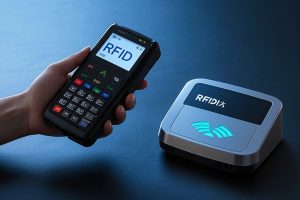
RFID tags tracking enables businesses to identify, monitor, and locate products, assets, and equipment automatically in real time. By combining RFID tags, readers, and software, organizations gain higher inventory accuracy, faster operations, and improved visibility across manufacturing, warehousing, and logistics environments.
About the Author
This article was reviewed by the Cykeo RFID engineering team. Over the past decade, our specialists have participated in RFID deployments involving manufacturing automation, warehouse management, returnable asset tracking, industrial tool control, and vehicle key management systems. The insights shared below come from real project implementation experience and field testing environments.
What Is RFID Tags Tracking?
RFID tags tracking is the process of monitoring physical objects through radio frequency identification technology.
Each RFID tag contains a unique identifier. When an item enters the coverage area of an RFID reader, the system automatically records its presence and location.
Unlike barcode systems, RFID does not require direct line-of-sight scanning.
I still remember visiting a European distribution center where workers spent nearly two hours every shift locating misplaced pallets. After fixed RFID checkpoints were installed, pallet searches became rare. Inventory location information appeared instantly on warehouse dashboards instead of relying on manual records.
Why Businesses Are Investing in RFID Tags Tracking
According to Auburn University’s RFID Lab, RFID deployments have consistently achieved inventory accuracy rates above 95% in retail and supply chain applications.
GS1, the global standards organization behind many supply chain standards, highlights RFID as one of the key technologies driving end-to-end visibility and traceability across modern logistics networks.
These results explain why RFID adoption continues to grow across manufacturing, logistics, healthcare, and government sectors.
How RFID Tags Tracking Works
RFID Tag Identification
Every tagged item carries a unique electronic identifier.
Readers continuously scan nearby tags and capture data automatically.
Data Processing
Captured information is transmitted into:
ERP systems
Warehouse Management Systems (WMS)
Manufacturing Execution Systems (MES)
Asset Management Platforms
Fleet Management Systems
Real-Time Visibility
Managers gain immediate visibility into:
Asset locations
Inventory status
Product movement history
Process bottlenecks
Unauthorized asset removal
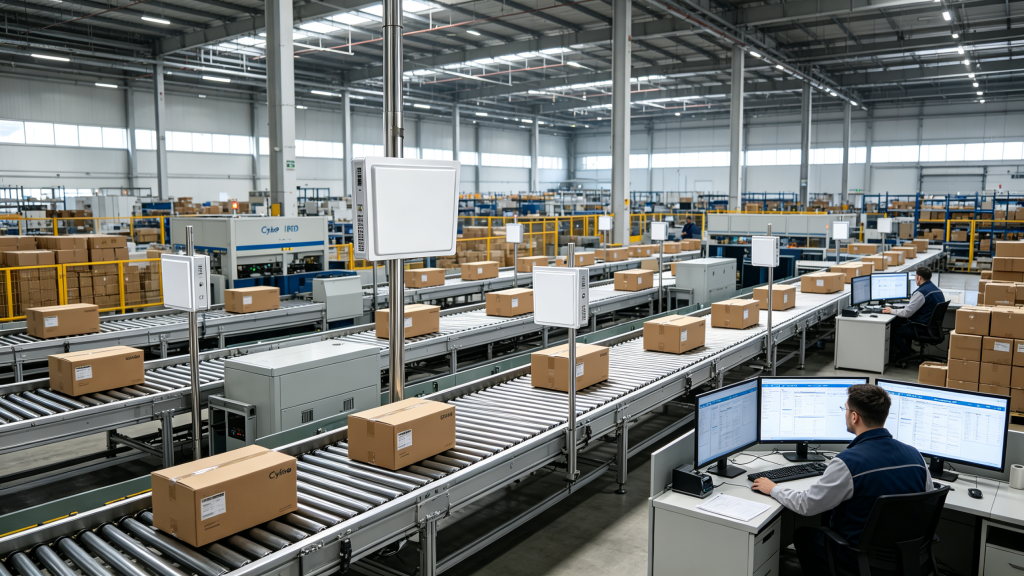
RFID tracking systems automatically monitor inventory movement throughout warehouse operations.
Benefits of RFID Tags Tracking
Higher Inventory Accuracy
Manual inventory counting is prone to mistakes.
RFID continuously verifies inventory positions without requiring workers to scan each item individually.
Typical Performance Comparison
Metric
Manual Process
RFID Tracking
Inventory Accuracy
70%-85%
95%-99%
Counting Time
Hours
Minutes
Human Error Risk
High
Low
Real-Time Visibility
Limited
Continuous
Actual results vary depending on deployment conditions.
Faster Asset Searches
One common issue in industrial environments is locating critical equipment.
RFID tracking eliminates much of the guesswork.
Maintenance teams can quickly identify:
Tool locations
Spare parts
Returnable containers
Mobile equipment
High-value assets
The operational impact is often larger than companies initially expect.
Improved Security and Accountability
RFID readers can generate alerts whenever assets move beyond approved zones.
This functionality is particularly valuable for:
Government vehicle fleets
Industrial equipment
IT assets
Medical devices
High-value inventory
RFID Inventory Tracking System Applications
Manufacturing
Manufacturers use RFID tracking to monitor:
Work-in-progress inventory
Production tools
Raw materials
Finished goods
Warehousing
Warehouse operators deploy RFID systems for:
Receiving automation
Inventory counting
Shipment verification
Order fulfillment
Logistics
Transportation companies track:
Pallets
Containers
Cargo movements
Returnable assets
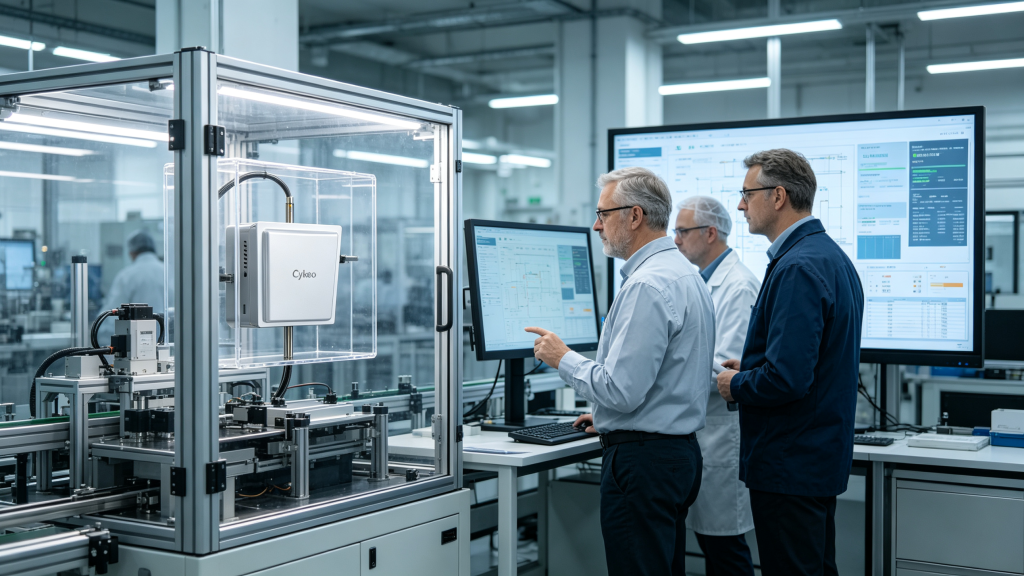
Manufacturing facilities use RFID tracking systems to monitor production assets automatically.
Expert Insight: What Most Companies Miss
The biggest tracking challenge is rarely RFID hardware.
In many projects, the real issue is process visibility.
Organizations often focus on reader specifications and read distance while overlooking workflow design. The most successful RFID deployments begin with identifying operational blind spots first, then selecting reader infrastructure that supports those business objectives.
That approach consistently delivers stronger ROI.
FAQ
Is RFID tracking better than barcode tracking?
For large-scale inventory management and automated asset visibility, RFID generally provides greater efficiency because tags can be read without direct line-of-sight scanning.
What industries use RFID tags tracking?
Common industries include:
Manufacturing
Logistics
Warehousing
Healthcare
Retail
Government
Transportation
How accurate is RFID tracking?
Well-designed RFID systems frequently achieve inventory accuracy levels above 95%, depending on environmental conditions and system design.
Can RFID track metal assets?
Yes. Specialized on-metal RFID tags are specifically engineered for metallic surfaces and industrial environments.
Is RFID suitable for real-time asset tracking?
Yes. RFID technology is widely used to monitor asset movement and location updates in real time.
Conclusion
RFID tags tracking provides organizations with real-time visibility, automated identification, and scalable asset monitoring capabilities. Whether managing warehouse inventory, production assets, tools, containers, or logistics operations, RFID technology helps reduce manual work, improve accuracy, and strengthen operational control. As digital transformation accelerates across industries, investing in a reliable rfid tags tracking solution remains one of the most effective ways to build smarter, data-driven operations.
Need to track tools across sprawling construction sites? Discover rugged UHF RFID readers that survive dust, rain, and chaos while scanning up to 100 ft.
Are long-range RFID readers secure? Learn encryption methods, anti-eavesdropping tactics, and how Cykeo’s solutions protect sensitive data across industries.
Rfid School Attendance System, with its advanced technology and innovative management approach, is rapidly becoming a preferred choice in the education sector.
 Cykeo RFID IoT Solution Products R&D Manufacturer