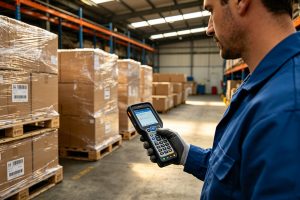
RFID tracking manufacturing uses RFID tags, readers, and software to automatically identify, locate, and track materials, components, tools, work-in-progress inventory, and finished products throughout the manufacturing process. It delivers real-time visibility, improves traceability, reduces manual errors, and increases operational efficiency.
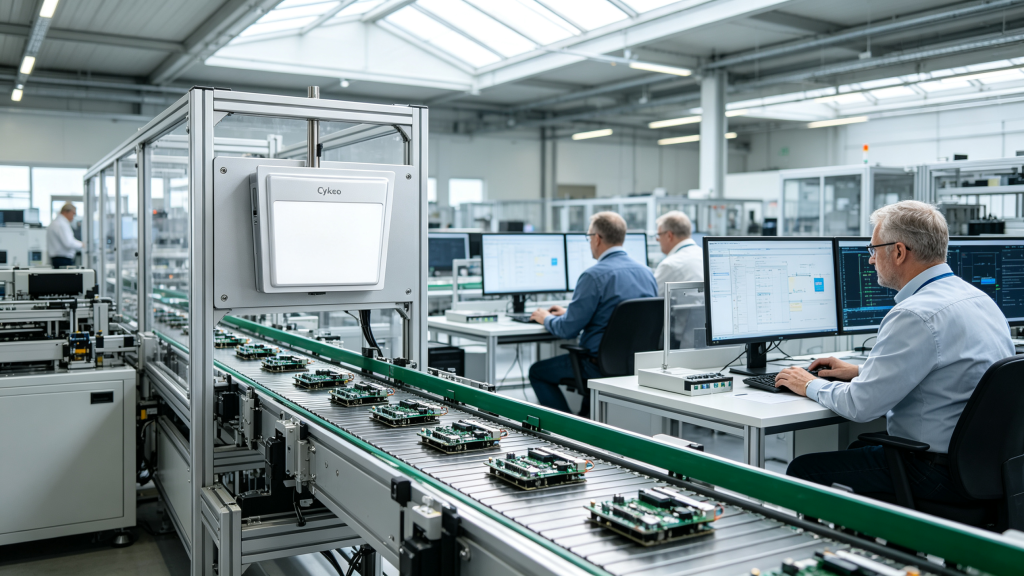
In practical factory environments, RFID tracking manufacturing is no longer limited to inventory counting. Modern manufacturers deploy RFID systems to monitor production flow, automate material movement records, verify assembly processes, and support Industry 4.0 initiatives.
At Cykeo, our engineering team has participated in RFID manufacturing projects involving automotive components, industrial equipment, warehouse logistics, and production-line automation. One recurring observation stands out: the biggest value rarely comes from faster inventory counts. It comes from eliminating uncertainty between production stages.
Author Experience & Industry Background
This article was reviewed by the Cykeo RFID engineering team, whose members have worked on RFID reader modules, industrial RFID readers, manufacturing asset tracking systems, and warehouse automation deployments.
During one European manufacturing project, operators spent nearly 40 minutes per shift manually verifying pallet movement between production zones. After RFID automation was deployed, the movement records became available instantly through the MES platform. The reduction in manual intervention created a larger productivity gain than management initially expected.
That experience mirrors broader industry findings.
According to the U.S. National Institute of Standards and Technology (NIST), manufacturers continue to prioritize digital traceability and real-time production visibility as key drivers of operational efficiency.
RFID Tracking Manufacturing Across Production Stages
Raw Material Receiving
Incoming materials are tagged and automatically recorded when entering the facility.
Benefits include:
Automated receiving verification
Reduced paperwork
Faster inventory updates
Supplier traceability
Work-In-Process (WIP) Tracking
WIP tracking is where RFID often creates the highest ROI.
RFID readers installed at production checkpoints automatically capture:
Production start times
Process completion events
Assembly verification records
Operator interactions
This creates a digital history for every item moving through production.
Finished Goods Tracking
Once products leave the production line, RFID enables:
Automated packaging verification
Shipment validation
Warehouse location tracking
Outbound logistics visibility
RFID technology automatically records product movement across manufacturing stations.
Why Manufacturers Are Investing in RFID
Improved Inventory Accuracy
According to research published by Auburn University’s RFID Lab, RFID-based inventory systems can achieve inventory accuracy levels above 95%, significantly outperforming many manual inventory processes.
Faster Data Collection
Unlike barcode systems that require line-of-sight scanning, RFID readers can identify multiple tagged items simultaneously.
Advantages include:
Process
Barcode
RFID
Line of Sight Required
Yes
No
Multiple Item Reading
Limited
Yes
Automation Capability
Moderate
High
Real-Time Tracking
Limited
Excellent
Enhanced Traceability
Manufacturers increasingly face customer and regulatory demands for complete product genealogy.
RFID tracking manufacturing helps maintain:
Batch history
Component traceability
Production timestamps
Quality inspection records
RFID Production Tracking
What We Learned From Real Deployments
One misconception is that read range determines project success.
In reality, successful RFID tracking manufacturing deployments depend more on:
Reader placement
Tag selection
Process mapping
Data integration
We have seen projects fail with excellent hardware but poor workflow design.
Conversely, carefully planned RFID deployments often achieve impressive results even with moderate infrastructure investments.
Real-time production visibility enables faster decision-making.
Key Components of an RFID Tracking Manufacturing System
RFID Tags
Attached to:
Raw materials
Containers
Pallets
Work orders
Finished products
RFID Reader Modules
Reader modules serve as the core data capture engine.
Industrial-grade RFID reader modules can be integrated into:
Production equipment
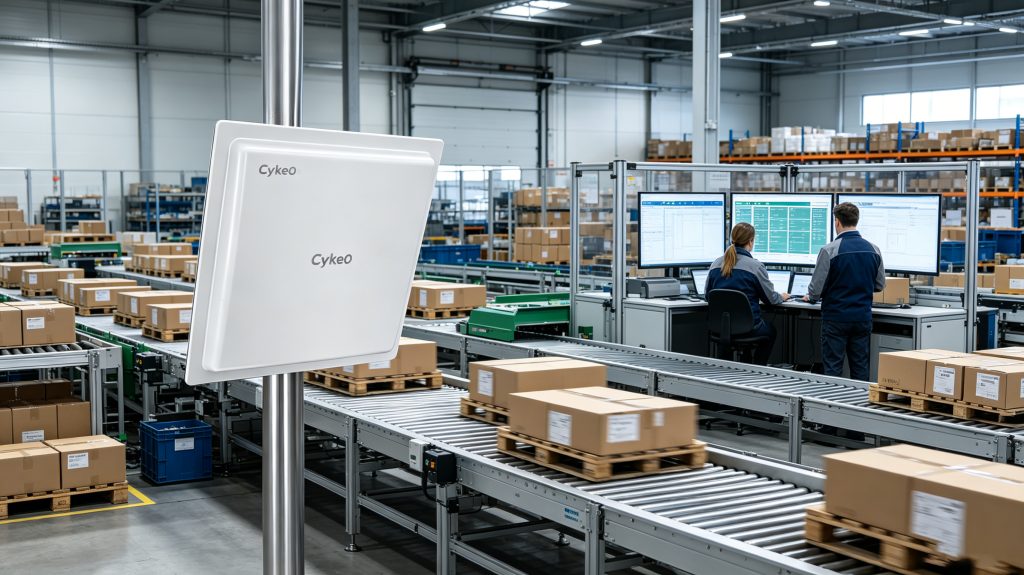
Conveyor systems
Smart workstations
Automated warehouses
Middleware Software
Middleware converts RFID reads into actionable manufacturing events.
Examples include:
Material received
Product assembled
Process completed
Shipment dispatched
Manufacturing Asset Tracking
Beyond Products
Many factories now use RFID to track:
Tools
Test equipment
Returnable transport items
Maintenance assets
This reduces losses while improving equipment utilization.
The Manufacturing Institute has repeatedly highlighted digital technologies as critical enablers for future manufacturing competitiveness.
RFID creates visibility from production through warehouse fulfillment.
Frequently Asked Questions
Does RFID tracking manufacturing work in metal-rich environments?
Yes. Specialized on-metal RFID tags and industrial reader configurations are commonly used in automotive, machinery, and heavy manufacturing environments.
Can RFID replace barcode systems?
Many manufacturers operate hybrid systems. RFID often complements existing barcode infrastructure rather than replacing it entirely.
What is the biggest benefit of RFID tracking manufacturing?
Real-time visibility. Knowing where materials, assets, and products are at any moment enables faster decisions and fewer operational delays.
Is RFID suitable for small manufacturers?
Yes. Modern RFID systems can scale from a single production line to multi-factory deployments.
Conclusion
RFID tracking manufacturing provides manufacturers with accurate, automated, and real-time visibility across production operations. From raw material receiving to finished goods shipment, RFID technology helps improve traceability, inventory accuracy, and operational efficiency. As digital manufacturing continues to evolve, RFID tracking manufacturing remains one of the most practical technologies for achieving smarter, more connected factory operations.
Can an RFID reader read multiple tags at once? Absolutely—UHF readers handle 500–750+ tags per second. But there’s a catch. Learn about anti-collision, real-world limits, and what kills read rates.
Learn how to test rfid reader performance with real field methods, troubleshooting tips, and CYKEO technician insights to verify range, stability, and accuracy.
Cykeo, a leading IoT hardware solutions provider, announces the grand opening of its Shenzhen smart factory, expanding its national production network to 25,000㎡. Explore how Cykeo leverages RFID technology, 200+ patents, and global certification...
Looking for an RFID handheld reader writer for warehouse inventory? Learn how to choose the right device based on range, speed, durability, and system compatibility.
 Cykeo RFID IoT Solution Products R&D Manufacturer