 Cykeo RFID IoT Solution Products R&D Manufacturer

How Hard Is It to Read RFID Signals? Real-World Challenges Explained
230Wondering "how hard is it to read RFID signals"? Discover real challenges like interference from metal, water, and noise. Learn how to overcome them with CYKEO.
MoreAll RFID Product
A few years ago, I walked through a distribution warehouse in northern Germany where operators were still scanning barcodes one by one. Forklifts paused every few meters. Inventory mismatches were so common that staff printed adjustment sheets every afternoon.
Three months later, after deploying a UHF RFID inventory control tag system, cycle counting time dropped from nearly two days to under three hours. What changed wasn’t only speed. The warehouse finally trusted its own data.
That’s where modern RFID inventory systems make the biggest difference.
An inventory control tag is an RFID-enabled label or hard tag attached to products, cartons, pallets, tools, or industrial assets. Unlike barcodes, RFID tags do not require line-of-sight scanning. Multiple items can be identified simultaneously.
Cykeo UHF RFID inventory control tags support:
In practical deployments, fixed readers installed at warehouse gates continuously capture inventory movement without interrupting operations.
That detail matters more than most managers expect.
Traditional barcode systems process items sequentially. UHF RFID reads dozens or even hundreds of tags simultaneously.
According to GS1 Official Website, RFID-based inventory systems can achieve inventory accuracy levels above 95% in retail and logistics operations.
On dense shelving systems, Cykeo engineers often observe read rates exceeding 99% when antenna placement and tag orientation are optimized correctly.
One logistics client in Southeast Asia reduced weekly manual inventory labor by nearly 60% after migrating from barcode scanning to RFID inventory control tags.
Workers stopped carrying paper lists. Instead, inventory data updated automatically as pallets passed through dock doors.
There was less shouting across aisles too. Funny how technology sometimes fixes workflow stress more than workflow itself.
UHF RFID inventory systems allow managers to monitor:
| Function | Traditional Barcode | UHF RFID Inventory Control Tag |
|---|---|---|
| Batch Reading | No | Yes |
| Line-of-Sight Required | Yes | No |
| Real-Time Tracking | Limited | Yes |
| Automated Counting | Low Efficiency | High Efficiency |
| Multi-Tag Detection | No | Yes |
Inventory control tags are widely deployed in:
The most effective deployments usually combine:
Heavy equipment, returnable transport items, and maintenance tools often disappear in large facilities.
According to a report from Deloitte Insights, manufacturers lose significant operational efficiency due to missing or misplaced assets during production and maintenance workflows.
RFID inventory control tags reduce those blind spots dramatically
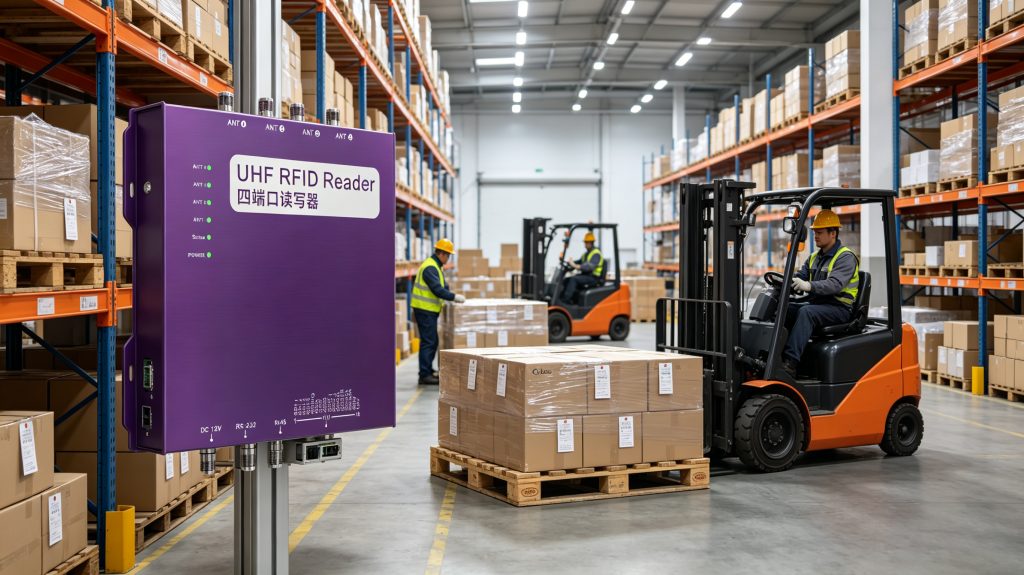
Cykeo focuses heavily on stable UHF identification performance instead of theoretical reading distance marketing.
That distinction matters inside metal-heavy environments.
Cykeo inventory control tag systems support:
In one electronics warehouse project, engineers deliberately lowered rfid antenna power near packing stations to reduce cross-zone interference.
Counterintuitive move.
But read accuracy improved immediately.
That kind of field adjustment rarely appears in glossy brochures.
| Hardware | Function |
| UHF RFID Tags | Asset identification |
| Fixed RFID Reader | Automatic portal reading |
| Desktop RFID Reader | Tag registration |
| RFID Antenna | Zone coverage |
| Inventory Software | Data analysis and tracking |
Cykeo desktop RFID readers support:
This becomes especially useful during tag registration or archive management.
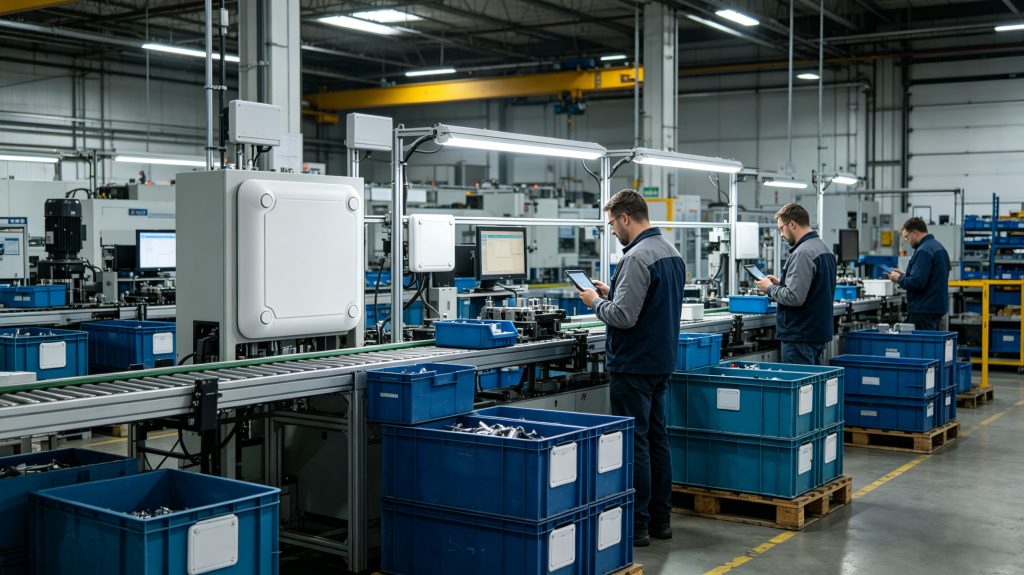
Well-configured UHF RFID systems commonly achieve over 95% inventory accuracy, depending on environmental interference and tag placement.
Yes. Specialized anti-metal RFID tags are designed specifically for metallic environments and industrial equipment.
Depending on antenna gain and environment, UHF RFID systems can read from several centimeters up to more than 10 meters.
Most modern systems support API, SDK, serial communication, and ERP/WMS integration.
Inventory problems rarely begin with missing products.
They usually begin with delayed visibility.
An effective inventory control tag system changes that quietly in the background. Shelves become traceable. Movements become measurable. Staff stop guessing.
And once a warehouse trusts its own inventory data again, operational decisions become much faster.
That’s the real advantage of UHF RFID inventory control systems.
RFID Industry Writer | IoT & Asset Tracking Analyst
James writes about RFID technology, asset tracking, and the practical challenges of digital transformation across warehousing, retail, manufacturing, and logistics.
His work focuses on how RFID is applied in real-world operations—improving inventory visibility, automating workflows, and helping businesses manage assets with greater accuracy and efficiency.
He regularly covers topics including UHF RFID, smart cabinets, RFID portals, tool tracking, warehouse automation, and industrial IoT trends..

Wondering "how hard is it to read RFID signals"? Discover real challenges like interference from metal, water, and noise. Learn how to overcome them with CYKEO.
More
Wondering "how can I read 1000 RFID tags"? Discover tunnel systems, anti-collision optimization, hardware selection, and real-world strategies for bulk RFID reading with CYKEO.
More
When selecting an RFID tag supplier, quality, technical support, customization capabilities, and industry experience play a crucial role. This article breaks down five essential criteria to help businesses evaluate and choose a reliable RFID tag s...
More
Discover the top software tools to program RFID tags, including encoding, data management, and integration solutions. Learn how Cykeo simplifies RFID development.
More