 Cykeo RFID IoT Solution Products R&D Manufacturer
Can You Use RFID for Forklift Tracking?
168can you use rfid for forklift tracking? Learn how UHF RFID identifies forklifts, records movement events, improves fleet visibility, and supports smarter warehouse operations with Cykeo.
MoreAll RFID Product
RFID jobs use UHF RFID systems to automate tool borrowing, worker authorization, and inventory tracking, reducing manual errors while improving operational speed and accountability in industrial environments.
I spent part of last winter inside a heavy-equipment maintenance workshop where over 2,000 calibrated tools moved between shifts every day. Before RFID deployment, supervisors relied on handwritten sign-out sheets taped beside a metal cabinet. Half the entries were incomplete. Torque wrenches disappeared weekly. Nobody trusted the inventory count.
Three weeks after deploying the Cykeo RFID workstation, the atmosphere changed noticeably. Technicians stopped queuing for manual registration. Managers stopped calling employees at midnight asking who borrowed a missing thermal scanner.
That difference is exactly why interest around rfid jobs has accelerated across manufacturing, aviation maintenance, energy plants, and industrial service operations.
In practical terms, RFID is no longer just a warehouse technology. It has become a workforce efficiency tool.
According to a report from McKinsey & Company, industrial digitalization and IoT-based automation can improve operational productivity by 15–30% in maintenance-heavy environments. RFID contributes directly by eliminating repetitive registration and manual counting.
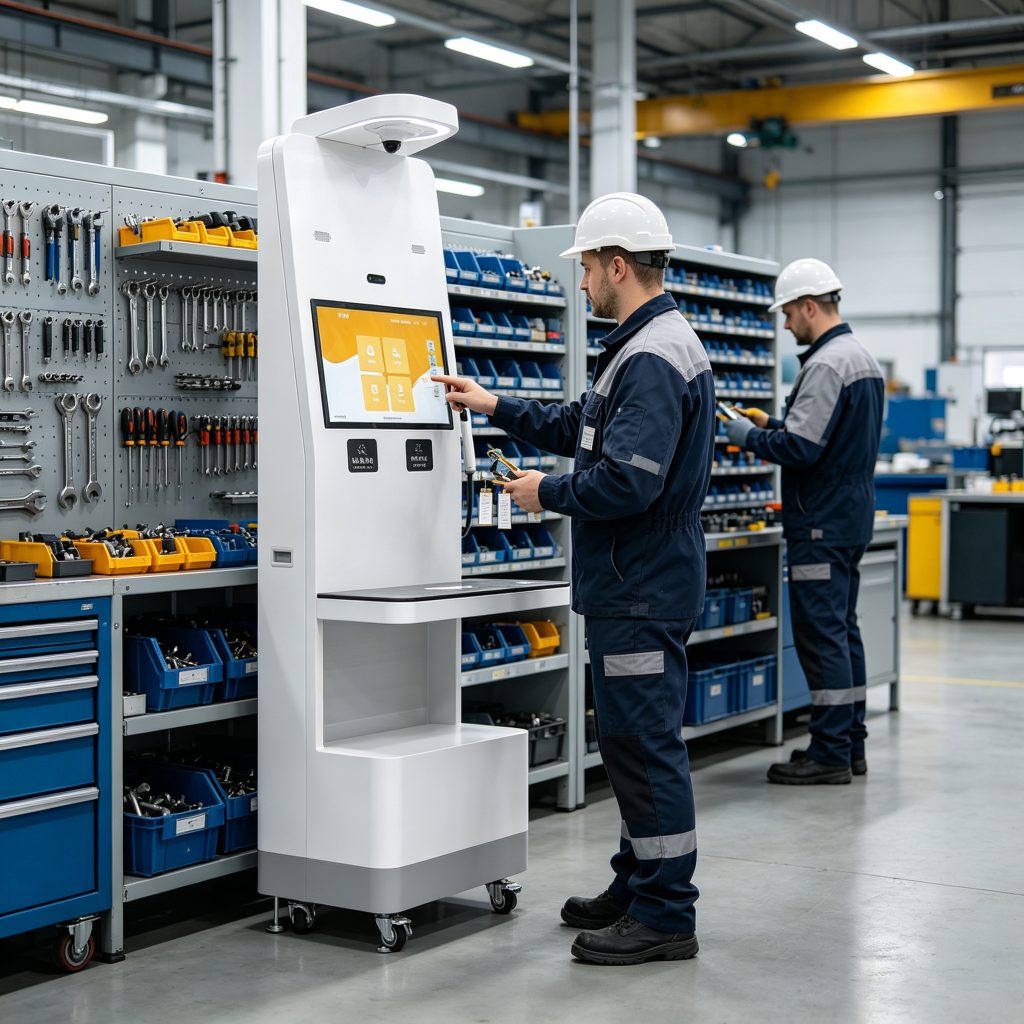
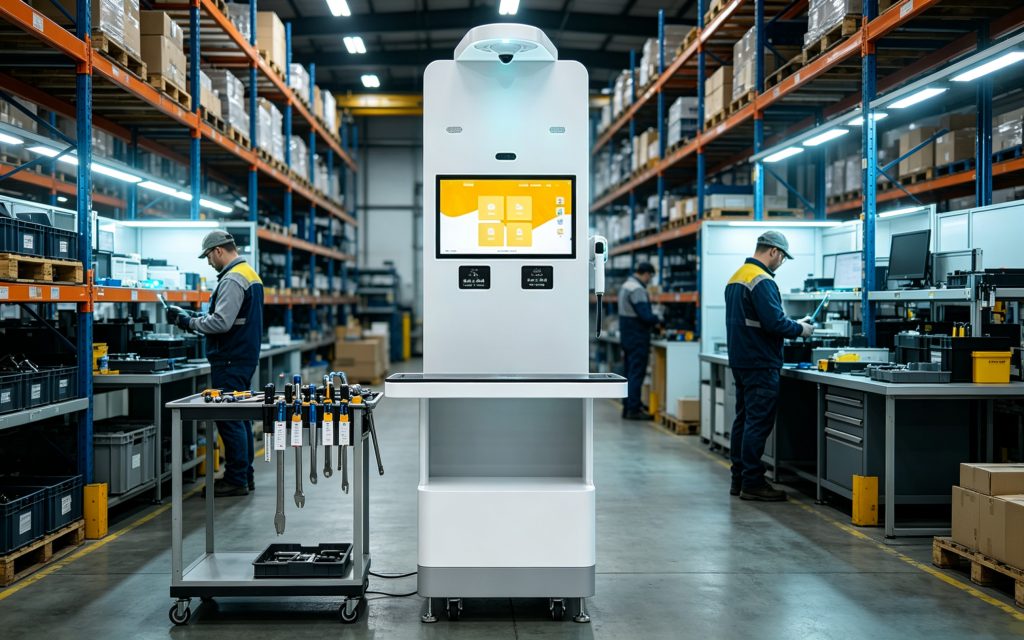
Cykeo’s vertical RFID workstation was designed specifically for these operational bottlenecks.
In one automotive parts factory I visited, workers previously spent roughly 12 minutes per shift waiting for tool issuance. After RFID automation, average retrieval time dropped below 90 seconds.
That sounds small until multiplied across 180 technicians and three daily shifts.
Traditional barcode systems fail in harsh industrial conditions. Oil stains, scratched labels, gloves, and low visibility all slow scanning speed.
UHF RFID behaves differently.
Instead of scanning one item at a time, the workstation identifies multiple tagged tools simultaneously through radio frequency recognition. No line-of-sight alignment is required.
| Function | Traditional Process | RFID Process |
|---|---|---|
| Tool borrowing | Manual logbook | Automatic identification |
| User tracking | Supervisor confirmation | Permission-based authentication |
| Inventory count | 20–40 minutes | Seconds |
| Missing tool investigation | Manual review | Real-time history |
| Shift handover | Paper signatures | System records |
According to GS1 US, RFID inventory accuracy can exceed 95%, significantly outperforming manual inventory workflows.
That accuracy becomes critical in aviation, medical equipment maintenance, and energy infrastructure environments where misplaced tools create safety risks rather than simple inconvenience.
The most interesting thing I noticed wasn’t the speed.
It was employee behavior.
Once every transaction became traceable, workers naturally returned equipment faster. Not because management forced them to — because the system quietly introduced accountability without interrupting workflow.
One technician joked:
“Now the cabinet remembers better than I do.”
That comment stayed with me because it reflects the real shift happening in industrial RFID adoption. Modern RFID systems are becoming invisible infrastructure.
Not flashy. Just dependable.
Factories use RFID workstations to manage calibrated instruments, repair kits, and shared production tools.
RFID reduces missing insulated tools and improves maintenance traceability during field operations.
Foreign Object Debris (FOD) prevention programs increasingly rely on RFID inventory validation before aircraft release.
RFID stations accelerate tool issue procedures during high-volume shift changes.
According to Deloitte Insights, connected industrial technologies are becoming a central investment area for operational resilience and workforce optimization.
A lot of RFID hardware looks technically similar on paper. Real-world usability is where differences appear.
Cykeo focused heavily on operational simplicity.
One detail I appreciated during testing: the interface was intentionally simplified. Large icons. Minimal nested menus. Operators understood it without training manuals.
That matters more than spec sheets sometimes.
RFID jobs are mainly used for automated tracking, workforce accountability, inventory control, and asset management in industrial environments.
UHF RFID supports longer read ranges, faster multi-tag identification, and non-line-of-sight recognition, making it ideal for high-volume industrial workflows.
Yes. RFID automation reduces manual registration, inventory counting, and supervision time, especially in factories and maintenance departments.
Well-designed UHF RFID systems commonly achieve inventory accuracy above 95%, depending on tag placement and environmental conditions.
can you use rfid for forklift tracking? Learn how UHF RFID identifies forklifts, records movement events, improves fleet visibility, and supports smarter warehouse operations with Cykeo.
More
how do rfid labels work? Discover how RFID labels store identity data, communicate wirelessly, and support fast inventory, asset tracking, retail, and logistics operations.
More
RFID vs GPS: Discover key differences in range, cost & accuracy. Learn when to use each for assets, vehicles, or inventory. Make informed decisions.
More
Learn how does rfid work in a warehouse to automate receiving, inventory counts, picking, shipping, and asset tracking with faster, more accurate data.
More