 Cykeo RFID IoT Solution Products R&D Manufacturer
RFID Tool Cabinet Price Guide: What Affects the Cost in 2026?
143How much does an RFID tool cabinet cost? Discover key pricing factors, cost ranges, and how to choose the right RFID tool tracking system for your budget.
MoreAll RFID Product
A UHF RFID tag label is a passive electronic label that stores EPC data and enables long-range, multi-tag identification for inventory, logistics, and asset tracking systems. In real industrial environments, it replaces barcode dependence and allows bulk reading of hundreds of items in seconds.
In field deployments across warehouse racks, metal toolboxes, and logistics pallets, I’ve seen the uhf rfid tag label become less of a “label upgrade” and more of a shift in how operations think about visibility—items stop being manually counted and start being continuously detected.
Most inventory problems are not about missing goods—they are about delayed awareness.
A UHF RFID tag label changes that timing gap.
Instead of scanning items one by one, operators move through aisles while tags respond automatically. Even stacked pallets or concealed assets can be identified without direct line-of-sight.
According to GS1 EPCglobal standards, EPC-enabled RFID systems provide globally unique identification for supply chain traceability.
The RAIN RFID Alliance notes that billions of passive RFID tags are now produced annually, driven largely by logistics, retail, and industrial automation demand.
These numbers reflect a shift: RFID is no longer experimental—it is infrastructure.
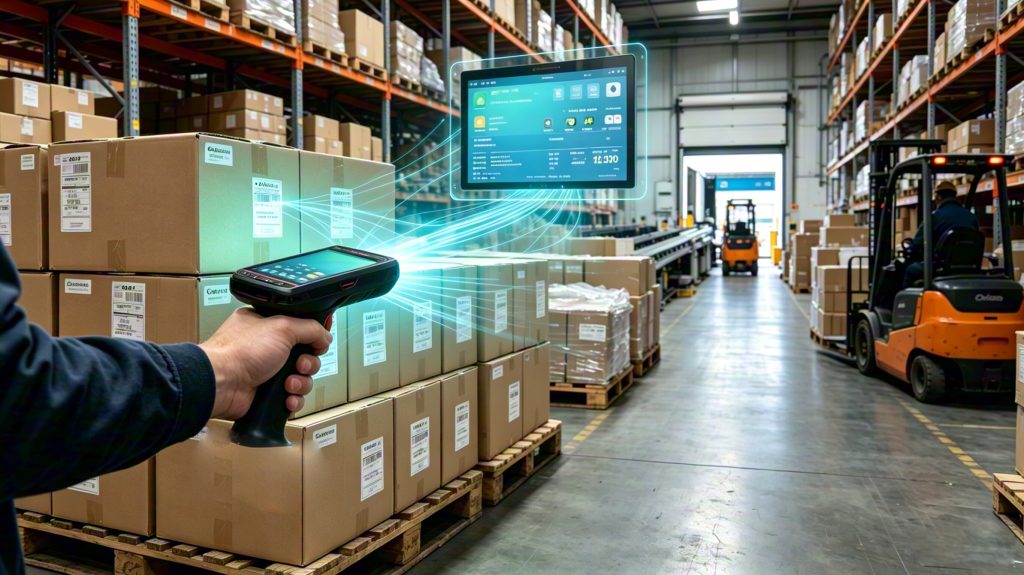
A UHF RFID tag label is not just a sticker—it is a layered RF system.
Typical structure includes:
| Component | Function |
|---|---|
| RFID Chip | Stores EPC identifier |
| RFID Antenna | Enables RF communication |
| Substrate | Supports signal stability |
| Adhesive | Fixes label on surface |
In real installations, I’ve noticed that antenna geometry matters more than chip specification. A poorly tuned label fails faster in metal-heavy environments than in clean cardboard logistics flows.
Laboratory performance numbers often differ from warehouse reality.
For example:
The Auburn University RFID Lab has repeatedly demonstrated that real-world read rates vary significantly based on tag placement and environmental interference, often exceeding lab variance expectations.
This is where deployment experience matters more than datasheets.
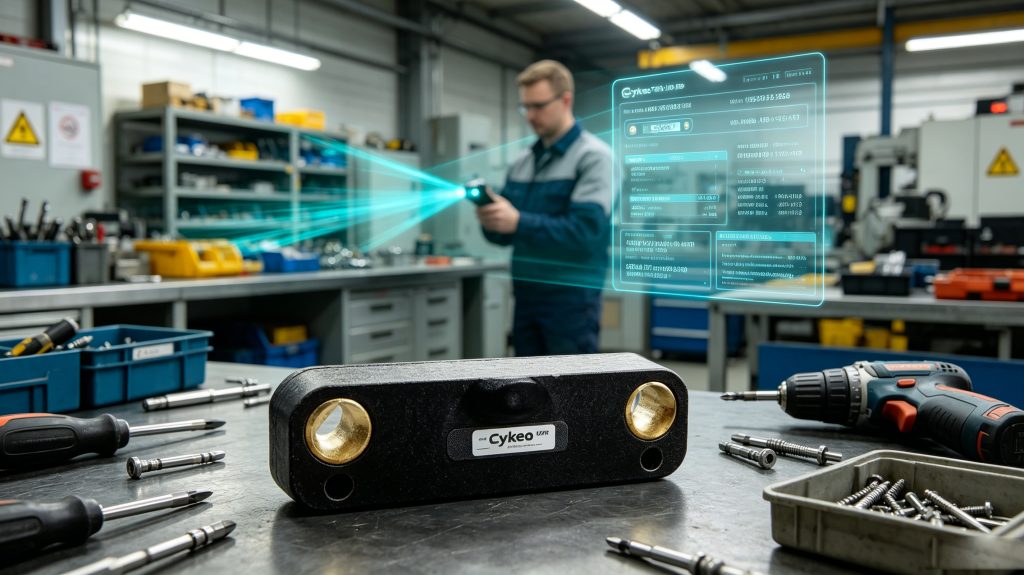
High-volume parcel flow is where RFID replaces repetitive scanning labor.
Tags move faster than people can scan.
Work-in-process tracking becomes continuous rather than checkpoint-based.
Store-level stock accuracy improves when items are detected in bulk rather than manual audits.
One of the most practical use cases I’ve observed—especially in maintenance environments where shared tools disappear across shifts.
A single scan session can reveal missing or misplaced equipment in seconds.
In deployment work, one pattern repeats:
Teams overestimate tag performance and underestimate environment complexity.
A UHF RFID tag label that performs well on cardboard may underperform near:
This is why installation tuning often matters more than tag selection alone.
Small adjustments in placement—sometimes just a few centimeters—can significantly change read reliability.
It is used for automatic identification and tracking of assets, inventory, and logistics items using radio frequency signals instead of manual barcode scanning.
Most passive UHF RFID tag labels last 5–10 years depending on environmental exposure, adhesive quality, and mechanical wear.
Yes, but only when using specialized on-metal RFID tag designs that include insulation layers to reduce RF interference.
Generally no. Passive RFID labels are cost-optimized for single-item lifecycle tracking rather than reuse, though some industrial hard tags can be reused.
Cykeo develops RFID tag label solutions designed for real industrial environments—not controlled lab conditions.
Our focus is consistency: stable reads in warehouses, predictable performance on mixed materials, and integration with UHF RFID readers and handheld scanners.
Across deployments in logistics and manufacturing environments, the uhf rfid tag label becomes most valuable when it disappears into the workflow—quietly enabling visibility without adding operational friction.

How much does an RFID tool cabinet cost? Discover key pricing factors, cost ranges, and how to choose the right RFID tool tracking system for your budget.
More
Learn how handheld rfid writer works with UHF RFID tag systems for long-range tracking, fast inventory, and reliable asset visibility in real operations.
More
RFID implementation should start with the business process, then connect tags, readers, controlled read zones, software, and measurable pilot testing.
More
A practical look at UHF RFID reader deployment at warehouse gates. Covers real installation issues, integration delays, and what system integrators and wholesale buyers usually discover only after testing on-site.
More