 Cykeo RFID IoT Solution Products R&D Manufacturer
How to Secure RFID Systems from Data Breaches and Hacking?
1048Protect your RFID systems from cyber threats with encryption, access controls, and compliance tactics. Learn how Cykeo’s solutions safeguard sensitive data in critical industries.
MoreAll RFID Product
An RFID tag can look like a paper label, plastic card, hard ABS enclosure, anti-metal tag, wristband, or embedded chip, depending on its application. Although appearances vary widely, every RFID tag contains an integrated circuit (IC) and an antenna that communicate wirelessly with RFID reader.
During years of supporting RFID deployments in warehouses, manufacturing plants, utility companies, and maintenance workshops, one question consistently comes up before discussing specifications: “What does RFID tag look like?” The answer is surprisingly broad because the appearance is determined by where the tag will be used—not by the RFID technology itself.
Unlike barcodes, RFID tags are designed around their operating environment.
A warehouse pallet needs a flexible adhesive label.
A metal machine requires a rugged anti-metal housing.
A hospital wristband must remain comfortable while surviving cleaning chemicals.
That’s why two RFID tags using the same EPC Gen2 chip may look completely different.
According to GS1, Electronic Product Code (EPC) standards allow RFID tags from different manufacturers to operate within the same identification framework, making appearance independent of interoperability.
The RAIN Alliance reports that billions of passive UHF RFID tags are shipped globally every year, supporting retail, logistics, aviation, healthcare, manufacturing, and industrial automation.
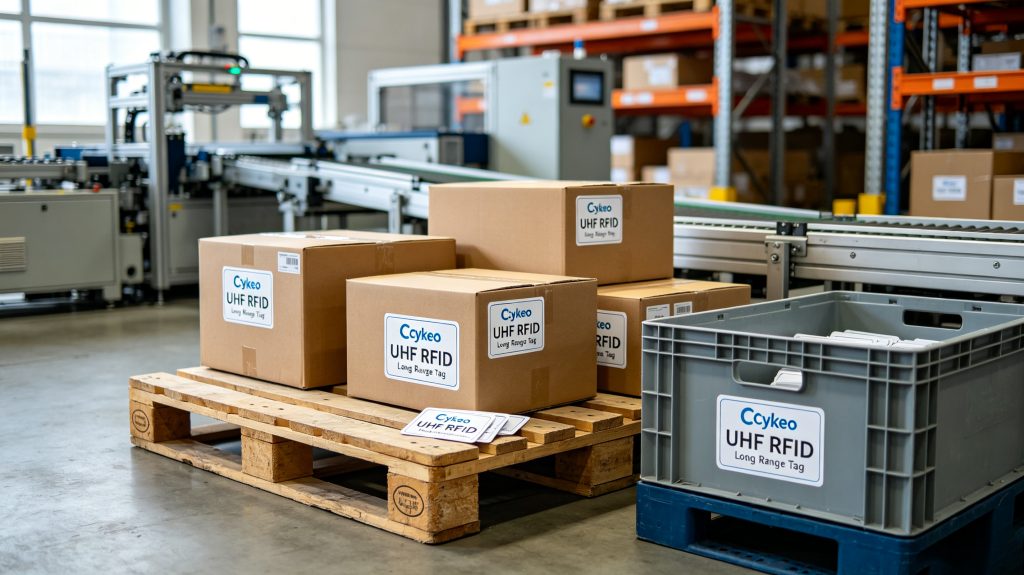
The most familiar RFID tag resembles a shipping label.
Inside the label is an etched aluminum antenna connected to a tiny silicon chip. From the outside, it often looks no different from a normal barcode sticker.
Typical applications include:
These resemble employee ID cards or hotel key cards.
The RFID antenna is embedded between plastic layers, protecting the electronics from daily wear.
Common applications include:
Hard tags are usually manufactured from ABS, PPS, or engineering plastics.
Unlike paper labels, they withstand vibration, impact, oil, UV exposure, and outdoor environments.
Typical industries include:
One misconception I frequently encounter is that every RFID tag works on metal.
It doesn’t.
Standard labels often lose performance on conductive surfaces. On-metal RFID tags include insulating layers specifically engineered to maintain RF performance when attached directly to steel equipment or machinery.
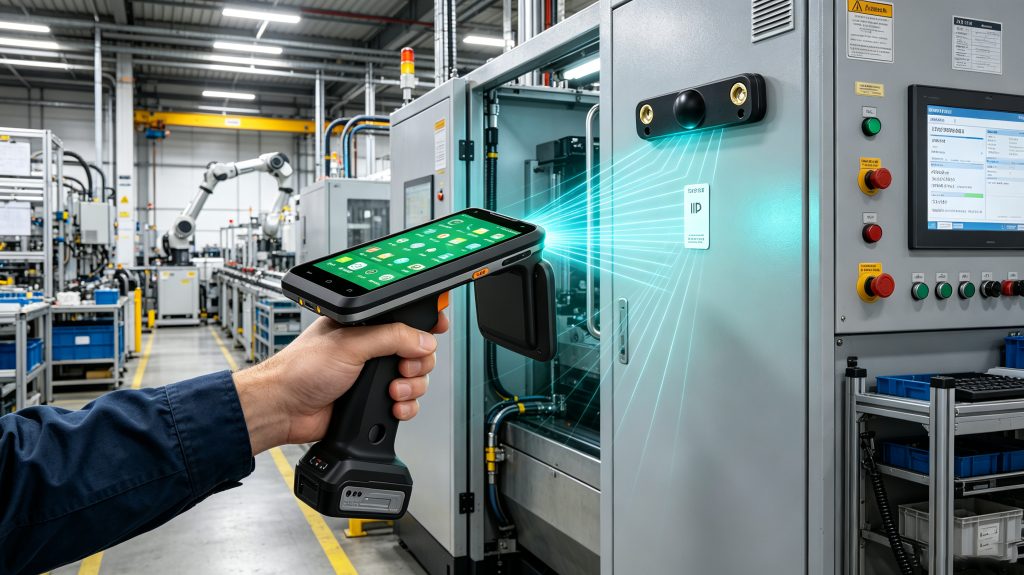
Regardless of appearance, every RFID tag contains the same fundamental components.
| Component | Purpose |
|---|---|
| RFID IC Chip | Stores EPC and user memory |
| Antenna | Receives and transmits RF signals |
| Substrate | Supports antenna structure |
| Protective Layer | Protects against environmental damage |
During product inspections, I’ve occasionally peeled damaged industrial labels apart after years in service. The outer surface may appear worn, but the internal antenna and chip often remain fully operational. That durability is one reason passive RFID has become standard in long-life asset tracking.
Not directly.
Performance depends much more on:
Research published by the Auburn University RFID Lab demonstrates that placement and surrounding materials can influence read performance more significantly than the visible shape of the tag itself.
This explains why experienced RFID engineers spend considerable time validating tag placement before full deployment.
People often expect RFID tags to look “high-tech.”
In reality, the most advanced RFID tag is frequently the least noticeable.
I’ve visited warehouses where millions of products carried RFID labels without employees realizing they were anything more than ordinary stickers.
That simplicity is intentional.
The technology is hidden because reliability—not appearance—is what matters.
Once deployed correctly, the RFID tag quietly becomes part of everyday operations, providing continuous visibility without changing established workflows.
It may look like a barcode label, plastic card, rugged industrial tag, cable tie tag, wristband, or embedded electronic component depending on its intended application.
Usually not. The chip is extremely small and sealed inside the label or housing together with the antenna.
Different environments require different materials, sizes, and antenna designs to achieve reliable reading performance.
Many RFID labels display EPC or barcode printing, but the embedded RFID electronics are generally invisible without specialized equipment or by opening the tag.
Cykeo develops RFID tag solutions for industrial environments where durability, stable reading performance, and long service life matter more than appearance alone.
From adhesive logistics labels to rugged anti-metal asset tags, our engineering team has helped customers deploy RFID across manufacturing, warehousing, utilities, healthcare, and infrastructure projects. Every deployment reinforces the same lesson: when someone asks what does RFID tag look like, the better question is what the tag needs to survive. The answer determines its shape, material, and long-term performance far more than aesthetics ever could.

Protect your RFID systems from cyber threats with encryption, access controls, and compliance tactics. Learn how Cykeo’s solutions safeguard sensitive data in critical industries.
More
Learn what is rfid technology, how RFID systems work, and why industries use RFID for tracking, inventory, and automation with Cykeo solutions.
More
Can an Android phone read an RFID tag? Yes—but only 13.56 MHz HF/NFC tags within 1-4 cm. For UHF warehouse tags? Absolutely not. Here’s exactly what works.
More
Discover how RFID technology enhances agricultural traceability, reduces waste, and improves compliance. Learn how farms and food brands are leveraging RFID for safer, sustainable food supply chains.
More