 Cykeo RFID IoT Solution Products R&D Manufacturer
Can Aluminum Foil Block RFID: How Metal Shielding Affects RFID Signals
195Can aluminum foil block RFID? Learn how metal shielding affects RFID signals, protection methods, and professional RFID insights from Cykeo engineers.
MoreAll RFID Product
UHF RFID labels are passive RFID tags designed for long-range, contactless identification of assets, inventory, and products. They enable automatic bulk reading, improve inventory accuracy, accelerate warehouse operations, and provide real-time visibility without requiring line-of-sight scanning, making them ideal for logistics, manufacturing, retail, healthcare, and industrial asset management.
For more than a decade, I’ve participated in RFID deployment projects involving warehouses, manufacturing plants, equipment management systems, and smart logistics. One lesson appears repeatedly regardless of industry: the biggest improvement isn’t faster scanning—it is eliminating information gaps. When every pallet, tool, carton, or reusable container continuously reports its movement, inventory stops becoming an estimate and becomes operational intelligence.
That is exactly where UHF RFID labels outperform traditional identification technologies.
UHF RFID labels are adhesive labels containing an RFID inlay and antenna operating in the Ultra High Frequency spectrum (typically 860–960 MHz). Most industrial labels comply with:
Unlike barcode labels, RFID labels communicate using radio waves instead of optical scanning.
According to GS1, EPC standards enable globally unique identification of products throughout the supply chain, making RFID one of the most scalable automatic identification technologies available.
One warehouse project still stands out.
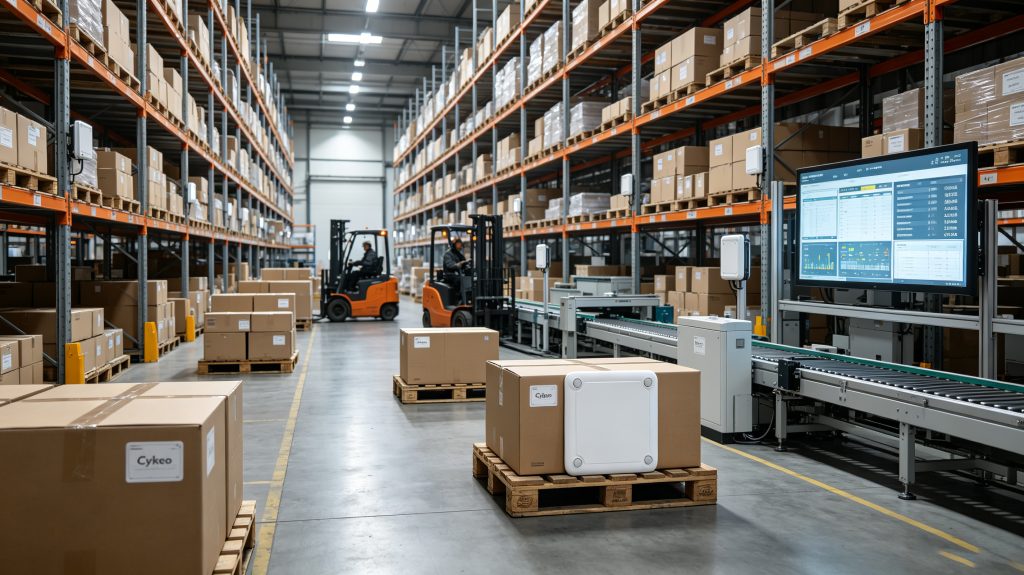
Instead of stopping every forklift to scan individual cartons, operators simply drove through RFID portals.
Within seconds, dozens of tagged cartons appeared automatically inside the warehouse management system.
Nobody aimed a scanner.
Nobody opened a pallet.
The process simply happened.
That difference becomes enormous when processing thousands of shipments daily.
Unlike barcode systems that only record an item when someone actively scans it, UHF RFID labels automatically generate movement events:
Every movement becomes digital evidence.
| Feature | UHF RFID Labels | Barcode Labels |
|---|---|---|
| Line-of-sight required | No | Yes |
| Multiple tags simultaneously | Yes | No |
| Read distance | Several meters (depending on reader and environment) | Few centimeters |
| Automatic inventory | Yes | No |
| Contactless operation | Yes | No |
According to RAIN Alliance, billions of passive UHF RFID chips are now deployed annually across retail, logistics, aviation, manufacturing, and healthcare because they dramatically increase supply chain visibility.
Typical applications include:
Inventory counting that previously required several workers for hours can often be completed significantly faster using fixed RFID readers.
Manufacturers attach RFID labels to:
Production managers gain real-time visibility into work-in-progress inventory.
Hospitals increasingly deploy RFID labels for:
The U.S. FDA continues promoting Unique Device Identification (UDI), encouraging automatic identification technologies that improve medical device traceability.
During one factory implementation, operators believed they mainly needed faster inventory.
After installation, another issue surfaced.
Nearly 18% of production delays weren’t caused by missing materials—they were caused by employees searching for them.
Once every container carried a UHF RFID label, locating inventory became nearly instantaneous.
Unexpectedly, productivity improved more than inventory accuracy.
That wasn’t in the original project plan.
It emerged only after real operational data became visible.
Cykeo develops RFID identification solutions designed for demanding industrial environments.
Combined with Cykeo fixed readers, handheld readers, desktop encoders, and intelligent cabinets, UHF RFID labels support:
Benefits include:
Different materials require different RFID antennas.
Examples include:
From practical experience, reader positioning often affects performance more than antenna power.
Testing several mounting angles before installation usually produces the best long-term results.
Following GS1 EPC standards improves interoperability across suppliers and enterprise software.

Read distance depends on rfid antenna size, rfid reader power, environment, and installation. Industrial systems typically achieve reading distances ranging from several meters under optimal conditions.
Yes. Specialized on-metal RFID labels are specifically designed for metallic assets.
Many are reusable if removed carefully, although adhesive labels are generally intended for permanent application.
UHF RFID labels have evolved from simple identification tags into the digital foundation of modern industrial visibility. When paired with enterprise software and intelligent RFID infrastructure, they transform isolated scans into continuous operational awareness. At Cykeo, we’ve consistently observed that the greatest return doesn’t come from reading tags faster—it comes from giving organizations the confidence that every critical asset, product, or shipment can be identified, located, and verified exactly when it matters.

Can aluminum foil block RFID? Learn how metal shielding affects RFID signals, protection methods, and professional RFID insights from Cykeo engineers.
More
Tired of messy inventory and lost shipments? Try RFID! Real-time visibility, automated stocktaking, precise tracking—warehouse management just got a whole lot easier.
More
Wondering "can smartphone read RFID NFC tag"? Discover which RFID frequencies phones can read, NFC vs UHF limitations, and solutions for mobile RFID reading with CYKEO.
More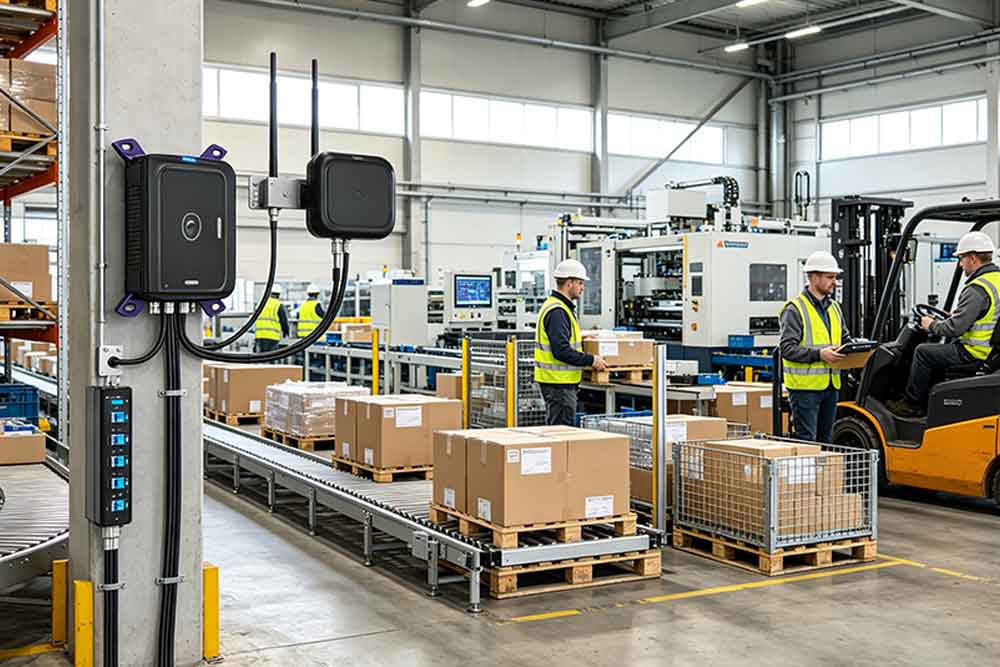
RFID enables automatic identification, tracking, and management of physical objects by connecting RFID tags, readers, software, and business workflows.
More