RFID tags are hailed as the future of tracking—until they’re not. While industries like retail and logistics thrive with RFID, some sectors face costly setbacks, security nightmares, and even safety risks. After a decade of deploying RFID systems, Cykeo has identified 3 industries where RFID often does more harm than good. Let’s dive into the pitfalls and safer alternatives.
1. Medical Implants & Wearable Health Devices
RFID’s promise of seamless tracking sounds perfect for healthcare. But when it comes to implants and wearables, the risks outweigh the rewards.
Why RFID Fails Here:
Interference with Medical Devices: RFID signals can disrupt pacemakers, insulin pumps, and hearing aids. A 2023 Johns Hopkins study found that UHF RFID readers caused malfunctions in 17% of tested cardiac devices.
Metal/Liquid Interference: Implants are often metal or fluid-filled (e.g., joint replacements), which block RFID signals. Tags fail to read, creating false “lost item” alerts.
Privacy Laws: HIPAA and GDPR require ultra-secure patient data handling. Most RFID tags lack military-grade encryption, risking exposure of sensitive health data.
Real-World Disaster: A European hospital tried tagging prosthetic limbs with RFID for inventory tracking. The tags disrupted nearby MRI machines, delaying critical scans.
Cykeo’s Alternative: Use NFC tags with read-range control (limited to 2 inches) and AES-256 encryption. NFC avoids interference and complies with medical data laws.
2. High-Precision Electronics Manufacturing
In factories producing microchips, sensors, or aerospace components, RFID’s radio waves can be a silent saboteur.
Why RFID Fails Here:
EMI (Electromagnetic Interference): RFID readers emit radio frequencies that corrupt delicate electronics during testing. A single corrupted batch can cost $500K+ in recalls.
Static Damage: RFID tags’ antennas generate static electricity when applied to components, risking electrostatic discharge (ESD) damage.
Metal Environments: Most electronics are built on metal surfaces or shielded rooms, which block or reflect RFID signals.
Case Study: A Tesla supplier abandoned RFID tagging for circuit boards after 12% failed QA tests due to EMI. They switched to laser-etched 2D barcodes instead.
Cykeo’s Alternative: Opt for laser marking or magnetic tags (for non-sensitive parts) to avoid EMI. For traceability, use Cykeo’s ESD-safe QR codes.
3. Deep-Sea or Extreme Environment Operations
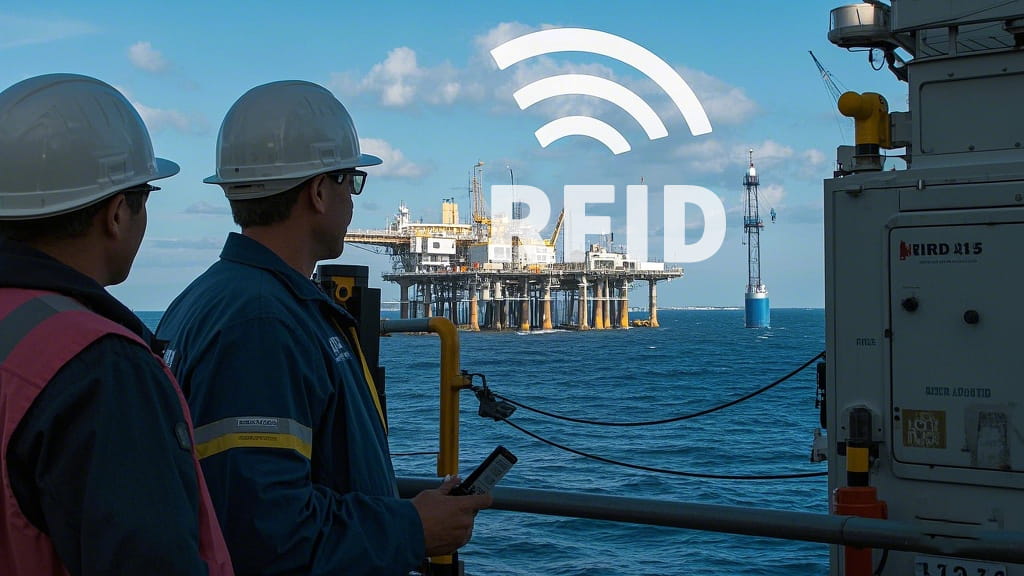
From underwater pipelines to Arctic oil rigs, RFID tags face conditions they weren’t built to survive.
Why RFID Fails Here:
Pressure & Temperature Extremes: Standard RFID tags fail below –40°C or underwater beyond 50 meters.
Corrosion: Saltwater and industrial chemicals degrade tag antennas and chips.
No Signal Penetration: Water absorbs RF signals—passive RFID becomes unreadable.
Costly Example: An offshore oil company lost $2M tracking “RFID-tagged” equipment. Saltwater corroded tags within weeks, leaving 60% of assets untraceable.
Cykeo’s Alternative: For extreme environments, use acoustic tags (sonar-based) or ruggedized QR codes etched onto titanium plates.
When to Override the “Avoid RFID” Rule
RFID can work in these industries—if you customize aggressively:
Medical: Cykeo’s biocompatible RFID tags (encased in medical-grade silicone) for non-implant devices.
Electronics: Low-frequency (LF) RFID systems with shielded readers to contain EMI.
Extreme Environments: Active RFID tags with satellite uplinks for remote tracking.
But customization costs 3–5x more than standard RFID. For most, alternatives like NFC or barcodes are smarter.
How to Decide If RFID Is Right for Your Industry
Ask these questions:
Do you handle sensitive data or devices? If yes, prioritize encryption and signal control.
Is your environment metal-heavy or liquid-rich? Avoid passive RFID; consider infrared or optical tracking.
What’s your error tolerance? High-risk sectors (healthcare, aerospace) need 99.99% accuracy—RFID may not deliver.
Still Unsure About RFID’s Risks for Your Business? At Cykeo, we help companies navigate RFID’s pros and cons with tailored audits. Email contact@cykeo.com to:
RFID (Radio Frequency Identification) readers, as a core component of RFID technology, play a crucial role in the development and management of smart cities. RFID technology enables automated identification, tracking, and management of assets thro...
Considering how to make an RFID reader antenna? We outline the complex design process and explain why commercial antennas are the practical choice for reliable systems.
 Cykeo RFID IoT Solution Products R&D Manufacturer