 Cykeo RFID IoT Solution Products R&D Manufacturer

Submit your request to us
We will contact you as soon as possible.
All RFID Product
Welcome to Part 2
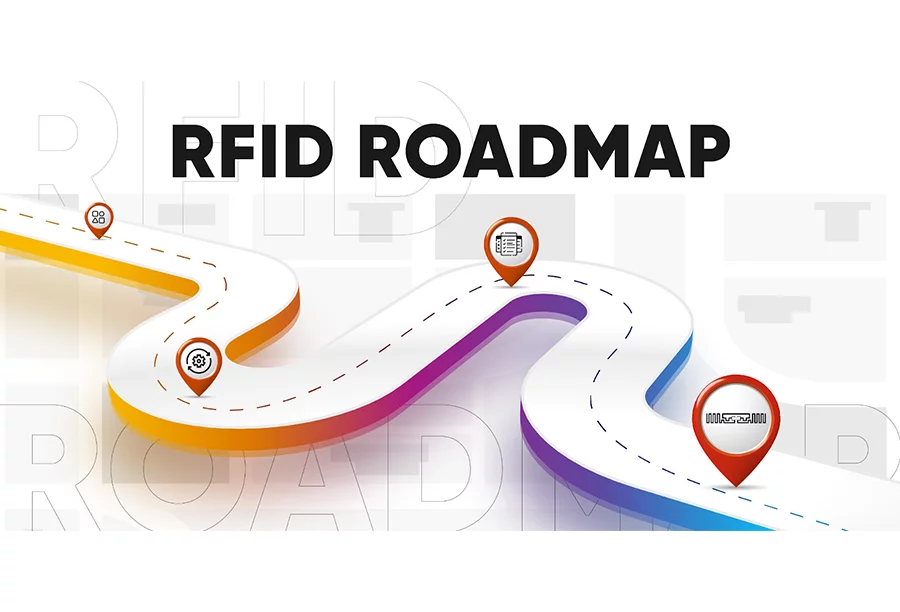
RFID Roadmap
We divide the information into nine parts: RFID overview, RFID readers, RFID antennas, RFID tags, hardware, auxiliary equipment, advanced principles, ideal device performance, RFID system deployment, and different types of RFID.
RFID readers
RFID Reader is luclude six subcategories:
RFID Modules – Core modules designed for system integration or embedded devices, providing essential RFID functions and allowing developers and companies to integrate RFID capabilities into custom equipment.
Fixed RFID Readers – Installed at a fixed location for continuous, automated data collection, ideal for warehouse entrances, production lines, or access points.
USB RFID Readers – Connect to computers or terminals via USB, suitable for desktop applications and short-range tag reading, such as front-desk registration, device management, or library check-in/out.
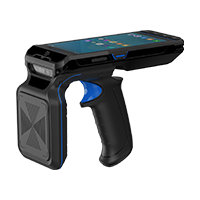
Handheld RFID Readers – Portable devices with built-in processors and displays, designed for inventory counting, on-site asset inspection, or mobile data collection.
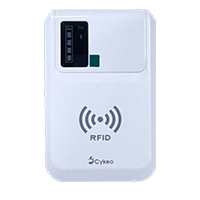
Portable RFID Readers – Lightweight and mobile devices, usually paired with smartphones or tablets via Bluetooth or USB, allowing fast, on-site scanning or temporary data collection.
Long-Range RFID Readers – Engineered for extended reading distances, using high-power output and high-gain antennas, suitable for vehicle identification, large warehouses, or logistics environments.
What is RFID Reader?
Online Reading Guide
RFID reader is an electronic device used to communicate with RFID tags to identify, track, and manage objects automatically. It works by sending radio frequency signals to a tag, which responds with its stored information. The reader then captures this data and sends it to a computer system for processing. RFID readers come in various forms, including fixed readers, handheld readers, and mobile/embedded readers, each suited to different applications like inventory management, access control, supply chain tracking, and asset monitoring. Key features of RFID readers include reading range, frequency compatibility, data processing speed, and connectivity options. Understanding how they function is essential for optimizing RFID systems in industries ranging from retail and healthcare to logistics and manufacturing.
Key points:
Device for reading and writing RFID tags
Communicates via radio waves
Types: fixed, handheld, mobile
Used in inventory, security, tracking
Performance depends on frequency, range, and interface
How to Add RFID Module in Proteus
How to Install a USB RFID Reader on Windows 11: Fix Driver Issues & Start Scanning Fast
How to Make a RFID Reader Module
RFID Reader vs. Barcode Scanner: Which is Right for Your Business?
How Different Types of RFID Readers Work: Fixed, Handheld, and Mobile
Maximizing RFID Reader Performance: Tips for Better Reading Accuracy
RFID Reader Applications Across Industries: From Healthcare to Logistics
• • •
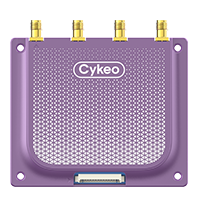
Cykeo RFID Modules are core RFID units designed for system integration or embedded applications. They are not standalone readers but provide the essential RF transmission, reception, and protocol processing. These modules are typically embedded in devices like smart cabinets, access controllers, or automated identification systems.
Key points:
Multi-port design (1/4/8/16 ports) allows connection of multiple antennas for wider coverage or multi-directional reading.
Supports open SDK/API for easy integration into custom systems.
Ideal for developers or system integrators as an embedded RFID engine.
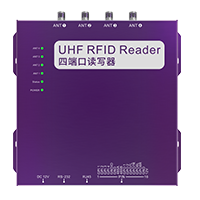
Cykeo Fixed RFID Readers are designed to be permanently installed at specific locations, usually paired with external antennas to create a fixed reading point. They are the most common type of RFID readers in industrial and logistics applications.
Key points:Continuous operation at fixed locations, such as warehouse entrances, workstations, or access points.
Multi-port support for connecting multiple antennas to expand reading areas.
Real-time integration with backend systems, enabling fully automated data collection.
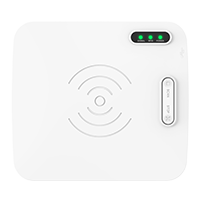
Cykeo USB RFID Readers connect directly to a computer or terminal via USB and focus on short-range tag reading or writing for desktop applications.
Key points:Plug-and-play design with minimal driver installation required, suitable for desktop environments.
Ideal for inventory registration, access card writing, or library/device check-in/out.
Typically short reading distance, suitable for near-field or desktop applications.
These are mobile RFID readers with built-in processors and displays (often Android-based), suitable for manual scanning in scenarios like inventory counting, on-site asset inspection, and field data collection.
Key points:Portable and mobile, supporting real-time data capture and processing.
Usually equipped with powerful processing capabilities, barcode scanning, Bluetooth/Wi‑Fi communication.
Some models offer long reading distances and high-speed scanning capabilities.
Cykeo Portable RFID Readers are lightweight, mobile devices that typically connect with smartphones or tablets via Bluetooth or USB, and work with dedicated apps or software.
Key points:Easy to carry for on-site inspections, inventory checks, or mobile scanning tasks.
Data can be quickly read via mobile apps or custom software.
Suitable for scenarios without fixed installation or temporary data collection.
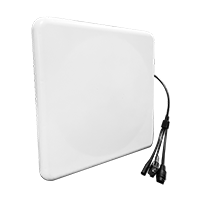
Cykeo Long-Range RFID Readers are a type of fixed reader designed for reading tags at long distances (often 6–20 meters or more), suitable for vehicles, logistics, or large-area tracking.
Key points:High-gain antennas and high-power output for extended reading range.
Commonly used for vehicle identification, logistics, warehouse ga
Designed with interference resistance and continuous operation in industrial environments.

Are you ready for Part 3?
If you’re ready to begin learning about RFID Antenna in Part 3—click the button on the right to get started!