 Cykeo RFID IoT Solution Products R&D Manufacturer
Antennas rfid uhf in the IoT era
792Antennas rfid uhf play irreplaceable role in many fields with their outstanding performance.
MoreAll RFID Product
One of the first questions buyers ask is simple:
“How much does an RFID tool cabinet cost?”
The honest answer is:
It depends.
Prices can vary significantly based on configuration, environment, and project requirements.
But once you understand the key factors, it becomes much easier to evaluate suppliers and avoid overpaying.
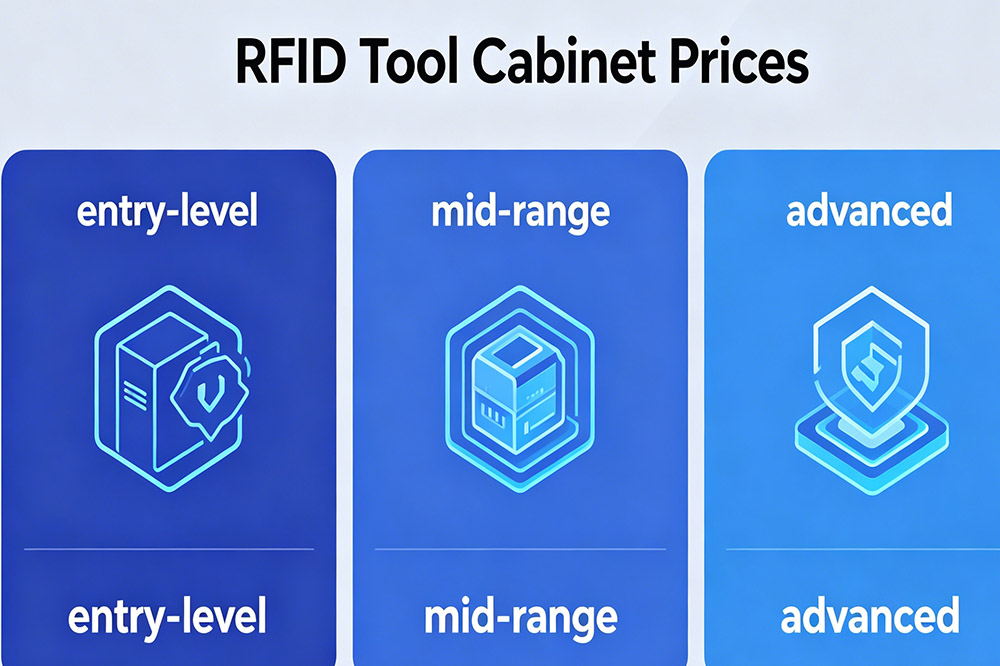
In most industrial projects, RFID tool cabinet pricing falls into this range:
Why such a big gap?
Because RFID tool cabinets are not standard products—they are system solutions.
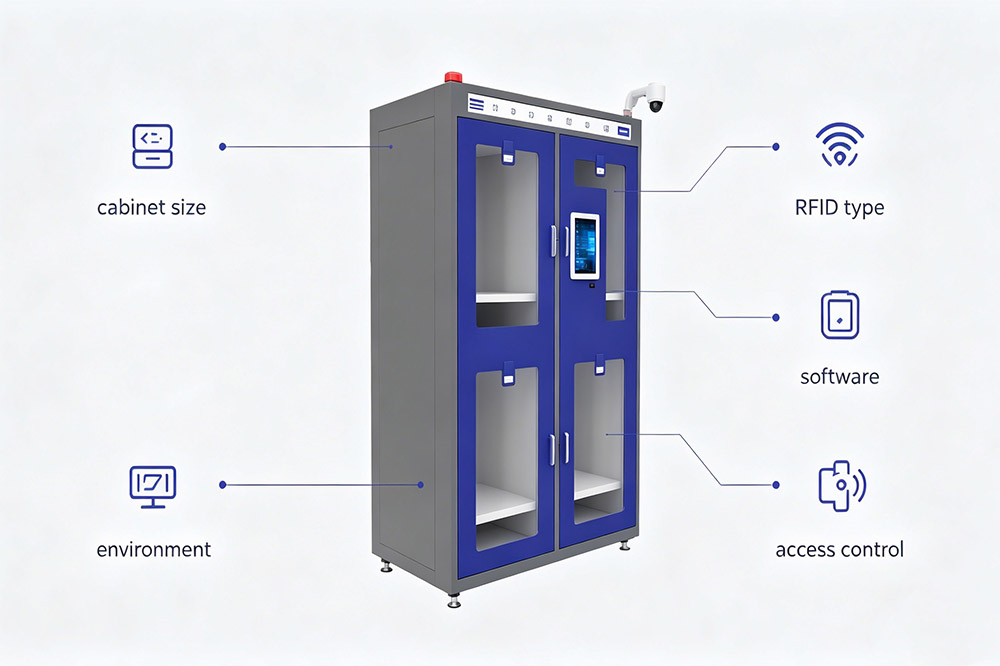
Larger cabinets with more compartments cost more.
Not all RFID systems are the same.
Most industrial tool tracking systems use UHF RFID.
The more tools you manage, the more:
Basic systems only show inventory.
Advanced systems can integrate with:
This significantly impacts pricing.
Industrial environments often require:
For example, systems like the CK-GT1 RFID Tool Cabinet are designed for harsh environments, which affects cost but improves durability.
More advanced features = higher price:
This is where many projects go wrong.
The cabinet itself is not the only cost.
You should also consider:
Each tool needs a tag (especially for metal tools)
On-site setup, calibration, and testing
Some suppliers charge annual fees
Operators need to learn the system
Long-term support and upgrades
Not every buyer needs the most advanced system.
Here’s a simple way to decide:
A typical mid-range project might include:
This is where many factories start.
Price is important—but ROI matters more.
Most companies recover cost through:
In high-loss environments, ROI can be achieved within months.
Low price often means unstable performance
Metal tools require proper RFID tags
Not every project needs AI or face recognition
System should support future expansion
RFID tool cabinet pricing is not just about hardware.
It’s about building a system that fits your workflow, environment, and scale.
The best solution is not the cheapest—
it’s the one that actually works in your operation.
If you’re evaluating RFID tool cabinet pricing for your project,
it’s best to request a customized quote based on your requirements.
👉 You can provide:
This helps suppliers recommend the most cost-effective solution.
RFID Tool Cabinets
CYKEO-GT1 RFID Intelligent Tool Cabinet
CYKEO-GGT1 Intelligent Weighing Cabinet
CYKEO-GT7 RFID Inventory Tool Cabinet
CYKEO-TC RFID Multi-Drawer Tool Cart
CYKEO-GTC4 INDUSTRIAL RFID TOOL CART
CYKEO-GTC7 RFID Aviation Maintenance Cart
CYKEO-GTC7A RFID Real-Time Tool Tracking Cart
CYKEO-GTC4B RFID Mobile Tool Cart
CYKEO-GTC4C RFID Workshop Tool Control Cart
CYKEO-GTC4A Multi-drawer RFID Tool Cart
CYKEO-GTC4D RFID Tool Tracking Cart
CYKEO-GT3A COMPACT RFID TOOL CABINET
CYKEO-GT1A INDOOR RFID CABINET
CYKEO-GT4A RFID Secure Tool Cabinet
CYKEO-GT2B RFID Aviation Tool Cabinet
CYKEO-GTC5 RFID tool tracking system
CYKEO-GT3B RFID Tool Inventory System Cabinet
CYKEO-GT3 UHF RFID Tool Cabinet
CYKEO-GT4 RFID Multi-Drawer Tool Cabinet
CYKEO-GT2 INDUSTRIAL RFID TOOL CABINET
CK-GT2A INDUSTRIAL RFID CABINET
CK-GT1B INDUSTRIALRFID TOOL CABINET
CK-GT3C RFID Tool Checkout System Cabinet
RFID Reader Antennas
CYKEO-A11 UHF RFID reader antenna
CYKEO-A10 UHF RFID HIGH GAIN ANTENNA
CYKEO-PHF3 SMART HIGH-FREQUENCY POSITIONING ANTENNA
CYKEO-A5B 5dBi Industrial Linear RFID Antenna
CYKEO-B12 12dBi UHF Long Range RFID Antenna
CYKEO-B10 Long Distance RFID Antenna
CYKEO-A6 UHF RFID panel antenna
CK-A3 industrial antenna RFID UHF
CYKEO-B5 directional RFID antenna
CYKEO-A5C High-Gain UHF RFID Antenna System
CYKEO-A7 Flexible RFID Antenna
CYKEO-B5A industrial Passive RFID Antenna
CYKEO-A9B High Gain RFID Antenna
CYKEO-A8A INDUSTRIAL UHF RFID ANTENNA
CYKEO-A9 9dBi UHF RFID Antenna
CYKEO-A12 12dBi RFID Circular Polarized Antenna
CYKEO-A5 5dBi UHF RFID Circular Polarized Antenna
CYKEO-A8 8dBi HIGH-GAIN UHF RFID ANTENNA
CYKEO-A9A 9dBi UHF RFID HIGH-GAIN ANTENNA

Antennas rfid uhf play irreplaceable role in many fields with their outstanding performance.
More
Integrating RFID Pharmacy Security Cabinets with existing systems is easy. Scalable, customizable, and designed for real-time inventory syncing across multiple locations. Perfect for pharmacies of any size.
More
Wondering if you can use smartphones to read RFID? We explain the NFC capability, its severe limitations, and when you need professional RFID hardware.
More
RFID tool cabinet training helps employees understand how to authenticate, check out, return, and manage tools correctly in daily work. A practical training ...
More