 Cykeo RFID IoT Solution Products R&D Manufacturer
Can RFID Reader Read Multiple Tags?
221Can RFID reader read multiple tags? Learn how anti-collision, near-field control, tag filtering, and RF tuning enable reliable batch RFID reading for retail and industrial applications.
MoreAll RFID Product
RFID tags UHF are electronic identification tags designed for long-distance reading, high-speed data capture, and large-scale inventory management. They enable businesses to track assets, products, and equipment efficiently through UHF RFID readers and software systems.
In real industrial environments, RFID performance is rarely determined by the tag alone. The interaction between tag design, reader power, material conditions, and installation position decides whether an RFID project succeeds.
At Cykeo, our RFID engineering team has tested and deployed UHF RFID solutions in warehouses, manufacturing plants, logistics centers, power facilities, and asset management environments. During field testing, we often find that a small change in tag placement—such as moving a tag away from a metal edge or adjusting antenna orientation—can significantly affect reading stability.
This is why selecting the correct RFID tags UHF solution requires more than choosing the longest reading distance listed in a product specification.
According to GS1, RFID technology enables automatic identification and data capture by allowing objects to communicate unique information through radio frequency signals. UHF RFID has become widely adopted in supply chain, retail, manufacturing, and logistics applications because of its ability to identify many items quickly.
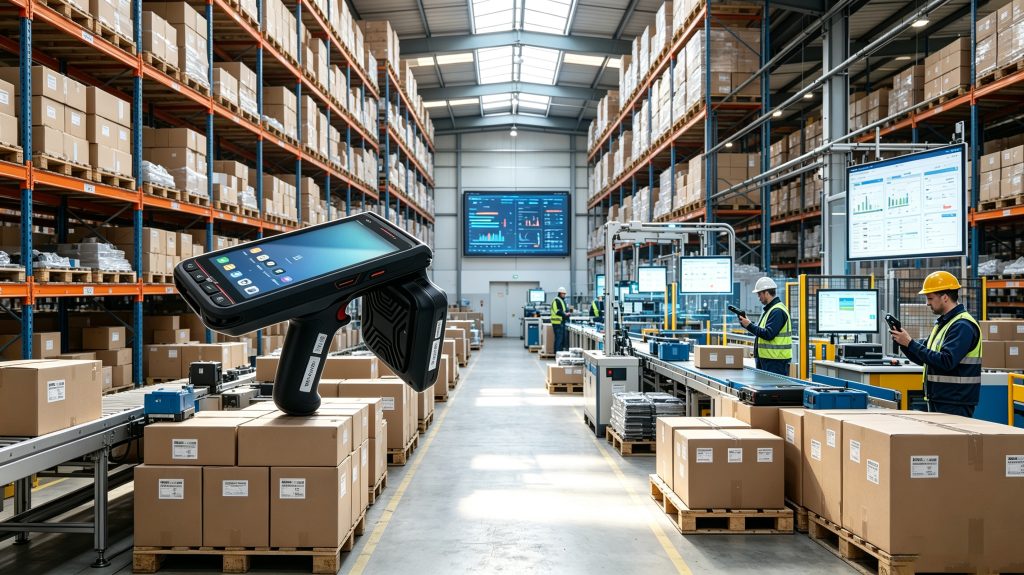
UHF RFID tags operate within the ultra-high-frequency range, typically between 860 MHz and 960 MHz depending on regional regulations.
Compared with low-frequency and high-frequency RFID technologies, UHF RFID provides:
| Feature | UHF RFID Tags |
|---|---|
| Reading Distance | Several meters depending on environment |
| Reading Speed | High-speed batch identification |
| Multi-Tag Reading | Supported |
| Typical Applications | Logistics, inventory, asset tracking |
| Communication Standard | ISO 18000-6C / EPC C1G2 |
The main advantage is efficiency. A warehouse worker can identify multiple tagged items without manually scanning each product.
For example, a clothing distribution center may process hundreds of garments on a trolley. Instead of scanning every barcode individually, UHF RFID readers can capture product information automatically as the trolley passes through a reading area.
A UHF RFID system includes:
When a reader sends an RF signal, the RFID tag responds with stored identification data.
Passive UHF RFID tags do not require batteries. They receive energy from the reader signal and return their stored information.
This makes them suitable for large-scale deployments where thousands or millions of items require identification.
The RAIN Alliance describes RAIN RFID as a technology designed for connecting physical items to digital systems through unique identification, supporting applications across retail, logistics, healthcare, and manufacturing.
Inventory accuracy is one of the most common reasons companies adopt UHF RFID.
Applications include:
Unlike manual inventory checks, RFID systems can collect information continuously during daily operations.
Industrial environments often require durable RFID identification.
Common tracked assets include:
Cykeo engineers often recommend selecting tags based on actual conditions rather than general specifications. A tag used on plastic packaging has completely different requirements from one mounted on industrial metal equipment.
The retail industry has become one of the largest users of UHF RFID technology.
RFID tags help retailers manage:
According to Auburn University RFID Lab, RFID adoption in retail has demonstrated improvements in inventory accuracy and operational visibility when systems are properly implemented.
| Comparison | UHF RFID | HF RFID | LF RFID |
|---|---|---|---|
| Frequency | 860–960 MHz | 13.56 MHz | 125–134 kHz |
| Reading Range | Long | Medium | Short |
| Batch Reading | Excellent | Limited | Limited |
| Main Use | Inventory, logistics | Cards, libraries | Access, animal tracking |
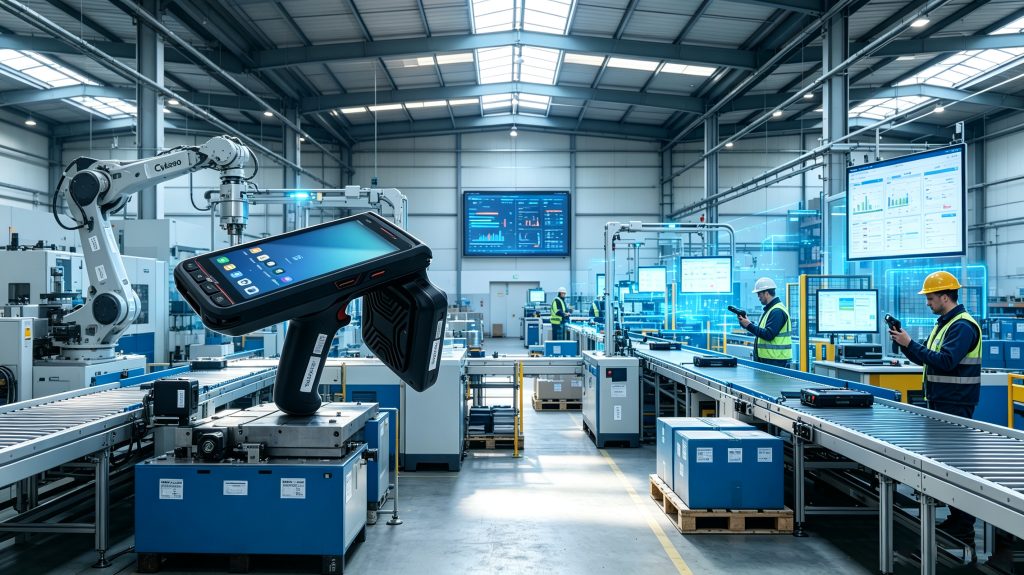
Before selecting UHF RFID tags, companies should evaluate:
| Factor | Consideration |
|---|---|
| Material Surface | Metal, plastic, cardboard, liquid |
| Reading Distance | Required detection range |
| Environment | Indoor, outdoor, industrial conditions |
| Attachment Method | Adhesive, mounting, embedded installation |
| Durability | Temperature, moisture, impact resistance |
A common mistake is selecting a tag based only on maximum reading distance. In practical deployments, stable identification is more valuable than theoretical range.
During RFID system implementation, our engineers focus on three practical questions:
The same tag can perform differently on different surfaces.
A fixed warehouse shelf and a moving trolley require different reading strategies.
Many companies need reliable inventory events rather than constant location tracking.
This approach helps create RFID systems that work consistently in real environments.
Reading distance depends on tag design, reader power, antenna configuration, and environmental conditions. Many UHF RFID applications achieve several meters of reading range.
Most UHF RFID tags are passive and operate without internal batteries.
Yes. Special on-metal UHF RFID tags are designed for metallic surfaces.
Yes. UHF RFID tags are widely used for inventory because they support fast reading, multiple tag identification, and automated data collection.
RFID tags UHF provide reliable long-range identification for inventory management, asset tracking, logistics, and industrial automation. Their ability to read multiple items quickly makes them an essential technology for companies seeking higher operational visibility.
At Cykeo, we design UHF RFID solutions based on real application environments, combining tag performance, reader capability, and workflow requirements. Reliable RFID starts with choosing the right tag for the right situation.

Can RFID reader read multiple tags? Learn how anti-collision, near-field control, tag filtering, and RF tuning enable reliable batch RFID reading for retail and industrial applications.
More
How RFID tags improve fashion inventory accuracy by delivering real-time stock visibility, reducing inventory errors, and optimizing retail operations with Cykeo RFID.
More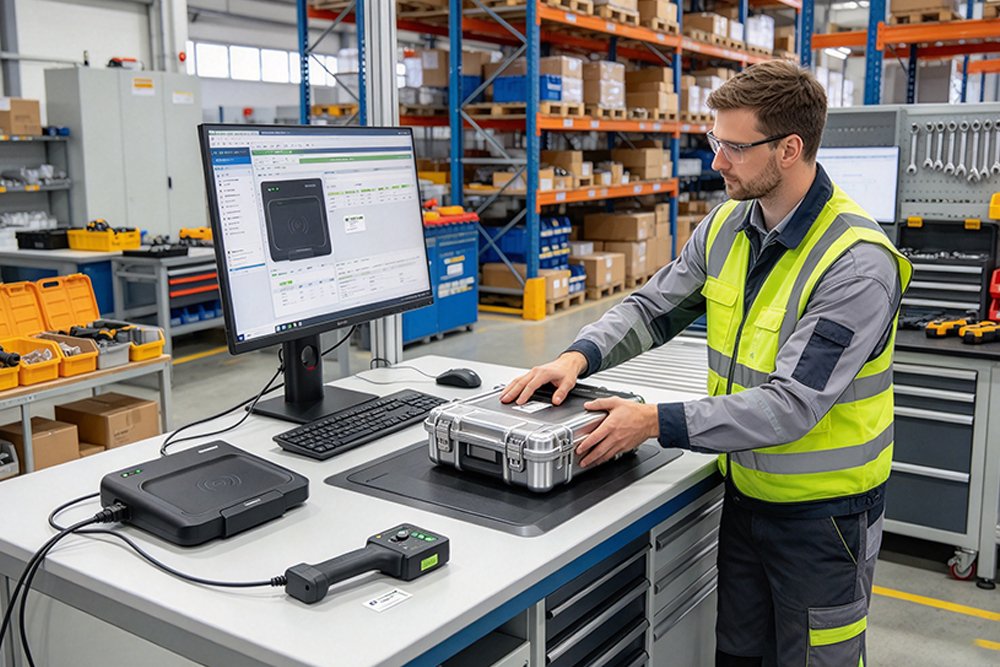
An RFID writer is a device that programs, updates, and manages information stored in compatible RFID tags through wireless communication, supporting tag regi...
More
Learn how to safely update firmware on handheld RFID readers like Zebra or Impinj. Follow our detailed guide to avoid errors, improve performance, and enable new features.
More