When someone asks,“How much does an RFID long range reader cost?”
what they usually want is a quick number.
But in real-world RFID projects, there is no single number that makes sense.
Because what you are actually buying is not a reader —
And that changes everything about how pricing should be evaluated.
1. The Biggest Misunderstanding About RFID Pricing
Most first-time buyers compare RFID readers the same way they compare consumer electronics:
Compare specs
Compare price
Pick the cheapest “good enough” option
That approach works for simple devices. It fails completely for RFID.
Why?
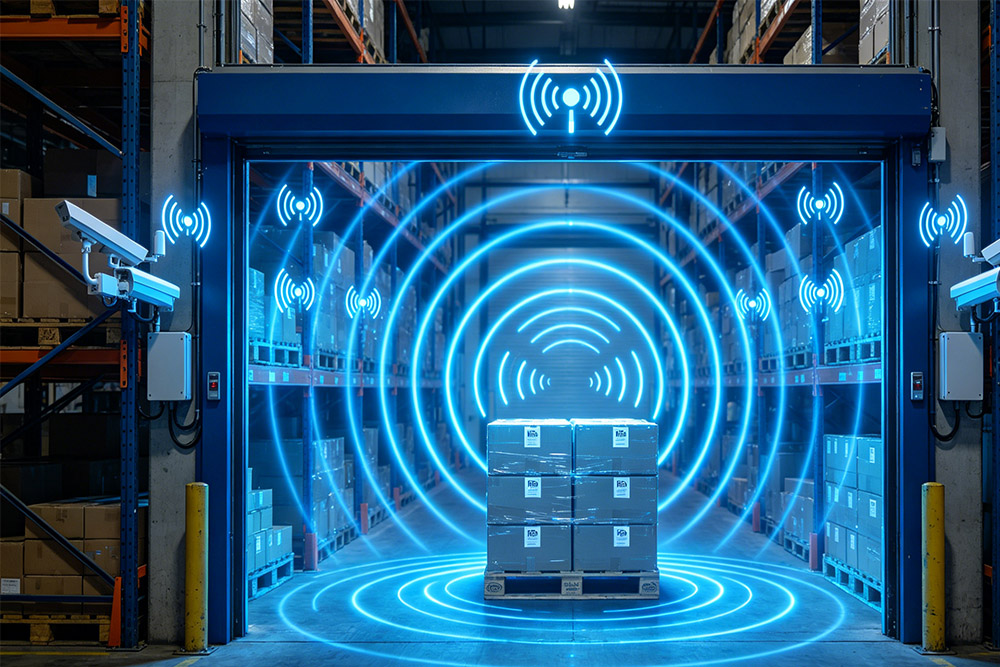
Because two readers that look similar on paper can behave very differently in real environments like:
Warehouses with metal racks
Loading docks with moving forklifts
Production lines with constant interference
In those environments, performance stability matters far more than spec sheets.
2. What Actually Determines RFID Reader Cost
If you strip away marketing language, the price of an RFID long range reader is mainly driven by five technical factors.
2.1 Multi-Antenna Capability
Most industrial readers are not designed to work alone.
A typical deployment uses:
2 antennas (small gate)
4 antennas (standard warehouse gate)
8+ antennas (complex environments)
A reader that supports more antenna ports will cost more — but it also reduces the number of readers you need.
In practice, integrators often save money by choosing a stronger reader with fewer total devices.
2.2 Tag Processing Performance
Reading one tag is easy.
High-performance readers include:
Advanced anti-collision algorithms
Faster processing chips
Better signal filtering
If your project involves bulk reading (and most do), this is not optional.
2.3 Communication Interfaces
Basic readers might only support simple serial communication.
Industrial readers usually support:
TCP/IP
RS232 / RS485 GPIO (for triggers, sensors, alarms)
These interfaces directly impact how easily the reader integrates into your system.
And integration time = development cost.
2.4 SDK and API Quality
This is one of the most underestimated cost factors.
A reader with a poor SDK will:
Slow down development
Create bugs
Increase long-term maintenance cost
A good SDK, on the other hand, can cut integration time by 50% or more.
For system integrators, this alone can justify a higher hardware price.
2.5 Industrial Reliability
In lab conditions, many readers perform well.
In real environments, conditions include:
Dust
Heat
Humidity
Vibration
Electromagnetic interference
Industrial-grade readers are built to handle these conditions continuously.
And that reliability is built into the price.
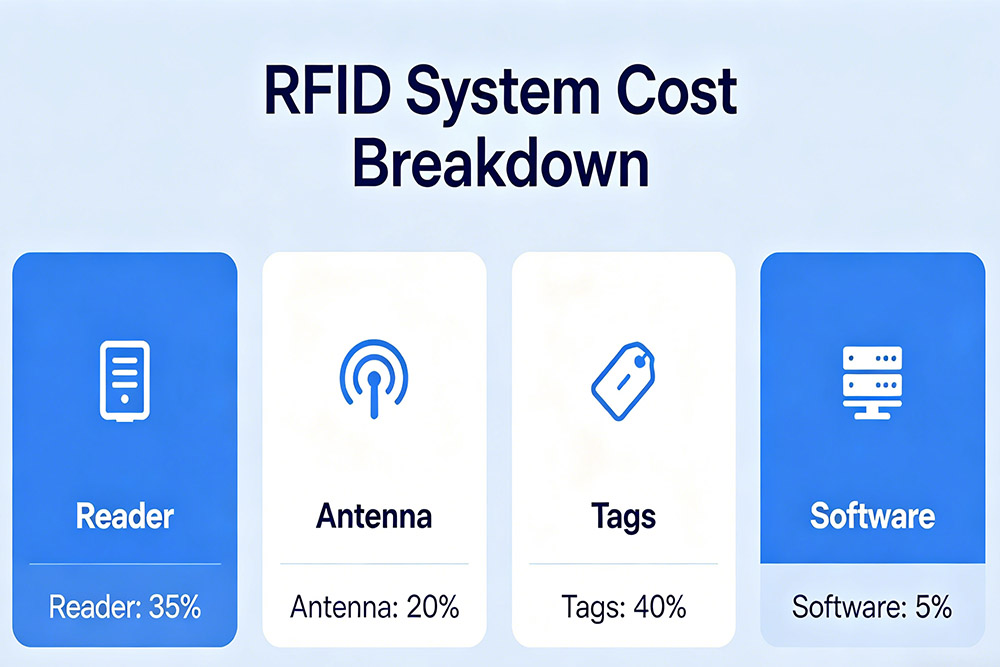
3. The Hidden Costs Behind RFID Systems
Even if you pick the right reader, your total cost doesn’t stop there.
3.1 Antennas
Each antenna adds cost — but also defines your read zone.
Bad antenna planning often leads to:
Missed reads
Duplicate reads
System instability
3.2 RFID Tags
Tag selection is critical.
Different tags behave differently depending on:
Material (metal, plastic, liquid)
Mounting method
Orientation
Choosing the wrong tag can destroy system performance — regardless of reader quality.
3.3 Installation and Tuning
RFID is not plug-and-play.
You will need:
Power tuning
Antenna angle adjustment
Environmental testing
This is where many low-cost projects fail.
3.4 Software Development
Even with a good SDK, you still need to:
Filter data
Define logic
Integrate with ERP/WMS
This is often the largest cost in real projects.
4. Real Price Ranges (Practical Reference)
Instead of exact numbers, it’s more useful to think in tiers:
Entry-level: basic functionality, limited scalability
Mid-range: stable for standard warehouse or gate systems
High-end: complex environments, high tag density, industrial automation
If your project involves real operations (not testing), you will almost always end up in the mid-to-high range.
5. How to Evaluate Value Instead of Price
Here’s a simple rule used by experienced integrators:
“The cheapest reader is the one that doesn’t break your system.”
To evaluate value, ask:
Can it maintain stable reads in your environment?
Does it reduce development time?
Can it scale with your system?
If the answer is yes, the higher upfront cost usually leads to lower total cost.
6. Practical Buying Advice for Developers and Integrators
If you’re building RFID solutions:
Start with system design, not hardware
Define your read zones first
Test tags before finalizing reader choice
Always evaluate SDK before purchase
And most importantly:
Don’t optimize for price — optimize for system success.
Conclusion
RFID long range reader pricing is not about hardware alone.
It’s about:
System performance
Integration complexity
Long-term reliability
When you look at it that way, the “price” question becomes much clearer.
 Cykeo RFID IoT Solution Products R&D Manufacturer