 Cykeo RFID IoT Solution Products R&D Manufacturer
What Are RFID Systems? UHF RFID Explained for Industry
69RFID systems are integrated identification solutions combining tags, readers, antennas, software, and networks to automatically identify physical objects thr...
MoreAll RFID Product
RFID enabled asset tracking provides real-time identification, location awareness, and automated inventory management for physical assets. By using RFID tags and readers, organizations can reduce asset loss, improve utilization rates, and eliminate the manual effort associated with traditional tracking methods.
In practice, the biggest advantage is not simply knowing where an asset is. It is knowing where it was, who used it, when it moved, and whether it should be there at all.
At Cykeo, we have worked with manufacturers, logistics providers, utility companies, healthcare facilities, and government organizations implementing RFID systems. Across these projects, one pattern appears repeatedly: most companies believe they have an asset visibility problem, but after deployment they discover they actually have a data confidence problem. RFID solves both.
RFID enabled asset tracking uses radio frequency identification technology to automatically identify and monitor physical assets throughout their lifecycle.
A typical system consists of:
Unlike barcode systems, RFID does not require line-of-sight scanning. Multiple tagged assets can be identified simultaneously, even when moving through operational environments.
According to the RAIN Alliance, more than 44 billion RAIN RFID chips were shipped globally in 2023, reflecting growing adoption across logistics, retail, healthcare, and industrial sectors.
That growth is driven by one simple reality: organizations need asset data without relying on manual processes.
Lost assets remain a significant hidden cost.
A maintenance supervisor may spend 15 minutes locating a calibration device. Multiply that by multiple technicians, multiple shifts, and hundreds of working days.
The financial impact rarely appears as “lost equipment.” It appears as lost productivity.
RFID automatically records movement events and location updates, dramatically reducing search time.
According to GS1, RFID technology can significantly improve inventory accuracy compared to traditional manual counting methods.
In real deployments, we frequently observe organizations moving from periodic inventory checks to continuous visibility.
That shift changes decision-making.
Managers stop asking:
“How many assets do we think we have?”
They start asking:
“Why are these assets sitting idle?”
Each asset receives a unique RFID tag containing an electronic identifier.
Examples include:
RFID readers positioned at strategic locations automatically capture movement information.
Common installation points include:
No manual scanning is required.
Every read event updates the asset management platform.
Users can instantly determine:
This creates a live digital representation of physical assets.
| Industry | Typical Assets Tracked |
|---|---|
| Manufacturing | Tools, molds, fixtures |
| Healthcare | Medical devices, surgical kits |
| Logistics | Containers, pallets, carts |
| Energy | Inspection equipment |
| Government | High-value assets |
| Aviation | Maintenance tools |
| Education | IT equipment |
| Construction | Power tools and machinery |
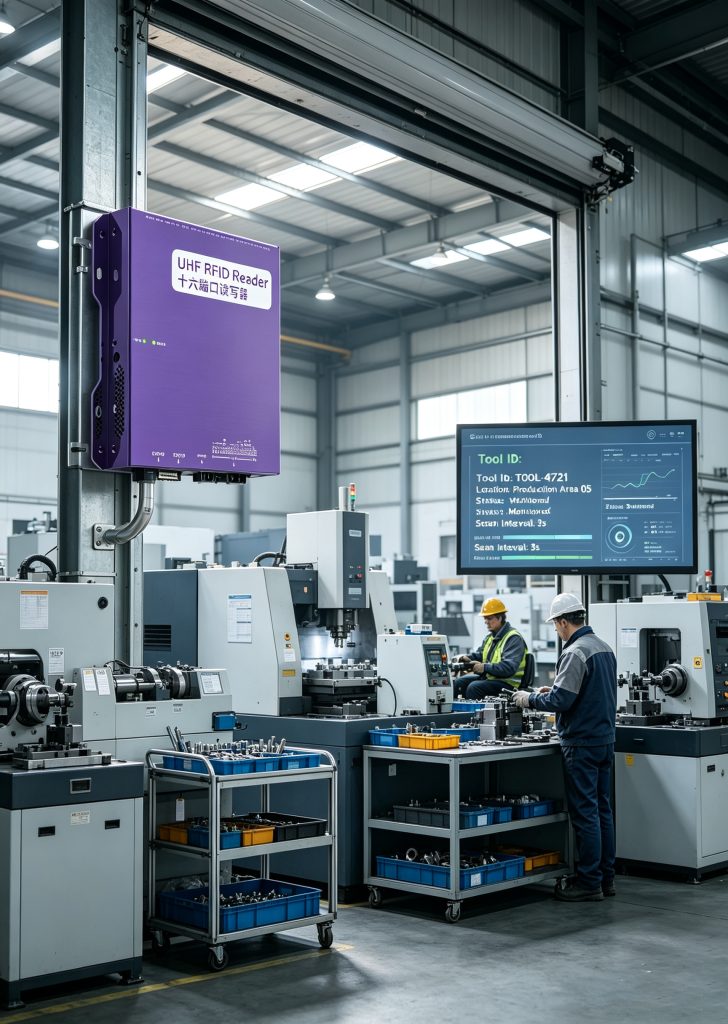
One of the most surprising findings during RFID projects is how often organizations discover “invisible bottlenecks.”
In one industrial maintenance environment, managers believed they needed additional tools.
RFID data revealed something different.
The tools were not missing.
They were spending most of their time in two specific work areas where nobody expected them to be.
Within weeks, asset utilization improved without purchasing a single additional tool.
That experience reinforced a principle our engineers frequently discuss:
Asset tracking is not primarily about finding things.
It is about understanding operational behavior.
When movement becomes measurable, inefficiencies become visible.
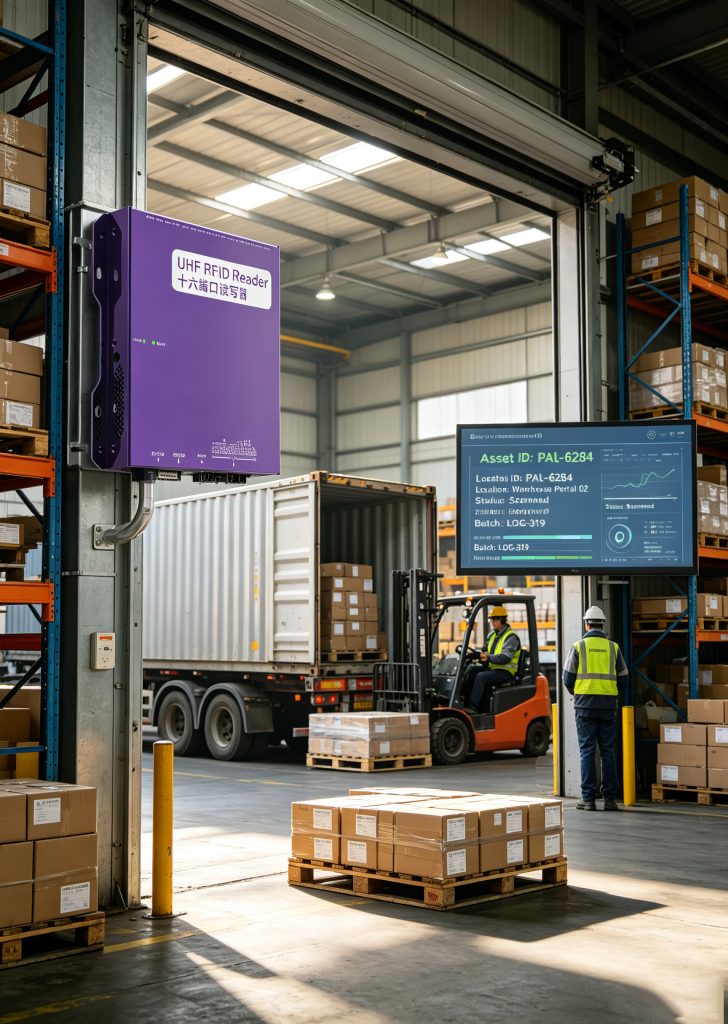
For most enterprise environments, yes. RFID enables automated, non-line-of-sight identification and can read multiple assets simultaneously, significantly reducing labor requirements.
Yes. RFID performs particularly well in indoor environments such as warehouses, hospitals, factories, offices, and maintenance facilities.
Properly designed RFID systems routinely achieve inventory visibility levels exceeding 99%, depending on asset type, tag selection, and environmental conditions.
Yes. Modern RFID platforms can integrate with ERP, WMS, MES, CMMS, and asset management systems through APIs and middleware.
Cykeo specializes in industrial RFID readers, RFID modules, rfid antennas, handheld rfid terminals, smart rfid cabinets, and enterprise asset tracking solutions. Our engineering team has supported RFID deployments across manufacturing plants, utility companies, logistics operations, healthcare facilities, and government asset management projects.
Rather than focusing only on hardware specifications, we design RFID systems around operational workflows. Reader placement, tag selection, environmental testing, and software integration all influence long-term performance far more than headline read-range figures.
For organizations seeking reliable visibility, automation, and accountability, RFID enabled asset tracking remains one of the most practical and measurable digital transformation technologies available today. Properly implemented, RFID enabled asset tracking turns physical assets into actionable business intelligence.
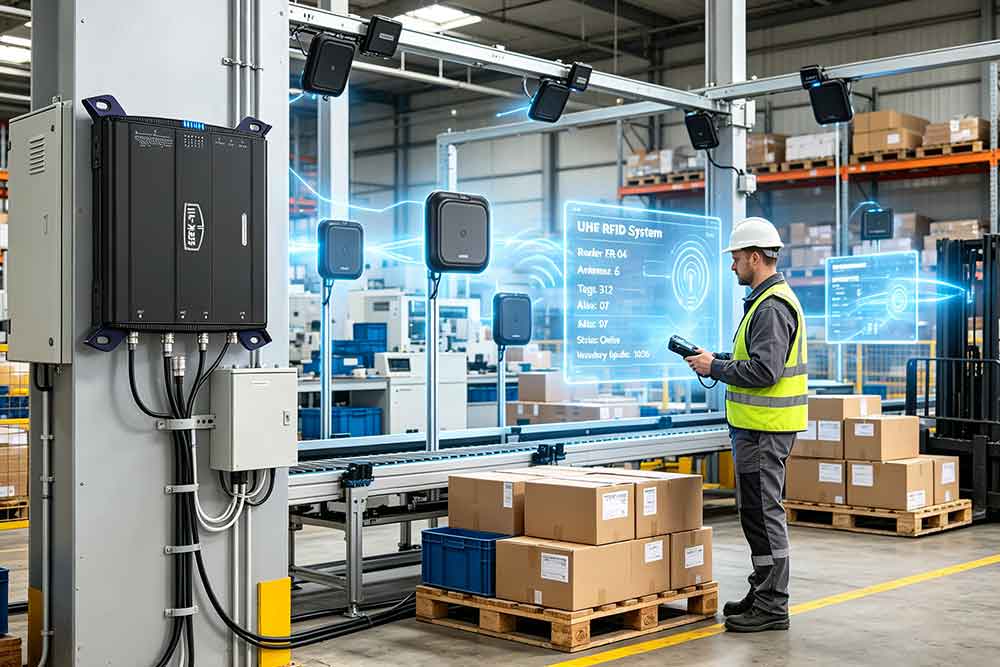
RFID systems are integrated identification solutions combining tags, readers, antennas, software, and networks to automatically identify physical objects thr...
More
Can RFID track animals? Discover how RFID animal tracking works, livestock identification methods, real applications, and Cykeo RFID solutions.
More
Learn how does rfid theft work, how RFID security gates detect unauthorized items, and how smart EAS systems prevent inventory loss with reliable protection.
More
RFID modules power modern RFID systems. Learn how RFID modules differ from readers, how they work, and how to choose the right RFID reader module for your project with Cykeo.
More