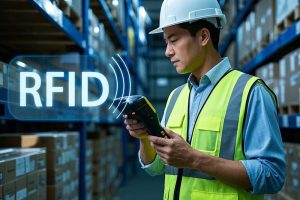
RFID for asset tracking solutions provide real-time visibility of equipment, tools, inventory, and returnable assets without manual scanning. By combining RFID tags, readers, and intelligent software, organizations significantly improve inventory accuracy, reduce asset losses, and increase operational efficiency across manufacturing, healthcare, logistics, and enterprise facilities.
Why Are RFID for Asset Tracking Solutions Becoming the Standard?
After participating in RFID deployments across factories, equipment warehouses, and maintenance workshops, one lesson becomes obvious very quickly.
The biggest challenge is rarely finding an asset.
The real problem is knowing where it actually is right now.
Traditional barcode systems depend on people remembering to scan every movement. That works until production speeds increase, multiple operators share equipment, or expensive tools circulate across departments.
RFID removes that dependency.
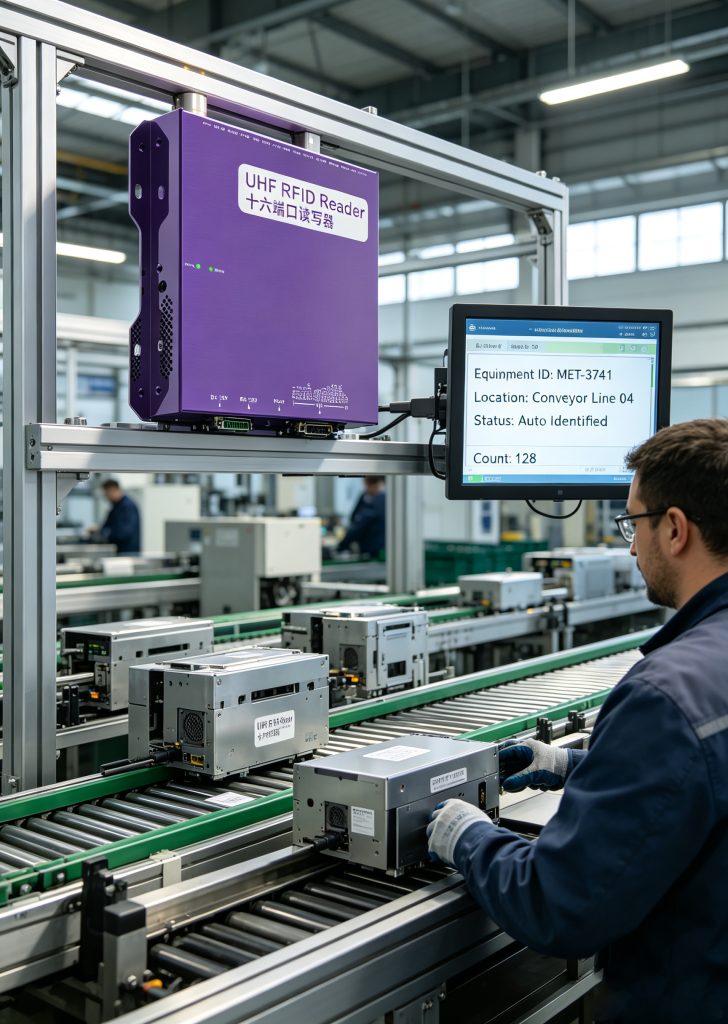
Once fixed readers or handheld readers are installed at strategic checkpoints, tagged assets are identified automatically whenever they move through the reading zone.
The result is continuous asset visibility rather than periodic inventory snapshots.
According to the RAIN Alliance, billions of UHF RFID tags are now deployed annually across retail, healthcare, logistics, manufacturing, and industrial applications, reflecting accelerating global adoption of passive RFID technology.
Automatic identification without stopping production.
How Does an RFID Asset Tracking System Work?
An effective rfid for asset tracking solutions deployment consists of four integrated layers.
Displays locations, movement history, alarms and reports
Unlike barcode systems, RFID does not require direct line-of-sight.
Hundreds of tagged assets can be identified during a single read cycle, making the technology particularly valuable for high-volume environments.
Typical Assets Tracked
IT equipment
Manufacturing tools
Returnable transport items
Medical devices
Warehouse pallets
Laboratory equipment
Maintenance instruments
Government assets
Measured Business Benefits
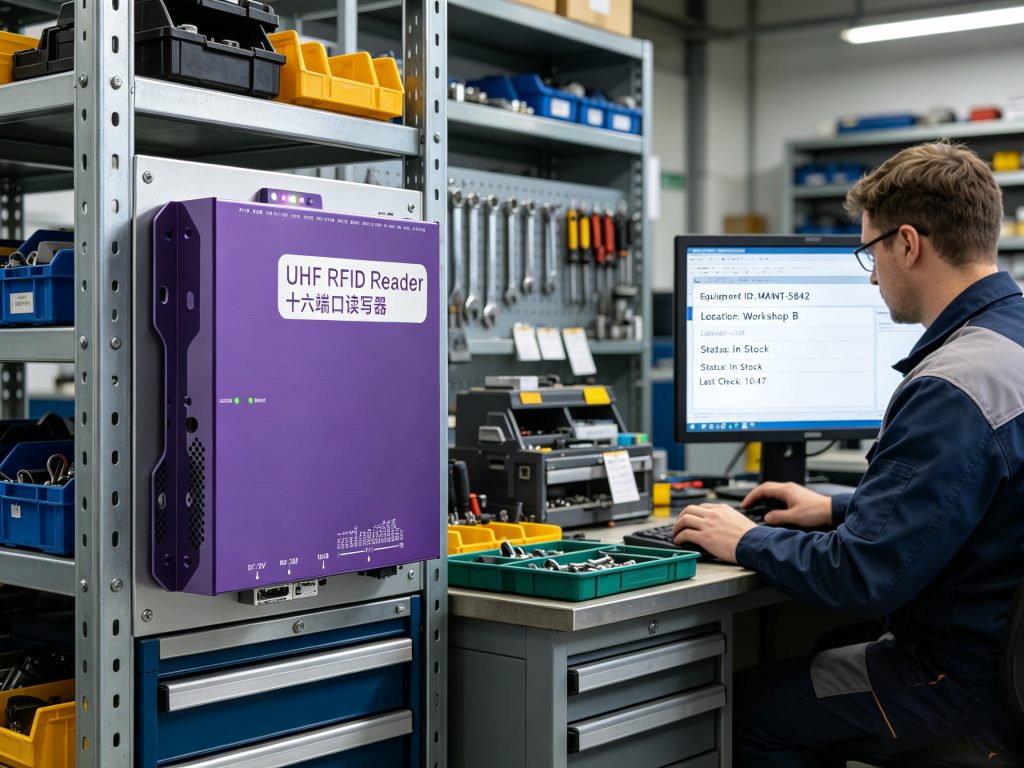
During one manufacturing deployment, our engineering team observed that maintenance personnel previously spent considerable time locating calibration equipment before scheduled servicing.
Once RFID checkpoints were installed at workshop entrances and storage areas, locating equipment became nearly instantaneous because every movement was automatically recorded.
The operational improvement wasn’t created by faster searching—it came from eliminating unnecessary searching altogether.
Independent industry research supports these observations.
According to McKinsey & Company, improved inventory visibility enabled by digital technologies—including RFID—can substantially improve inventory accuracy while reducing stock discrepancies across supply chains.
Likewise, GS1, the global standards organization responsible for EPC and barcode standards, highlights RFID as a key technology for improving inventory accuracy, traceability, and supply chain efficiency.
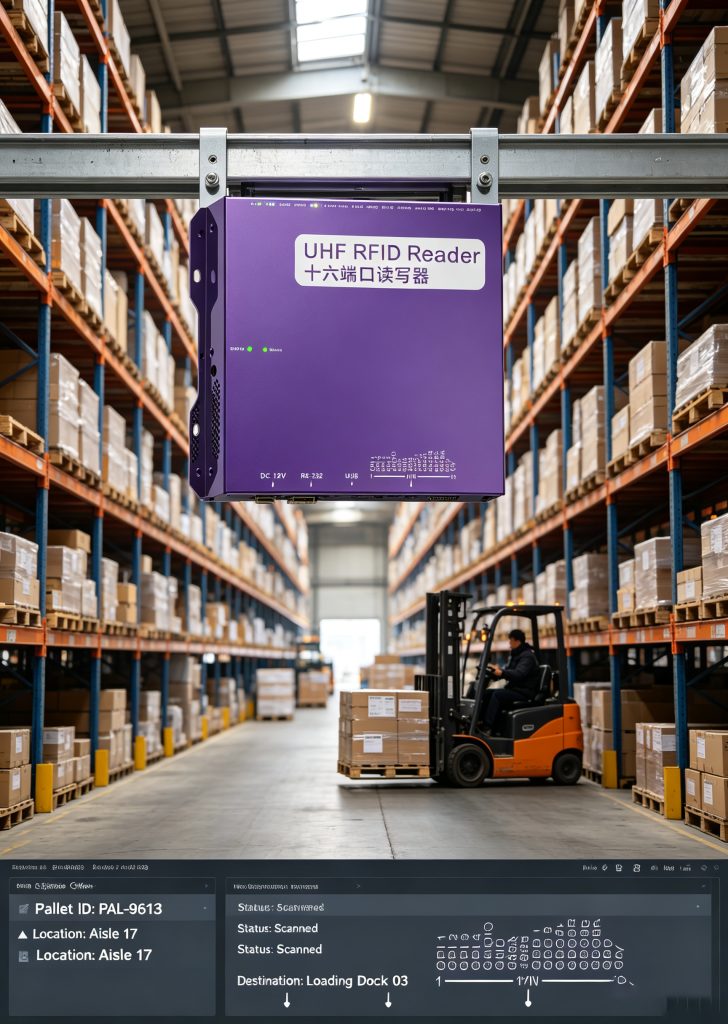
Every tagged asset is automatically identified during movement.
Where RFID Creates the Highest ROI
Manufacturing
Tool tracking
Work-in-process visibility
Production equipment management
Healthcare
Medical device tracking
Surgical instrument management
Hospital asset utilization
Warehousing
Returnable container management
Inventory automation
Dock door monitoring
Utilities & Energy
Inspection equipment
Maintenance tools
Safety asset management
Why Companies Choose Cykeo
Cykeo focuses on industrial RFID rather than consumer applications.
Our engineering experience comes from integrating RFID readers into demanding environments where metal surfaces, electrical interference, long operating hours, and continuous equipment movement present real engineering challenges.
Cykeo solutions support:
UHF EPC Gen2 / ISO 18000-6C
Fixed RFID readers
Handheld RFID readers
Embedded RFID modules
Industrial RFID antennas
RFID software integration
SDK and API development support
OEM and customized RFID solutions
Instead of recommending identical architectures for every customer, we evaluate read distance, installation height, environmental interference, asset density, and workflow before determining antenna layout and reader configuration.
That practical approach consistently delivers more reliable read performance than simply increasing transmission power.
Industrial RFID designed for continuous enterprise operation.
Frequently Asked Questions
Can RFID replace barcode asset tracking?
In many industrial environments, yes. RFID identifies multiple assets simultaneously without line-of-sight, making it significantly more efficient than manual barcode scanning.
What reading distance is typical?
Depending on reader type, antenna selection, tag design, and installation environment, passive UHF RFID systems typically operate from a few centimeters to more than 10 meters.
Is RFID suitable for metal assets?
Yes. Using specialized on-metal RFID tags and proper antenna placement, reliable performance can be achieved even on metallic equipment.
Can RFID integrate with ERP or WMS?
Absolutely. Cykeo provides SDKs, APIs, and integration support to connect RFID data with ERP, WMS, MES, and enterprise asset management platforms.
Final Thoughts
Organizations investing in rfid for asset tracking solutions are no longer simply replacing barcode technology—they are building a continuously connected asset visibility platform. With proven industrial hardware, practical deployment experience, and standards-based RFID technology, Cykeo helps enterprises reduce asset loss, automate inventory, and make faster operational decisions based on accurate, real-time data. Whether managing tools, equipment, IT assets, or production inventory, rfid for asset tracking solutions provide a scalable foundation for long-term operational excellence.
Discover how RFID gate access control systems are transforming property management. Explore trends in smart entry, data-driven access control, and the integration of RFID with license plate recognition, mobile credentials, and industrial-grade rea...
This article explains what a rugged RFID tag is, how it handles tough environments, tips for choosing and maintaining them, plus some hands-on experience for better performance in industrial or outdoor use.
Understand the differences between UHF and HF handheld RFID readers. Compare range, applications, costs, and choose the right technology for logistics, healthcare, or retail.
 Cykeo RFID IoT Solution Products R&D Manufacturer