How to test RFID reader: Connect the UHF RFID reader correctly, use a known compatible tag, confirm communication, then check reading distance, tag count, stability, and data accuracy under controlled conditions. A reliable test should measure actual performance rather than simply confirming that one RFID tag can be detected.
What Should Be Checked When Testing a UHF RFID Reader?
Testing a UHF RFID reader in a lab is usually straightforward. The difficult part begins when the same reader is installed beside metal shelving, conveyors, cartons, or other equipment. In practical deployments, I treat the first successful tag read as the starting point, not the test result.
For a UHF system, the test should normally cover:
Reader power and startup status Communication between reader and host system Compatible UHF RFID tag detection Read range and coverage area Multi-tag reading performance Read consistency during repeated scans RSSI or other available signal information Incorrect reads, missed reads, and duplicate data
This distinction matters. A reader may detect a tag easily when the tag is held directly in front of the antenna, yet perform poorly when tags are stacked, attached to products, or moving through a doorway.
How to Test RFID Reader Communication
Start With the Reader and Host Connection
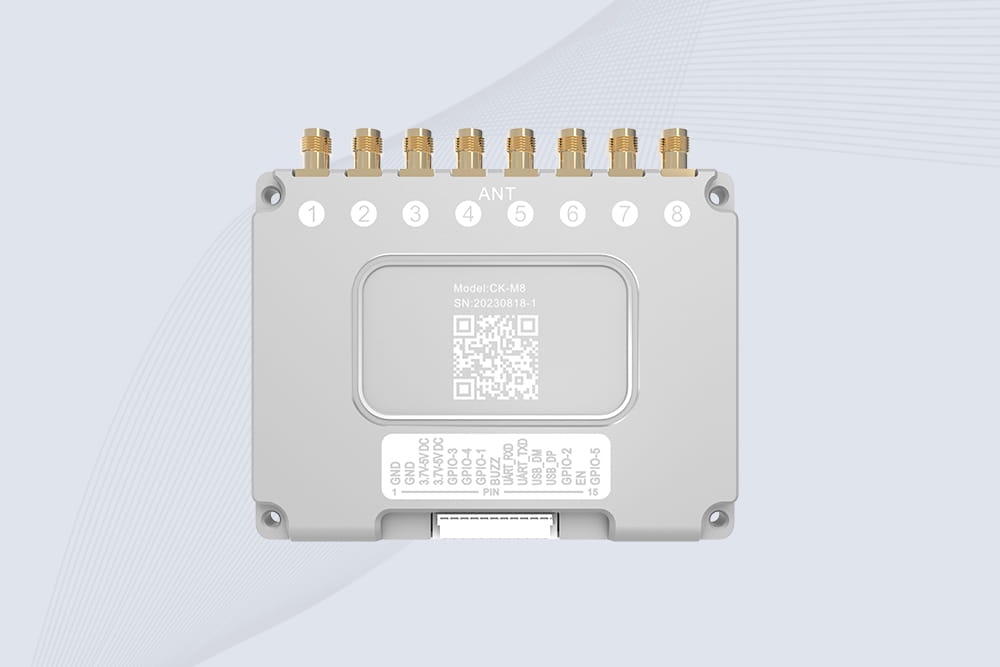
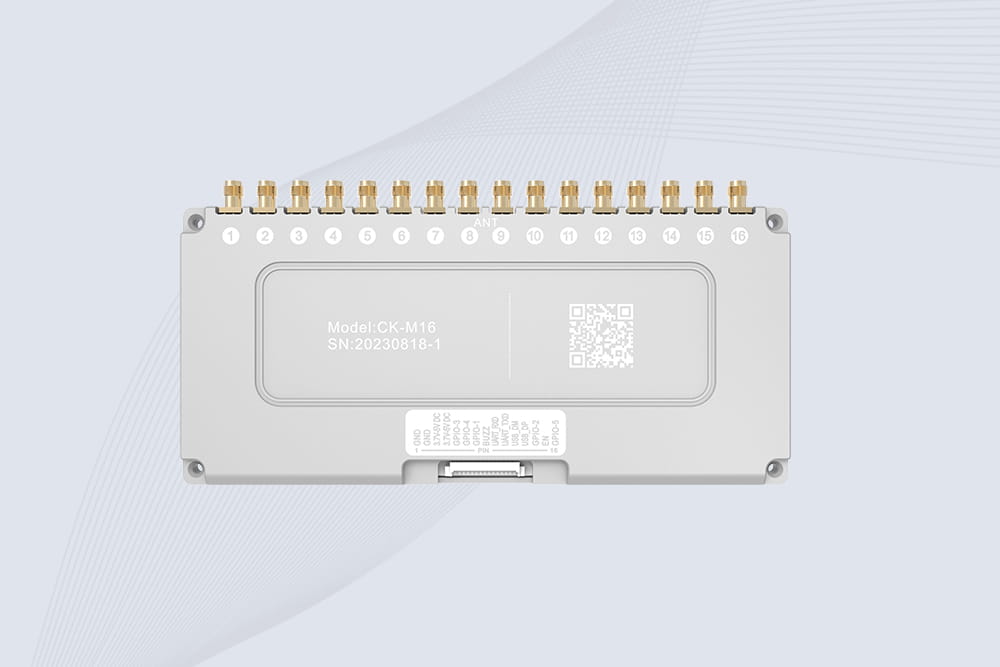
Before measuring RF performance, verify that the reader itself is communicating normally. Depending on the model and deployment, UHF RFID readers may use Ethernet, RS-232, USB, or another supported interface.
Check the reader’s configuration software or SDK and confirm that commands are being sent and responses are being received. If the reader provides inventory data, record the tag EPC and any available RSSI or antenna information.
Test item
What to verify
Typical observation
Power
Reader starts normally
No abnormal restart or fault
Communication
Host receives reader responses
Commands return correctly
Tag detection
Compatible UHF tag is identified
EPC is returned consistently
Read stability
Repeated inventory remains consistent
Few or no unexpected gaps
Multi-tag reading
Several tags are inventoried
Expected tag population appears
How to Test RFID Reader Read Range
Read range should be tested as a measurement, not a marketing number. Place the same UHF RFID tag at predetermined distances from the antenna and repeat the inventory operation at each position.
For example, test at 0.5 m, 1 m, 2 m, 3 m, and progressively farther distances where appropriate. Keep the tag orientation consistent during the first test. Then repeat the measurement after changing its orientation. This often exposes weak points that a single maximum-distance measurement hides.
Do not change several variables at once. If antenna angle, reader power, tag orientation, and product material all change together, it becomes difficult to identify why performance changed.
Why Tag Placement Changes the Result
UHF RFID performance is strongly affected by the environment and by the tag itself. Metal, liquids, packaging materials, antenna polarization, tag orientation, and reader power can all influence the observed result.
That is why a useful site test includes the actual product or container whenever possible. Testing only with a loose laboratory tag can produce a result that does not represent the installation.
Author experience: In reader commissioning work, one of the most revealing checks is to repeat the same inventory test after the tagged item has been moved from an open bench to its real mounting position. A small change in placement can matter more than increasing reader power.
UHF RFID Reader Testing With Multiple Tags
A reader that reads one tag successfully has not yet demonstrated reliable inventory performance. Add several tags and observe whether the reader identifies the expected population without excessive missed reads or unstable results.
For a practical test, record:
Total number of tags physically present Number of unique EPCs detected Time required for the inventory cycle Tags repeatedly missed Unexpected or duplicate reports Changes caused by tag spacing or orientation
For example, if 20 tags are placed within the intended read zone, the test should verify whether all 20 unique EPCs are consistently reported. Repeat the test rather than accepting one successful scan.
Use Realistic Operating Conditions
For warehouse or retail applications, test the reader in the conditions in which it will actually operate. A fixed reader mounted near a portal should be tested with products moving through the portal. A reader installed above a workstation should be tested with normal operator movements and product placement.
The goal is not to make the reader achieve the largest possible reading distance. The better objective is to establish a predictable read zone that captures the intended tags while limiting unwanted reads outside the zone.
Industry Reference for RFID Performance Testing
UHF RFID testing should also be aligned with the relevant technical standard for the equipment and application. GS1 identifies EPC UHF RFID technology within the EPC Gen2 / ISO-based framework, while ISO/IEC 18000-63 specifies the air-interface parameters for RFID operating at 860 MHz to 960 MHz. These standards provide a useful technical reference when evaluating reader and tag compatibility.
For this reason, a professional test should document the reader model, antenna configuration, tag model, operating frequency, reader settings, test distance, tag orientation, and environmental conditions. Without those details, a reported “read range” is difficult to reproduce or compare.
Cykeo Approach to UHF RFID Reader Testing
Cykeo UHF RFID readers are designed for applications requiring stable multi-tag identification and integration with host systems. Depending on the model, testing can include communication through Ethernet or RS-232, tag inventory, adjustable RF power, filtering, RSSI information, and SDK/API integration.
For engineering evaluation, I recommend keeping a simple test record for every reader:
Reader: exact model and firmware version Antenna: model, position, and orientation Tags: chip/tag type and mounting surface Power: configured output level Environment: open space or actual installation site Results: unique tags detected, missed reads, distance, and repeatability
This gives the installation team something much more useful than a single maximum-distance figure. It creates a baseline that can be checked again when the reader is moved, the tagged product changes, or the production environment becomes more crowded.
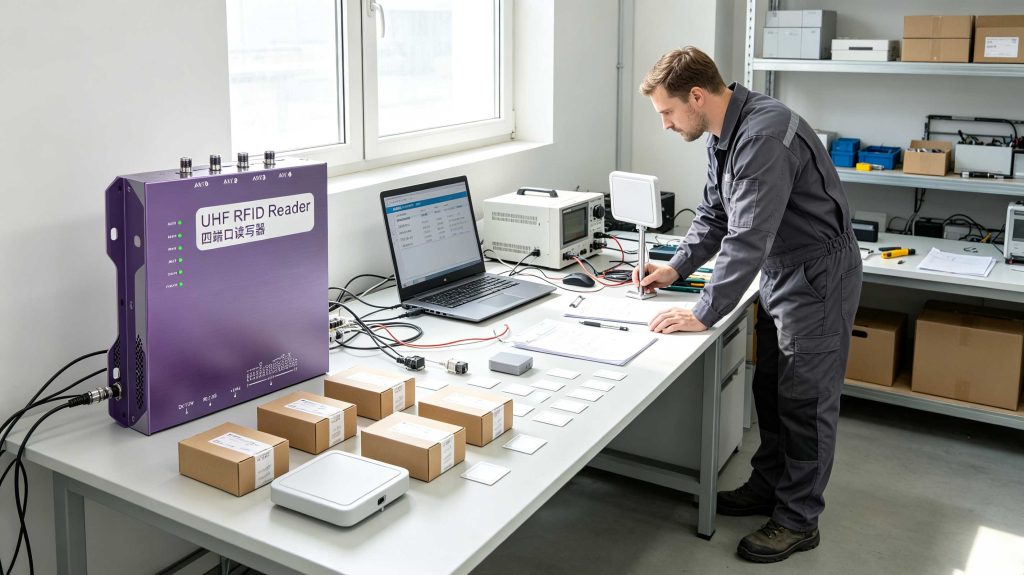
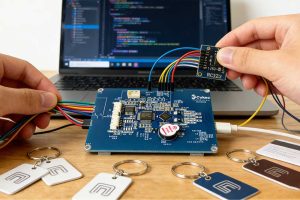
A controlled bench test helps engineers verify UHF RFID reader communication and tag detection before field deployment.
Testing Read Stability in the Field
Once basic communication and range tests pass, repeat the test in the intended operating environment. Walk tagged items through the read zone, rotate cartons, change tag spacing, and repeat the inventory cycle several times.
Watch for the failures that are easy to overlook: a tag that disappears only at one angle, a product that is consistently missed near metal, or an EPC that appears when an item is outside the intended zone.
These observations are often more valuable than simply increasing transmit power. A controlled UHF read zone is usually easier to integrate into a real business process than an uncontrolled zone designed only for maximum range.
How to Test RFID Reader Step by Step
A useful field test does not need complicated laboratory equipment. What matters is controlling the variables and recording what actually happens. For how to test RFID reader work, I normally separate communication testing, single-tag testing, range testing, and multi-tag testing instead of treating them as one pass-or-fail check.
1. Confirm Reader Configuration
Check the reader model and firmware. Confirm the antenna connection and antenna port. Verify the UHF operating region and supported frequency range. Set an appropriate RF output level. Confirm the reader is communicating with the host computer or application.
Start conservatively. Running the reader at maximum output immediately can make troubleshooting harder because an unnecessarily large read zone may introduce unwanted tag responses.
2. Test One Known UHF RFID Tag
Use one compatible UHF RFID tag with a known EPC. Place it in front of the antenna and initiate inventory. The returned EPC should remain consistent during repeated scans.
If the tag is not detected, do not immediately assume the reader is defective. Check the tag orientation, antenna connection, frequency configuration, reader settings, and physical distance first.
3. Measure the Read Zone
Move the tag away from the antenna in controlled increments. Record the farthest distance at which the tag can still be detected reliably, but also record where intermittent reads begin.
Test
Measurement
Why it matters
Near-field check
Short controlled distance
Confirms basic tag response
Range test
Increasing distance
Identifies practical coverage
Orientation test
Rotate tag
Reveals polarization sensitivity
Material test
Attach tag to actual product
Shows application-specific behavior
Repeatability test
Multiple inventory cycles
Checks stability rather than one-time detection
How to Test RFID Reader With Multiple Tags
Multi-tag performance deserves its own test. Put a known number of UHF tags into the intended reading area and compare the physical tag count with the unique EPCs returned by the reader.
Do not count repeated EPC reports as additional tags. A useful test counts unique identifiers.
For instance, place 30 tagged items inside the test area. If the reader reports 27 unique EPCs, the result is not simply “90% performance.” Identify which three tags were missed, then repeat the test. Their location, orientation, product material, or tag placement may reveal a specific installation problem.
Test Moving Tags, Not Only Stationary Tags
Stationary testing can look excellent while a portal application still misses products. If the reader will be used on a conveyor, doorway, warehouse lane, or checkout station, introduce movement into the test.
Run tagged products through the expected path at realistic spacing. Then repeat with different orientations. This is where antenna placement and read-zone control become much more important.
How to Test RFID Reader for Accuracy
Accuracy should be evaluated against the business event the RFID system is supposed to capture. For inventory, that may mean identifying every intended item. For access or tracking, it may mean determining whether the correct tag was detected within a defined zone.
A practical test record can include:
Test date and location Reader and antenna model Tag model and chip type Reader output power Distance and tag orientation Number of tags physically present Number of unique EPCs detected Missed tags Unexpected reads Environmental conditions
This level of documentation is particularly useful when the same reader must later be reproduced across several warehouse stations. It prevents an engineering result from becoming disconnected from the physical installation.
Common Problems When Testing a UHF RFID Reader
Reader Detects Tags Only at Short Distance
Check the antenna connection, tag orientation, RF settings, frequency configuration, and mounting environment. Metal surfaces and certain product materials can significantly alter the behavior of a UHF tag.
Reader Detects Some Tags but Misses Others
Compare the missed tags physically. They may use a different tag design, have different orientation, or be mounted on a material that changes antenna performance. Testing the actual production tag is more useful than substituting a convenient laboratory tag.
Reader Detects Tags Outside the Intended Area
Reduce the effective reading zone through antenna positioning, power adjustment, filtering, shielding where appropriate, or application-level event logic. Maximum range is not automatically the correct target.
Multiple Tags Produce Unstable Results
Check tag spacing, antenna placement, reader configuration, and the application’s inventory settings. Repeat the same test several times before changing hardware. A single unusual scan is not enough evidence to identify the cause.
Cykeo UHF RFID Reader Testing Considerations
Cykeo’s UHF RFID reader solutions support practical evaluation through features such as multi-tag identification, adjustable RF output, filtering, and host-system integration. Depending on the model, Ethernet and RS-232 interfaces can be used for connecting the reader to industrial equipment or software platforms.
For engineering teams, the important point is not simply whether a Cykeo reader can “read an RFID tag.” The stronger evaluation asks whether the reader can repeatedly identify the right tags at the right location and under the actual operating conditions.
For example, a fixed reader installed beside a warehouse passage should be evaluated with the real antenna position, real tagged cartons, real lane width, and expected movement. A desktop reader requires a different test: short controlled reading and writing distances, repeatability, tag filtering, and reliable communication with the workstation application.
Technical Reference for UHF RFID Testing
For UHF RFID systems, ISO/IEC 18000-63 provides the air-interface specification for RFID devices operating in the 860 MHz to 960 MHz frequency range. GS1 also maintains technical resources covering EPC UHF RFID and EPC Gen2 technology. These references are useful when checking whether reader, tag, and system configurations are aligned with the intended UHF RFID technology.
Rather than reporting an isolated maximum range, an engineering report should state the conditions under which the measurement was obtained. That makes the result reproducible and gives installation teams something concrete to compare after deployment.
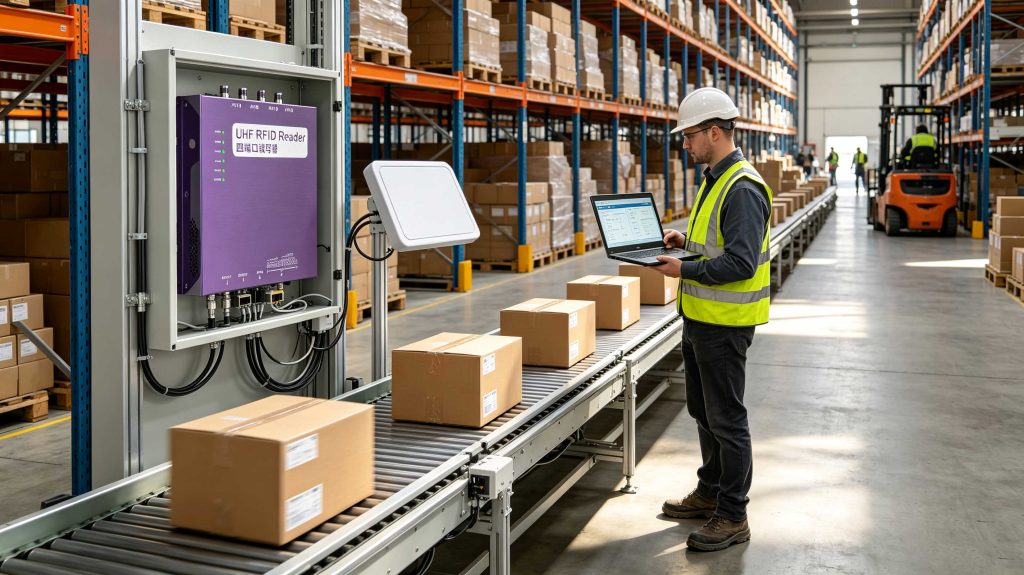
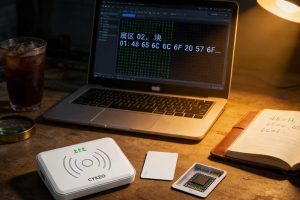
Field testing verifies UHF RFID reader performance with real tagged products, antenna placement, and warehouse conditions
UHF RFID Reader Testing Checklist
☐ Reader powers on normally ☐ Host communication is stable ☐ Compatible UHF tag is detected ☐ EPC data is correct ☐ Read distance has been measured ☐ Tag orientation has been tested ☐ Actual product materials have been tested ☐ Multiple tags have been tested ☐ Moving tags have been tested where required ☐ Missed and unwanted reads have been recorded ☐ Final settings have been documented
FAQ: How to Test RFID Reader
1. How do I know if my RFID reader is working?
Connect the reader to its host system and test it with a compatible UHF RFID tag whose EPC is known. If the reader consistently returns the correct EPC during repeated inventory operations, basic communication and tag detection are working.
2. How do you test RFID reader range?
Place a compatible UHF RFID tag at controlled distances from the antenna and repeat the inventory operation at each distance. Record both the maximum detectable distance and the distance where reliable, repeatable reading begins to decline.
3. Why does my RFID reader read one tag but miss several tags?
Multi-tag performance can be affected by tag spacing, orientation, product material, antenna position, RF settings, and the surrounding environment. Test the actual tags and products used in the application rather than relying only on one laboratory tag.
4. Can I test a UHF RFID reader without special equipment?
Yes. Basic functional testing can be performed with the reader, compatible UHF RFID tags, its antenna, a host computer, and the appropriate software or SDK. More detailed laboratory characterization may require additional measurement equipment.
5. Should RFID reader testing use the maximum power?
Not necessarily. The correct power level depends on the required read zone and installation environment. Excessive range can create unwanted reads outside the intended area, so practical testing should focus on controlled and repeatable coverage.
6. How many RFID tags should be used for testing?
There is no universal number. Start with one known tag for functional testing, then use a representative group for multi-tag testing. The group should reflect the quantity, spacing, tag type, and product arrangement expected during actual operation.
7. What is the most important part of RFID reader testing?
Repeatability is one of the most important factors. A reader should not merely detect a tag once. The test should show that the intended tags are consistently identified under the same physical and operating conditions.
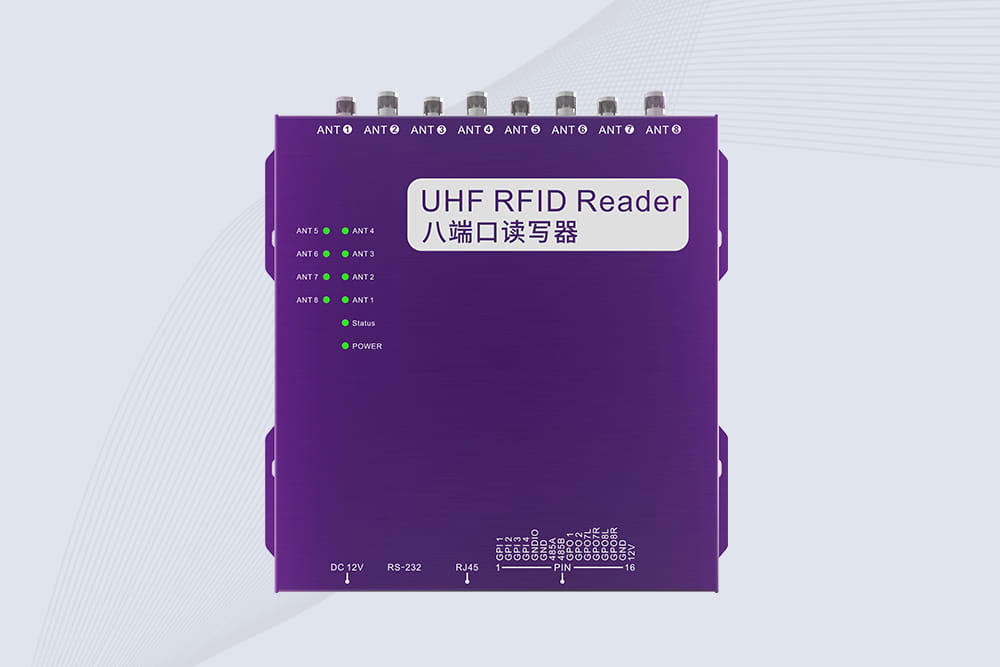
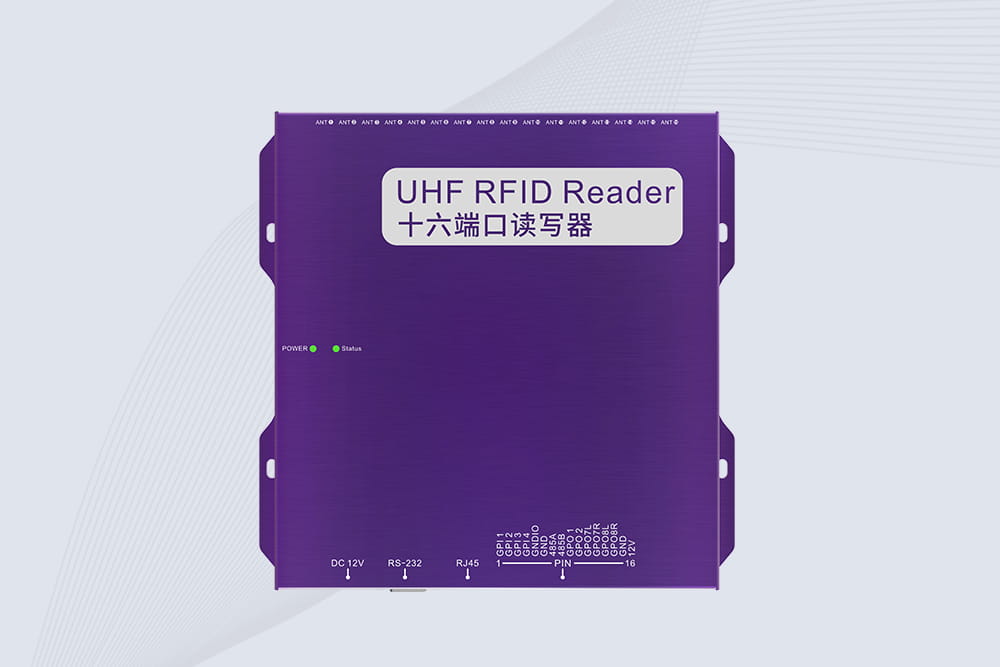
SSD-R16L Multi-Channel RFID Infrastructure for Automated Inventory Management ✔️ 16-Port High-Density RFID Reading Equipped with 16 SMA antenna ports, SSD-R16L supports multi-antenna deployment for warehouses, retail stores, logistics, production lines, and large-area RFID identification. ✔️ High-Speed & Long-Range Performance With up to 33…
SSD-R8L 8-port UHF RFID reader with 33dBm output, up to 20m reading range and 600+ tags/s recognition. Ideal for warehouse, logistics, retail and asset tracking.
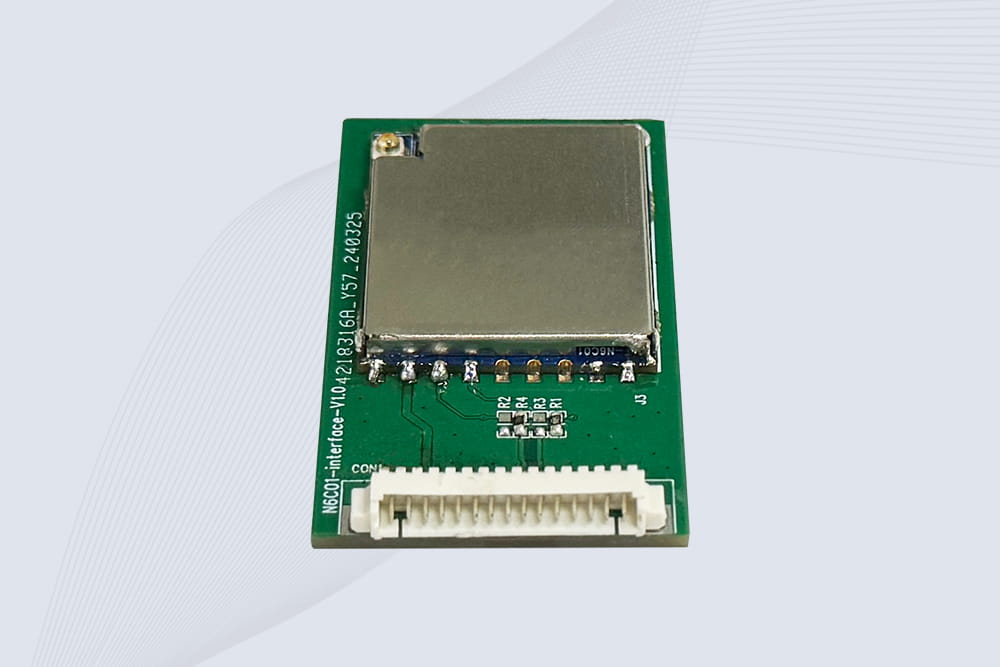
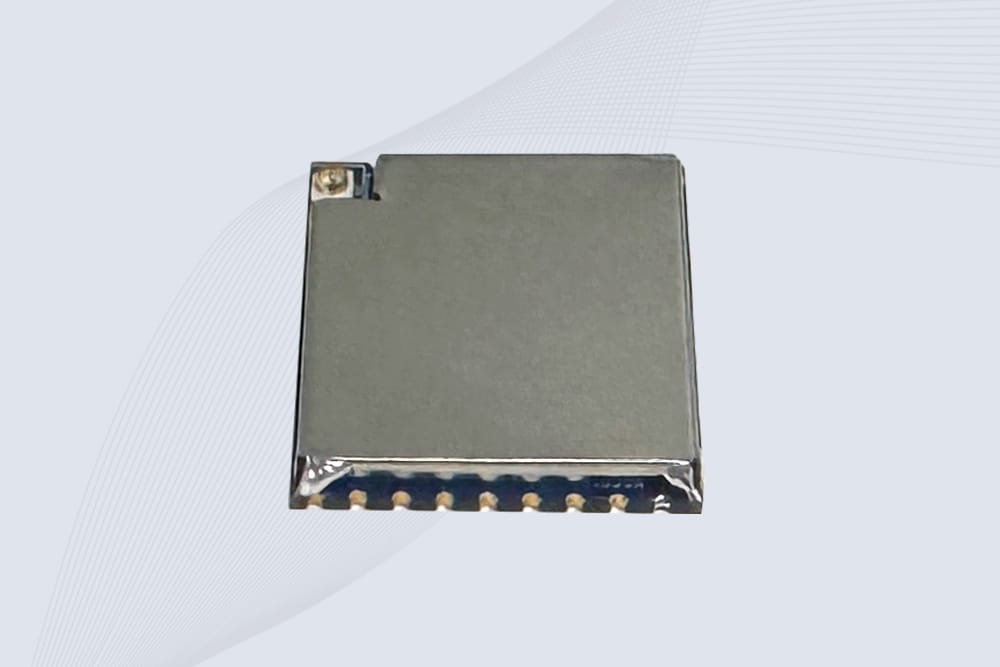
CYKEO Embedded RFID Modules are designed for compact industrial and IoT devices that require stable UHF performance. These UHF RFID Modules support global protocols, flexible power control, and reliable multi-tag reading for smart cabinets, production lines, and asset tracking systems.
CYKEO Embedded RFID Module is built for compact IoT and industrial devices that need stable UHF performance. This UHF module supports global protocols, low power operation, and reliable multi-tag reading for smart lockers, production lines, and always-on RFID systems.
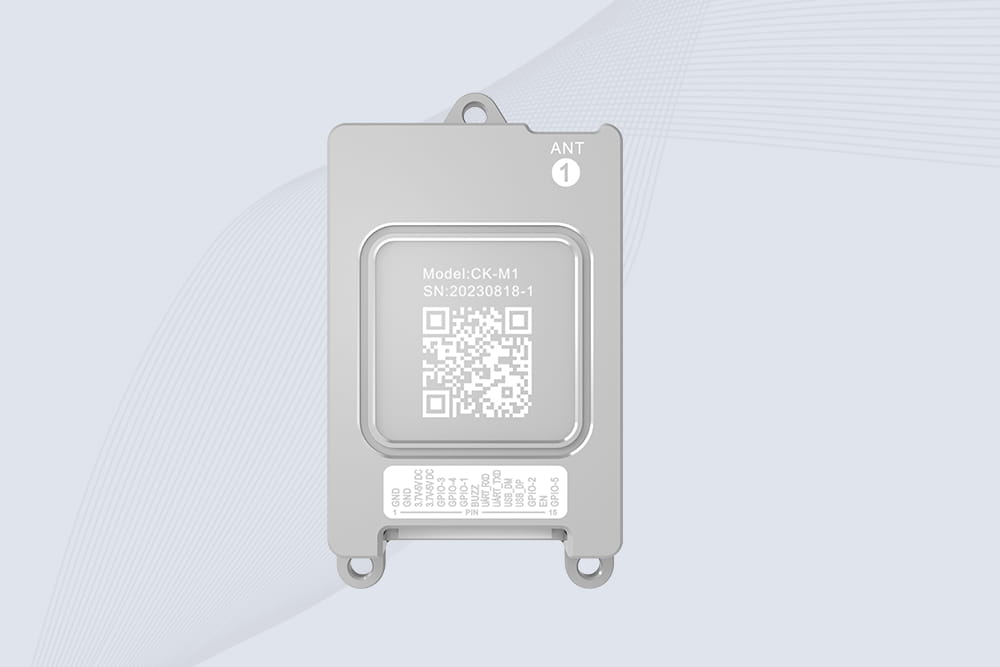
CYKEO CYKEO-M1 drone rfid module is a compact UHF RFID reader module designed for drones and UAV platforms. It supports long-range aerial scanning, fast multi-tag reading, and stable performance in wind, vibration, and outdoor environments.
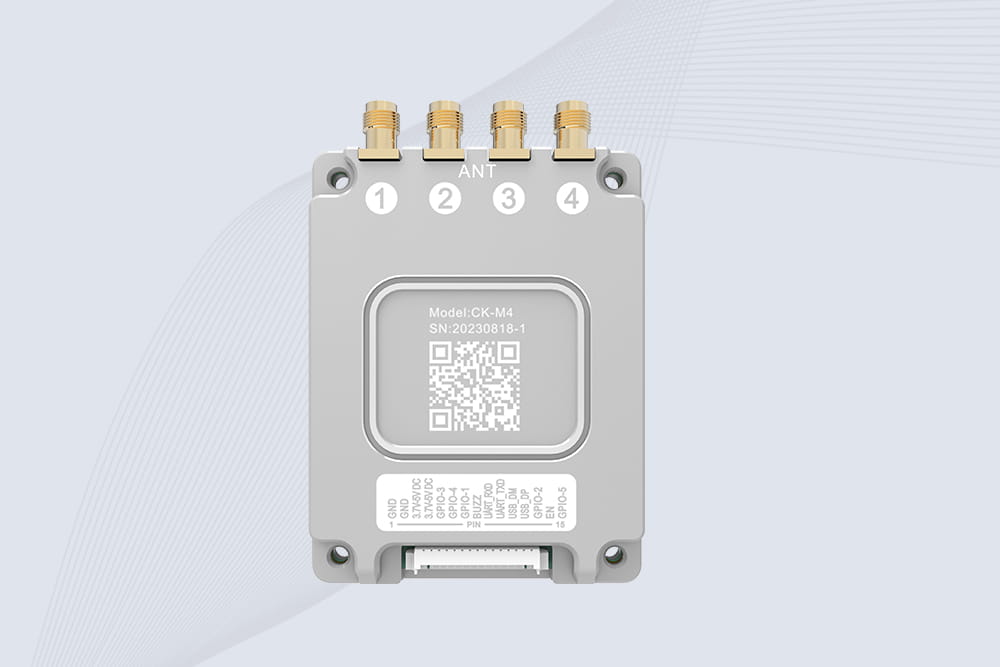
CYKEO CYKEO-M4 RC522 RFID Module is an industrial-grade UHF RFID reader with 4 ports, supporting ISO, EPC, and GB protocols. High-speed, accurate reading for IoT, automation, and warehouse applications.
CYKEO CYKEO-M8 Module RFID is an 8-port UHF R2000 RFID Module designed for high-density, multi-tag environments. Stable 33dBm output, ISO & GB protocol support, ideal for warehouses, factories, and automated systems.
CYKEO CYKEO-M16 RFID Module is a 16-port UHF RFID reader module based on the R2000 chipset. Designed for dense tag environments, it supports ISO and GB standards and delivers stable multi-antenna control for industrial automation.
The CYKEO CYKEO-M16L RFID Reader Module is a 16-channel UHF RFID core designed for dense tag environments. With adjustable 33dBm output, multi-protocol support, and stable multi-antenna control, this RFID Tag Reader Module fits industrial automation, warehouse systems, and large-scale IoT deployments.
CYKEO CYKEO-M8L module RFID is a compact industrial UHF module built for dense tag and multi-antenna environments. With 8 RF ports, adjustable 33 dBm output, and ISO & GB protocol support, it is widely used in factories, warehouses, and automated tracking systems.
CYKEOCYKEO-M4L UHF RFID Module is a compact 4-channel RFID tag reader module designed for dense tag environments. Supporting ISO and GB protocols, it delivers stable reads up to 10 meters for industrial and IoT systems.
Cykeo CYKEO-C1 industrial Forklift RFID Reader features 20m read range, 600 tags/sec scanning, Impinj R2000 chipset, and IP67 rugged design. Ideal for warehouse logistics and manufacturing. Supports ISO 18000-6C/6B protocols.
Cykeo CYKEO-R4 industrial UHF RFID Fixed Reader features 4 TNC ports, 400+ tags/sec speed, IP67 housing, and global frequency compliance for vehicle inspection, smart warehouse, and asset management systems.
CYKEO CYKEO-R8L Fixed RFID Reader with 8-port UHF design, Impinj-based RF core and up to 20m read range. An industrial Fixed RFID Reader for vehicle inspection, warehouse portals, smart manufacturing lines and secure access checkpoints.
RFID Fixed Reader from CYKEO – the CYKEO-R16L 16-port UHF fixed reader for warehouses, smart cabinets, and production lines. Long-range, multi-tag reading, stable performance for 24/7 industrial use.
Learn the critical maintenance requirements for industrial RFID systems to ensure longevity and accuracy. Discover Cykeo’s strategies for minimizing downtime in harsh environments.
Discover how RFID antennas drive modern supply chain automation—reduce errors, enable real-time tracking, and streamline operations without manual bottlenecks.
 Cykeo RFID IoT Solution Products R&D Manufacturer