 Cykeo RFID IoT Solution Products R&D Manufacturer
How Many Layers of Foil to Block RFID? A Real-World DIY Guide
334Learn how many layers of aluminum foil are actually needed to block RFID signals, how it works, and whether this DIY method is truly reliable for protecting your cards.
MoreAll RFID Product
For many hotels, hospitals, and commercial laundries, linen replacement is one of those operating costs that slowly grows in the background.
At first, the losses don’t seem serious. A few towels disappear. Some bed sheets wear out earlier than expected. Uniforms get mixed into the wrong customer batches.
But over time, the numbers become difficult to ignore.
Large laundry operations replace huge amounts of textiles every year, and in many cases, management teams don’t have clear visibility into why items disappear or wear out so quickly.
This is one reason RFID laundry tracking systems are becoming increasingly popular in textile management.
Better tracking does not completely eliminate linen replacement costs, but it helps operators understand where losses happen and how inventory is actually being used.
Textile loss usually isn’t caused by one major issue.
Instead, it comes from small daily problems repeated over long periods.
For example:
When facilities rely mainly on manual counting, these issues are difficult to measure accurately.
Many businesses replace linens based on assumptions instead of actual usage data.
RFID helps create much clearer visibility.
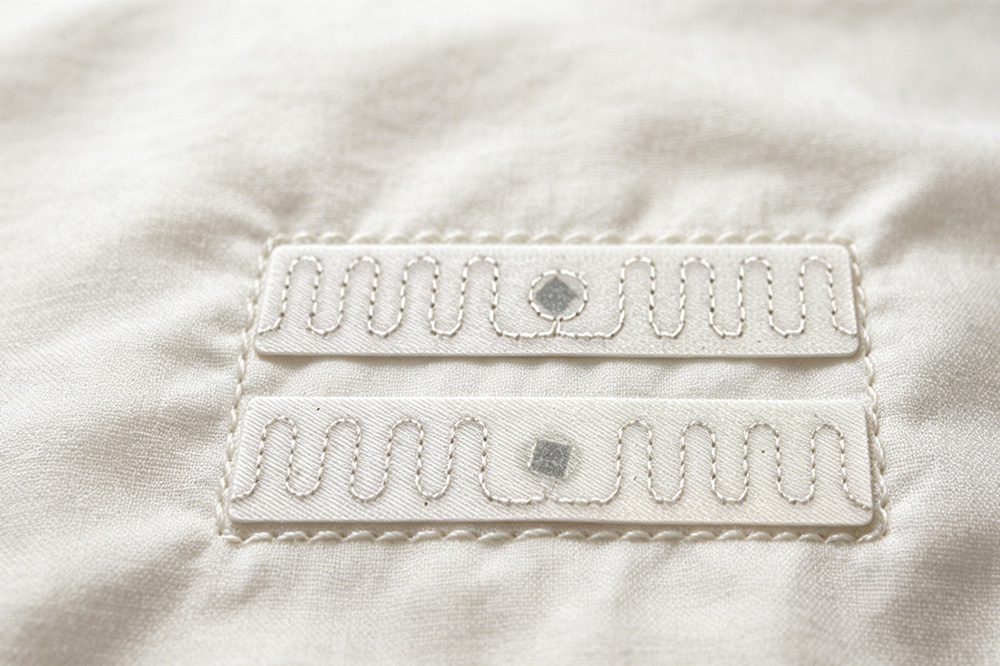
RFID laundry tags allow individual textile items to be tracked throughout their entire lifecycle.
The tag is sewn directly into the linen or garment and remains attached during washing, drying, storage, and transportation.
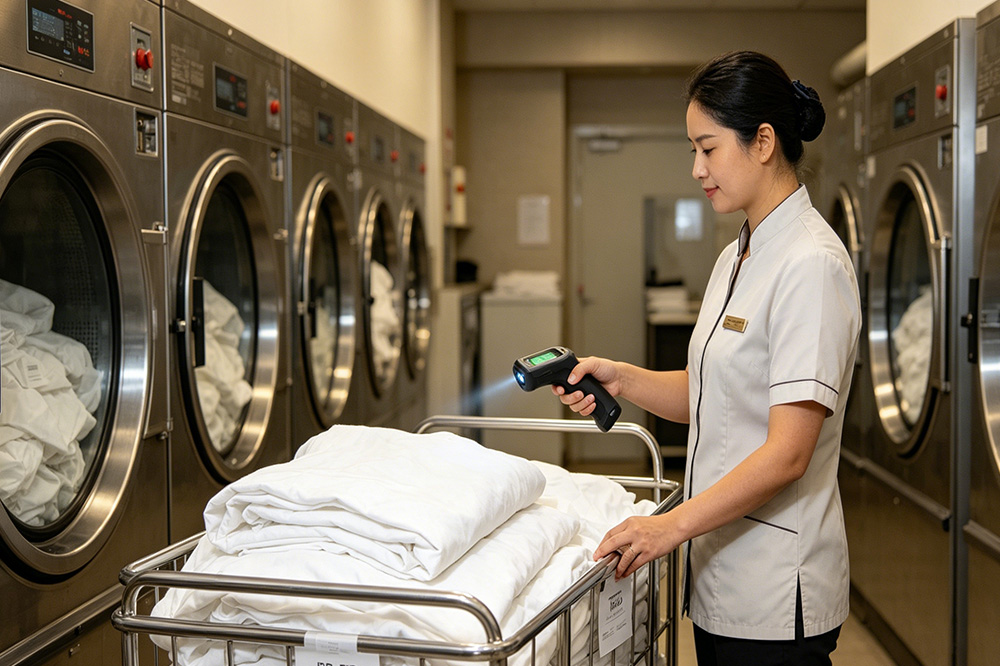
As textiles move through RFID reading points, the system automatically records inventory activity.
A durable industrial RFID laundry tag is designed to survive repeated industrial washing cycles, chemical detergents, ironing pressure, and high-temperature drying environments.
Once deployed, operators can monitor:
This level of visibility is difficult to achieve with manual systems alone.
In hospitality operations, linens are sometimes replaced earlier than necessary simply because their actual usage history is unclear.
Without tracking, housekeeping teams may remove items based on appearance estimates or incomplete inventory records.
RFID systems help hotels understand how long textiles actually remain in circulation.
For example, operators can identify:
That information helps hotels make more consistent replacement decisions instead of relying only on manual observation.
One of the biggest advantages of RFID laundry management is wash cycle tracking.
Every time a textile moves through the laundry process, the RFID system can update its usage history automatically.
This helps operators monitor textile lifespan more accurately.
Instead of replacing all linens on rough schedules, facilities can identify individual items approaching end-of-life based on actual washing frequency.
That improves:
For large operations handling thousands of linens, even small improvements in textile lifespan create noticeable savings over time.
Many commercial laundries and hotels carry excess textile inventory because inventory accuracy is inconsistent.
When operators cannot trust inventory data fully, they often compensate by purchasing additional stock “just in case.”
RFID helps reduce that uncertainty.
Because textiles are tracked automatically, operators gain more reliable inventory visibility across storage areas, laundry facilities, and delivery processes.
This makes it easier to identify actual shortages instead of relying on estimated inventory counts.
In some cases, businesses discover they already own more textiles than they originally believed.
One overlooked advantage of RFID systems is problem detection.
When textile movement becomes traceable, unusual patterns become easier to notice.
For example:
Without tracking data, these issues may continue for years unnoticed.
RFID helps management teams identify operational inefficiencies earlier before replacement costs grow larger.
Manual inventory systems often create hidden operational problems.
When staff are under pressure, counting errors and sorting mistakes increase. Misplaced textiles eventually appear as inventory loss.
RFID reduces some of this manual workload by automating textile identification and counting.
That improves inventory accuracy while also reducing the likelihood of garments disappearing because of human error.
For facilities processing high textile volumes daily, automation becomes increasingly valuable as operations scale.
As textile prices and labor costs continue rising, businesses are paying closer attention to inventory efficiency.
Hotels, hospitals, and uniform rental companies all want better visibility into how textiles move through their operations.
RFID helps provide that visibility.
For many commercial laundry operators today, RFID laundry tags are no longer viewed simply as tracking tools. They are becoming part of broader efforts to control operating costs and manage textile inventory more efficiently over the long term.
User Guide
How to Remove RFID Tags from Clothing Safely (Without Ripping Your Shirt)
The Truth About RFID Signals: Aluminum Foil, Smartphones, and Reading Range Explained
How Security Tag Readers Work: RFID vs. Magnetic Systems – Which Is More Efficient?
How to Deactivate RFID Tags Without Guesswork or Myths?
How to Test RFID Tags with Phone
How to Test RFID Tags with Your Smartphone (No Scanner Needed)
How to Use Android Phone to Emulate RFID Tag: Full Tutorial and Application Guide
Can Your RFID Tags Reader iPhone ? Here’s How It Actually Works
Can You Use an NFC Phone as an RFID Tag?
How to Choose the Right RFID Tag for Clothing? Materials, Packaging & Attachment Explained
Industrial Essentials: 2025 Guide to the Most Durable Rugged RFID Tags
Active RFID Tag Range: The Real Difference Between Active and Passive Tags

Learn how many layers of aluminum foil are actually needed to block RFID signals, how it works, and whether this DIY method is truly reliable for protecting your cards.
More
Learn how long range RFID scanners are used for vehicle tracking, parking access, and logistics management. A practical guide for RFID integrators, distributors, and industrial buyers.
More
RFID tag rewriting is possible only when the tag has writable memory and a compatible RFID reader writer is used. A reliable process requires correct tag sel...
More
CYKEO long range RFID tag reader with 9dBi integrated antenna, rugged design, outdoor-ready, real-time tag reading, and multi-protocol support. Perfect for warehouses, logistics, and industrial automation.
More