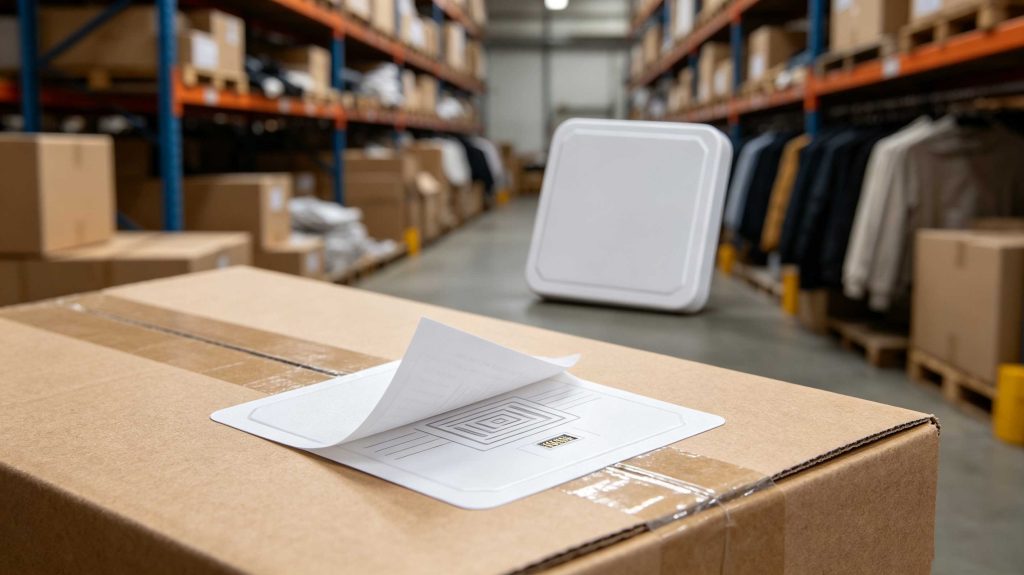
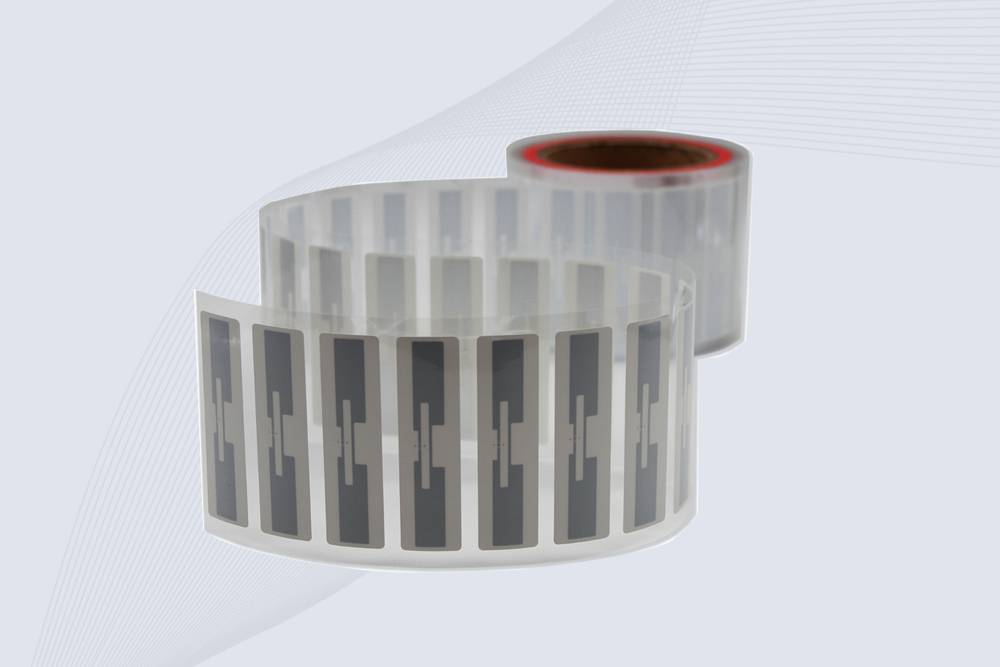
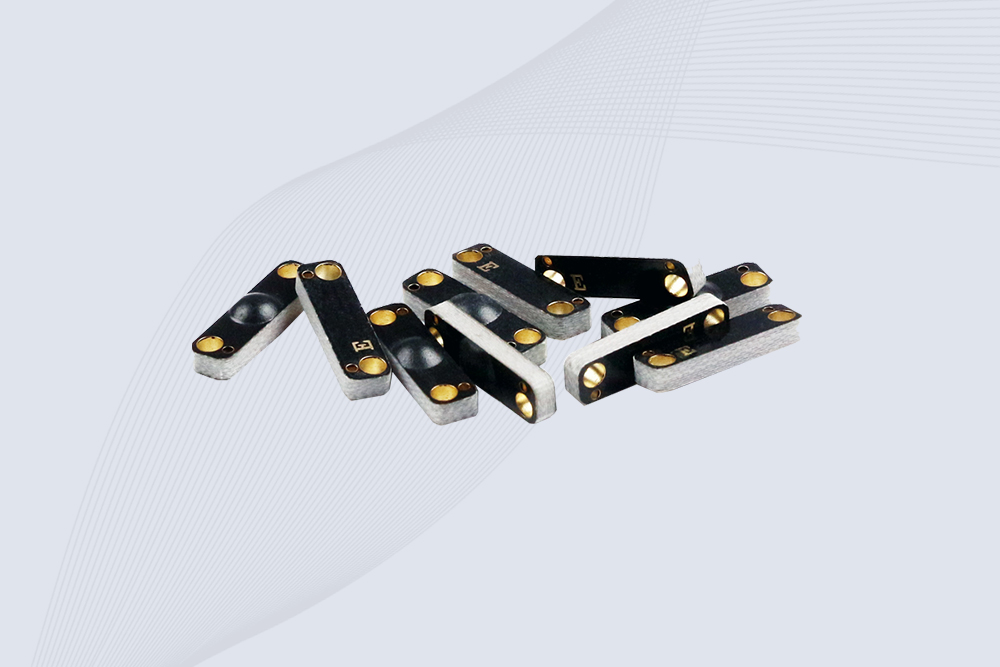
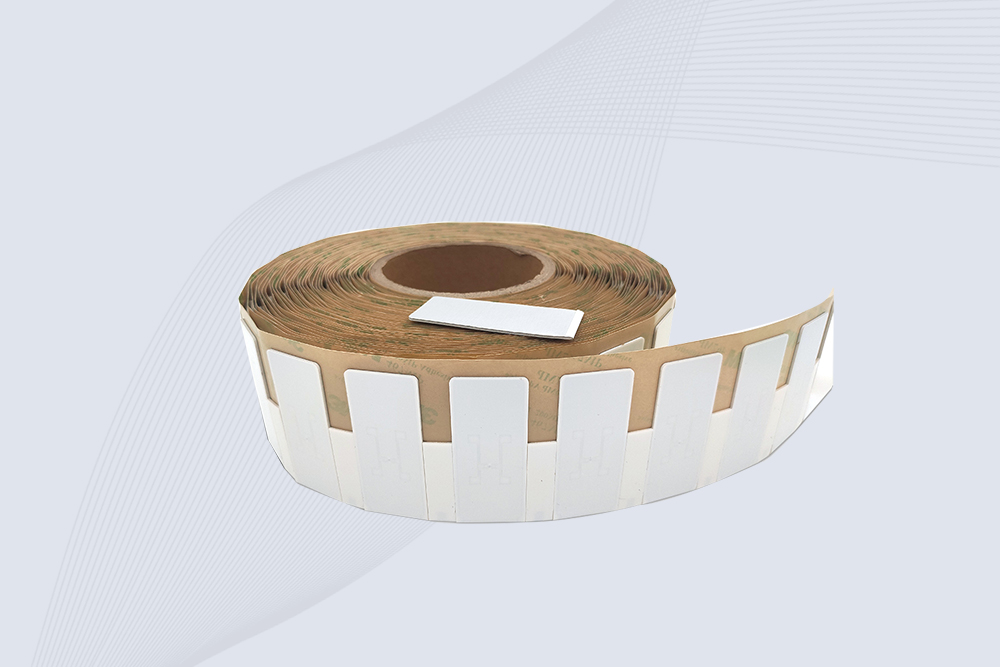
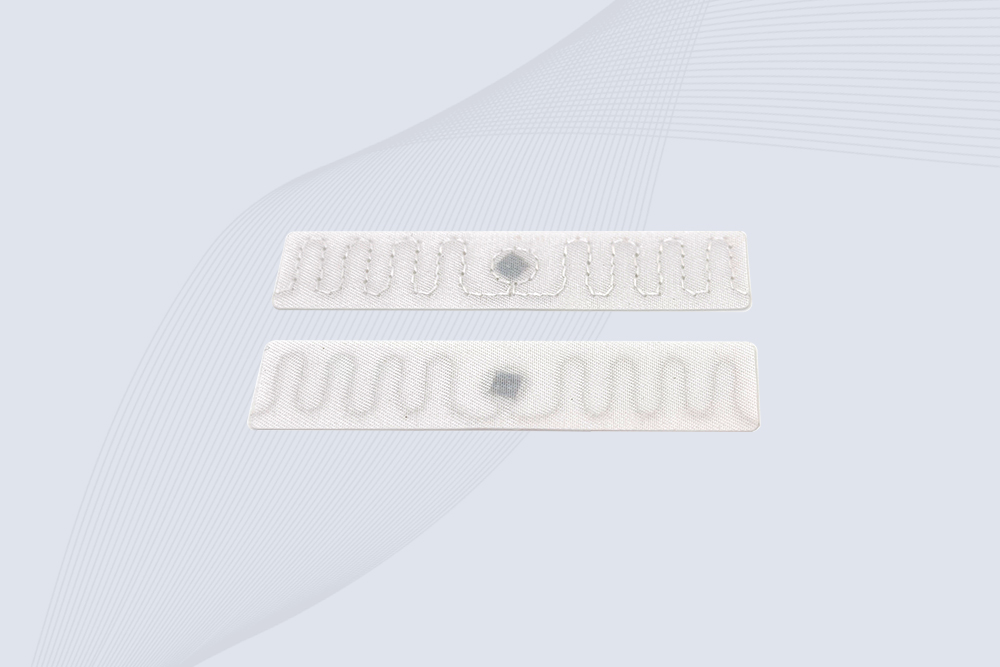
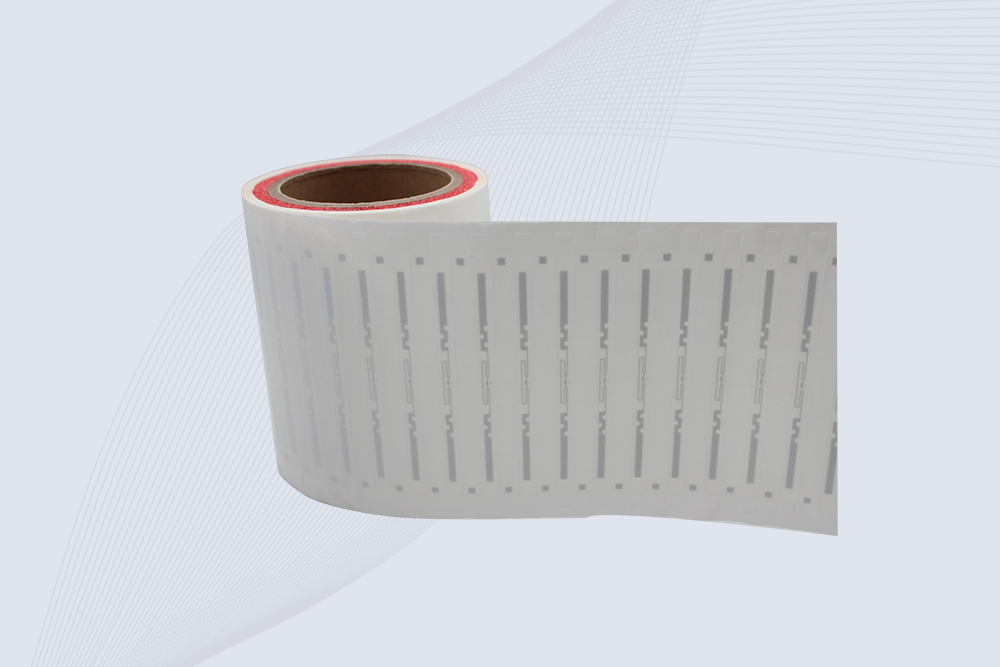
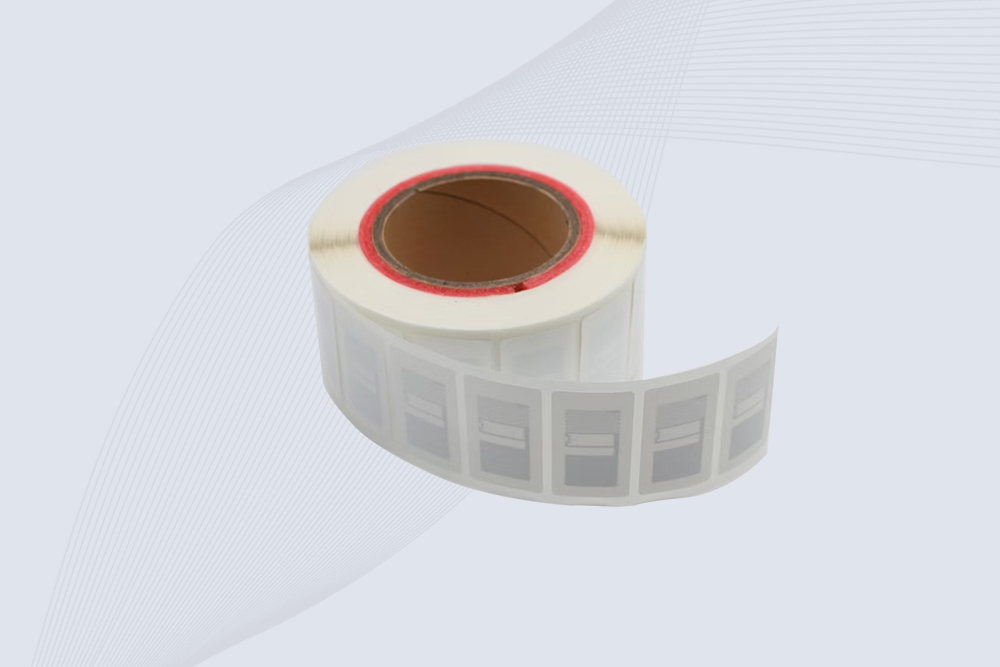
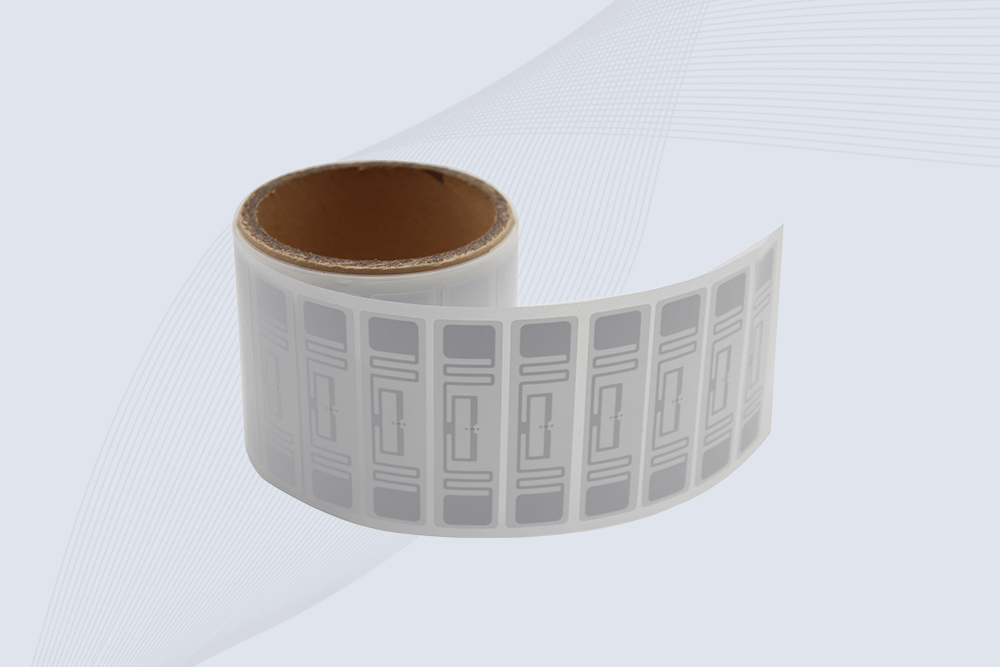
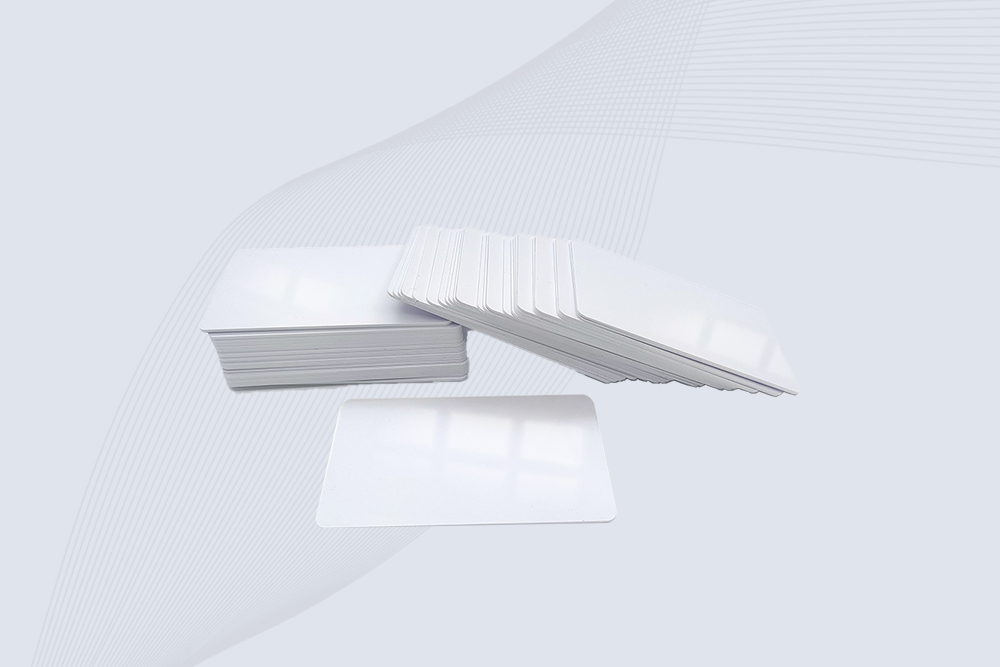
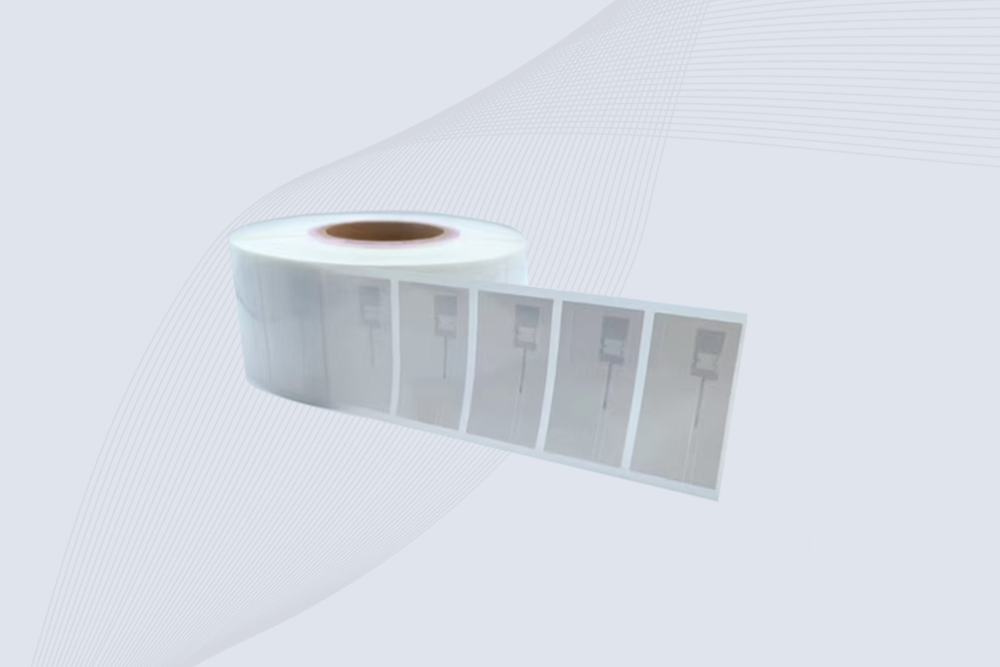
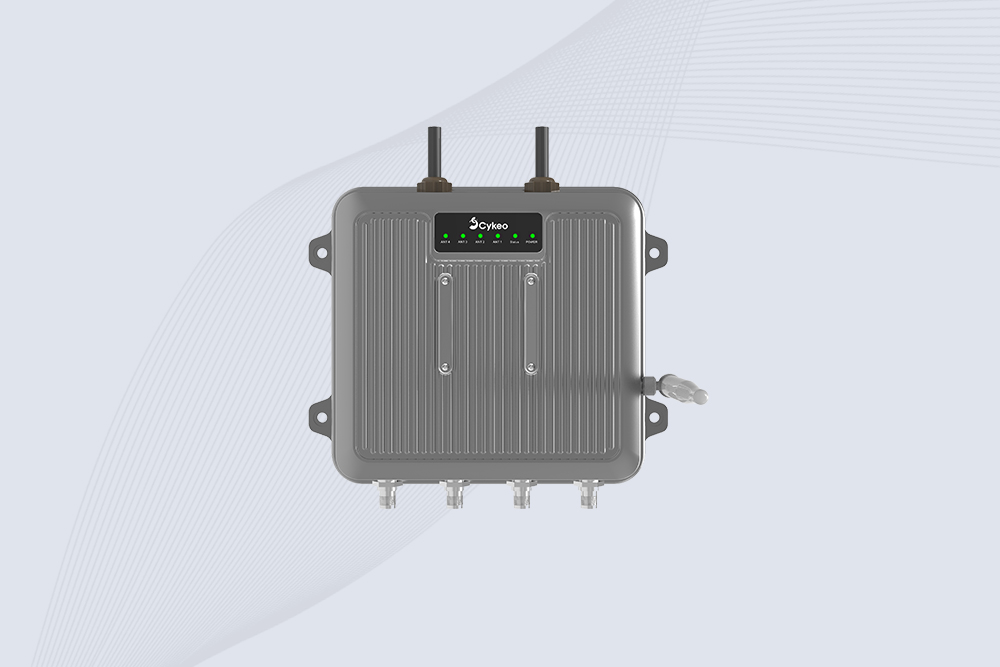
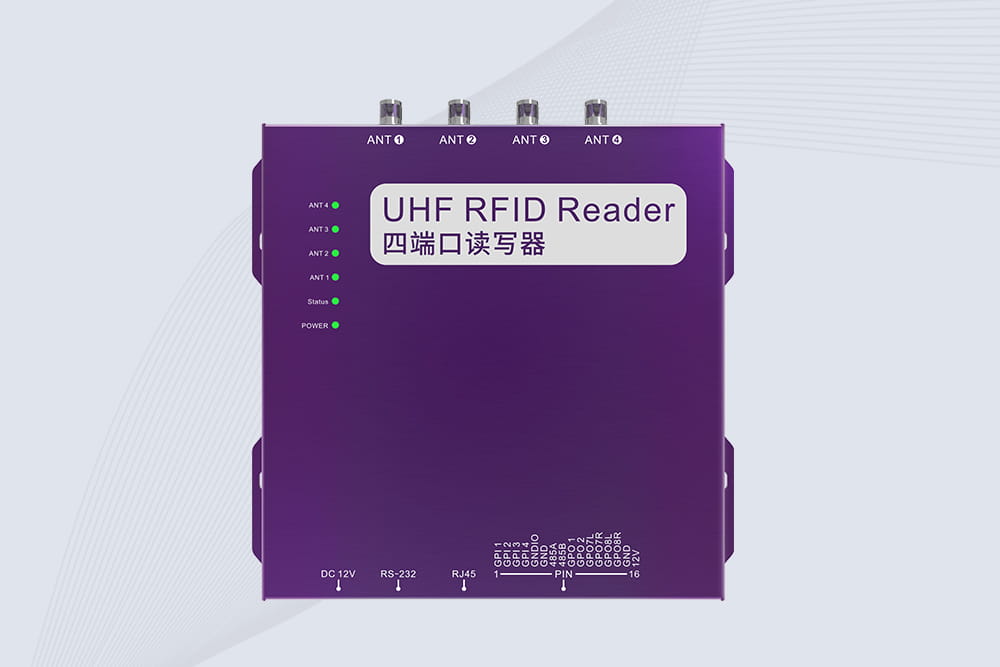
How rfid labels work is straightforward: a reader sends radio energy to the label, the label’s antenna captures that energy, its chip processes the stored identification data, and the label reflects a modulated signal back to the reader. A passive UHF RFID label does not need a conventional battery to answer the reader.
That short exchange is happening incredibly quickly.
The label may look like an ordinary adhesive sticker, but underneath the printed surface are two critical components: an antenna and an RFID integrated circuit (IC). Together they form the RFID transponder. GS1 describes the antenna as the element that enables the chip to communicate with the reader, while the chip stores identification information and other possible data.
What Is Inside an RFID Label?
A typical passive UHF RFID label has a relatively simple physical construction:
Receives RF energy and participates in backscatter communication
RFID IC
Processes commands and stores tag information
Substrate / inlay
Holds the antenna and chip together
Adhesive
Attaches the label to the product
Printed face
Provides human-readable information when required
The part worth paying attention to is the inlay. In practical RFID manufacturing, this is where the antenna and IC are integrated before the finished inlay is converted into a label.
The printed label is therefore not the RFID system itself. It is the physical carrier around the RF components.
How RFID Labels Receive Power
Passive UHF RFID labels are powered differently from Bluetooth devices or active tracking tags.
The reader generates an electromagnetic field. When a compatible passive label enters that field, its antenna receives RF energy and converts it into electrical energy for the chip. The chip then becomes active enough to respond to the reader.
GS1 explains that passive tags have no radio transmitter or conventional power source and instead draw operating energy from the reader’s electromagnetic field.
This is why a passive RFID label can remain extremely thin.
There is no battery to recharge. No switch. No separate transmitter.
The RF exchange
The sequence is better understood as a conversation than as a one-way broadcast:
The RFID reader transmits RF energy.
The label antenna receives the RF field.
The chip harvests enough energy to operate.
The reader sends commands to the tag.
The chip processes the command.
The tag changes the electrical characteristics of its antenna.
The altered reflection carries information back to the reader.
The reader converts that response into digital tag data.
This return mechanism is called backscatter. GS1’s EPC/RFID architecture describes passive tags as receiving operating energy from the reader’s continuous-wave signal and communicating by modulating the reflection coefficient of their antenna.
That distinction is important when explaining how UHF RFID tags work. The label does not independently transmit like a Wi-Fi device. It modifies the reader’s RF signal so the reader can interpret the response.
What Information Does an RFID Label Store?
Not every RFID label carries a large product database.
In many item-level applications, the most important information is a serialized identifier. For GS1 EPC/RFID applications, the EPC can encode GS1 identification keys and add serialization so individual physical items can be distinguished.
GS1 notes that simple RAIN RFID labels may use 96-bit or 128-bit identifiers, while higher-memory passive UHF tags can provide substantially more storage, with typical tag capacity reaching up to 8 KB depending on the chip and application.
That creates two very different approaches to label design:
Identifier-focused label: stores a unique EPC and uses the enterprise database for product information.
Data-bearing label: stores additional application information in user memory.
For warehouse and retail projects, the first approach is often more practical. The RFID label acts as the item’s digital license plate; the business system holds the richer product record.
EPC Memory and User Memory
A Gen2 RFID tag contains different memory areas. GS1 identifies the EPC memory bank as the location normally used for the serialized product identifier, while the User memory bank can hold additional application information.
This is one reason RFID labels should not be evaluated solely by asking, “How much data can it store?”
For inventory management, the more useful question is often:
Can the label provide a reliable unique identity at the point where the item needs to be recognized?
That shifts the engineering discussion toward tag design, antenna performance, placement and reader configuration.
A passive UHF RFID label combines an antenna and RFID IC to harvest reader energy and communicate through backscatter.
Why Antenna Design Matters More Than the Sticker
In the field, an RFID label can look perfectly normal and still perform badly.
The antenna has to work with the reader’s operating frequency, polarization, mounting surface and surrounding materials. Metal and liquid are especially important considerations in UHF deployments.
GS1 states that passive UHF RFID generally operates in the 860–930 MHz range and that read range can reach up to approximately 10 meters depending on the environment.
But distance alone is a poor specification.
GS1 explicitly notes that passive UHF read range depends on factors including reader power, interference, antenna characteristics and tag orientation; it also emphasizes that the shape of the readable volume can matter more than maximum distance.
That is something we pay close attention to when evaluating RFID labels for actual deployments. A label that reads beautifully from one orientation on a cardboard carton may behave very differently when the same label is folded into clothing, placed against a metal meter, or compressed into a dense trolley.
The label and reader should therefore be treated as a matched RF system—not two independent products.
How Multiple RFID Labels Are Read
One of the major advantages of UHF RFID is that the reader can communicate with multiple tags in its interrogation zone.
This requires an anti-collision mechanism. In the EPC Gen2 protocol, tags participate in inventory rounds using a randomized slot-based process so that multiple tags do not simply respond at exactly the same instant. GS1’s Gen2 specification defines random-slotted collision arbitration and the Q parameter used by the interrogator to manage tag response probability.
This is what makes a pile of individually tagged products fundamentally different from a collection of barcodes.
A barcode scanner normally works through individual visual scanning events.
A UHF RFID reader can manage an RF inventory round involving numerous tags.
A field detail that often gets missed
When a warehouse reports that “RFID missed a few labels,” the immediate assumption is often that the reader is weak.
That is not necessarily the problem.
The label could be poorly oriented. The antenna pattern may not cover the required volume. Several products may be shielding one another. The tag may have been designed for cardboard but installed directly against metal.
In other words, RFID label performance is an application-engineering problem as much as a reader-performance problem.
GS1’s published RFID material gives a useful real-world benchmark: its research reports that RFID implementations can raise inventory accuracy from an average of 63% to 95%, while other GS1 retail research found RFID users reporting 93–99% inventory accuracy. These figures come from specific studies and deployments, not a universal guarantee for every RFID installation.
For Cykeo applications, that distinction matters. The objective is not to attach an RFID label and hope it reads. The label specification, reader, antenna arrangement, product characteristics and reading environment need to be considered together.
RFID Label Technical Principles: What Happens After the Reader Sends the Signal?
The practical value of understanding how RFID labels work appears during system deployment. A label that performs well on cardboard may behave very differently when attached to metal, liquid-filled products, tightly packed garments, or stacked cartons. The RF interaction between reader antenna, tag antenna, material, orientation, and software determines whether the identification process remains stable.
GS1 describes a passive RFID system as a reader transmitting a continuous-wave signal that provides operating energy to the tag. The tag then changes the reflection characteristics of its antenna to backscatter information to the reader. This is the fundamental mechanism behind most passive UHF RFID deployments.
Passive RFID Labels vs. Active RFID Tags
Most RFID labels used for inventory and item identification are passive labels. They do not continuously transmit their own radio signal and normally contain no battery.
When the label enters the reader’s RF field:
The reader transmits RF energy.
The tag antenna receives part of that energy.
The chip uses the harvested energy to operate.
The reader issues commands.
The chip changes the electrical characteristics of the tag antenna.
The resulting backscattered signal carries the tag response.
The reader decodes the response and passes the identification data to the application system.
Active RFID works differently because the tag has its own power source and radio transmitter. Battery-assisted passive tags occupy a middle position: a battery can support the chip or sensors, while communication with the reader still relies on backscatter.
For ordinary inventory labels, passive UHF is attractive because the label itself does not require a replaceable battery.
What Information Does an RFID Label Actually Store?
An RFID label does not necessarily contain a complete product record.
In a typical RAIN RFID implementation, the serialized identifier is stored in the EPC memory bank, while additional application information can be stored in User memory when supported. GS1 notes that simple RFID tags may use 96-bit or 128-bit identifiers, while higher-memory passive UHF tags can provide substantially more storage, with typical RAIN tags carrying no more than about 8 KB.
Memory / Data
Primary purpose
EPC
Serialized identification of the tagged object
TID
Information identifying the RFID chip/tag itself
User Memory
Optional application-specific information
Reserved Memory
Security-related passwords where implemented
This architecture is important in warehouse systems. Instead of writing an entire product database into every label, the RFID system can use the EPC as the identifier and retrieve the associated product, location, order, or inventory information from enterprise software.
GS1’s EPC Tag Data Standard defines how EPCs correspond to GS1 identification schemes, supporting interoperability between RFID and established identification systems.
Why RFID Labels Can Read Multiple Items at Once
A barcode reader normally needs a controlled optical view of an individual barcode. RFID does not require that same line-of-sight interaction.
With UHF RFID, many tags can occupy the reader’s RF field simultaneously. The communication protocol manages their responses through an anti-collision process rather than requiring every label to answer at exactly the same moment.
GS1’s EPC Gen2 air-interface specification defines inventory, selection, access, memory and related logical functions for passive UHF RFID. The standard operates across the 860–930 MHz UHF range in its described implementation.
This is why RFID labels are particularly useful when an operator needs to identify a carton, rack, garment batch, linen trolley, or group of tagged products without individually presenting each label to a scanner.
RFID Label Performance Depends on More Than the Label
A common engineering mistake is to evaluate an RFID label only by its printed appearance or advertised read distance.
The actual RF environment matters.
GS1 specifically notes that passive UHF read range depends on factors including operating frequency, reader power, interference, reader antenna characteristics, polarization, and tag orientation. Its current guidance describes passive UHF tags as typically operating over several meters, with longer distances possible in specialized configurations.
RFID label performance depends on tag orientation, reader antenna positioning, packaging materials, and the surrounding RF environment.
How to Choose the Right RFID Label
The label should be selected according to the object and operating environment, rather than treated as a generic consumable.
1. Clothing and Textile Products
Paper or synthetic RFID labels can be integrated into hangtags or sewn into textile products. The main concern is maintaining reliable tag orientation during bulk counting.
2. Cardboard Cartons
Cardboard generally provides a relatively straightforward environment for passive UHF RFID. Label placement can be standardized across cartons to make reader performance more predictable.
3. Metal Products
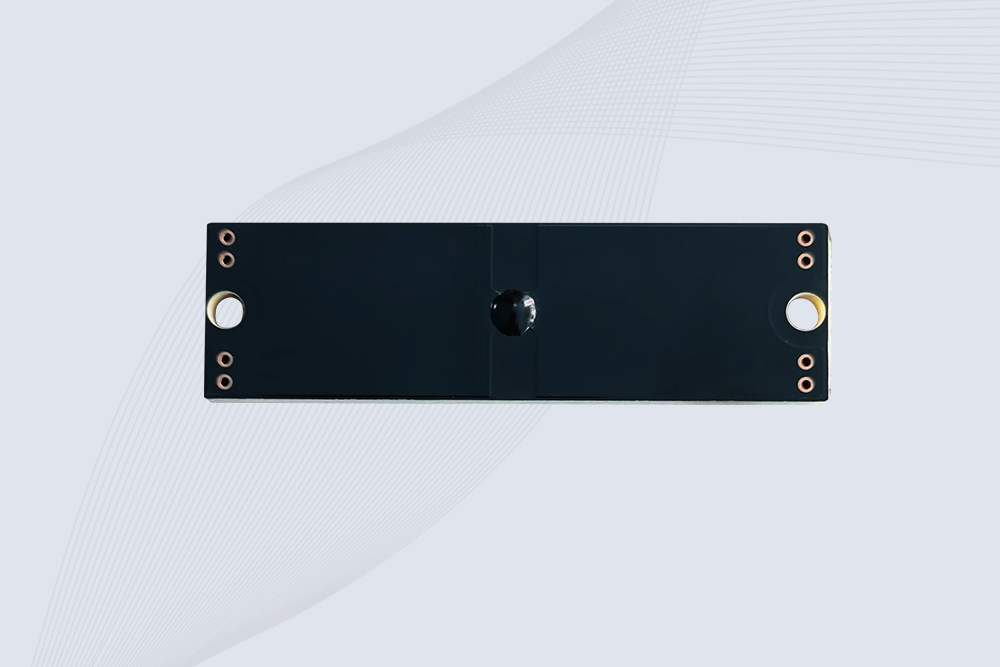
Metal can alter the electromagnetic environment around the tag antenna. Products such as electrical equipment, tools, metal containers and industrial components may therefore require RFID labels specifically designed for on-metal installation.
4. Liquid-Containing Products
Water and other materials containing significant moisture can absorb or alter RF energy. RFID Journal notes that environmental materials such as water and metal can affect how much energy reaches a passive tag.
For these applications, label selection and physical placement need to be validated together.
Where Cykeo RFID Labels Fit Into an Identification System
For a complete RFID deployment, the label is only one component. Cykeo RFID systems can combine RFID tags and labels with UHF readers, antennas, software interfaces and inventory workflows.
The reader handles RF communication. Middleware can filter duplicate reads and convert raw tag events into meaningful inventory transactions. The application layer then associates the EPC with an actual item, carton, asset, or business process.
For fixed UHF installations, reader power and antenna configuration should be adjusted around the physical reading zone rather than simply maximizing transmission power. A larger read zone is not automatically a better read zone. In a doorway or inventory station, unwanted reads from adjacent goods can create operational problems.
That distinction becomes particularly important when RFID labels are used around dense storage locations.
Cykeo RFID Label Deployment Considerations
Deployment factor
Engineering consideration
Tag material
Match the label construction to the product surface
Product composition
Check effects from metal, liquid and dense materials
Reader antenna
Select coverage and polarization according to the reading zone
Tag orientation
Maintain a repeatable orientation where possible
Reader power
Tune according to the required coverage rather than maximum output
Multiple tags
Validate anti-collision performance under actual tag density
Data structure
Define EPC and optional User Memory requirements before encoding
Software
Connect RFID events with inventory or asset-management workflows
This approach also prevents a frequent implementation problem: testing a single RFID label on an empty workbench and assuming the same result will occur when hundreds of tagged items are packed together.
RFID Label FAQs
1. Do RFID labels need batteries?
Most passive RFID labels do not. They harvest energy from the reader’s electromagnetic field and communicate through backscatter. Active and battery-assisted RFID products use different power architectures.
2. Can RFID labels be read without line of sight?
Yes. Passive UHF RFID does not require the optical line of sight used by conventional barcode scanning. However, materials, tag orientation, antenna polarization and the physical environment still affect performance.
3. How far can an RFID label be read?
There is no universal distance. GS1 states that passive UHF RFID generally provides several meters of read range, while specialized configurations can achieve longer distances. Antenna design, reader power, tag orientation and RF conditions all influence the result.
4. Can one reader identify multiple RFID labels?
Yes. UHF RFID systems are specifically designed to inventory multiple tags within the reader field using standardized anti-collision mechanisms.
5. Can RFID labels store product information?
They can store identification data and, depending on the chip, additional application data. GS1 identifies EPC and optional User memory as important parts of the RAIN RFID memory architecture.
6. Can RFID labels work on metal?
They can, but a standard label may not perform reliably when placed directly on metal. An RFID label designed for on-metal applications may be required, with installation validated under the actual operating conditions.
7. Are RFID labels reusable?
The answer depends on the label construction and business process. A permanent RFID tag attached to a reusable asset can remain with that asset through repeated inventory cycles, while disposable product labels are normally treated differently.
Cykeo Engineering Perspective
In practical RFID deployment, how RFID labels work cannot be separated from how the label is installed. The chip provides identification logic, but the antenna determines how effectively the tag interacts with the reader field. Product material, orientation, reader configuration and tag density then determine whether that interaction remains reliable at operating scale.
For this reason, RFID label selection should be validated using the actual product, packaging, reader, antenna and reading workflow—not evaluated from the label specification alone.
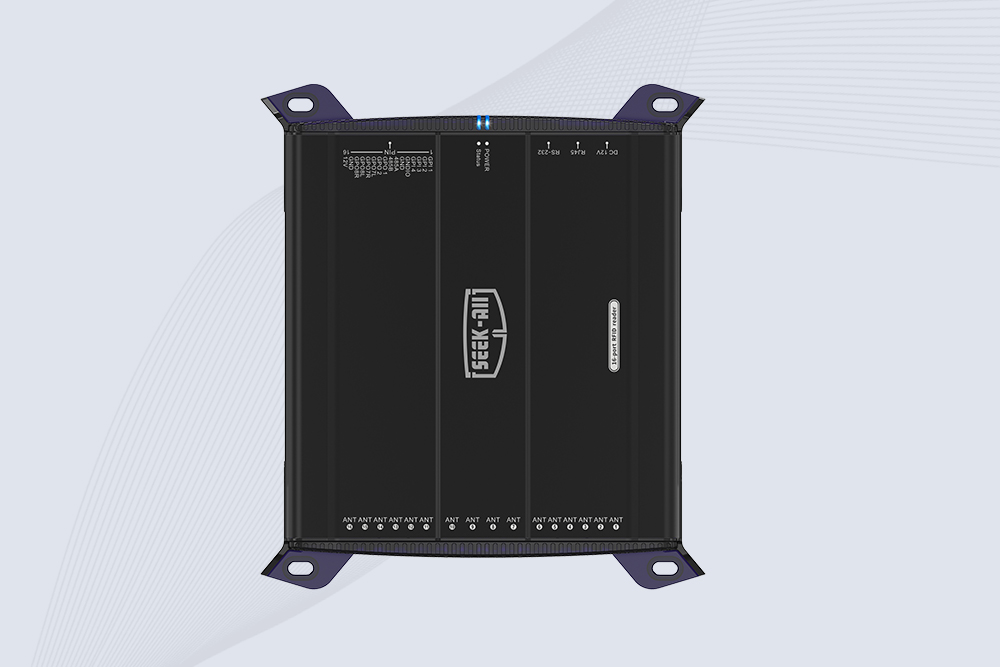
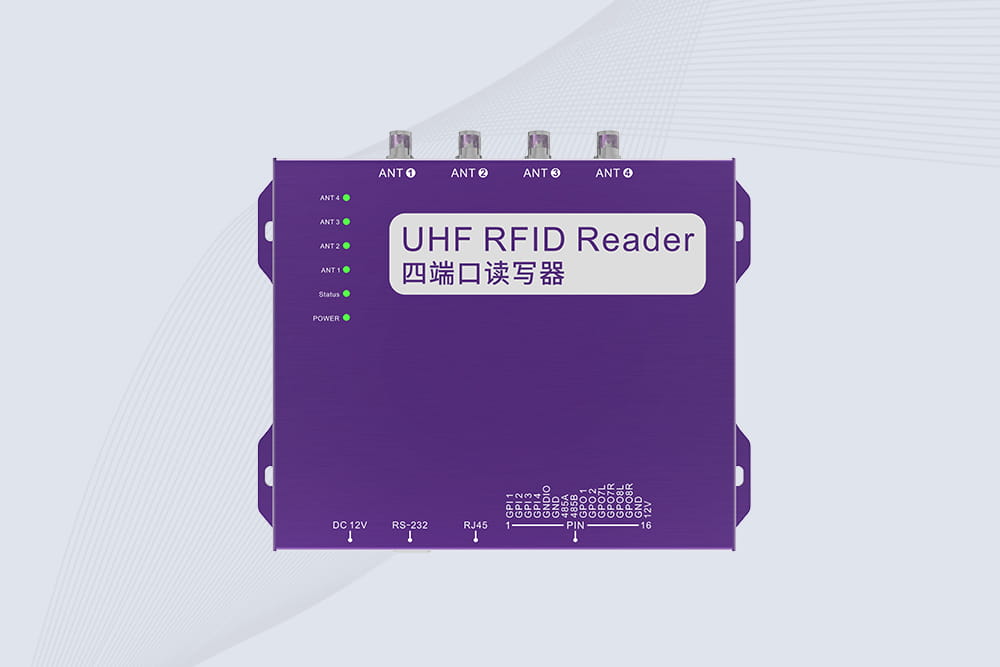
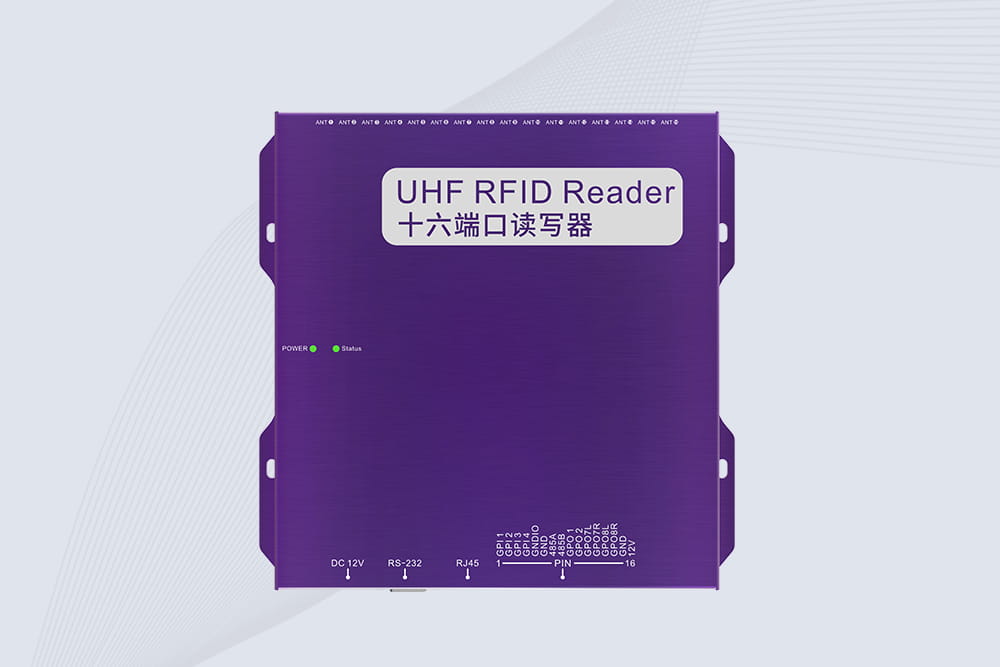
SSD-R16L Multi-Channel RFID Infrastructure for Automated Inventory Management ✔️ 16-Port High-Density RFID Reading Equipped with 16 SMA antenna ports, SSD-R16L supports multi-antenna deployment for warehouses, retail stores, logistics, production lines, and large-area RFID identification. ✔️ High-Speed & Long-Range Performance With up to 33…
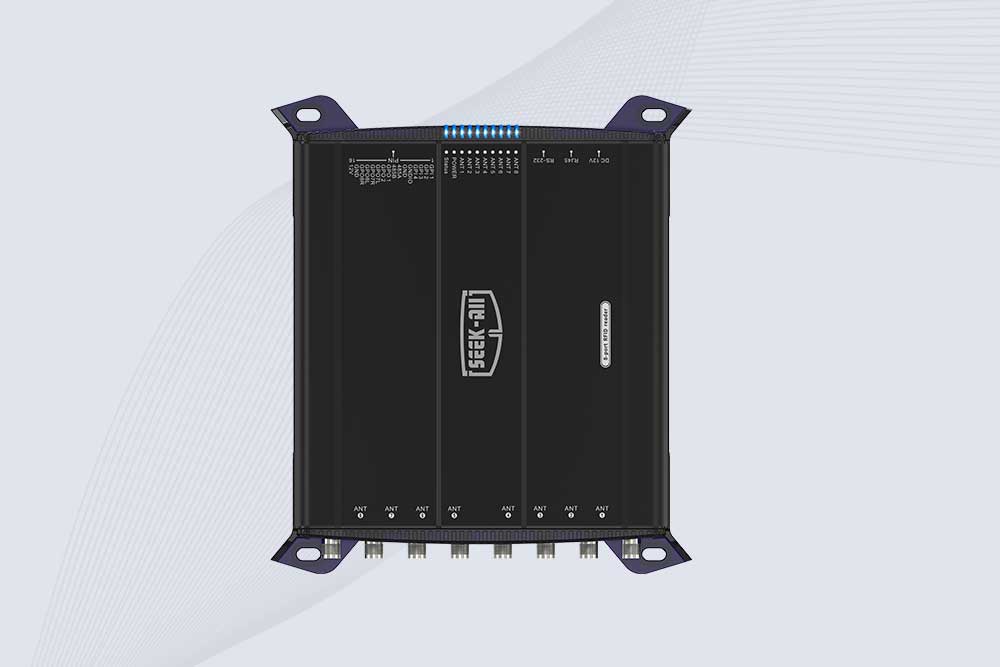
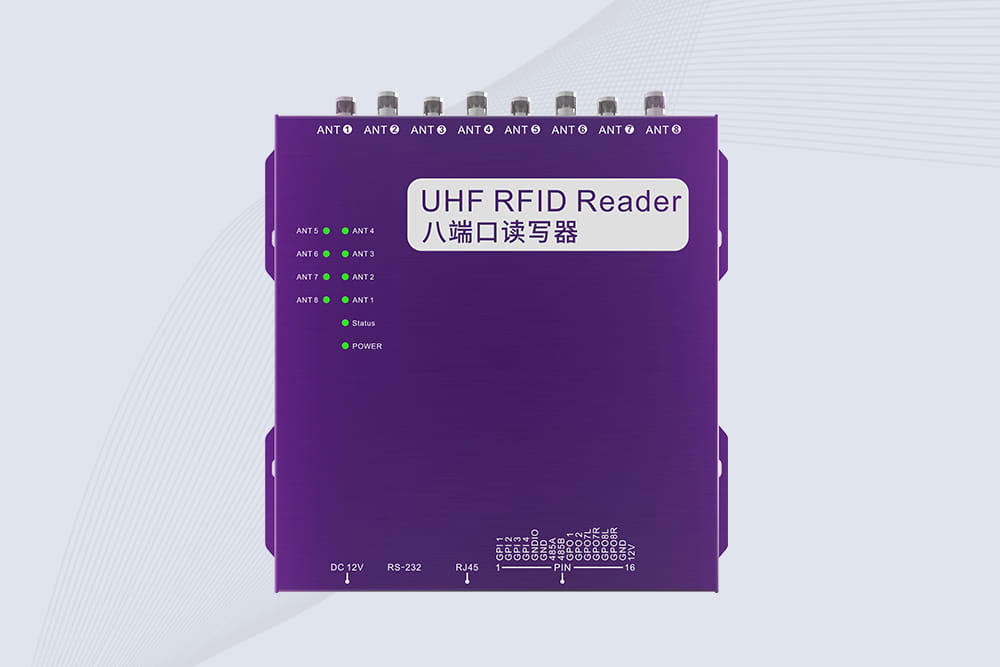
SSD-R8L 8-port UHF RFID reader with 33dBm output, up to 20m reading range and 600+ tags/s recognition. Ideal for warehouse, logistics, retail and asset tracking.
CYKEO Passive RFID Tags are made for wet and high-humidity environments where standard labels do not last. This rfid passive tag is often used around liquids, chemicals and temperature changes, providing stable reading distance and long data life for industrial tracking.
CYKEO CYKEO-PCB1504 Metal RFID Tags is a compact anti-metal UHF RFID solution built for direct mounting on metal surfaces. With stable 8-meter read range, Ucode-8 chip, and long data retention, this rfid metal tag fits tools, containers, automotive parts, and industrial asset tracking.
CYKEO CYKEO-PCB7020 On-Metal RFID Tags are designed for reliable tracking on steel and metal surfaces. Built with an FR4 epoxy body and industrial-grade chips, these On-Metal RFID Tags deliver stable performance, long data life, and chemical resistance, making them a dependable RFID anti-metal tag for harsh environments.
The CYKEO CYKEO-60-25 Anti-Metal RFID Tag is built for metal surfaces where standard tags fail. Designed for long-range performance, harsh environments, and stable data retention, this Anti-Metal RFID Tag is ideal for industrial assets, containers, and equipment tracking using on metal RFID tags.
The CYKEO RFID Laundry Tag is designed for long-term textile identification in harsh laundry environments. Built to withstand high heat, chemicals, and repeated washing, this RFID Laundry Tag delivers stable performance for hotels, hospitals, and industrial laundry operations using laundry rfid tags at scale.
The CYKEO CYKEO-125-7 RFID Book Tag is designed for reliable book and document tracking in libraries and archives. This RFID Book Tag delivers long read range, dense placement support, and stable performance on shelves, making it a practical rfid tag on books for library automation, file management, and archival systems.
CYKEO RFID tags in hospitals are designed for sterile environments where accuracy matters. These autoclavable RFID tags support long-term tracking of surgical tools, implants, and medications, helping hospitals improve visibility, compliance, and patient safety.
CYKEO RFID Cable Tie Tag is built for reliable identification on metal surfaces. This UHF RFID Cable Tie Tag is widely used in rfid tags for inventory systems, industrial asset management and Hospital RFID Tags, offering stable read performance, long service life and global EPC Gen2 compatibility.
CYKEO RFID Asset Tag is designed for stable identification of metal assets in industrial environments. This UHF RFID Asset Tag is commonly used for rfid tag asset tracking on equipment, tools and containers, providing reliable reads, long service life and ISO/IEC 18000-6C support.
CYKEO UHF RFID Card is designed for fast identification and long-term use in industrial and commercial systems. Supporting ISO 18000-6C, this UHF RFID Card works at 860–960 MHz and is suitable for custom RFID cards used in asset tracking, access control and inventory management.
CYKEO HF RFID Cards are designed for secure and stable access control systems. These 13.56 MHz RFID key cards support ISO 14443-A, reliable rewriting and long service life, making HF RFID Cards suitable for offices, campuses, events and membership management.
CYKEO UHF RFID Tag is designed for reliable tracking of metal jewelry and high-value items. This Jewelry RFID Tag supports long-range reading up to 8 meters, anti-counterfeit protection and stable performance on metal, making it suitable for retail, inventory control and asset management.
Cykeo CYKEO-C1 industrial Forklift RFID Reader features 20m read range, 600 tags/sec scanning, Impinj R2000 chipset, and IP67 rugged design. Ideal for warehouse logistics and manufacturing. Supports ISO 18000-6C/6B protocols.
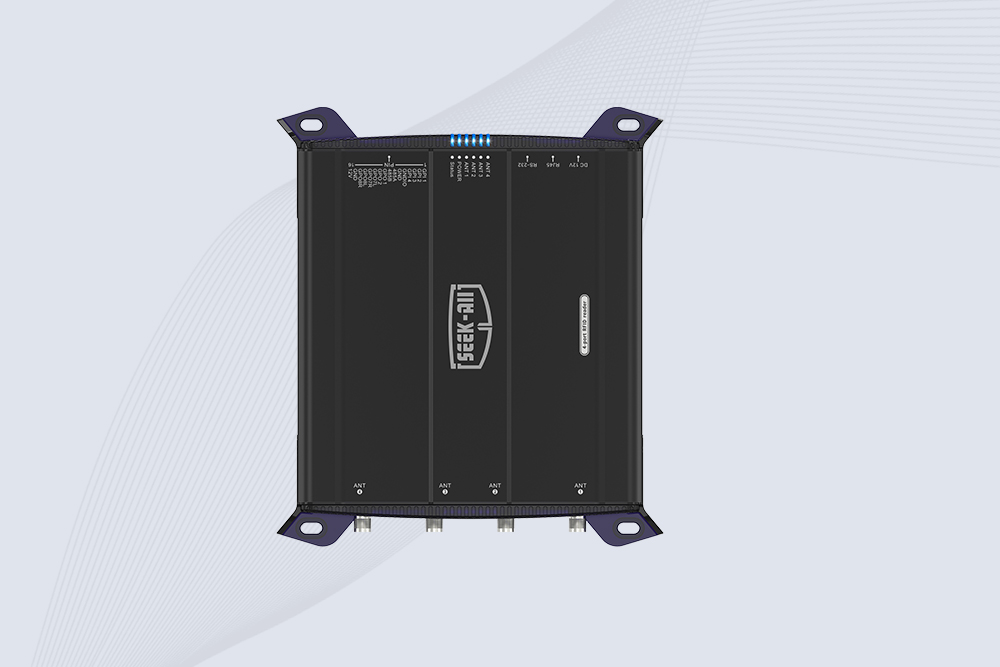
Cykeo CYKEO-R4 industrial UHF RFID Fixed Reader features 4 TNC ports, 400+ tags/sec speed, IP67 housing, and global frequency compliance for vehicle inspection, smart warehouse, and asset management systems.
CYKEO CYKEO-R8L Fixed RFID Reader with 8-port UHF design, Impinj-based RF core and up to 20m read range. An industrial Fixed RFID Reader for vehicle inspection, warehouse portals, smart manufacturing lines and secure access checkpoints.
RFID Fixed Reader from CYKEO – the CYKEO-R16L 16-port UHF fixed reader for warehouses, smart cabinets, and production lines. Long-range, multi-tag reading, stable performance for 24/7 industrial use.
CYKEO CK-B3L is a rugged uhf rfid bluetooth handheld reader with long read range, Android system and stable performance. This UHF RFID Handheld Reader is designed for warehousing, logistics, manufacturing and outdoor field operations.
Jewelry RFID Reader helps jewelry retailers identify tagged products, check stock, and reduce manual inventory work. This article explains how USB RFID reade...
RFID (Radio Frequency Identification) is a wireless communication technology. Automatically identifying and tracking the corresponding frequency band tags on attached objects by emitting electromagnetic waves of different frequency bands emitted b...
 Cykeo RFID IoT Solution Products R&D Manufacturer