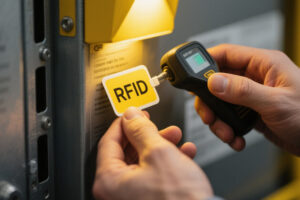
RFID jewelry tags are specialized RFID labels designed for rings, necklaces, bracelets, watches, and other valuable jewelry items. They enable real-time inventory tracking, faster stock counts, improved security, and inventory accuracy levels often exceeding 95% in jewelry retail environments.
About the Author
This article was reviewed by the Cykeo RFID engineering team. Our specialists have participated in RFID deployments across luxury retail, jewelry stores, inventory management centers, and high-value asset tracking projects. We have worked directly with retailers seeking to reduce inventory discrepancies while maintaining a seamless customer experience.
Why RFID Jewelry Tags Matter More Than Most Retailers Realize
A jewelry store doesn’t lose money the same way a warehouse does.
One missing necklace can represent thousands of dollars.
A missing diamond ring can erase an entire day’s profit.
Several years ago, during a pilot RFID deployment for a regional jewelry retailer, I watched two employees perform a manual inventory count after closing. The process took nearly four hours. Small trays covered every counter. Ring boxes were stacked behind display cases.
The next evening, after RFID jewelry tags had been deployed, the same inventory count finished in less than fifteen minutes.
Nothing else changed.
That’s the power of visibility.
How RFID Jewelry Tags Work
RFID jewelry tags contain a miniature RFID chip and antenna embedded into a lightweight tag specifically designed for jewelry items.
Each tag carries a unique identification number.
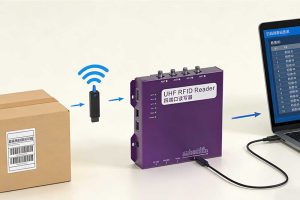
When an RFID reader scans the display area, hundreds of jewelry items can be identified simultaneously without requiring line-of-sight scanning.
Core Components
Component
Function
RFID Jewelry Tag
Stores unique item ID
RFID Reader
Captures tag information
RFID Antenna
Creates reading zone
RFID Software
Manages inventory data
POS/WMS Integration
Connects inventory and sales
Unlike barcodes, jewelry items do not need to be individually handled during counting.
RFID jewelry tags enable rapid inventory counting without handling each item individually.
Benefits of RFID Jewelry Tags
Inventory Accuracy Improves Significantly
According to research conducted by Auburn University’s RFID Lab, RFID deployments consistently improve inventory accuracy compared with traditional manual counting methods.
Inventory accuracy is especially critical for jewelry retailers because even a single missing item may represent substantial financial loss.
Faster Stock Counts
Traditional jewelry audits often require:
Opening display cases
Handling each item individually
Scanning barcodes manually
Recording counts
RFID changes the process completely.
A handheld reader can scan hundreds of tagged items within seconds.
Store employees can perform daily inventory verification without disrupting customer service.
Enhanced Security
High-value merchandise attracts attention.
RFID jewelry tags create an additional layer of visibility by identifying when items are removed, misplaced, or transferred between locations.
Jewelry Inventory Management RFID in Real Stores
One observation from actual deployments stands out.
Most losses don’t come from theft.
They come from operational mistakes.
Common examples include:
Misplaced trays
Incorrect stock transfers
Unrecorded sales adjustments
Human counting errors
RFID dramatically reduces these issues because inventory becomes continuously visible.
Employees spend less time searching.
Managers spend less time investigating.
Customers spend less time waiting.
RFID inventory verification can be completed in minutes instead of hours.
Choosing the Right RFID Jewelry Tags
Not all RFID tags perform equally around jewelry.
Metal surfaces can affect radio frequency behavior.
Selecting the correct tag design is critical.
Important Selection Factors
Tag size
Reading distance
Jewelry type
Display environment
Reader compatibility
Store layout
For most jewelry retailers, UHF RFID technology provides the best balance between inventory speed and operational efficiency.
Typical ROI of RFID Jewelry Tracking Systems
The return on investment usually comes from three areas:
Benefit
Business Impact
Faster Inventory Counts
Reduced labor cost
Better Inventory Accuracy
Fewer stock discrepancies
Improved Security
Reduced shrinkage risk
Real-Time Visibility
Faster replenishment
Many retailers discover that labor savings alone justify deployment costs.
The additional visibility simply accelerates the return.
Frequently Asked Questions
Can RFID jewelry tags be used on rings?
Yes. RFID jewelry tags are specifically designed for small items such as rings, earrings, bracelets, pendants, and watches.
Do RFID jewelry tags affect the appearance of jewelry?
No. Modern jewelry RFID tags are lightweight and designed to minimize visual impact while maintaining reliable performance.
How accurate are RFID jewelry tracking systems?
When properly deployed, RFID systems commonly achieve inventory accuracy rates above 95%, depending on store layout and operational processes.
Can RFID integrate with POS systems?
Yes. Most RFID inventory platforms integrate with POS, ERP, and inventory management software.
Are RFID jewelry tags reusable?
Many jewelry RFID tags can be reused depending on store procedures and tag design.
Final Thoughts
RFID jewelry tags have become one of the most effective technologies available for jewelry inventory management. They reduce counting time, improve inventory accuracy, strengthen security, and provide real-time visibility into valuable merchandise. For retailers managing high-value inventory, RFID jewelry tags are no longer a future investment—they are increasingly becoming a competitive necessity.
The future of luxury retail inventory management will be built on accurate, real-time data, and RFID jewelry tags are already leading that transition.
RFID jewelry tags remain one of the fastest-growing technologies in modern jewelry inventory management, helping retailers protect assets while improving operational efficiency.
Wondering how to check if your RFID is working? Learn simple and effective steps to test your RFID system, ensuring it’s operating correctly. Discover tips for troubleshooting RFID issues with Cykeo technology.
long-range UHF RFID readers that scan tags from up to 20 meters. Cykeo CK‑RA4L, CK‑RA6L, CK‑RA9L, and CK‑RA12L handle high-speed batch reading, work in tough industrial environments, and easily integrate with WMS, ERP, and IoT systems.
Discover how energy-harvesting RFID modules eliminate batteries in IoT devices. Learn how they work, key benefits, and real-world applications for sustainable tech.
 Cykeo RFID IoT Solution Products R&D Manufacturer