 Cykeo RFID IoT Solution Products R&D Manufacturer

What Is RFID Technology and How It Transforms Modern Identification Systems
140Learn what is rfid technology, how RFID systems work, and why industries use RFID for tracking, inventory, and automation with Cykeo solutions.
MoreAll RFID Product
RFID for manufacturers improves production tracking, inventory accuracy, and workflow automation by identifying materials and products automatically without manual scanning. In modern factories, RFID helps reduce operational delays, minimize inventory errors, and improve production visibility in real time.
What surprised me most during early factory RFID deployments was not the technology itself. It was how much hidden downtime existed inside “normal” manufacturing routines. Operators walking back to verify parts. Supervisors checking unfinished work orders manually. Forklift drivers stopping production lines simply because pallets could not be located fast enough.
Once RFID enters the process, those small interruptions become visible immediately.
At Cykeo, we have worked with manufacturing clients across electronics assembly, automotive components, warehouse packaging, and industrial tooling environments. In one project involving metal spare-part production, the factory initially believed their inventory discrepancy was under 2%. After RFID-based tracking was introduced, actual mismatch rates during work-in-progress movement were closer to 9%.
That discovery alone justified the deployment.
Manufacturing has changed dramatically over the last decade. Faster production cycles and labor shortages are forcing factories to automate identification processes that were previously manual.
According to Deloitte Insights, smart factory technologies continue accelerating globally as manufacturers seek better operational visibility and automation efficiency.
Meanwhile, McKinsey & Company reported that digital manufacturing technologies can significantly improve productivity and reduce operational waste when integrated correctly.
Inside actual factories, the reasons are practical:
The factories investing in RFID are usually not chasing “innovation.” They are trying to remove friction from daily operations.
An RFID manufacturing system typically includes:
| Component | Function |
|---|---|
| RFID Tags | Store unique product or asset IDs |
| Fixed RFID Readers | Detect tagged items automatically |
| RFID Antennas | Create industrial read zones |
| RFID Middleware | Filters and processes data |
| MES / ERP Integration | Connects production workflows |
Unlike barcode systems, RFID does not require line-of-sight scanning. Multiple items can be identified simultaneously while moving.
That difference becomes important near conveyor lines and high-speed production stations.
Factories often lose visibility once components move between stations.
RFID solves this by automatically recording movement without requiring operators to stop and scan manually.
In one automotive parts workshop we visited, unfinished metal components were stacked inside rolling bins between machining and coating areas. Before RFID, supervisors physically checked the bins several times daily. After deployment, workstation movement updated automatically through fixed readers installed above transfer lanes.
The result was not dramatic on paper. But floor supervisors stopped spending nearly two hours daily walking production lines.
That operational fatigue matters more than many reports admit.
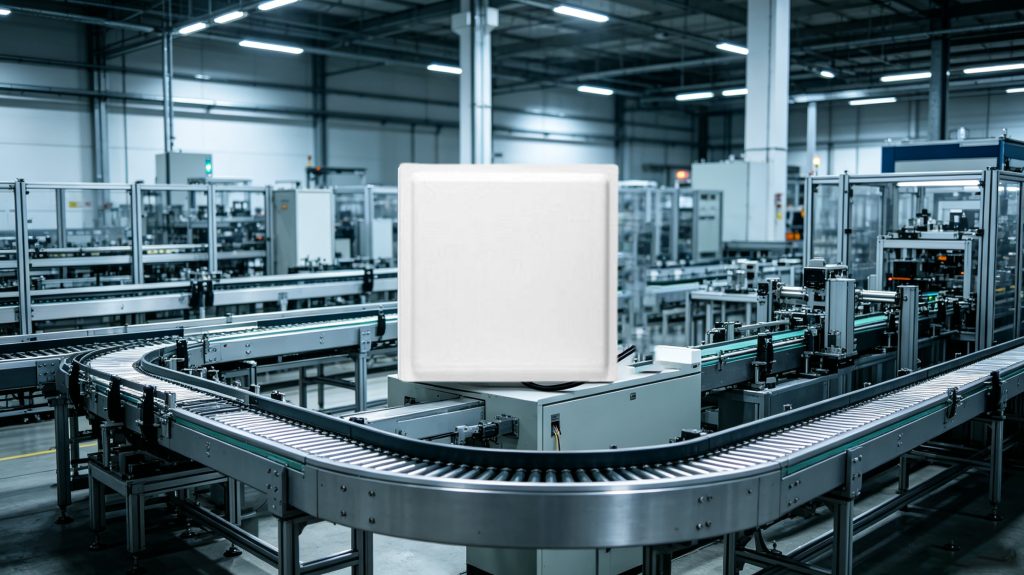
RFID reduces the need for manual stock counting.
According to GS1 Official Website, RFID improves inventory visibility and enables more accurate supply chain management through automated identification processes.
Factories managing thousands of components daily especially benefit from:
One electronics manufacturer told us their monthly inventory reconciliation previously required weekend overtime. After RFID implementation, cycle counting became part of normal operations instead of a separate shutdown event.
| Feature | RFID | Barcode |
| Bulk Reading | Yes | No |
| Line-of-Sight Required | No | Yes |
| Automation Capability | High | Moderate |
| Reading Speed | Very Fast | Slower |
| Industrial Durability | Strong | Moderate |
Barcodes still remain useful for small-scale operations. But in large manufacturing environments, repeated scanning introduces delays that accumulate across shifts.
Factories rarely notice the inefficiency until automation exposes it.
Metal environments affect RF performance significantly.
This is especially true in automotive and machining industries.
Incorrect tag positioning still causes many read failures during early deployments.
Too much RF power can create unwanted reads from nearby stations.
Experienced RFID integrators spend substantial time tuning read zones rather than simply installing hardware.
That part is usually underestimated.
Modern manufacturing increasingly connects RFID systems with:
At Cykeo, we often see manufacturers begin with inventory tracking, then gradually expand RFID into production monitoring and asset lifecycle management.
The first deployment is usually small.
Expansion happens after managers trust the data.
Research from Auburn University RFID Lab has consistently shown that RFID systems can dramatically improve inventory accuracy in industrial environments when optimized correctly.
Another overlooked advantage is labor stability.
Factories with mature RFID workflows rely less on tribal knowledge from individual workers. That becomes critical when turnover increases or temporary staffing rises during seasonal production.
The technology itself matters. But operational consistency matters more.
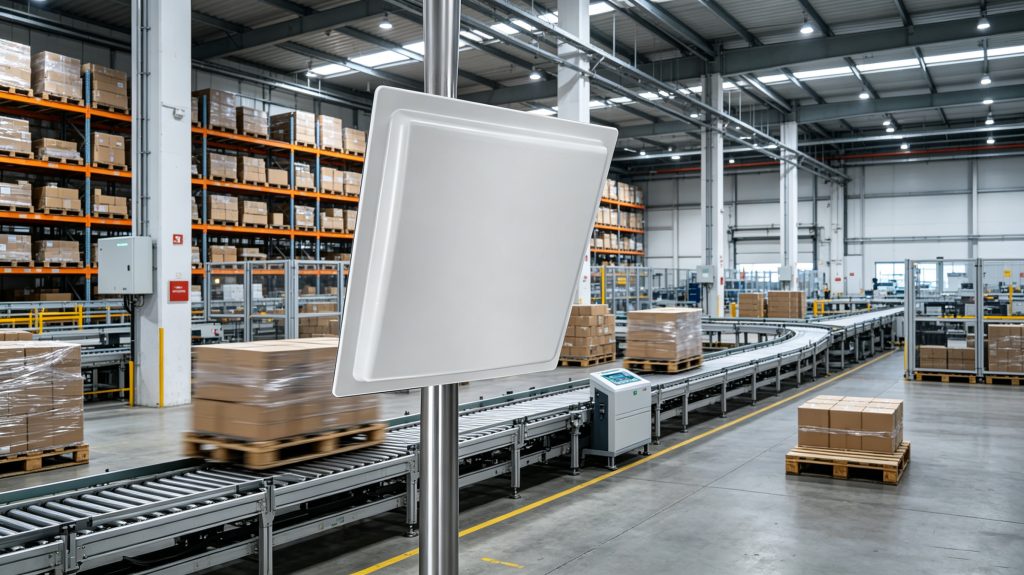
Yes. RFID improves inventory visibility, production tracking, and workflow automation while reducing manual scanning and operational delays.
Yes, but proper antenna design and tag selection are critical because metal surfaces affect RF signals.
Automotive, electronics, textiles, logistics, pharmaceuticals, tooling, and industrial assembly operations widely use RFID.
In many deployments, RFID reduces repetitive manual counting and scanning work, improving operational efficiency significantly.
RFID for manufacturers is no longer limited to experimental smart factory projects. It has become part of daily industrial infrastructure.
Factories today are under constant pressure to produce faster with fewer operational mistakes. Manual tracking methods simply struggle to keep pace once production volume rises.
The manufacturers seeing the strongest RFID results are usually not the ones buying the most hardware. They are the ones designing cleaner workflows around real operational bottlenecks.
At Cykeo, we continue seeing the same pattern across manufacturing deployments: once factories trust automated visibility, process decisions become faster everywhere else too.
That is where RFID begins creating long-term value instead of just short-term automation.
RFID Industry Writer | IoT & Asset Tracking Analyst
James writes about RFID technology, asset tracking, and the practical challenges of digital transformation across warehousing, retail, manufacturing, and logistics.
His work focuses on how RFID is applied in real-world operations—improving inventory visibility, automating workflows, and helping businesses manage assets with greater accuracy and efficiency.
He regularly covers topics including UHF RFID, smart cabinets, RFID portals, tool tracking, warehouse automation, and industrial IoT trends..

Learn what is rfid technology, how RFID systems work, and why industries use RFID for tracking, inventory, and automation with Cykeo solutions.
More
bracelet rfid technology improves event management, hospital identification, and access control with fast UHF RFID tracking and real-time visibility by Cykeo.
More
Trying to figure out if your NFC reader is enough? We explain exactly which RFID tags an NFC reader can and cannot read, and why it's not a warehouse solution.
More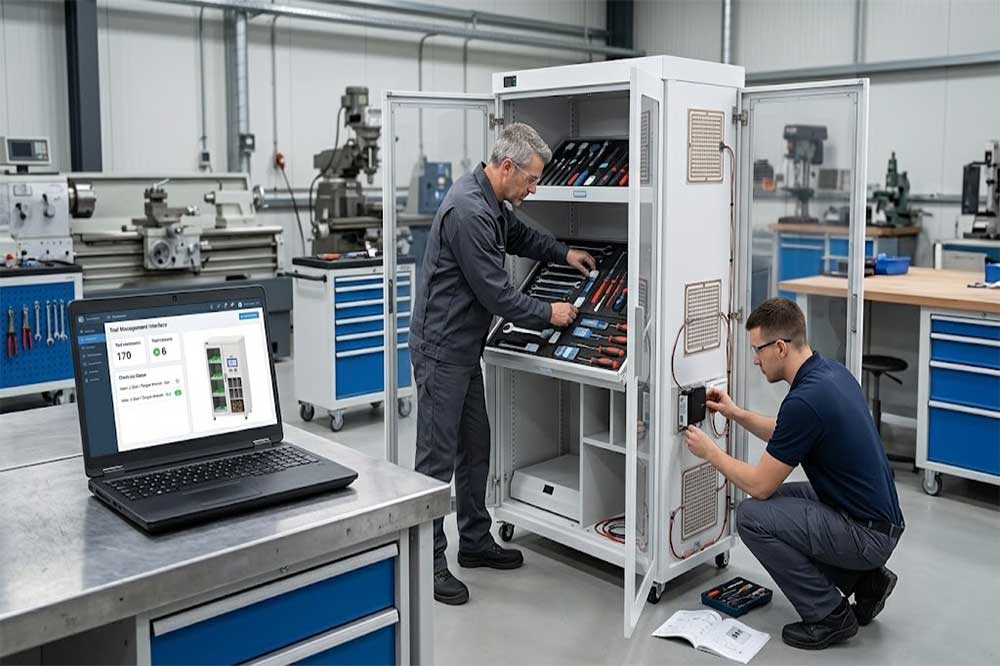
RFID tool cabinet installation requires more than mounting hardware. This guide explains how to prepare tools and tags, configure the cabinet, install RFID r...
More