 Cykeo RFID IoT Solution Products R&D Manufacturer
What is an RFID Reader Used For?
244Discover what is an RFID reader used for in logistics, retail, security, and more. Learn how CYKEO's RFID technology boosts efficiency and accuracy.
MoreAll RFID Product
How does rfid and asset tracking improve business operations?
RFID and asset tracking provide real-time visibility of equipment, inventory, and valuable assets by automatically identifying tagged items, reducing losses, improving accuracy, and increasing operational efficiency across warehouses, factories, hospitals, and retail environments.
During the last decade, I’ve participated in RFID deployments across logistics centers, manufacturing plants, and asset-intensive facilities. One observation remains consistent: organizations rarely underestimate the value of visibility after implementation. The challenge is usually realizing how much time, labor, and capital were being lost before accurate tracking existed.
A missing forklift, misplaced tool kit, or unaccounted pallet doesn’t seem significant individually. Across thousands of assets, however, the operational impact becomes substantial.
Asset visibility has become a strategic requirement rather than an operational convenience.
Traditional methods often rely on:
These approaches consume labor and frequently introduce errors.
RFID changes the process entirely.
Tagged assets automatically communicate with RFID readers, generating real-time location and status information without requiring direct line-of-sight scanning.
According to GS1, RFID technology significantly improves inventory accuracy while reducing manual handling requirements throughout supply chains.
The system consists of four primary components:
| Component | Function |
|---|---|
| RFID Tag | Stores unique asset identification |
| RFID Reader | Captures tag information |
| Antenna | Extends reading coverage |
| Software Platform | Processes and visualizes asset data |
When a tagged asset enters a reading zone, the reader captures its unique identifier and updates the management platform automatically.
The process often takes less than a second.
No manual entry.
No visual scanning.
No paper records.
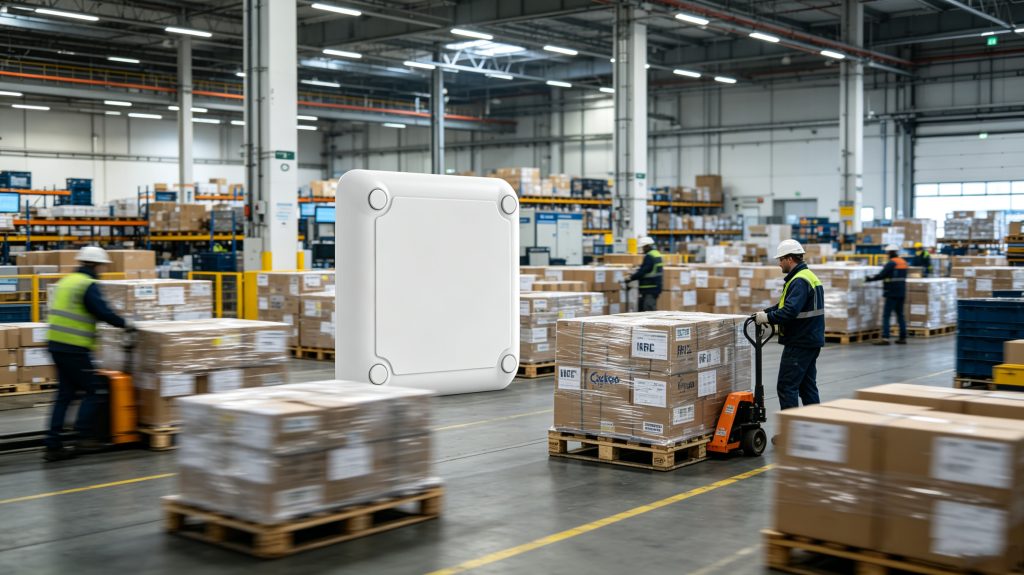
Modern organizations use RFID and asset tracking across numerous environments.
Manufacturers track:
In one production environment I visited, locating specialized maintenance equipment previously required 20–30 minutes of searching. RFID tracking reduced that process to seconds.
Hospitals frequently monitor:
Improved visibility directly supports operational efficiency and patient care.
Distribution centers utilize RFID for:
Organizations typically experience improvements in four key areas.
RFID systems reduce manual data entry and associated errors.
Entire asset groups can be identified simultaneously.
Real-time visibility minimizes misplaced equipment and inventory.
Organizations can identify underused assets and optimize resource allocation.
According to RFID Journal, RFID adoption continues expanding because businesses are increasingly prioritizing automation and visibility.
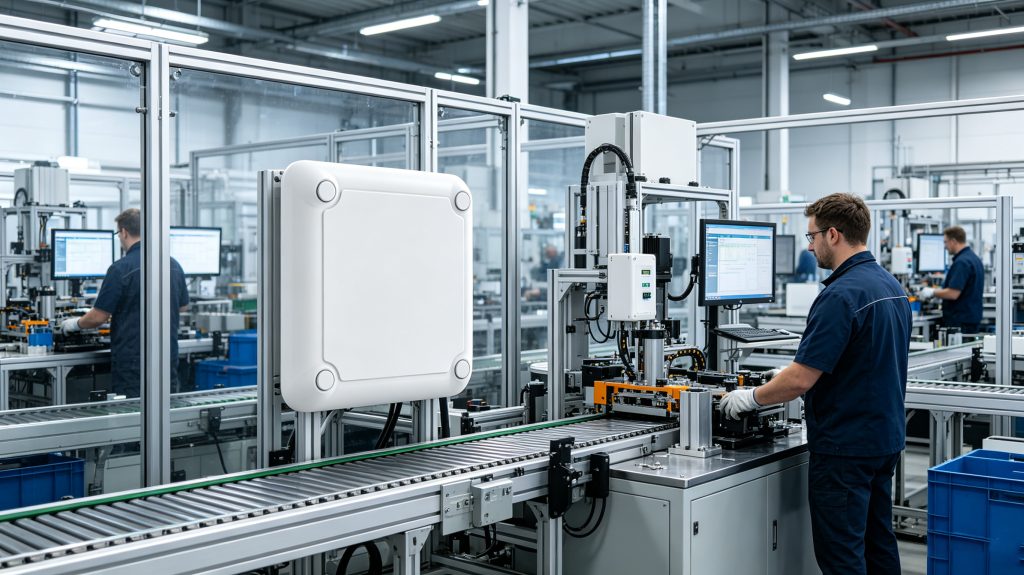
Not every deployment environment behaves the same.
Factors influencing RFID performance include:
Successful projects typically begin with site testing rather than relying solely on laboratory specifications.
One lesson repeatedly learned in real-world deployments is that reader positioning often impacts performance more than hardware selection.
Small adjustments frequently generate significant improvements.
RFID asset tracking uses RFID tags and readers to automatically identify, locate, and monitor assets throughout their lifecycle.
Manufacturing, logistics, healthcare, retail, education, government, and industrial sectors commonly deploy RFID systems.
No. RFID can identify tagged assets without direct visual alignment.
Yes. Modern RFID systems can identify hundreds of tags within seconds depending on the environment and configuration.
Cykeo develops RFID technologies designed for reliable asset visibility, operational efficiency, and scalable deployment across complex environments.
As organizations continue investing in automation and digital transformation, the importance of asset visibility continues growing. RFID and asset tracking provide a practical foundation for smarter operations by transforming physical assets into real-time data sources. Whether managing warehouse inventory, industrial equipment, medical devices, or logistics assets, organizations gain measurable advantages when visibility improves. Cykeo remains committed to delivering RFID and asset tracking solutions that support accuracy, efficiency, and long-term operational growth. The future of operational excellence increasingly depends on reliable RFID and asset tracking technologies.

Discover what is an RFID reader used for in logistics, retail, security, and more. Learn how CYKEO's RFID technology boosts efficiency and accuracy.
More
Discover durable textile RFID tags designed for industrial laundry, uniform, and linen tracking. Improve inventory accuracy, reduce loss, and manage textiles efficiently with long-lasting RFID laundry tags.
More
Need to track tools across sprawling construction sites? Discover rugged UHF RFID readers that survive dust, rain, and chaos while scanning up to 100 ft.
More
RFID tags use wireless identification to enable fast book check-in/out, accurate inventory, and anti-theft management. This article explains how RFID works and its advantages over traditional barcode systems.
More