 Cykeo RFID IoT Solution Products R&D Manufacturer
How Does RFID Tracking Actually Work for Medical Devices?
1082Considering medical device RFID? See how RFID tracking improves equipment visibility, reduces losses, and meets compliance. Get practical insights.
MoreAll RFID Product
RFID works without power by using electromagnetic energy from the reader to activate passive tags, enabling them to transmit stored data wirelessly without batteries.
That’s the short answer—but in real deployments, the behavior is far more nuanced. After years working with warehouse and access-control RFID systems, I’ve seen “no power” misunderstood. These tags are not passive in effect—they’re just externally powered, momentarily, and very efficiently.
At the core, passive RFID relies on energy harvesting. The reader emits a radio frequency field; when a tag enters that field, its antenna captures the signal and converts it into electrical energy.
In practice, this entire process happens so fast that operators perceive it as “instant detection.”

The concept is grounded in well-known electromagnetic theory. According to research published by the MIT Auto-ID Lab, passive RFID tags can operate with power levels as low as microwatts.
Unlike active transmitters, passive tags don’t “send” signals in the traditional sense. Instead:
This is why RFID systems can scale to thousands of tags per second without massive power requirements.
In controlled tests and real warehouse environments:
| Parameter | Typical Passive RFID |
|---|---|
| Activation Power | ~10–100 µW |
| Read Distance | Up to 10–15 meters |
| Response Time | < 100 ms |
| Tag Lifespan | 10+ years |
According to GS1, passive RFID adoption has reduced inventory counting time by up to 96% in large-scale retail logistics.
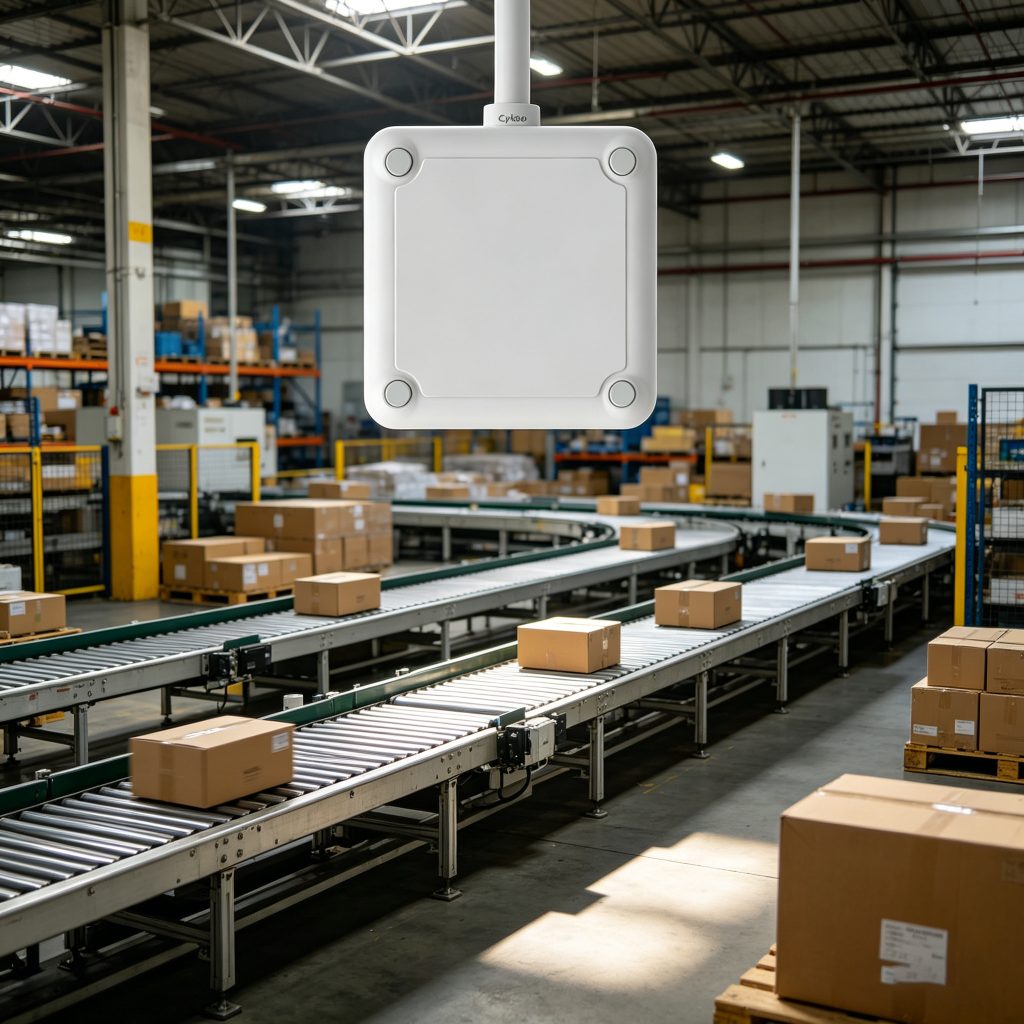
From my own deployment experience in a 20,000㎡ warehouse, switching from barcode to passive RFID reduced cycle counting from 3 days to under 4 hours—with zero batteries involved.
There are three reasons passive RFID systems are stable despite having no internal power:
Modern RFID chips are optimized for minimal energy consumption, often below 10 microwatts.
Tag antennas are tuned to specific frequencies, maximizing energy absorption.
Advanced readers (like Cykeo systems) use anti-collision algorithms to manage multiple tags simultaneously.
Passive RFID excels in environments where maintenance must be minimized:
In one jewelry tracking project, passive RFID reduced item search time by over 70%, largely because tags required zero maintenance.

Not exactly. The signal strength depends on the reader, not the tag.
Modern UHF systems can exceed 10 meters under optimal conditions.
Passive tags can last over a decade since there’s no battery degradation.
No. Without batteries, they require virtually zero maintenance over their lifespan.
Yes, but performance varies. Metals and liquids can reduce readability.
With proper encryption and protocol configuration, it can meet enterprise security standards.

Considering medical device RFID? See how RFID tracking improves equipment visibility, reduces losses, and meets compliance. Get practical insights.
More
Uncover the truth behind common RFID myths—security risks, cost, and performance. Learn how Cykeo’s solutions overcome misconceptions for efficient inventory management.
More
Inventory control tag solutions from Cykeo use UHF RFID technology to improve warehouse accuracy, reduce manual counting time, and enable real-time asset visibility.
More
Wondering what is a RFID reader writer? We explain the definition, how it differs from a reader-only device, common types from desktop to handheld, and real-world applications. Clear guidance from CYKEO engineers.
More