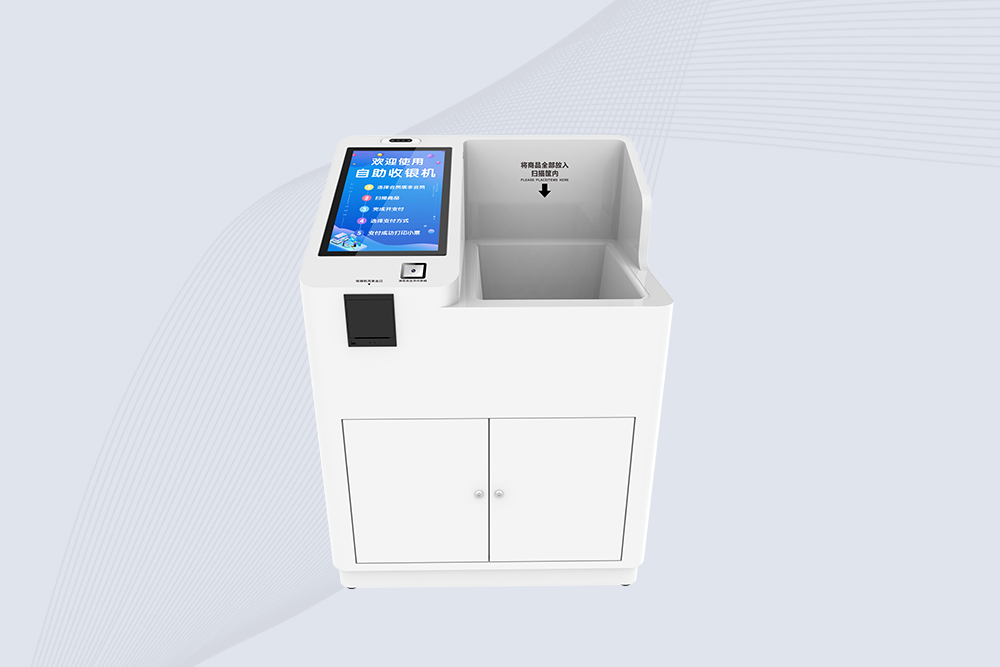
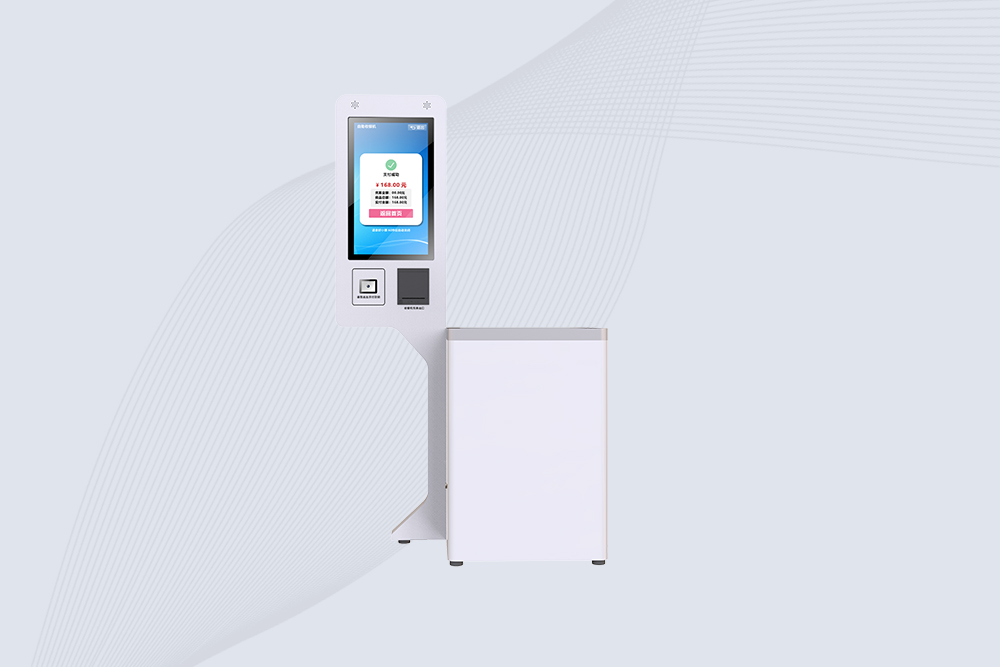
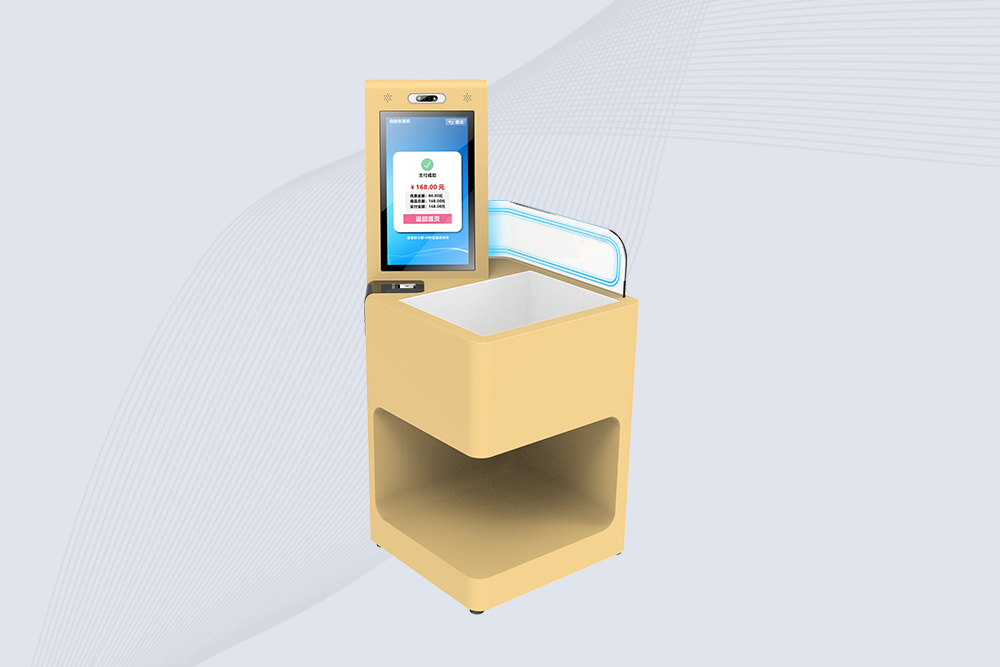
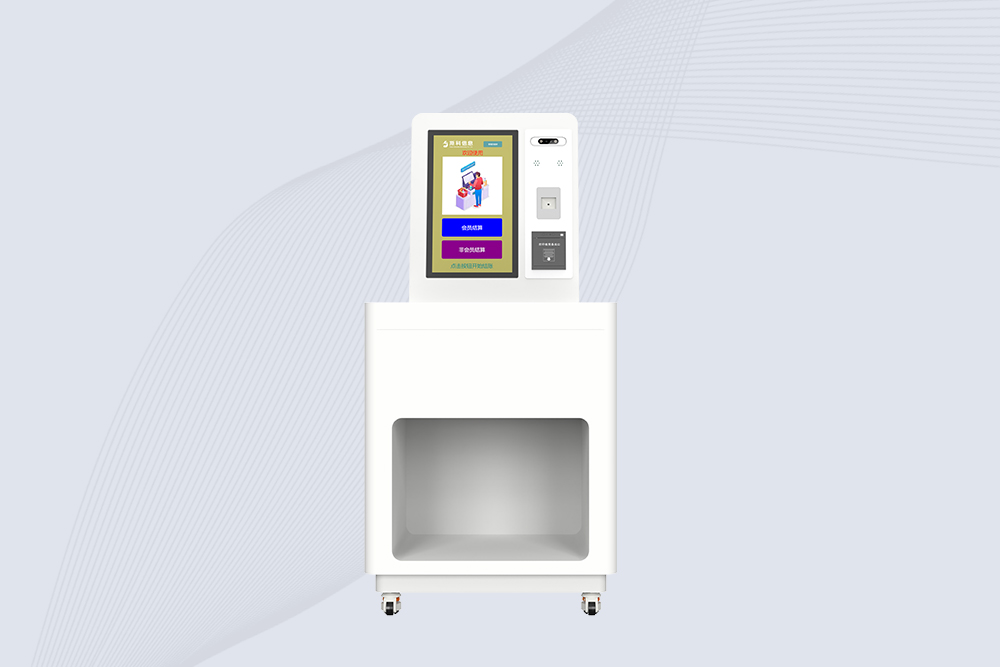
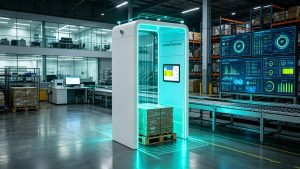
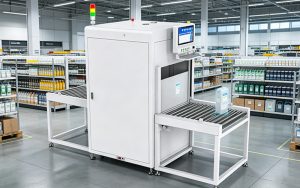
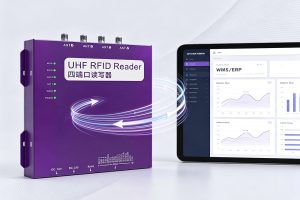
How does RFID work in retail? RFID works in retail by using electronic tags, RFID readers, and software systems to automatically identify products, update inventory data, support self-checkout, and improve customer purchasing efficiency without manual barcode scanning.
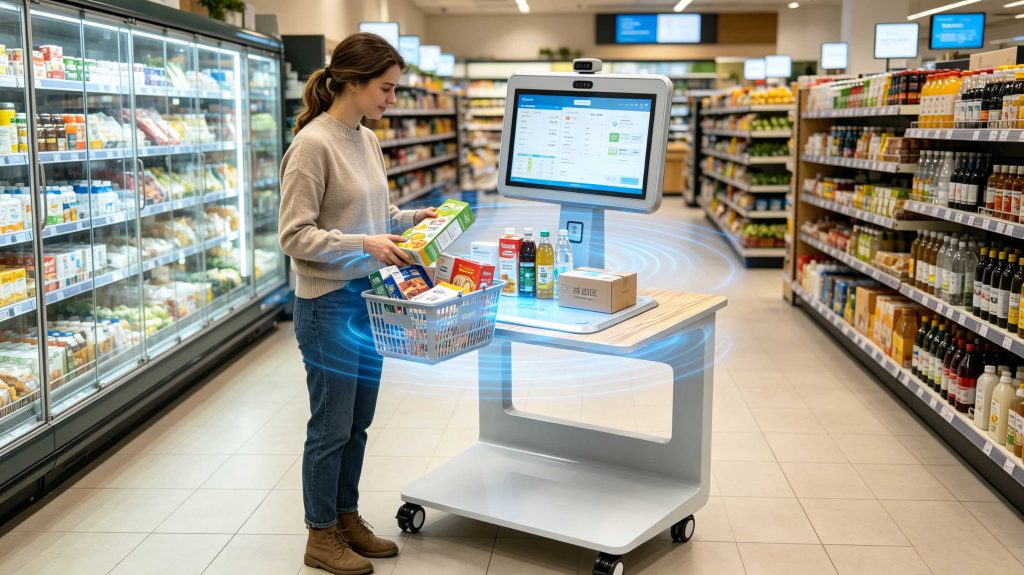
Retail RFID technology changes the traditional shopping process by connecting physical products with digital information. Each item contains an RFID tag with unique identification data. When customers place products on an RFID checkout platform, the reader can recognize multiple items simultaneously, calculate purchase information, and update inventory records automatically.
In Cykeo retail deployment experience, the biggest difference between RFID checkout and traditional scanning is not only speed. It is the change from “one product, one scan” to “multiple products, one identification process.”
A customer buying several items does not need to place every product under a barcode scanner. The RFID system reads the tagged products together, displays payment information, and completes the transaction through an integrated checkout workflow.
According to GS1, RFID based on EPC standards is widely used in retail supply chains to improve product visibility and inventory accuracy.
Understanding How Does RFID Work in Retail Systems
When discussing how does RFID work in retail, the core principle is simple: every product receives a digital identity that can be recognized automatically.
Provides customer interaction and payment information
Retail Software Platform
Updates inventory, sales, and product data
The working process usually follows these steps:
Products are attached with RFID tags before entering the store.
Customers select products during shopping.
Products are placed on an RFID checkout platform.
The reader identifies multiple products simultaneously.
The system calculates payment information.
Sales data and inventory records are updated automatically.
Unlike barcode technology, RFID does not require direct visual alignment. This allows retailers to create faster and more convenient checkout experiences.
RFID Smart Checkout Technology in Modern Retail Stores
Traditional retail checkout requires employees or customers to scan items individually. This creates bottlenecks during busy periods.
RFID smart checkout platforms solve this problem through automatic batch identification.
Cykeo RFID retail checkout solutions are designed for:
Supermarkets
Chain stores
Unmanned retail stores
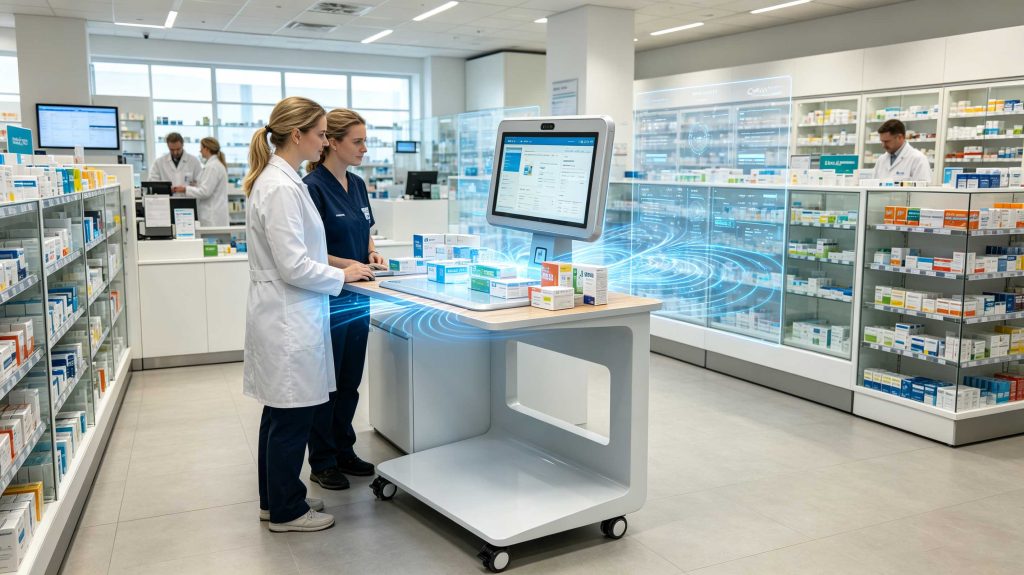
Pharmacy environments
Medical supply warehouses
Tool storage rooms
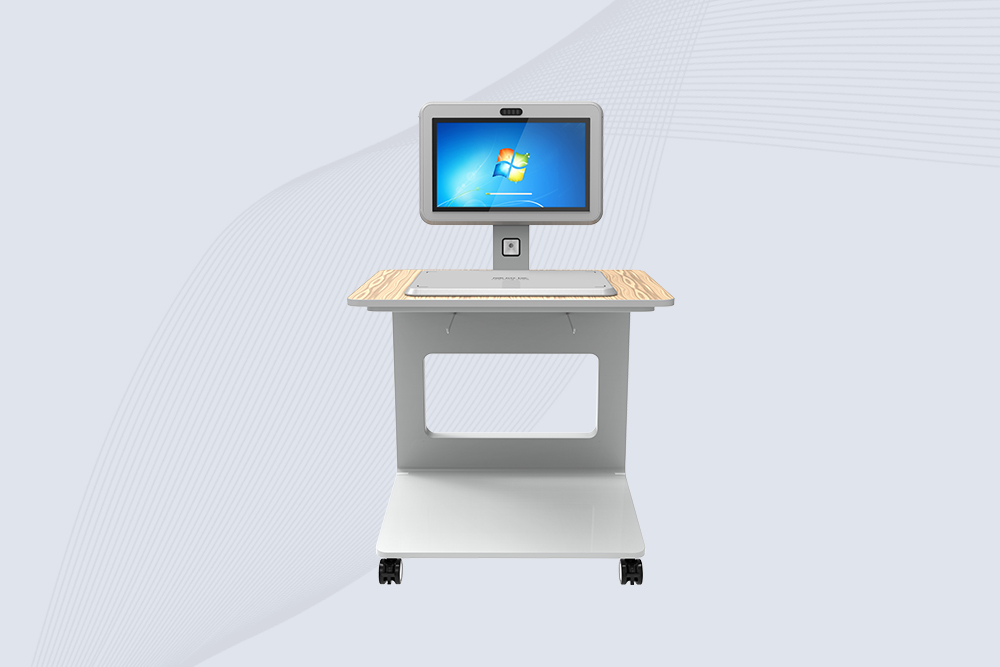
The integrated RFID checkout platform combines:
High-frequency data reading
Touchscreen interaction
Payment information display
Product security management
Sales data synchronization
A 21.5-inch high-definition touchscreen provides an intuitive customer interface. Customers can view product information, confirm purchase details, and complete self-service transactions.
Batch RFID Reading Improves Checkout Efficiency
One of the biggest advantages of RFID in retail is multi-item recognition.
A traditional barcode process requires:
Traditional Barcode Checkout
RFID Checkout
Scan each item individually
Identify multiple items together
Requires product alignment
No direct scanning needed
Higher employee workload
Supports self-service operation
Slower during peak hours
Faster transaction process
Cykeo RFID checkout platforms use UHF RFID technology with strong multi-tag reading performance.
The system can identify multiple products in one operation, helping retailers reduce checkout waiting time and improve customer experience.
RFID checkout technology enables fast product recognition and self-service payment experiences.
RFID Inventory Management Behind Retail Automation
RFID in retail is not only used at checkout. The same identification data supports inventory management.
Retailers can use RFID systems to monitor:
Product availability
Stock movement
Store replenishment
Item location
Sales records
A product sold through an RFID checkout platform can automatically update inventory information.
This creates a connected process:
RFID Tag → RFID Reader → Retail Software → Inventory Update → Business Decision
For chain stores, this visibility becomes increasingly important because managers need accurate information across multiple locations.
RFID Applications Beyond Traditional Retail
The same RFID technology is used in many commercial environments.
Hospital Pharmacy Management
RFID helps pharmacies identify medicines and supplies, improving inventory control and reducing manual recording.
Medical Consumable Warehouses
Healthcare organizations use RFID to manage disposable supplies and improve stock visibility.
Tool Storage Management
Industrial companies use RFID cabinets and readers to track tools and prevent loss.
Unmanned Retail Stores
RFID enables automated purchasing experiences where customers complete transactions with minimal staff involvement.
Why Retailers Choose RFID Instead of Barcode Systems
RFID provides advantages when businesses need higher automation levels.
Feature
Barcode
RFID
Identification Method
Optical scanning
Radio frequency communication
Multiple Item Reading
Limited
Supported
Contact Requirement
Direct scanning
Wireless recognition
Checkout Automation
Moderate
High
Inventory Visibility
Manual updates
Real-time capable
According to GS1 EPC RFID Standards, RFID technology provides standardized identification methods that support supply chain visibility and retail applications.
Cykeo RFID Retail Solution Experience
Cykeo designs RFID equipment based on real retail workflows.
In actual store environments, the challenge is not only reading RFID tags. Engineers must consider:
Product material differences
Customer interaction habits
Checkout speed requirements
Software integration
Security requirements
A retail RFID checkout platform must feel simple for customers while handling complex identification tasks internally.
The customer only sees a touchscreen and payment interface. Behind that simple experience is a complete RFID identification system connecting products, sales data, and inventory management.
Cykeo RFID Retail Checkout Technical Advantages
Retail automation requires more than a simple RFID reader. A successful self-service checkout system must combine fast identification, stable communication, user-friendly interaction, and seamless data management.
Cykeo RFID retail checkout platforms are designed for environments where customers expect fast transactions and retailers require accurate inventory updates.
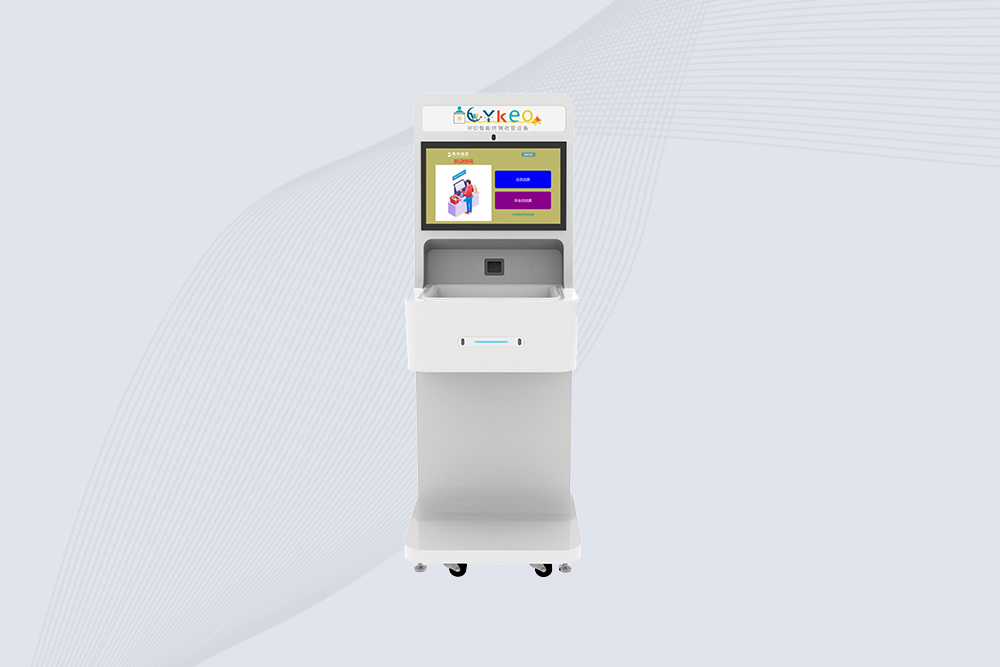
The system integrates RFID reading, product recognition, payment display, and sales data synchronization into one intelligent device.
Cykeo Technical Advantage
Retail Application Value
High-performance UHF RFID technology
Rapid recognition of multiple tagged products
Multi-tag reading capability
Supports batch checkout without individual scanning
21.5-inch HD touchscreen
Provides intuitive customer interaction
Network communication interface
Enables connection with retail management systems
Integrated security tag management
Supports anti-theft status updates after purchase
Compact all-in-one design
Saves installation space and improves store appearance
Batch RFID Recognition for Faster Self-Service Checkout
The biggest operational difference between RFID checkout and traditional payment methods is the ability to identify several products simultaneously.
In a conventional supermarket, customers place items one by one under a barcode scanner.
With a Cykeo RFID checkout platform:
Multiple products are placed on the reading area.
RFID tags are detected automatically.
Product information appears on the touchscreen.
Payment details are calculated.
Sales data updates immediately.
This process is especially valuable during busy retail periods.
A customer purchasing several products does not need to search for barcodes or rotate packages to find scanning positions. The system handles identification automatically.
Integrated RFID Security Management
Retail loss prevention is another important RFID application.
Many retail products include security functions inside RFID tags. During purchase, the RFID checkout system can update the security status of the product tag.
The workflow becomes:
Product Tag → RFID Identification → Payment Confirmation → Security Status Update → Customer Exit
This helps retailers combine checkout and security management in one process.
Applications include:
Supermarkets
Clothing stores
Chain retail stores
Unmanned shops
Pharmacy environments
Smart Touchscreen Interaction Design
A self-service retail system must be simple enough for customers without technical training.
Cykeo RFID checkout equipment uses a large 21.5-inch high-definition touchscreen interface designed for:
Product information display
Purchase confirmation
Payment guidance
Transaction status
User interaction
The customer experience is similar to modern digital payment systems, while the RFID technology operates invisibly in the background.
This combination creates a smoother shopping process.
RFID Retail Checkout Applications in Different Industries
RFID checkout technology is expanding beyond traditional supermarkets.
Application Scenario
RFID Function
Hospital Pharmacy
Medicine and supply identification
Medical Consumable Warehouse
Inventory and distribution management
Supermarket
Fast product checkout
Chain Stores
Unified inventory and sales data
Unmanned Retail
Automated purchasing experience
Tool Warehouse
Equipment borrowing and return management
RFID technology supports automated identification, inventory management, and self-service transactions across multiple industries.
RFID Retail Data Architecture for Digital Commerce
Modern retail requires accurate information flow.
An RFID checkout system creates a connected data structure:
RFID Product Tag ↓ RFID Reader Module ↓ Checkout Software ↓ Payment System ↓ Inventory Database
This architecture allows retailers to understand:
Which products were sold
Current inventory levels
Customer purchasing patterns
Product movement trends
For chain stores, this information helps managers make faster operational decisions.
Why RFID Is Changing Retail Checkout Experiences
The value of RFID is not only faster payment.
It changes how stores operate.
Traditional retail often separates:
Product identification
Inventory counting
Checkout
Security management
RFID combines these processes into one connected system.
Retailers gain:
Lower manual workload
Better inventory visibility
Faster customer service
Improved store automation
According to AIM Global RFID Resources, RFID adoption continues expanding in retail environments because automated identification improves supply chain visibility and operational efficiency.
FAQ: How Does RFID Work in Retail?
1. How does RFID work in retail?
RFID works in retail by attaching electronic tags to products and using RFID readers to automatically identify items, update inventory, support checkout, and improve shopping efficiency.
2. Can RFID read multiple products at the same time?
Yes. UHF RFID systems can identify multiple tagged products simultaneously, making them suitable for self-service checkout and fast retail transactions.
3. Does RFID replace barcode scanning in stores?
RFID does not completely replace barcodes, but it provides higher automation because products can be identified without individual scanning.
4. How does RFID improve retail inventory management?
RFID automatically collects product movement information, helping retailers maintain more accurate inventory records and reduce manual counting work.
5. Can RFID be used in unmanned supermarkets?
Yes. RFID enables automated product recognition, self-service checkout, and digital payment processes in unmanned retail environments.
6. What products can use RFID tags in retail?
RFID can be applied to clothing, food packaging, medical supplies, tools, electronics, and many other retail products.
7. Is RFID checkout faster than barcode checkout?
RFID checkout can be faster because multiple products can be recognized together instead of scanning each item individually.
Understanding How Does RFID Work in Retail
How does RFID work in retail is the foundation for understanding modern automated shopping experiences. RFID connects products, checkout systems, inventory platforms, and security management into one intelligent retail ecosystem.
From supermarkets and chain stores to pharmacies and unmanned shops, RFID technology helps businesses improve efficiency while creating smoother customer experiences.
Cykeo RFID retail checkout solutions combine advanced UHF identification technology, touchscreen interaction, and integrated data management to support the future of smart commerce.
RFID is not simply a faster scanning method. It is a technology that transforms products into connected digital assets.
Cykeo’s CYKEO-DP11A RFID payment system combines UHF item recognition, facial authentication, and PCI-certified transactions for retail. Features Windows/Android dual OS, 4G connectivity, and SAP integration.
Cykeo CYKEO-DP11 UHF RFID Checkout Terminal streamlines bulk scanning operations with 5-tag/sec efficiency, dual OS compatibility (Windows/Android), and pharmacy-grade inventory management. Ideal for healthcare, retail, and unmanned stores, it ensures high-accuracy RFID bulk scanning with IP54 ruggedness and ISO 18000-6C compliance.
Cykeo’s unmanned RFID checkout Kiosk terminal enables 10-item bulk scanning in 3 seconds with 21.5″ touchscreen, anti-theft tag update, and POS integration for retail automation.
Cykeo’s CYKEO-DP11C UHF RFID self checkout kiosk enables unmanned retail with 10+ items/sec scanning, 21.5″ payment UI, and ISO 18000-6C compliance. Ideal for supermarkets and apparel stores.
Cykeo CYKEO-DP11E RFID self checkout system offers 21.5″ touchscreen, UHF RFID batch scanning (ISO 18000-6C), and cloud integration for retail automation. Ideal for unmanned supermarkets and apparel stores.
Cykeo’s autonomous RFID payment kiosk enables 10-item/sec contactless checkout, POS integration, and EAS tag deactivation. Features 21.5″ payment interface, PCI-certified security.
Discover the essential features of industrial RFID handheld readers for optimal performance. Learn about durability, read range, battery life, and Cykeo’s rugged solutions.
tracking rfid enables real-time asset visibility with UHF identification, reducing manual errors and improving logistics accuracy in industrial environments.
Discover how uhf rfid label technology enables fast, long-range tracking up to 10m with high accuracy for logistics, retail, and automated inventory systems.
A practical guide for developers on RFID SDK and API integration. Learn how to handle raw tag data, avoid common mistakes, and build stable RFID systems.
 Cykeo RFID IoT Solution Products R&D Manufacturer