 Cykeo RFID IoT Solution Products R&D Manufacturer
how to use rfid scanner for Efficient RFID Tag Identification
92An RFID scanner identifies tagged objects through wireless communication and transfers tag data into business systems. Reliable use depends on matching the s...
MoreAll RFID Product
An rfid reader chip is the core processing component inside a UHF RFID reader that controls tag communication, multi-tag decoding, and high-speed data transmission. In industrial environments, a high-performance chip directly determines reading stability, anti-collision capability, and inventory efficiency.
In practical deployments, the difference between a standard RFID system and a stable industrial solution usually starts with the chip architecture. I have spent the last eight years involved in RFID warehouse projects, textile tracking systems, and hospital asset management integrations. In one apparel distribution center in Southeast Asia, the migration from a low-performance reader module to an IMPINJ-based UHF platform reduced missed reads during carton scanning by nearly 31% within the first two weeks of operation.
That gap matters when thousands of tags move through a doorway every hour.
People often focus on antennas, power output, or software dashboards first. The chip rarely gets discussed. Yet inside every stable UHF RFID system, the chip determines how quickly the reader resolves overlapping tag signals.
A weak chip creates slow inventory cycles, unstable read ranges, and inconsistent filtering.
A strong one handles dense-tag environments smoothly.
According to data published by Auburn University RFID Lab, modern UHF RFID deployments in retail can achieve inventory accuracy rates above 95% when supported by optimized reader hardware and EPC Gen2 standards.
GS1 also notes that EPC UHF RFID dramatically improves supply-chain visibility and traceability in logistics and retail environments.
In real warehouse environments, those percentages translate directly into labor savings.
I remember standing inside a cold-storage loading area during a late-night test run. Forklifts were moving continuously, metal racks reflected signals everywhere, and workers were skeptical the system would work consistently. The first-generation reader hardware struggled badly. After replacing the internal reader module with a higher-sensitivity UHF reader chip platform, the portal stabilized almost immediately.
No software change. No antenna repositioning. Just better RF processing.
These are the most common in industrial automation and logistics.
Typical applications include:
Most enterprise systems today operate under:
Modern UHF chips support:
| Feature | Industrial Requirement |
|---|---|
| Multi-tag reading | 400+ tags/sec |
| Dense reader mode | Stable performance |
| Anti-collision | High-speed sorting |
| Low latency | Real-time inventory |
| SDK support | Secondary development |
HF systems usually operate at 13.56 MHz and focus on shorter-range communication.
Used in:
HF provides stronger near-field control but lower long-range capability than UHF.
NFC is technically part of HF RFID but optimized for mobile interaction.
Typical scenarios:
Industrial inventory projects rarely use NFC for bulk counting because reading speed and range are limited.
Cykeo UHF devices integrate industrial-grade RFID reader chip platforms optimized for dense-tag environments.
In actual deployment projects, several factors become critical:
In textile warehouses, hundreds of tagged garments may pass through a gate simultaneously.
A stronger reader chip helps:
Factories contain interference sources everywhere:
A high-quality reader chip maintains decoding performance despite environmental noise.
In one hotel linen project, UHF tunnel equipment equipped with high-speed reader modules completed batch counting of over 800 linen items within several seconds.
Manual counting previously required multiple staff members and repeated verification.
That operational difference changes labor planning completely.
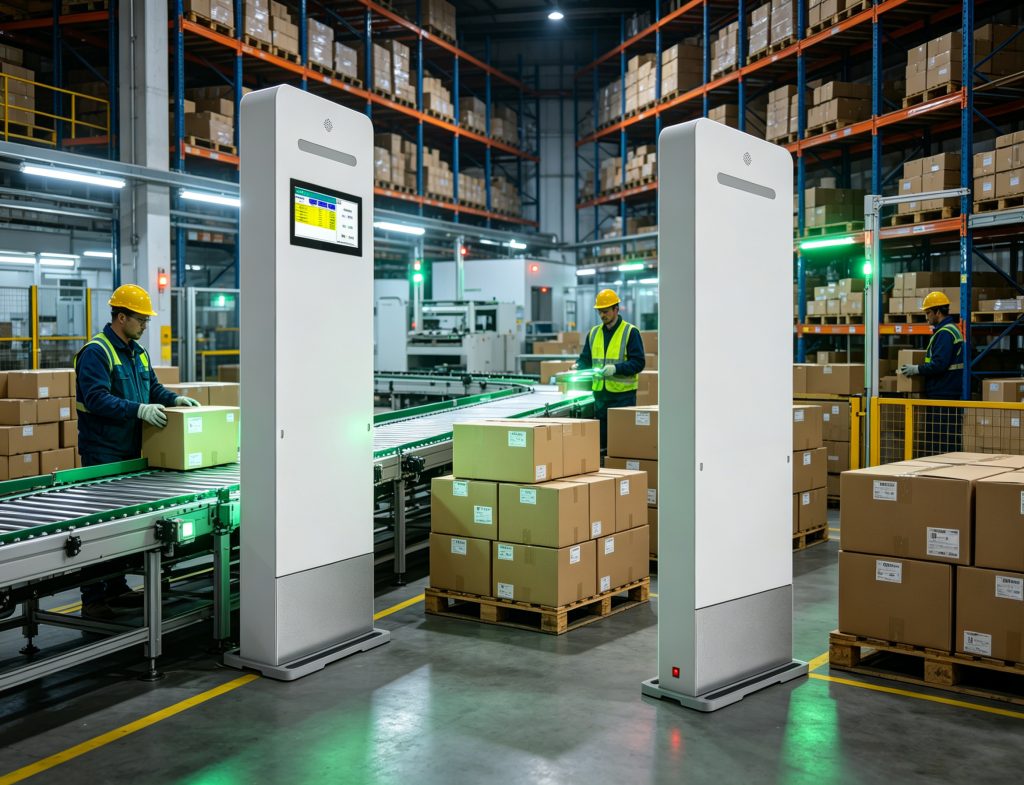
Higher sensitivity means weaker tag responses can still be decoded correctly.
This matters in:
Industrial systems often read hundreds of tags simultaneously.
Without advanced anti-collision capability, data loss increases rapidly.
Inventory speed directly affects operational throughput.
A weak processor introduces bottlenecks during:
Modern RFID projects rarely operate independently.
Developers typically require:
This becomes especially important for hospitals and manufacturing facilities.
UHF RFID reader chips now support:
According to a report from McKinsey & Company, healthcare digitization continues accelerating due to labor shortages and inventory visibility challenges.
Retail remains one of the fastest-growing RFID sectors globally.
Decathlon, Walmart suppliers, and apparel brands increasingly rely on UHF RFID infrastructure to improve inventory visibility.
Manufacturing facilities use RFID reader chips for:
In actual factories, stable reading matters more than theoretical range numbers.
That distinction becomes obvious very quickly on live production lines.
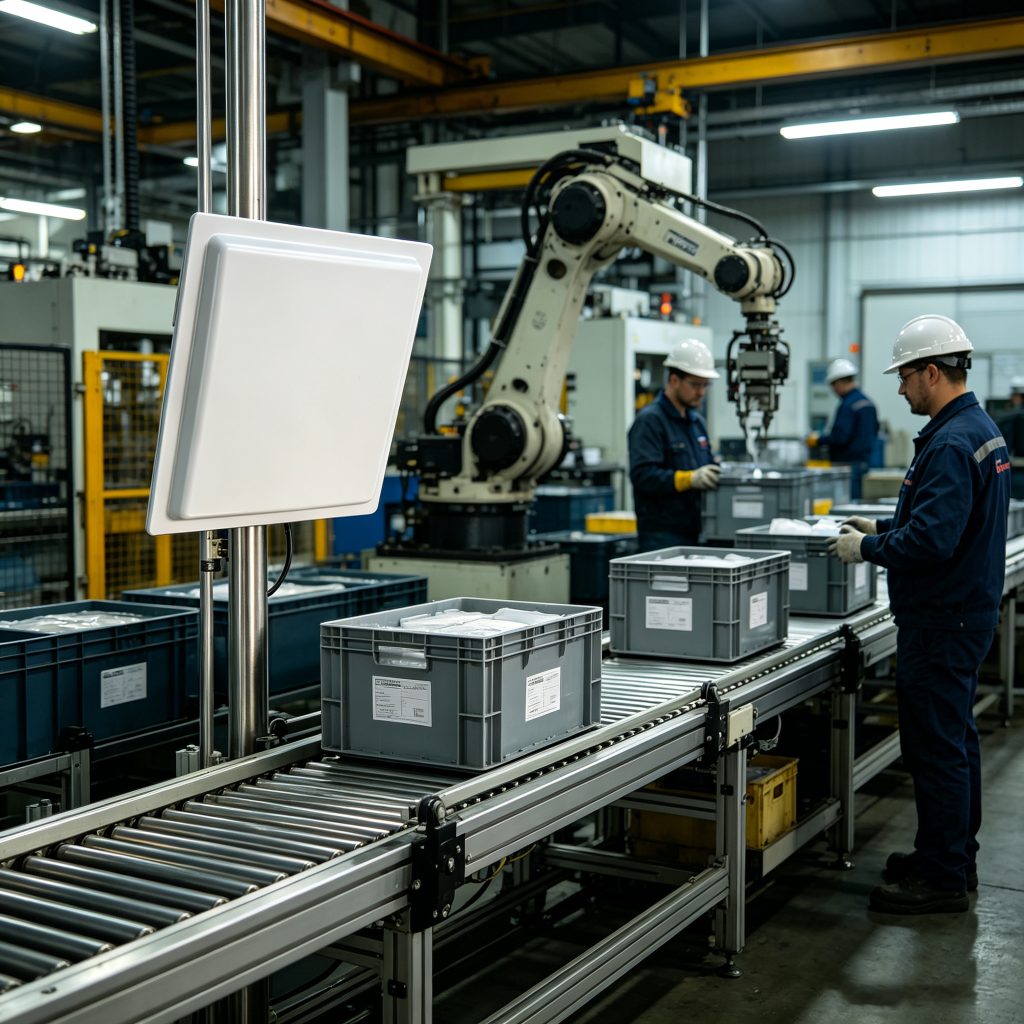
An RFID reader chip processes radio signals between RFID tags and the reader system. It controls decoding speed, anti-collision performance, and inventory efficiency.
For long-range bulk inventory applications, UHF is usually better because it supports faster multi-tag reading and larger coverage areas.
IMPINJ reader platforms are widely used because they provide strong sensitivity, stable decoding, and reliable EPC Gen2 compatibility for industrial environments.
Yes. The chip directly impacts signal decoding quality, interference resistance, and inventory stability.
Warehousing, healthcare, manufacturing, textile laundry management, retail logistics, and industrial automation are among the largest users.

An RFID scanner identifies tagged objects through wireless communication and transfers tag data into business systems. Reliable use depends on matching the s...
More
A realistic, no-fluff guide to RFID attendance systems. Learn how RFID check-in works, where it fits, the pros and cons, and what to consider before deploying it in your organization.
More
Learn how RFID tool cabinet security protects tool access, user permissions, transaction records, system communication, and industrial tool management data.
More
Discover how a major retail chain reduced stockouts by 40% using RFID for real-time inventory tracking. Learn actionable strategies to apply in your stores.
More