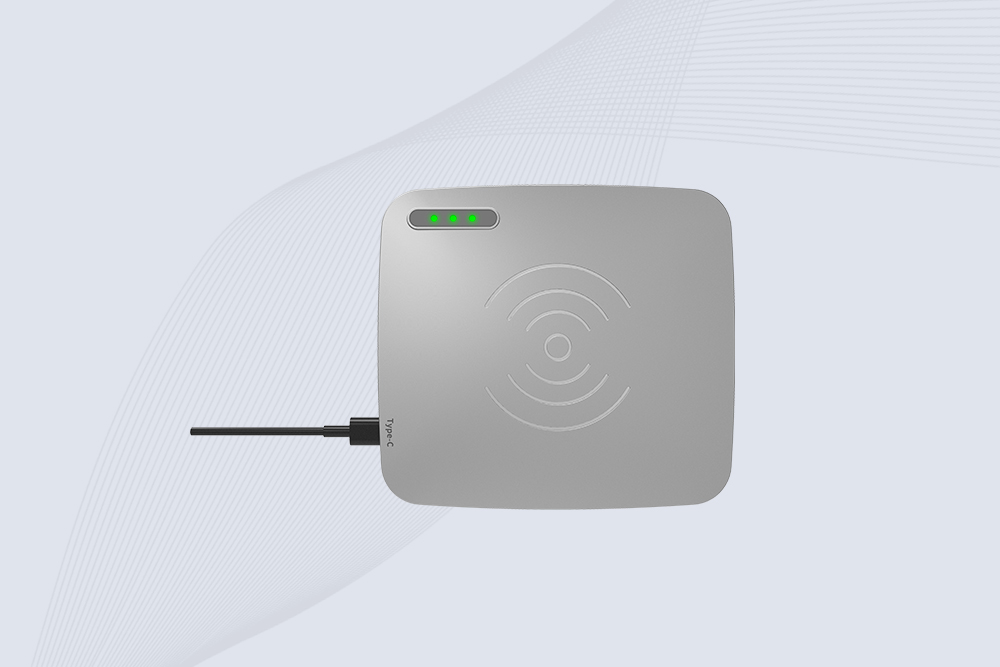
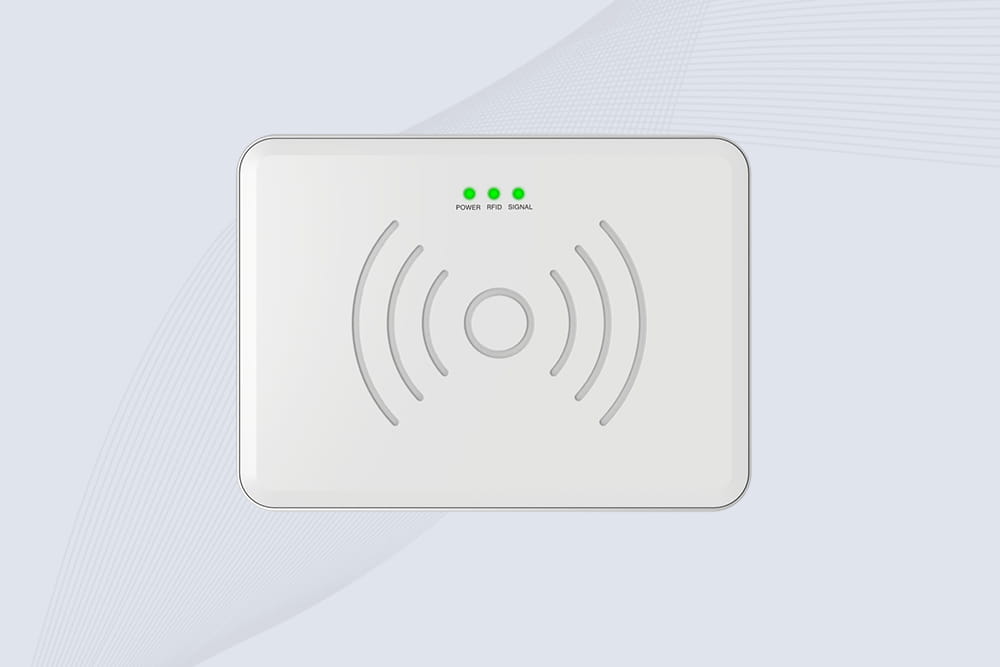
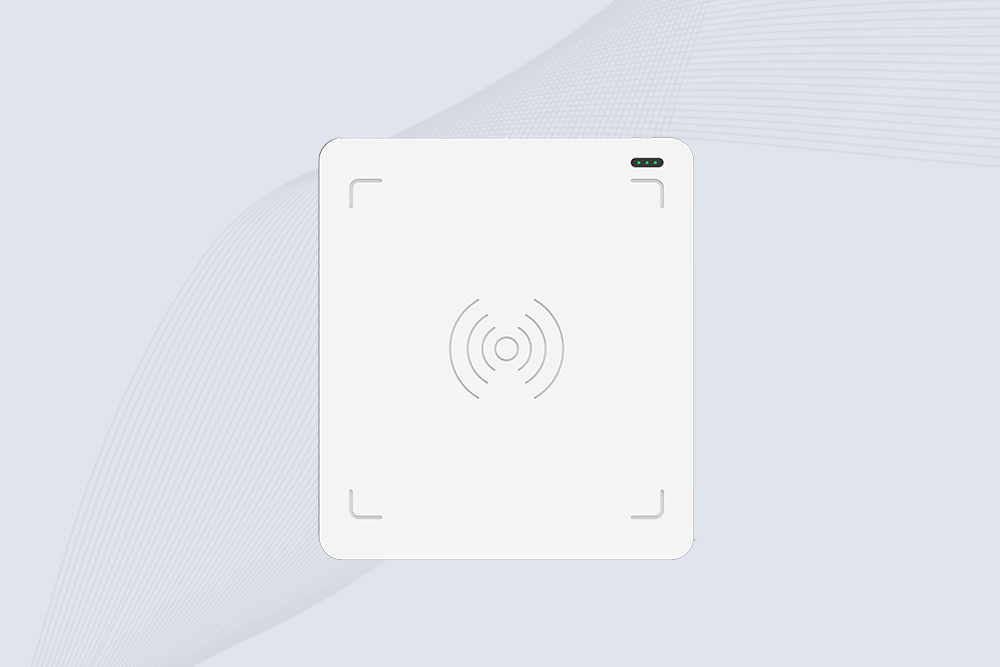
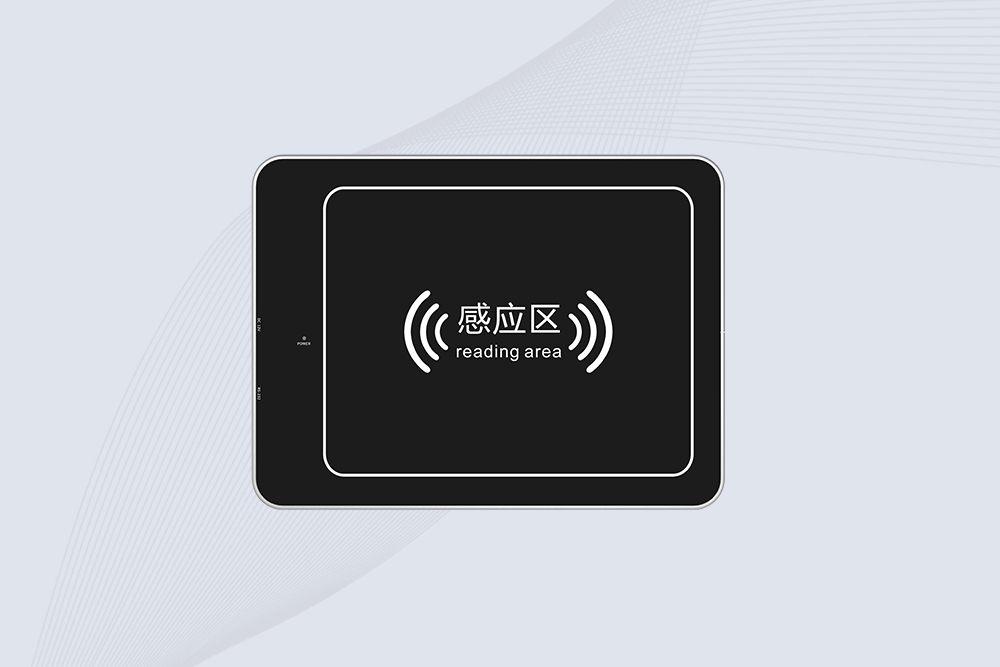
An RFID reader works by transmitting radio-frequency signals to communicate with compatible RFID tags, receiving their responses, and converting those signals into usable data. Depending on the system, it can identify individual items, read multiple tags, and send results to inventory software, access-control systems, or other connected applications.
RFID stands for radio-frequency identification. Unlike a barcode scanner, which generally needs a clear optical view of a printed code, an RFID reader communicates with an electronic tag through radio waves. That difference makes RFID useful for warehouse receiving, production tracking, retail inventory, library circulation, and automated identification points where handling each item individually would slow operations.
But the reader is only one part of the system. Its performance depends on the tag, antenna, operating frequency, reader configuration, surrounding materials, and the software that processes the returned data. A reader with high output power will not automatically deliver accurate inventory counts, and detecting a tag does not necessarily mean the application has recorded the correct business transaction.
What Is an RFID Reader?
An RFID reader is an electronic device that communicates with RFID tags using radio-frequency signals. It typically contains or connects to an RF transmitter and receiver, control electronics, and an interface that transfers tag information to a computer or application.
Depending on the model, the reader may be handheld, built into a desktop device, installed at a fixed workstation, or integrated into industrial equipment.
The basic system has three components:
RFID tag: A small electronic device containing an integrated circuit and antenna. It stores an identifier and, depending on the tag, may provide additional memory.
RFID reader: Generates the radio signal, communicates with tags, receives responses, and passes decoded information to the host system.
Antenna: Transmits and receives radio-frequency energy. It may be integrated into the reader or connected externally.
A fourth component is often essential in practical deployments: the application that interprets the data. For example, a warehouse system may receive a tag’s Electronic Product Code (EPC) and match it to a product record, purchase order, or inventory location.
The distinction matters. An RFID reader identifies a tag; the connected software determines what that identification means within the business process.
How Does a RFID Reader Work Step by Step?
Most RFID systems follow a recognizable communication sequence, although the details vary with the frequency band, tag design, and protocol.
1. The reader transmits a radio signal
The reader generates an RF signal and sends it through an antenna. In a passive RFID system, this signal provides the energy needed by the tag to respond. In other systems, the tag may use its own battery.
2. The tag receives the signal
A passive tag captures energy from the reader’s RF field. Its chip uses the available energy to respond according to the supported communication protocol and the reader’s commands.
3. The tag sends information back
In passive UHF systems, the tag commonly responds by modulating and reflecting the reader’s carrier signal, a technique called backscatter. The reader receives and decodes that response.
4. The reader transfers the decoded data
The reader passes the tag identifier or other supported data to a host device or application through an interface such as USB, serial communication, or Ethernet, depending on the model.
These steps happen quickly, often without the operator touching or directly viewing each tag. A system may inventory several tags within one reader cycle, subject to the protocol, reader configuration, tag population, and RF conditions.
What happens when several RFID tags respond together?
When many tags occupy the same read zone, their responses can overlap. UHF RFID protocols such as EPC Gen2 use anti-collision mechanisms to help a reader inventory multiple tags rather than treating them as a single response.
This is particularly important when reading cartons on a conveyor or items in a receiving area. However, anti-collision does not guarantee that every tag will be read on every pass. Tag orientation, shielding, RF interference, movement speed, and the reader’s settings can still affect the result.
For technical reference, see the GS1 UHF Gen2 Air Interface Protocol, which defines communication procedures for compatible UHF RFID systems.
How RFID Reader Frequency Affects Performance
An RFID reader must operate on a frequency compatible with its tags. Frequency affects how the tag and reader exchange energy and information, the practical reading distance, and the kinds of applications for which the system is suitable.
GS1 identifies passive UHF RFID systems operating in the 860–930 MHz range under its EPC Gen2 standard. Its guidance also notes that passive UHF read ranges can reach up to 10 meters, depending on the environment. This is a potential operating range, not a guarantee that every tag will be readable at that distance.
RFID frequency type
Common frequency
Typical applications
Key operating consideration
Low Frequency (LF)
125–134 kHz
Animal identification and selected access applications
Generally short-range communication
High Frequency (HF)
13.56 MHz
Contactless cards, tickets, NFC and selected item-tracking systems
Range and behavior depend on the standard and antenna design
Ultra-High Frequency (UHF)
Approximately 860–960 MHz across regional allocations
Warehouse inventory, logistics, retail and asset tracking
Supports multi-tag inventory over several meters in suitable conditions
Frequency bands and achievable ranges vary by standard, region, tag design, and installation. The figures above are general guidance, not universal performance specifications. Sources: GS1 frequency comparison and GS1 UHF Gen2 standard.
Why UHF RFID is common in warehouses
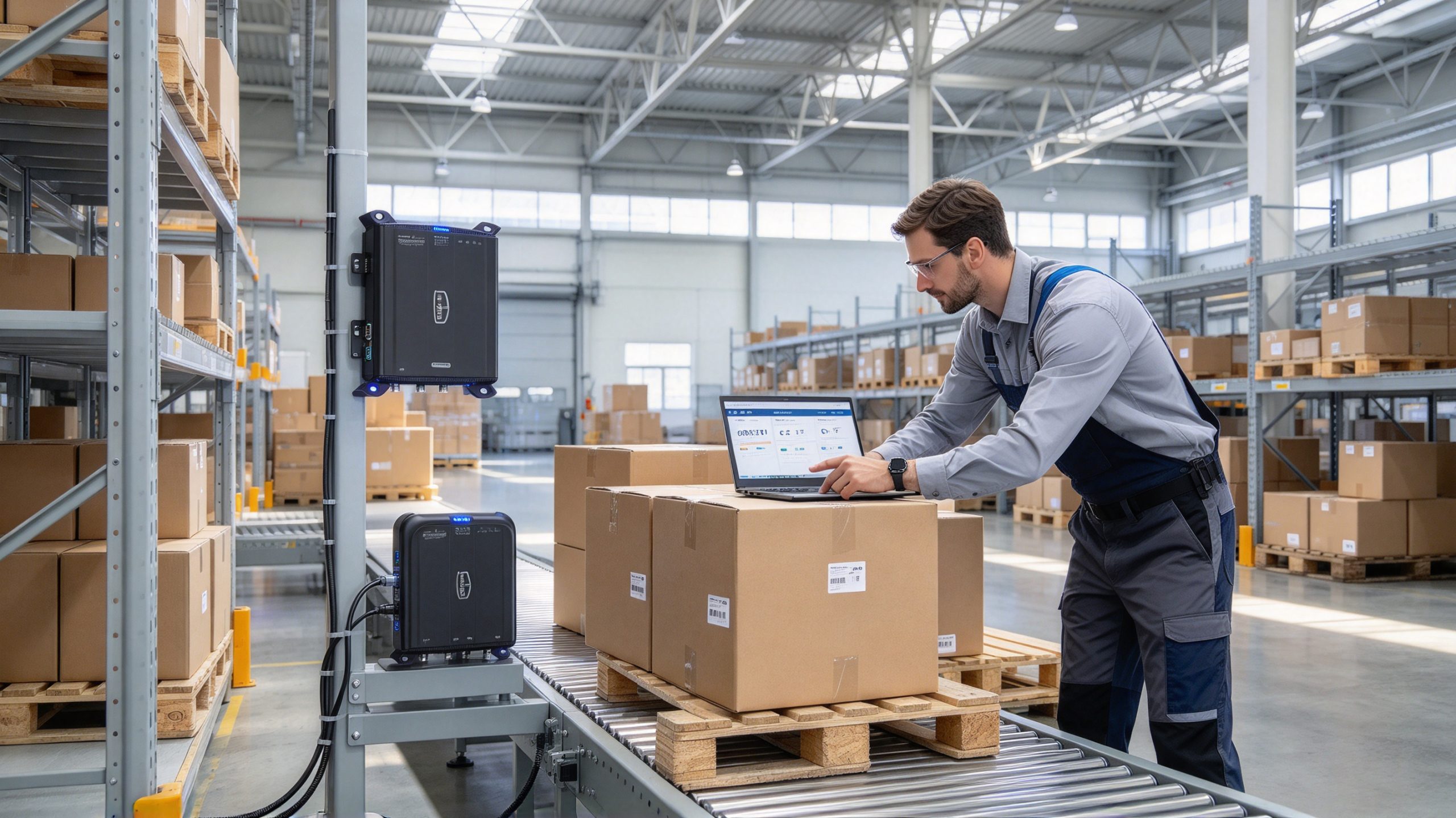
UHF RFID is well suited to situations where a reader must identify many tagged items without requiring each item to be presented individually. A fixed reader can monitor a defined checkpoint while tagged cartons move through the read zone.
That does not mean UHF is always the right choice. A UHF tag attached directly to a metal surface may perform differently from one attached to cardboard. Liquids can also affect radio-frequency behavior, and a tag facing away from an antenna may receive a weaker signal. The right combination of tag, mounting position, antenna, and reader settings matters more than choosing a reader solely by its advertised maximum range.
An RFID reader transmits radio signals, receives tag responses, and transfers decoded identification data to connected software.
Fixed, Handheld, and Desktop RFID Readers
RFID readers are built for different operating environments. The main distinction is not simply size; it is how tags are presented, how the reading zone is controlled, and how the resulting data enters the business system.
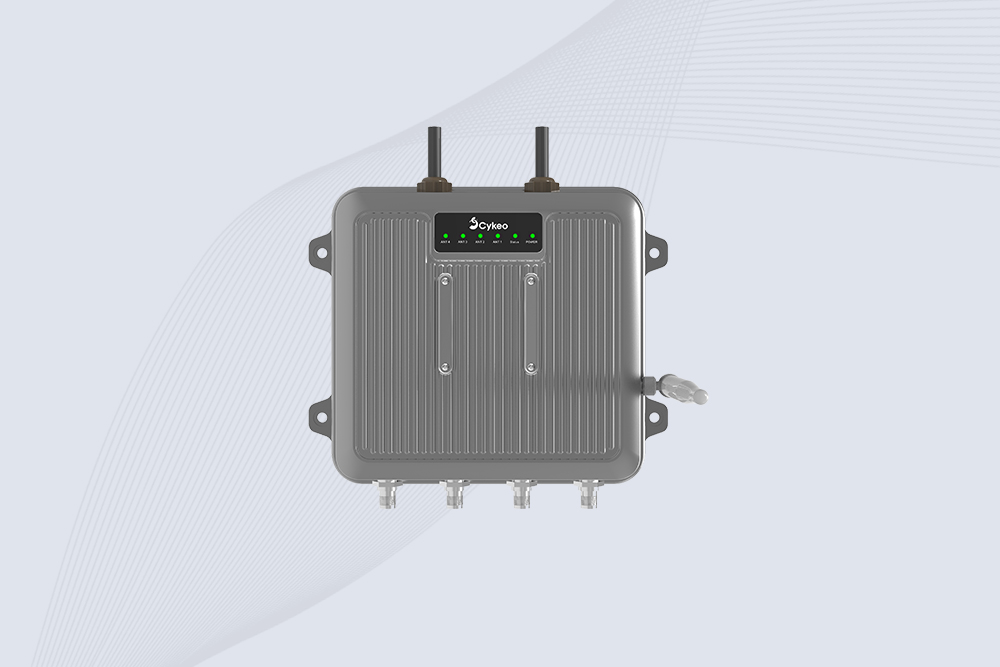
Fixed RFID readers: Installed at conveyor points, warehouse portals, production lines, or other checkpoints where tags pass through a defined area.
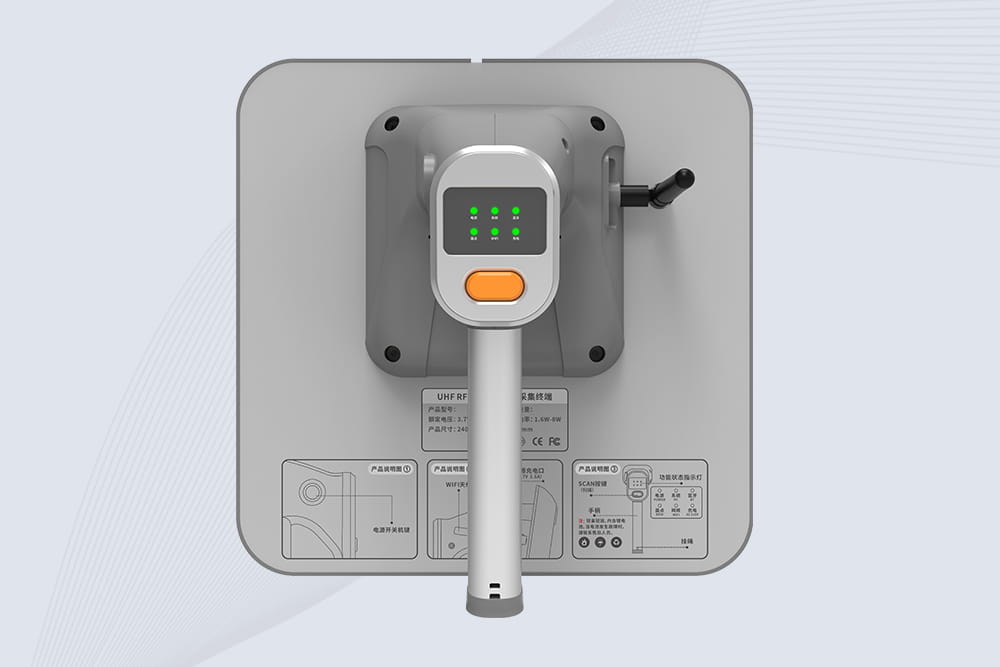
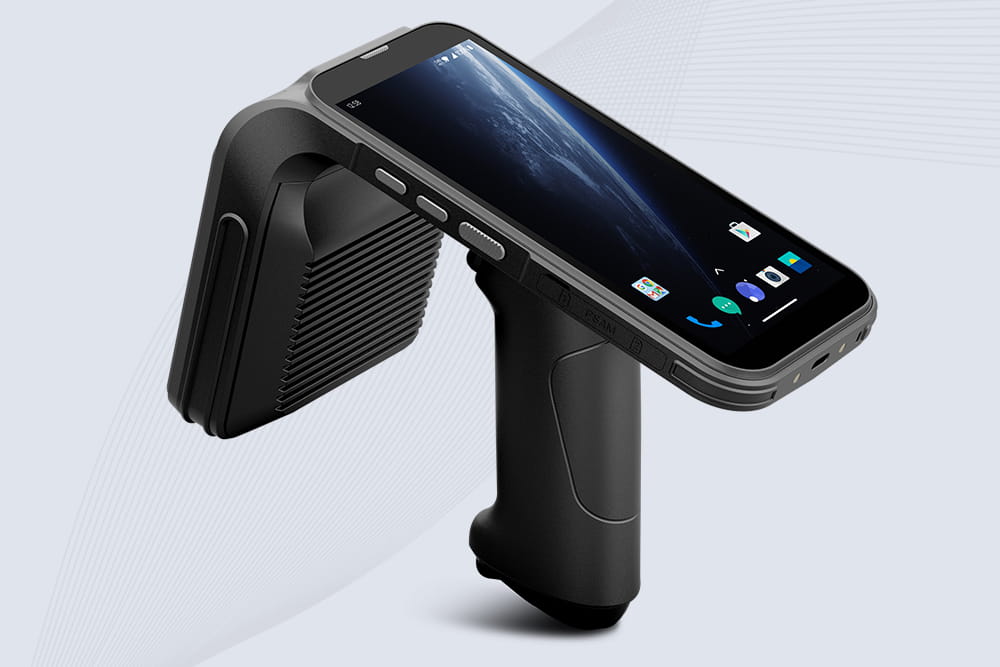
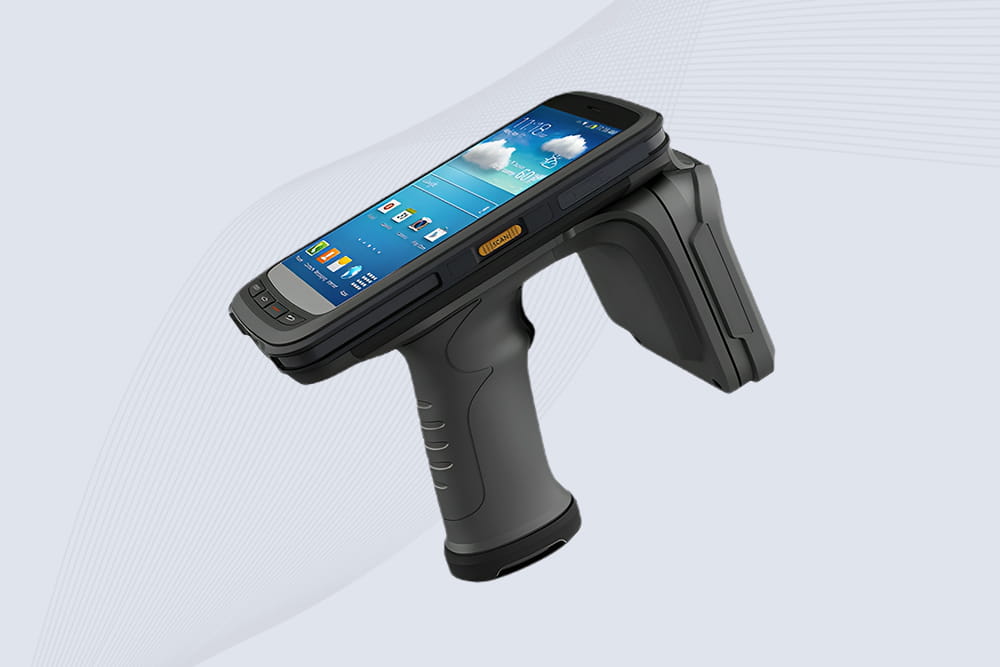
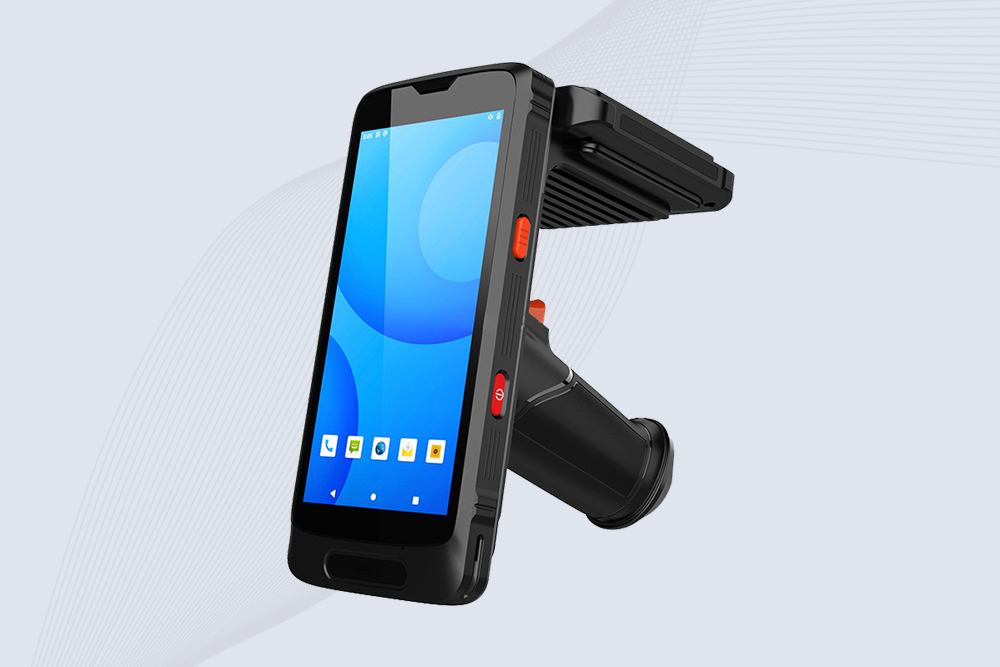
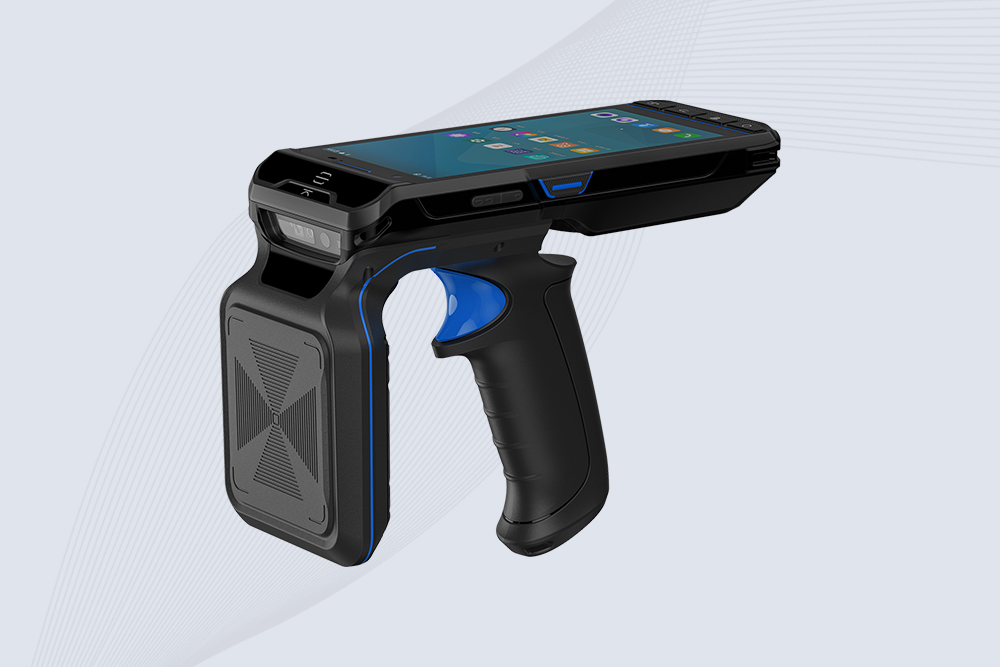
Handheld RFID readers: Allow workers to move through aisles, inspect assets, locate tagged items, and perform stock checks.
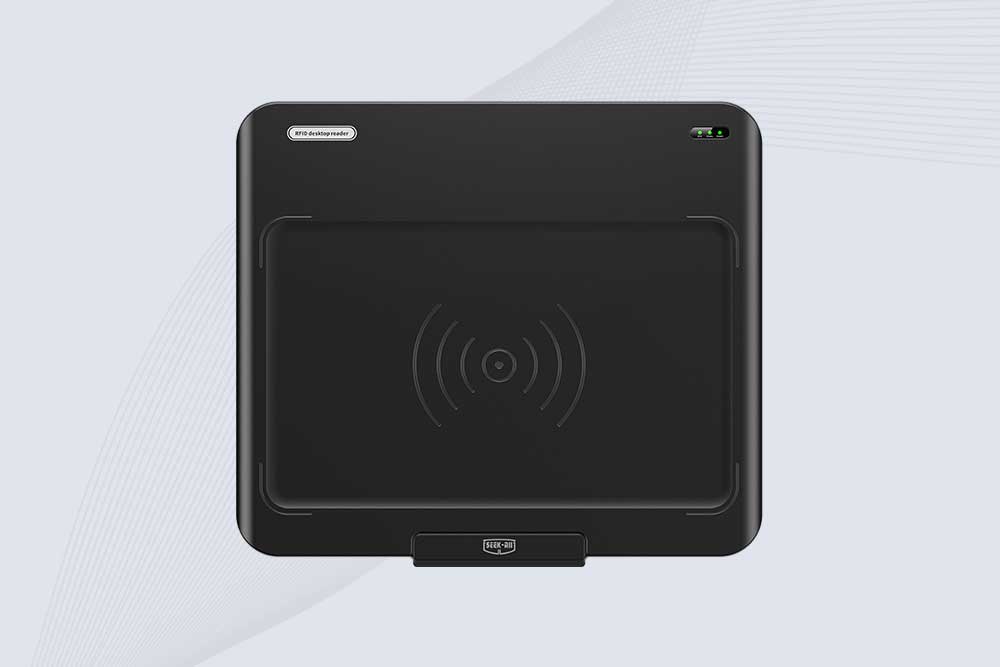
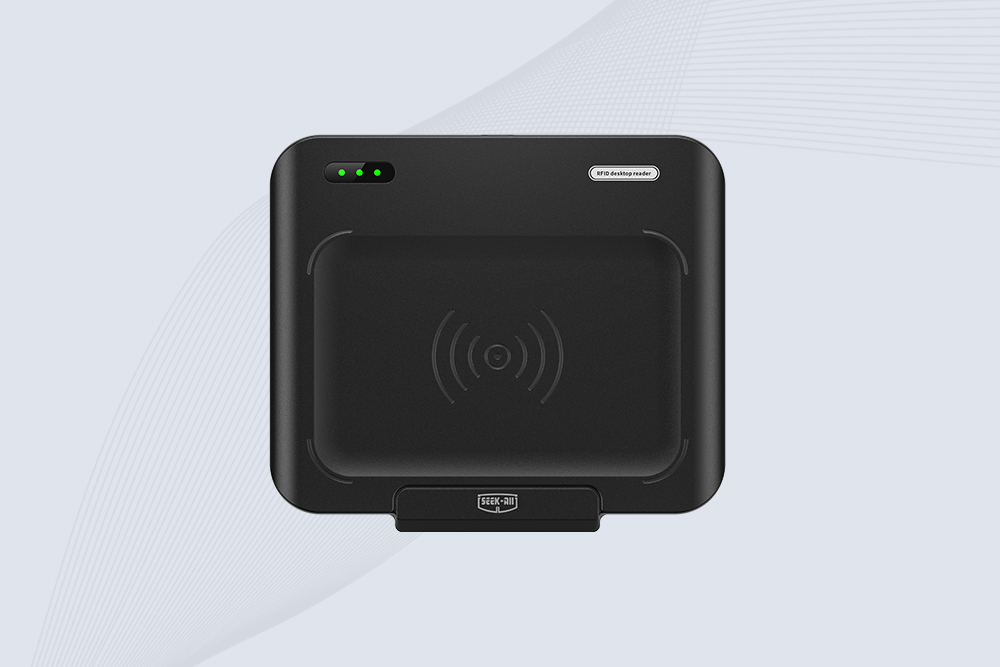
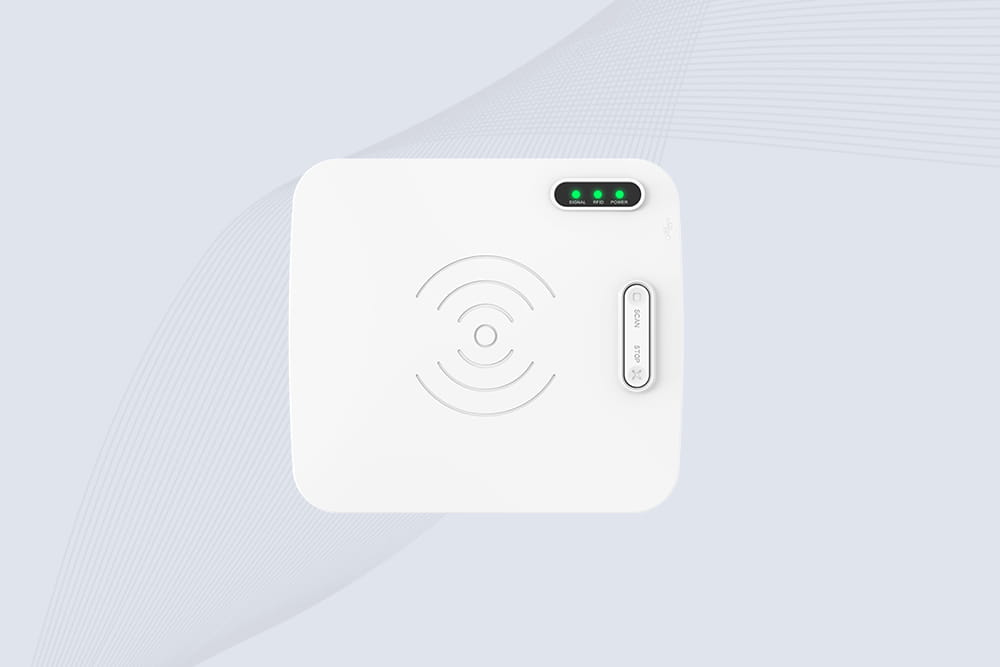
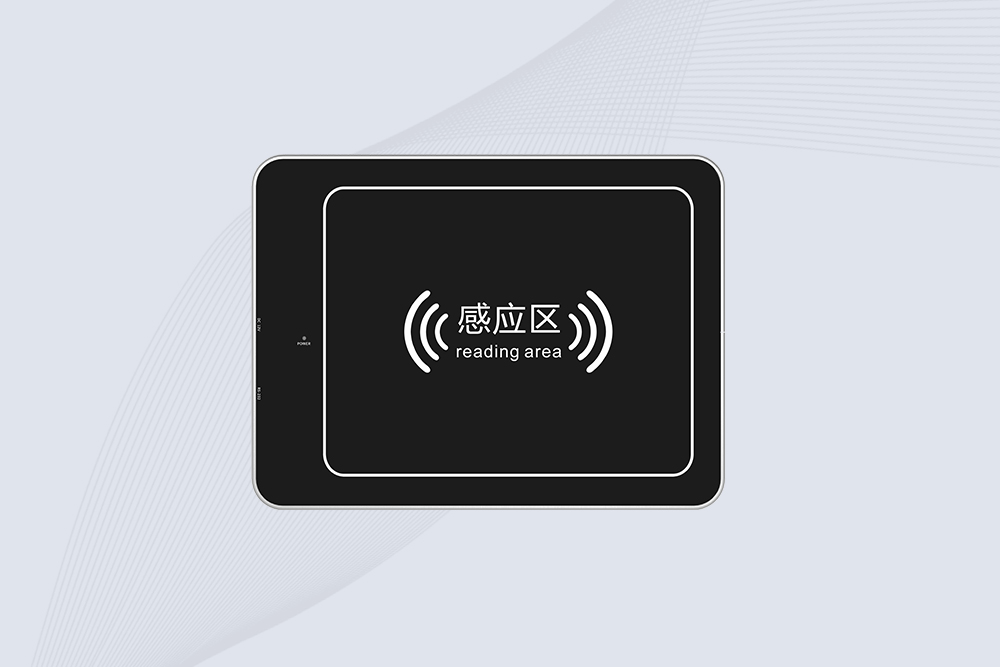
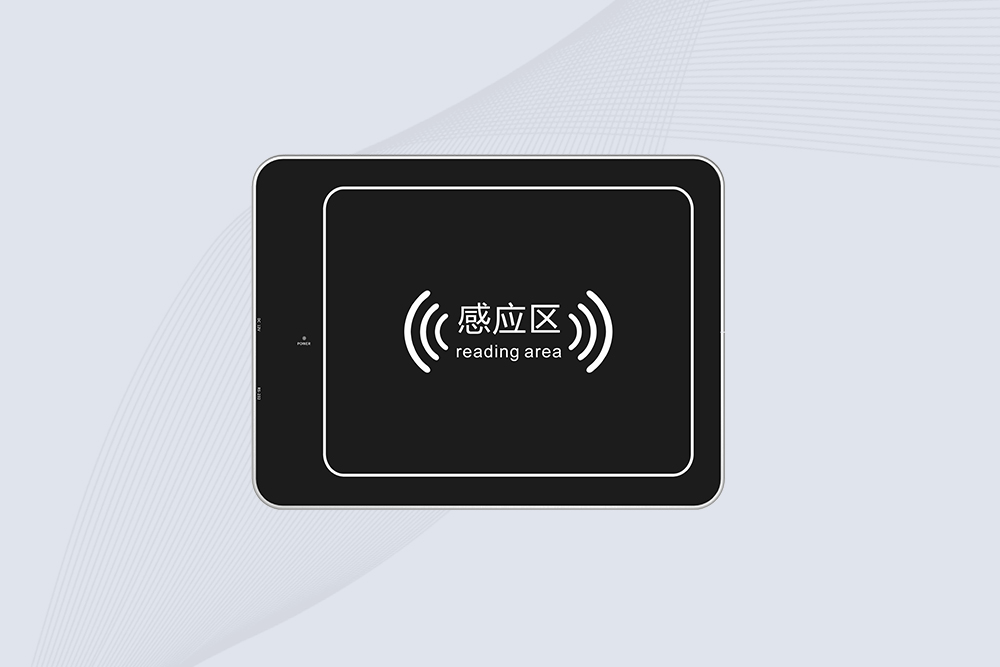
Desktop RFID readers: Support controlled reading, tag registration, and read/write tasks at a workstation.
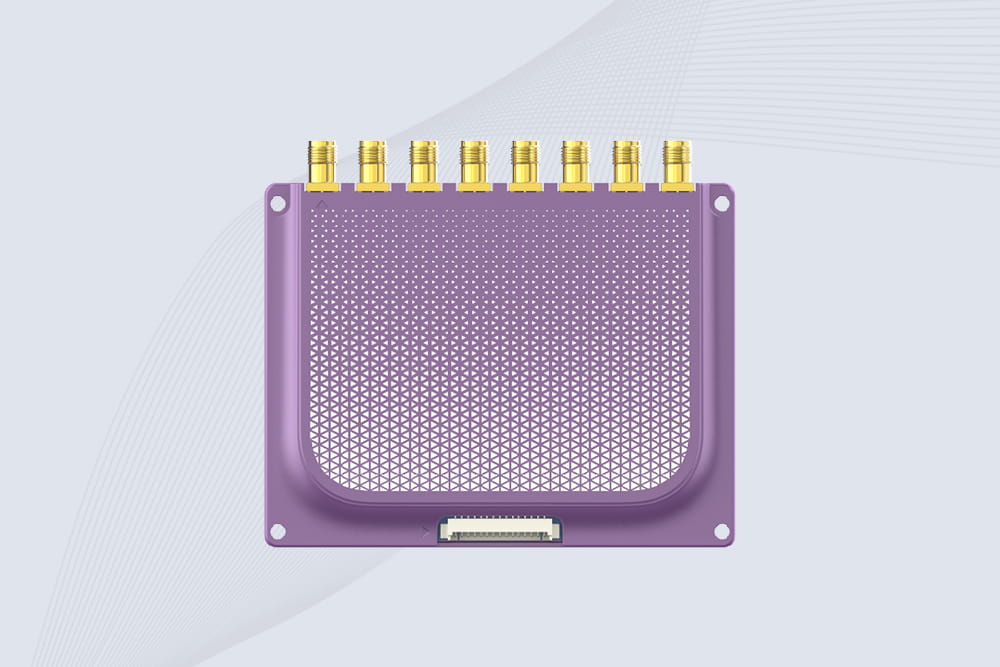
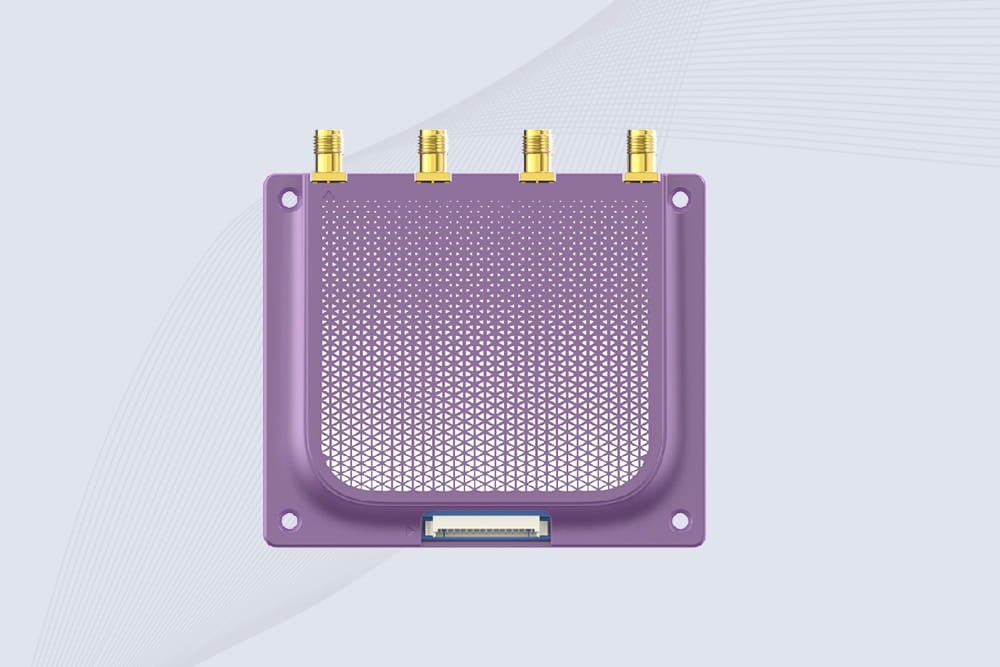
Embedded RFID modules: Provide reader functionality inside a custom device or integrated system.
A useful installation question is: Where should a tag be read—and where should it not be read? In a warehouse portal, the reader must capture the intended cartons without collecting unrelated tags from a nearby staging area. At a desktop registration station, a shorter, more controlled read zone may be preferable because it reduces the chance of registering the wrong item.
This is why antenna placement, transmit power, tag selection, and software filtering should be considered together rather than configured independently.
How to Set Up an RFID Reader for Reliable Tag Reading
An RFID reader needs more than power and a connected computer. Before testing it with live inventory, confirm that the reader, tags, antenna, regional frequency settings, and application use compatible configurations. A reader can appear to be working while still missing tags or returning data that the application cannot interpret correctly.
1. Confirm tag and reader compatibility
Start with the tag specification rather than the reader’s maximum advertised range. Check:
Frequency: Ensure the tag and reader operate in compatible frequency bands.
Protocol: For passive UHF applications, verify support for the relevant EPC Gen2 / ISO/IEC 18000-63 protocol implementation.
Tag memory: Determine whether the application needs only an identifier or must read additional memory.
Regional settings: Configure the reader for the applicable regulatory region and supported channels.
Connection and software: Confirm the host interface, driver requirements, SDK/API, and application compatibility.
The GS1 RFID standards provide background on RFID standards and interoperability. Exact capabilities should always be checked against the documentation for the specific reader and tag.
2. Configure the antenna and read zone
The antenna determines where radio energy is transmitted and where tag responses are received. Its position, polarization, orientation, and distance from the tagged items can materially affect performance.
For a conveyor installation, place the antenna so that the expected tag positions pass through a useful read zone. For desktop tag registration, use a controlled near-field or short-range arrangement when supported by the equipment. The goal is not to maximize the reading distance indiscriminately; it is to read the intended tags consistently.
3. Test the complete data path
Run a small test before introducing a full batch of inventory.
Present one known, compatible tag.
Confirm that the reader detects it.
Check that the expected identifier appears in the reader software.
If necessary, test supported memory-read commands.
Confirm that the application receives and correctly interprets the returned data.
Repeat with several tags in realistic positions and orientations.
This last step is often where a lab test and an actual installation diverge. A tag that reads easily when held directly in front of an antenna may behave differently when attached to a carton stacked among other goods.
Common RFID Reader Problems and How to Fix Them
When an RFID installation underperforms, the first instinct is often to increase reader power. That may help in some situations, but it can also enlarge the read zone and capture tags that should have been ignored. A better starting point is to identify exactly what is failing: tag detection, data decoding, or the transfer of data into the application.
Problem
Likely cause
Practical troubleshooting step
No tags detected
Incompatible tag, incorrect frequency settings, disconnected antenna, or insufficient RF coupling
Verify compatibility, antenna connections, and reader configuration
Some tags are missed
Tag orientation, shielding, poor placement, or inconsistent read-zone coverage
Test representative tags in several orientations and positions
Tags outside the target area are detected
Read zone is too broad, or nearby tags receive sufficient RF energy
Adjust antenna placement and power; use supported filtering or tag-selection functions
Duplicate records appear
The application processes repeated tag reports as separate events
Apply appropriate software filtering and transaction-level deduplication
Reader detects tags but the application shows nothing
Check communication logs and verify the data path from reader to application
Performance drops when many tags are present
Dense tag population, RF interference, or unsuitable reader settings
Test with a representative tag population and review anti-collision settings
Why maximum reading distance is not the same as reliable performance
GS1 notes that passive UHF read range depends on factors such as reader power, interference, and tag orientation. It also explains that the shape of the readable volume can matter more than distance alone
Consider a receiving station where cartons pass an antenna. A reader that detects a tag at a long distance may also detect inventory on an adjacent pallet. For the operator, that is not necessarily better performance: the system may associate the wrong item with a receiving transaction.
A useful commissioning test therefore measures both successful reads inside the intended zone and unwanted reads outside it. Repeat the test with the real packaging, tag placement, movement speed, and surrounding stock. Record missed tags and false captures rather than relying on a single successful scan.
Where RFID Readers Are Used in Real Operations
RFID readers support several kinds of identification workflows. The hardware may use similar radio principles, but the required read behavior changes from one application to another.
Warehouse and inventory management
A fixed UHF reader can identify tagged cartons or assets as they pass a receiving, dispatch, or inventory checkpoint. The application can compare the captured identifiers with expected shipment or stock records.
The practical challenge is establishing which items belong to a transaction. If goods are staged close together, the system may read tags from adjacent inventory. Antenna positioning, read-zone testing, and software rules must work together.
Retail and item-level tracking
Retail systems can use RFID readers to support stock checks, item identification, and replenishment workflows. Handheld readers are useful when staff need to move through shelves, while fixed readers can support repeatable identification at selected points.
An RFID read does not automatically confirm that a sale or stock transfer has occurred. The application must associate the identifier with the correct event and apply the appropriate business rules.
Manufacturing and production tracking
At a production station, a reader may identify a tagged component, work-in-process item, or container before a process begins. The application can use that identifier to retrieve the corresponding work order or production record.
Here, timing matters. The read must occur at the correct point in the process, and the system must avoid associating a tag from a neighboring workstation with the active job.
Libraries and asset circulation
Desktop RFID readers can support tag registration, item identification, and borrowing or return workflows. Fixed readers and self-service equipment can support other parts of the circulation process.
For these systems, the reader’s ability to communicate with a tag is only one requirement. The circulation application must also handle the correct item record, transaction status, and user permissions.
Testing RFID performance with real cartons and tag positions helps identify missed reads and unwanted reads outside the intended zone.
Frequently Asked Questions About How RFID Readers Work
1. How does a RFID reader work with a passive tag?
A passive RFID reader transmits a radio signal that provides energy to a compatible tag. The tag responds by modulating the received signal, and the reader decodes that response into digital information. Passive UHF systems commonly use backscatter communication.
2. Does an RFID reader need to touch the tag?
No. RFID communication is wireless, so the reader does not need physical contact with the tag. The achievable distance depends on the frequency, tag design, antenna, reader settings, and surrounding environment.
3. Can one RFID reader read multiple tags at once?
Yes. Compatible RFID readers can inventory multiple tags within their effective read zone. UHF RFID protocols provide anti-collision mechanisms to manage multiple tag responses, but the number successfully read depends on the operating conditions and configuration.
4. What information does an RFID reader receive?
It commonly receives a tag identifier, such as an EPC in a compatible UHF system. Depending on the tag, reader, protocol, and permissions, additional memory data may also be available. Product descriptions and transaction histories are often retrieved from connected software rather than stored directly on the tag.
5. Why can an RFID reader miss a tag?
A tag may be poorly oriented, shielded by metal or other materials, outside the effective read zone, or incompatible with the reader. Incorrect configuration and interference can also affect performance. Test with the actual tag and packaging rather than relying solely on an advertised range.
6. What is the difference between an RFID reader and an RFID scanner?
“RFID scanner” is often used informally to describe an RFID reader, especially a handheld device. Technically, an RFID reader communicates with electronic tags through radio signals, while a barcode scanner typically captures printed codes optically. The precise distinction depends on the product and application.
7. Can an RFID reader write information to a tag?
Some readers support both reading and writing. Writing requires a compatible writable tag, appropriate commands, and any required access credentials. Not every reader exposes write functions, and not every tag memory area is writable. Confirm these capabilities in the product documentation before selecting equipment.
SSD-D3AL is a USB-HID UHF RFID reader with 0–30 cm reading, 0–15 cm writing, over 600 tags/s recognition, USB plug-and-play operation and OEM Logo customization.
SSD-D1AL is a compact USB UHF RFID reader with Impinj E710/X3M1 chipset, USB-HID, 600+ tags/s recognition, 4/8/16 antenna support and plug-and-play USB power.
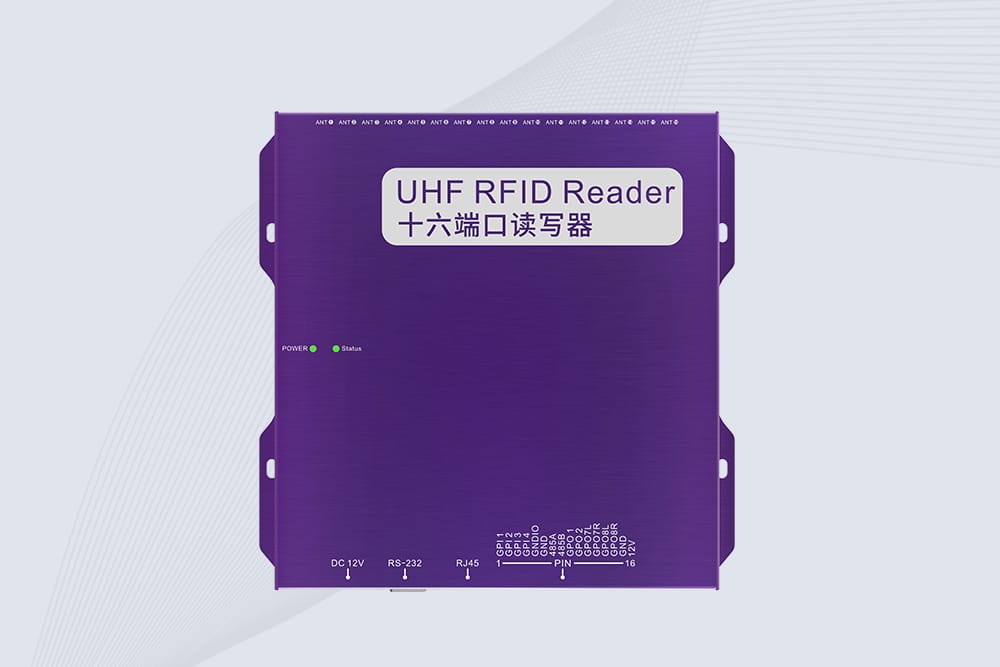
SSD-R16L Multi-Channel RFID Infrastructure for Automated Inventory Management ✔️ 16-Port High-Density RFID Reading Equipped with 16 SMA antenna ports, SSD-R16L supports multi-antenna deployment for warehouses, retail stores, logistics, production lines, and large-area RFID identification. ✔️ High-Speed & Long-Range Performance With up to 33…
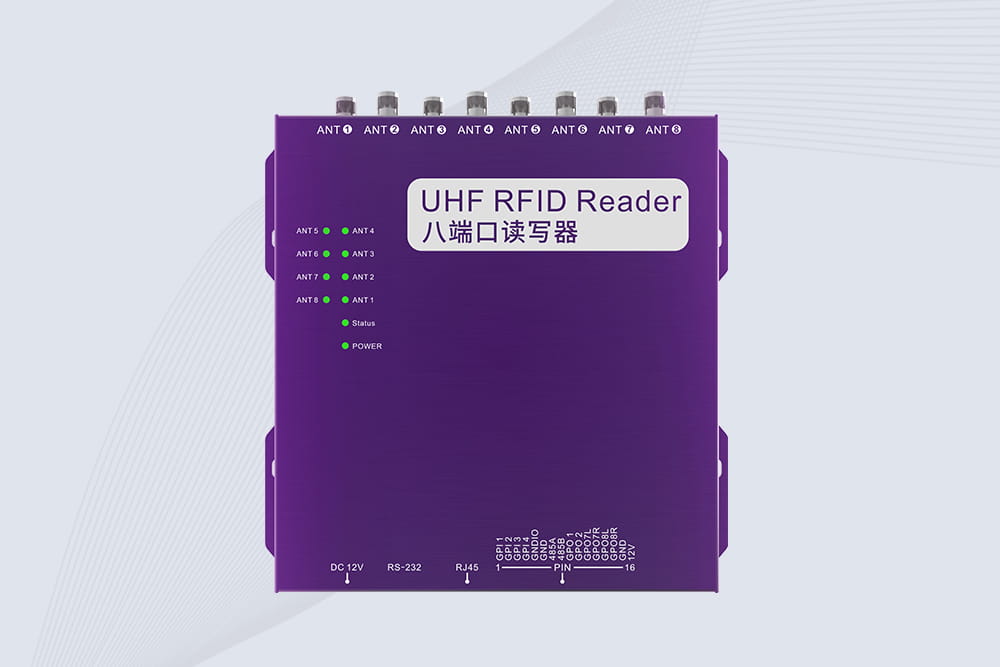
SSD-R8L 8-port UHF RFID reader with 33dBm output, up to 20m reading range and 600+ tags/s recognition. Ideal for warehouse, logistics, retail and asset tracking.
CYKEO CYKEO-D1LA USB RFID Reader is a compact desktop solution with near-field control for precise tag reading and encoding. Powered by USB, supporting ISO 18000-6C, and built for stable batch writing, this usb rfid tag reader fits retail, libraries, offices, and controlled RFID encoding tasks.
CYKEO CYKEO-D1L RFID scanner USB is a compact desktop UHF RFID scanner designed for short-range tag writing and verification. This usb rfid scanner supports batch encoding, stable 0–26 dBm output, and works across Windows, Linux, and Android systems.
CYKEO CYKEO-D1C USB RFID Card Reader is a near-field UHF desktop writer designed for secure, short-range tag encoding. With USB-C connectivity and stable 26 dBm output, this rfid reader usb c is ideal for badge issuance, label encoding, and controlled desktop RFID workflows.
CYKEO CYKEO-D2L RFID Reader USB is a compact desktop encoder built on the Impinj R500 chip. With near-field control and stable USB power, this usb rfid card reader delivers precise tag writing for offices, retail counters, and small-scale logistics encoding tasks.
CYKEO CYKEO-D3L USB RFID Tag Reader delivers stable UHF tag reading and writing for daily desktop and light industrial tasks. Designed for controlled short-range operation, this USB RFID Tag Reader works reliably with rfid tag and reader systems in libraries, tool tracking, and inventory registration.
The CYKEO CYKEO-D4L UHF RFID Tag Reader is a stable Desktop RFID Reader designed for accurate tag registration, borrowing, and return workflows. Built with the Impinj R2000 chip, this UHF RFID Tag Reader delivers controlled short-range reads for libraries, asset tracking, and inventory management environments.
The CYKEO CYKEO-D5L Desktop RFID Card Reader is a stable UHF RFID Card Reader designed for controlled short-range reading and writing. Built for libraries, tool rooms, and asset desks, this UHF RFID Card Reader supports dense tag handling, secure data processing, and easy USB integration.
The CYKEO CYKEO-D6L RFID Reader Writer is a heavy-duty Desktop RFID Reader designed for short-range, high-accuracy tag programming. Built for libraries, labs, and asset desks, this RFID Reader Writer supports batch processing, stable 33dBm output, and seamless integration with existing management systems.
Cykeo CYKEO-D8A embedded RFID badge reader offers 30+ tags/sec scanning, 20cm anti-crosstalk precision, and DC 12V power for unmanned stores, warehouses, and smart inventory systems.
Cykeo’s CYKEO-D8C UHF RFID gate reader achieves 200-tag/batch scanning with adjustable power control, ideal for retail inventory and smart warehouse management.
CYKEO Embedded RFID Modules are designed for compact industrial and IoT devices that require stable UHF performance. These UHF RFID Modules support global protocols, flexible power control, and reliable multi-tag reading for smart cabinets, production lines, and asset tracking systems.
CYKEO Embedded RFID Module is built for compact IoT and industrial devices that need stable UHF performance. This UHF module supports global protocols, low power operation, and reliable multi-tag reading for smart lockers, production lines, and always-on RFID systems.
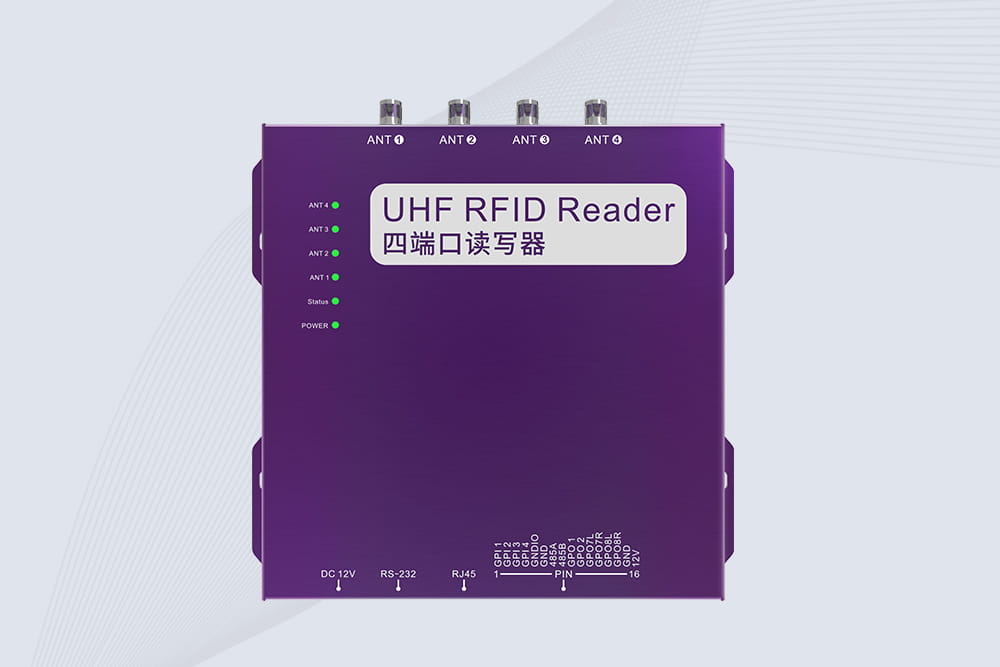
CYKEO CYKEO-M1 drone rfid module is a compact UHF RFID reader module designed for drones and UAV platforms. It supports long-range aerial scanning, fast multi-tag reading, and stable performance in wind, vibration, and outdoor environments.
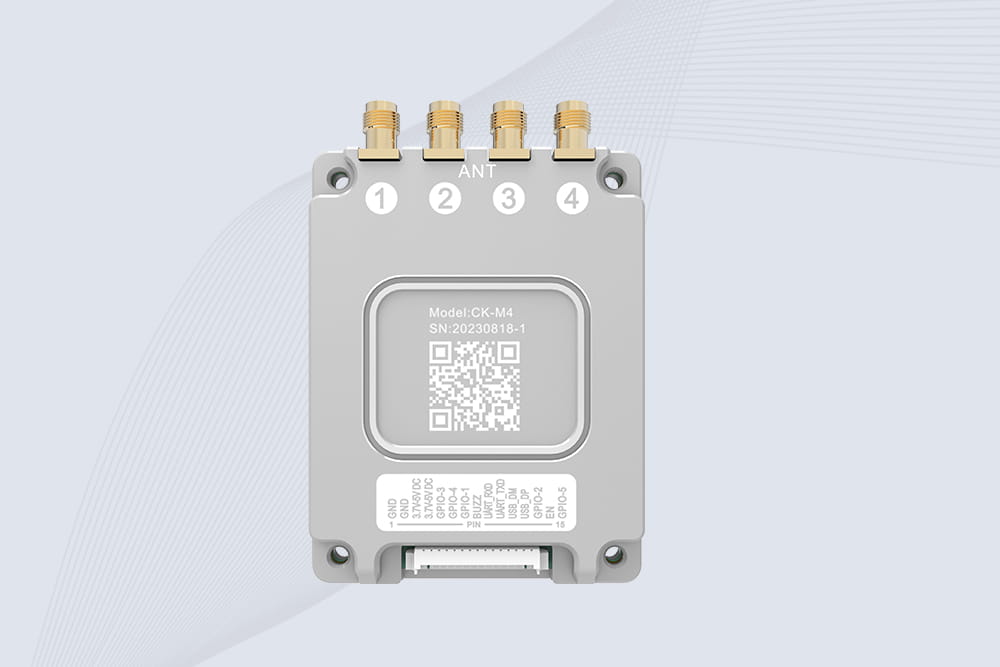
CYKEO CYKEO-M4 RC522 RFID Module is an industrial-grade UHF RFID reader with 4 ports, supporting ISO, EPC, and GB protocols. High-speed, accurate reading for IoT, automation, and warehouse applications.
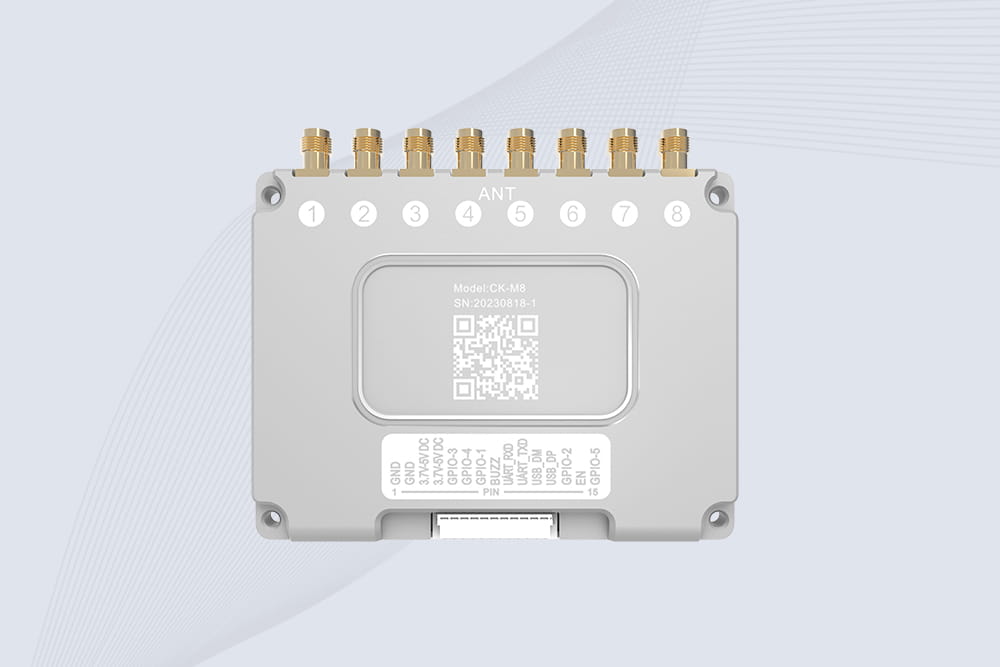
CYKEO CYKEO-M8 Module RFID is an 8-port UHF R2000 RFID Module designed for high-density, multi-tag environments. Stable 33dBm output, ISO & GB protocol support, ideal for warehouses, factories, and automated systems.
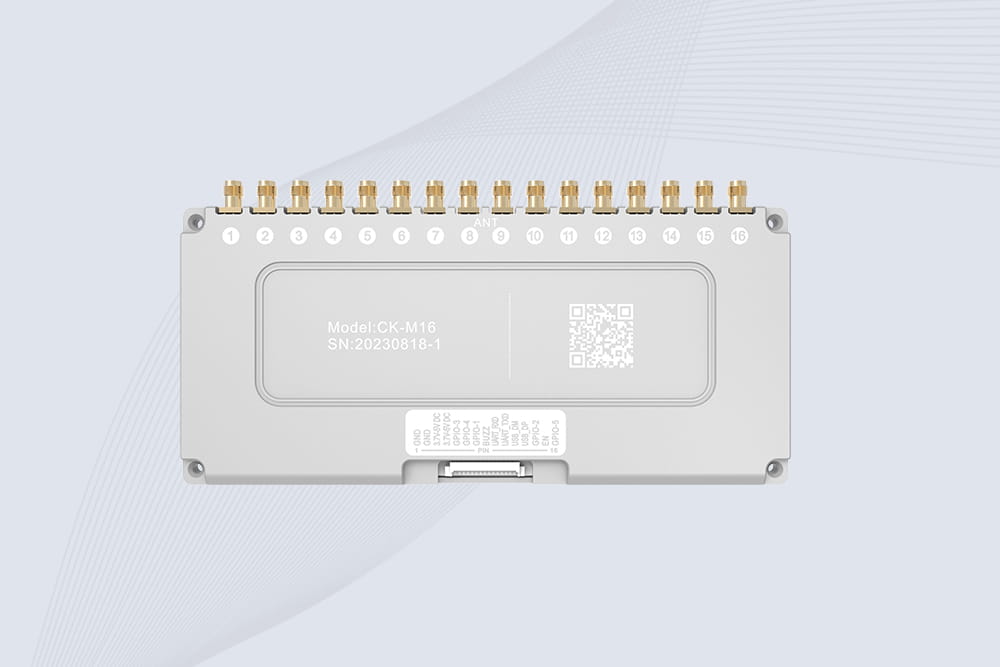
CYKEO CYKEO-M16 RFID Module is a 16-port UHF RFID reader module based on the R2000 chipset. Designed for dense tag environments, it supports ISO and GB standards and delivers stable multi-antenna control for industrial automation.
The CYKEO CYKEO-M16L RFID Reader Module is a 16-channel UHF RFID core designed for dense tag environments. With adjustable 33dBm output, multi-protocol support, and stable multi-antenna control, this RFID Tag Reader Module fits industrial automation, warehouse systems, and large-scale IoT deployments.
CYKEO CYKEO-M8L module RFID is a compact industrial UHF module built for dense tag and multi-antenna environments. With 8 RF ports, adjustable 33 dBm output, and ISO & GB protocol support, it is widely used in factories, warehouses, and automated tracking systems.
CYKEOCYKEO-M4L UHF RFID Module is a compact 4-channel RFID tag reader module designed for dense tag environments. Supporting ISO and GB protocols, it delivers stable reads up to 10 meters for industrial and IoT systems.
Cykeo CYKEO-C1 industrial Forklift RFID Reader features 20m read range, 600 tags/sec scanning, Impinj R2000 chipset, and IP67 rugged design. Ideal for warehouse logistics and manufacturing. Supports ISO 18000-6C/6B protocols.
Cykeo CYKEO-R4 industrial UHF RFID Fixed Reader features 4 TNC ports, 400+ tags/sec speed, IP67 housing, and global frequency compliance for vehicle inspection, smart warehouse, and asset management systems.
CYKEO CYKEO-R8L Fixed RFID Reader with 8-port UHF design, Impinj-based RF core and up to 20m read range. An industrial Fixed RFID Reader for vehicle inspection, warehouse portals, smart manufacturing lines and secure access checkpoints.
RFID Fixed Reader from CYKEO – the CYKEO-R16L 16-port UHF fixed reader for warehouses, smart cabinets, and production lines. Long-range, multi-tag reading, stable performance for 24/7 industrial use.
Explore how a hospital parking system using RFID improves ambulance access, staff parking efficiency, and visitor traffic management with automated vehicle identification and long-range RFID technology.
A long range RFID scanner helps cold chain operators track pallets, reusable insulated boxes, refrigerated containers, and shipment assets through cold rooms...
 Cykeo RFID IoT Solution Products R&D Manufacturer