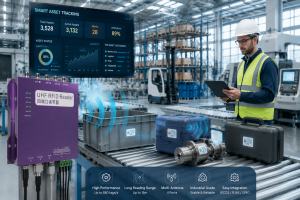
RFID can identify multiple tagged items without direct line of sight, while barcode scanning can be highly accurate when labels are clear, correctly printed, and properly scanned. Neither technology is universally more accurate. Real-world results depend on tag or label quality, reader configuration, item presentation, software validation, and how the business measures a successful read.
For warehouse managers, inventory teams, and system integrators, the more useful question is not which technology has the highest theoretical accuracy. It is which one produces the fewest missed items, duplicate records, and incorrect inventory updates in the actual workflow.
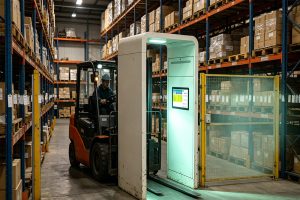
A barcode scanner may capture a well-printed label reliably every time an operator presents it correctly. An RFID system may identify dozens of tagged products in one read zone, but it can also pick up tags outside the intended area or miss tags affected by metal, liquids, orientation, or poor antenna placement. Those are different failure modes, and they need different controls.
RFID vs barcode accuracy: What does accuracy actually mean?
Accuracy is not a single number that can be compared fairly without defining what is being measured. In an inventory operation, it can refer to the percentage of items successfully identified, the proportion of scans associated with the correct product, the accuracy of the stock record, or the rate of false or duplicate reads.
These measures are related, but they are not interchangeable.
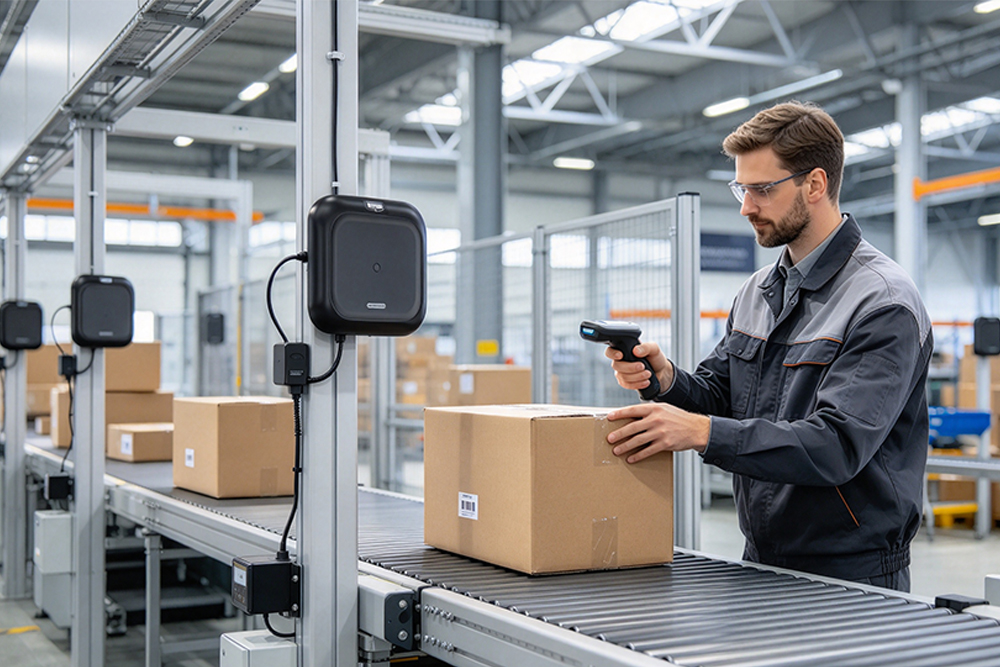
Consider a warehouse team counting 500 items. A barcode process may require an operator to scan each label individually. If one label is obscured by shrink-wrap, the operator may notice the problem and reposition the item. An RFID portal may read many tags automatically as a carton passes through, but a tag from an adjacent carton could also enter the read zone. The first workflow risks missed manual scans; the second may risk unintended reads.
Both systems can produce an incorrect count, but the causes are different.
Four ways to measure identification accuracy
Measurement
What it tells you
Why it matters
Successful read rate
The share of intended items detected
Reveals missed tags or labels
Correct identification rate
The share of reads matched to the correct item
Detects incorrect or ambiguous item records
False-read rate
How often unintended items are captured
Especially important in RFID portals and dense read zones
Inventory record accuracy
How closely the system’s stock records match the physical inventory
Measures the result of the entire process, not just the reader
For a fair comparison, use the same items, the same inventory task, and the same definition of success. A barcode test that counts only successful scans should not be compared with an RFID test that counts every tag response, including reads from neighboring stock.
It is also important to distinguish a read from a transaction. A rfid reader can detect a tag correctly, but the software may still assign it to the wrong shipment, count it twice, or fail to save the event. Conversely, a well-designed application can filter duplicate reads and validate the result before updating the inventory record.
The accuracy of the complete system therefore depends on more than the hardware alone.
How accurate is RFID compared to barcode scanning in real inventory work?
In a controlled environment, both technologies can achieve high identification reliability. The difference often becomes visible when operators must work quickly, handle many items, or deal with inconsistent labels and packaging.
Barcode scanning relies on an optical reader capturing the printed code. The barcode must generally be visible to the scanner, although the operator may not need to touch the item or place the scanner directly against the label. RFID uses radio-frequency communication and can identify compatible tags without optical line of sight.
That distinction changes the work involved.
When barcode scanning is highly reliable
Barcode systems are often a strong choice when products have clear, accessible labels and workers can scan each item deliberately. The operator can see which label is being scanned, and the system can provide immediate confirmation.
Common conditions that support reliable barcode capture include:
Correctly printed labels with adequate contrast.
A scanner suited to the barcode symbology and label size.
A clean, unobstructed scanning surface.
A workflow that confirms each scan before moving to the next item.
Software validation that rejects invalid or unexpected product codes.
Barcode scanning can become less reliable when labels are torn, wrinkled, dirty, hidden behind packaging, or positioned where the scanner cannot capture them easily. Reflective surfaces and poor print quality can also complicate reading.
In a busy receiving area, a worker may have to rotate a carton several times to find a usable label. That delay does not necessarily mean the barcode technology itself is inaccurate; it may indicate that the labeling or handling process needs improvement.
When RFID has an accuracy advantage
RFID can be useful when items are tagged consistently and the system is designed around a controlled read zone. A reader may identify multiple items during one inventory pass without requiring an operator to aim at each tag individually.
Potential advantages include:
Identifying compatible tagged items without visual access to each tag.
Reading multiple tags within a suitable RF field.
Reducing dependence on manual, item-by-item scanning.
Supporting automated inventory checks at defined locations.
Recording item movement when tags pass through appropriately configured read points.
RFID’s flexibility introduces its own engineering requirements. Metal can interfere with antenna performance; liquids can affect UHF propagation; tag orientation and placement can change read results. In a dense area, a reader may also capture tags from outside the intended group unless antenna placement, power, shielding, and software filtering are properly managed.
A warehouse that uses RFID should therefore test not only whether the intended tags can be read, but also whether nearby tags are excluded from the transaction.
What do research studies say about RFID and inventory accuracy?
Published field research suggests that RFID can improve inventory accuracy in suitable retail applications, but the findings should not be interpreted as a universal percentage advantage over barcode scanning.
A study by Bill C. Hardgrave and colleagues, published in Production and Operations Management, examined RFID-enabled inventory visibility in two field experiments. The first involved 13 stores over 23 weeks, with daily physical counts in one product category. The researchers reported an approximately 26% reduction in inventory record inaccuracy associated with RFID-enabled inventory adjustments. The second experiment expanded to 62 stores and five categories, finding that the effect varied by product category.
That distinction matters. The reported 26% was a reduction in inventory record inaccuracy, not a claim that every RFID reader achieved 26% higher read accuracy than every barcode scanner.
The study examined a business process: how RFID visibility could help correct the gap between physical stock and the quantities recorded in the inventory system. It did not establish a universal hardware accuracy rating for RFID.
A separate study published in Decision Support Systems examined RFID and barcode systems in healthcare apparel inventory control. Its analysis highlights that the relative performance of the two approaches depends on the operating conditions and the inventory process being evaluated.
For businesses, the practical lesson is to separate three questions:
How often does the reader capture the intended identifier?
How often does the software record the correct transaction?
How closely does the final inventory record match the physical stock?
A technology can perform well on the first measure without automatically solving the other two.
RFID and barcode scanning can both support accurate inventory records, but each requires controls suited to its read process.
How to measure RFID vs barcode accuracy in your own facility
Published research provides context, but a site-specific test is more useful when deciding whether to replace an existing scanning process.
A comparison should reproduce the actual task. Testing a barcode on a clean desk against an RFID tag mounted beside a metal component will not produce a fair comparison if the intended deployment involves sealed cartons, stacked apparel, or mixed inventory.
Use a representative sample of products and define the expected result before testing.
A practical comparison method
Create a known item list. Record the identity of each item in the test group and verify the list independently.
Run the barcode process. Use the scanner, labels, software, and operating procedure intended for deployment.
Run the RFID process. Use compatible tags and a reader configured for the planned read zone.
Compare results against the known list. Count missed items, incorrect identifiers, duplicates, and unintended reads.
Repeat under realistic conditions. Include normal packaging, item orientation, operator movement, and surrounding inventory.
Measure the time required. Record setup, handling, exception correction, and reconciliation—not just the time spent scanning.
Calculate the final error rates. Use the same definitions and denominator for both systems.
For example, if a test contains 1,000 unique items and the process correctly identifies 985 of them, the item identification rate is 98.5%, provided each item is counted once and the remaining 15 are genuine misses. If duplicate or unintended reads are present, report them separately rather than hiding them inside that percentage.
A simple test report might include:
Metric
Barcode process
RFID process
Number of unique items in the test
1,000
1,000
Correctly identified items
Measured result
Measured result
Missed items
Measured result
Measured result
Duplicate records
Measured result
Measured result
Unintended item reads
Measured result
Measured result
Total time, including corrections
Measured result
Measured result
The values should come from the actual test, not from a supplier’s maximum read-rate claim.
Don’t overlook barcode quality verification
Barcode accuracy is not purely a scanner issue. GS1 recommends checking print characteristics such as contrast, quiet zones, symbol dimensions, barcode construction, and damage. Its guidance also explains that a barcode verifier compliant with relevant ISO/IEC standards can measure symbol quality and provide a grade.
For RFID, the equivalent discipline is to validate tag performance in its final mounting and packaging configuration. A tag that performs well in an open test may behave differently when attached to metal, placed near liquid products, or packed tightly beside other tagged goods.
Both technologies benefit from testing the complete identification process rather than relying on a single successful scan.
Which factors cause RFID and barcode scanning errors?
The main difference between the two technologies is not that one can make mistakes and the other cannot. They fail under different conditions, so the best way to improve accuracy is to identify where errors enter the workflow.
RFID error sources
RFID performance depends on the relationship between the tag, reader, antenna, environment, and software.
Missed reads: A tag may not respond reliably because of its orientation, poor placement, insufficient RF coverage, or interference.
Unintended reads: The reader may detect tags belonging to nearby products or another transaction.
Tag collision and dense populations: The reader must use appropriate anti-collision procedures to inventory multiple tags efficiently.
Material interference: Metal, liquids, and certain packaging arrangements can affect radio-frequency performance.
Duplicate event processing: A tag may be read repeatedly as it remains in the field. The application should distinguish repeated observations from separate business transactions.
Incorrect data association: A valid tag identifier can still be linked to the wrong item record if the encoding or database mapping is wrong.
One practical insight: increasing reader power is not always the best response to missed reads. It can expand coverage, but it may also increase unintended reads from neighboring stock. Adjusting antenna placement, tag position, read-zone boundaries, and filtering can be more effective.
Barcode error sources
Barcode scanning is generally more visually constrained. The scanner must capture a usable image or optical signal from the printed symbol.
Damaged or dirty labels: Scratches, smudges, tears, and abrasion can reduce readability.
Poor print quality: Low contrast, incorrect dimensions, or insufficient quiet zones can interfere with decoding.
Obstructed labels: Packaging, overlapping labels, or the product itself may hide the barcode.
Wrong-code scanning: An operator may scan a neighboring product’s label or an incorrect barcode on a carton.
Manual process omissions: A product can be handled without being scanned, leaving the system unaware of the movement.
Duplicate scans: Repeated scans may create duplicate transaction records if the application does not validate them.
A barcode that scans successfully is not necessarily the correct barcode for the transaction. The application should validate the product, quantity, and expected workflow step rather than treating every decoded number as an acceptable result.
RFID vs barcode: Which technology is more accurate?
The comparison below describes typical operating characteristics, not guaranteed performance figures.
Criterion
RFID
Barcode scanning
Need for direct visual access
Usually not required
Generally required
Multiple-item identification
Supported by suitable RFID systems
Usually requires individual scans or a specialized imaging workflow
Performance with damaged labels
RFID tag can remain readable if undamaged and properly positioned
Damaged or obscured barcode may be unreadable
Sensitivity to metal and liquids
Can be significant, especially for UHF
Not affected by RF propagation, although label visibility still matters
Risk of reading the wrong nearby item
Possible if the RF zone is poorly controlled
Possible if the wrong visible label is scanned
Manual effort during stock counts
Can be reduced with suitable tag coverage and reader placement
Often involves scanning each item individually
Initial item-level identification cost
Requires compatible tags and readers
Often lower when barcodes already exist
Best accuracy control
RF design, tag testing, zone control, and software validation
Print quality, label placement, scan confirmation, and software validation
A key distinction is that read accuracy and inventory accuracy are not the same thing. A reader may capture an identifier correctly while the inventory system still has an incorrect quantity. Transaction rules, exception handling, and reconciliation determine whether the information ultimately becomes a reliable stock record.
When should a business choose RFID, barcode scanning, or both?
The right choice depends on the number of items being handled, the speed of the process, the cost of labeling, and the consequences of missing an item.
Choose barcode scanning when…
Barcode scanning is often a sensible option for small inventories, point-of-sale transactions, shipping labels, and workflows where an operator can easily access each product label.
It may be especially attractive when products already carry standardized barcodes and the organization does not need automated bulk identification.
For example, a small parts distributor processing a few dozen orders at a packing bench may find that a barcode scanner, clear labels, and well-designed software provide sufficient accuracy without introducing RFID infrastructure.
Choose RFID when…
RFID becomes more attractive when the business needs frequent inventory counts, faster identification of multiple tagged items, or automated identification at defined movement points.
Common examples include:
Apparel retail inventory and cycle counting.
Warehouse receiving and shipping verification.
Reusable asset and equipment tracking.
Library inventory and circulation workflows.
Item-level visibility across supply-chain operations.
RFID is not automatically the better choice for every warehouse. Tags must be applied consistently, readers must be positioned correctly, and the software must distinguish intended items from neighboring tags. A poorly designed RFID deployment can simply automate the wrong reads faster.
Use both when the workflow benefits from each
Some businesses keep barcodes for human-readable identification and supplier processes while introducing RFID for inventory visibility or automated movement tracking.
For instance, a warehouse can use RFID to identify tagged cartons at a receiving point and use barcode scanning when an operator needs to confirm a particular product, order, or exception. The two identifiers can be linked in the inventory system.
This approach requires a clear data model. If the barcode identifies a product type while the RFID tag identifies an individual item, the software must preserve that distinction. Otherwise, the organization may have two identification methods but still struggle to reconcile the records.
Combining barcode verification with RFID identification can help warehouses validate incoming goods when each technology has a defined role.
How to improve accuracy regardless of the technology
The biggest improvements often come from the process around the reader, not from replacing hardware alone.
1. Validate identifiers before updating records
A decoded barcode or RFID identifier should be checked against the expected product, shipment, location, or transaction. This helps prevent a technically successful read from creating a business error.
2. Define how duplicates are handled
Barcode software should prevent unintended repeated scans from creating duplicate transactions. RFID software should distinguish repeated tag observations from genuinely separate events. The appropriate rule depends on the application: repeated observations of a tag are not necessarily duplicate inventory movements.
3. Test representative products
Use the actual packaging, label stock, tag placement, and operating environment. A test performed on an empty desk cannot predict performance around metal racks, liquids, stacked cartons, or moving goods.
4. Track exceptions instead of hiding them
Record missed reads, unreadable barcodes, duplicate records, and manual corrections. Exception data often reveals a more useful improvement opportunity than a single headline accuracy figure.
5. Reconcile against physical inventory
Periodically compare system records with physical counts. This is especially important when the business needs reliable stock-on-hand figures for replenishment, order fulfillment, or financial reporting.
6. Measure total process cost
A lower-cost scanner may require more manual labor. An RFID installation may reduce counting effort but require tag purchasing, integration, and RF testing. Compare the full cost of the workflow, including exception correction and inventory reconciliation.
Frequently asked questions
1. Is RFID more accurate than barcode scanning?
RFID can improve inventory accuracy in suitable applications, particularly when it enables more frequent and comprehensive item counts. However, it is not universally more accurate. Performance depends on tag and label quality, read-zone design, operator procedures, software validation, and the accuracy measure being used.
2. What percentage accuracy can RFID achieve?
There is no single percentage that applies to all RFID systems. In a field study by Hardgrave, Aloysius, and Goyal, RFID-enabled inventory visibility reduced inventory record inaccuracy by approximately 26% in the first experiment, which covered 13 stores over 23 weeks. In a second experiment across 62 stores, the improvement varied by product category. These results measure inventory record inaccuracy, not a universal RFID read-success rate.
3. Is barcode scanning 100% accurate?
No technology or process should be assumed to be 100% accurate in every operating condition. Barcodes can be decoded reliably when the symbol is correctly printed and visible, but damaged labels, incorrect scans, missed scans, and software errors can affect the final record. Verification and exception handling remain important.
4. Can RFID read multiple items at once?
Yes. Suitable RFID readers can identify multiple compatible tags within their read field, subject to the tag protocol, reader configuration, tag population, and environment. The system still needs to ensure that the detected tags belong to the intended inventory group or transaction.
5. Why does RFID sometimes miss items?
Missed RFID reads can result from tag orientation, unsuitable tag placement, RF interference, insufficient coverage, incompatible hardware, or environmental materials such as metal and liquids. Test the actual tag on the actual product, then adjust antenna placement, reader settings, or tag selection as necessary.
6. Can RFID and barcode scanning be used together?
Yes. Businesses can use RFID for automated item identification and inventory visibility while retaining barcodes for manual checks, shipping labels, or existing processes. The identifiers should be linked correctly in the software, and the workflow should define which identifier is authoritative for each operation.
7. How should a business compare RFID and barcode accuracy before investing?
Run a controlled test using representative products and the intended hardware. Measure correct identifications, missed items, incorrect reads, duplicate records, and total processing time. Include correction and reconciliation work. Use the same success criteria for both technologies so the comparison reflects actual operating performance rather than different definitions of accuracy.
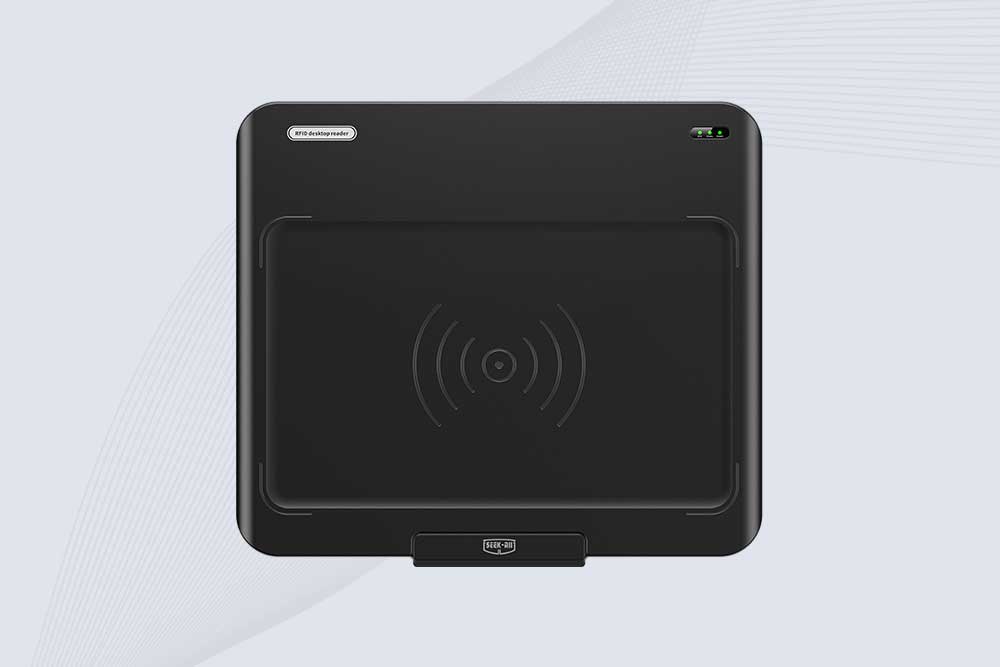
SSD-D3AL is a USB-HID UHF RFID reader with 0–30 cm reading, 0–15 cm writing, over 600 tags/s recognition, USB plug-and-play operation and OEM Logo customization.
SSD-D1AL is a compact USB UHF RFID reader with Impinj E710/X3M1 chipset, USB-HID, 600+ tags/s recognition, 4/8/16 antenna support and plug-and-play USB power.
SSD-R16L Multi-Channel RFID Infrastructure for Automated Inventory Management ✔️ 16-Port High-Density RFID Reading Equipped with 16 SMA antenna ports, SSD-R16L supports multi-antenna deployment for warehouses, retail stores, logistics, production lines, and large-area RFID identification. ✔️ High-Speed & Long-Range Performance With up to 33…
SSD-R8L 8-port UHF RFID reader with 33dBm output, up to 20m reading range and 600+ tags/s recognition. Ideal for warehouse, logistics, retail and asset tracking.
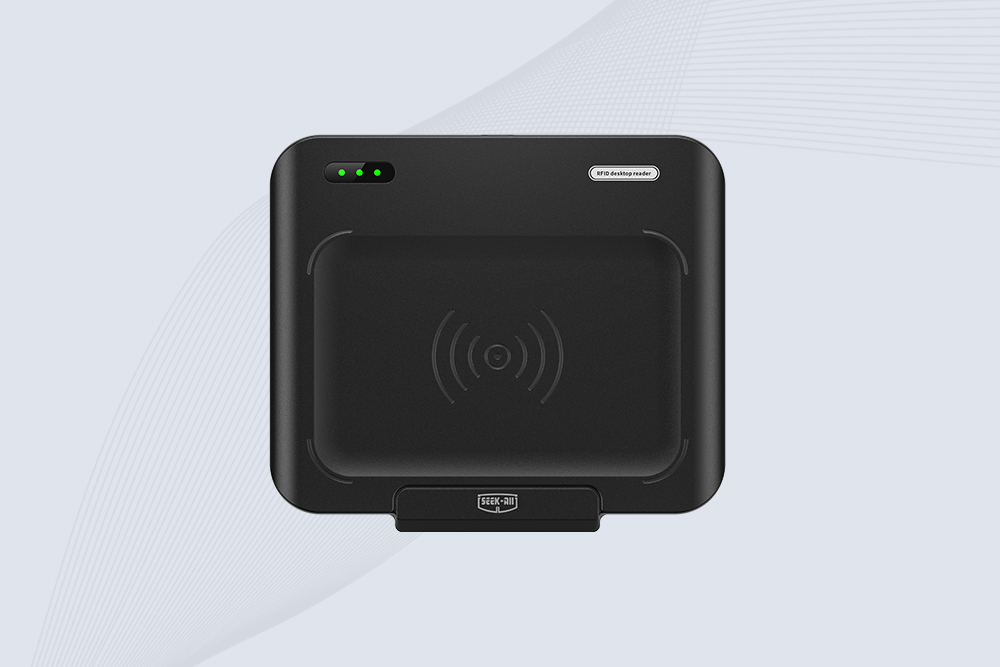
CYKEO CYKEO-D1LA USB RFID Reader is a compact desktop solution with near-field control for precise tag reading and encoding. Powered by USB, supporting ISO 18000-6C, and built for stable batch writing, this usb rfid tag reader fits retail, libraries, offices, and controlled RFID encoding tasks.
CYKEO CYKEO-D1L RFID scanner USB is a compact desktop UHF RFID scanner designed for short-range tag writing and verification. This usb rfid scanner supports batch encoding, stable 0–26 dBm output, and works across Windows, Linux, and Android systems.
CYKEO CYKEO-D1C USB RFID Card Reader is a near-field UHF desktop writer designed for secure, short-range tag encoding. With USB-C connectivity and stable 26 dBm output, this rfid reader usb c is ideal for badge issuance, label encoding, and controlled desktop RFID workflows.
CYKEO CYKEO-D2L RFID Reader USB is a compact desktop encoder built on the Impinj R500 chip. With near-field control and stable USB power, this usb rfid card reader delivers precise tag writing for offices, retail counters, and small-scale logistics encoding tasks.
CYKEO CYKEO-D3L USB RFID Tag Reader delivers stable UHF tag reading and writing for daily desktop and light industrial tasks. Designed for controlled short-range operation, this USB RFID Tag Reader works reliably with rfid tag and reader systems in libraries, tool tracking, and inventory registration.
The CYKEO CYKEO-D4L UHF RFID Tag Reader is a stable Desktop RFID Reader designed for accurate tag registration, borrowing, and return workflows. Built with the Impinj R2000 chip, this UHF RFID Tag Reader delivers controlled short-range reads for libraries, asset tracking, and inventory management environments.
The CYKEO CYKEO-D5L Desktop RFID Card Reader is a stable UHF RFID Card Reader designed for controlled short-range reading and writing. Built for libraries, tool rooms, and asset desks, this UHF RFID Card Reader supports dense tag handling, secure data processing, and easy USB integration.
The CYKEO CYKEO-D6L RFID Reader Writer is a heavy-duty Desktop RFID Reader designed for short-range, high-accuracy tag programming. Built for libraries, labs, and asset desks, this RFID Reader Writer supports batch processing, stable 33dBm output, and seamless integration with existing management systems.
Cykeo CYKEO-D8A embedded RFID badge reader offers 30+ tags/sec scanning, 20cm anti-crosstalk precision, and DC 12V power for unmanned stores, warehouses, and smart inventory systems.
Cykeo’s CYKEO-D8C UHF RFID gate reader achieves 200-tag/batch scanning with adjustable power control, ideal for retail inventory and smart warehouse management.
CYKEO Passive RFID Tags are made for wet and high-humidity environments where standard labels do not last. This rfid passive tag is often used around liquids, chemicals and temperature changes, providing stable reading distance and long data life for industrial tracking.
CYKEO CYKEO-PCB1504 Metal RFID Tags is a compact anti-metal UHF RFID solution built for direct mounting on metal surfaces. With stable 8-meter read range, Ucode-8 chip, and long data retention, this rfid metal tag fits tools, containers, automotive parts, and industrial asset tracking.
CYKEO CYKEO-PCB7020 On-Metal RFID Tags are designed for reliable tracking on steel and metal surfaces. Built with an FR4 epoxy body and industrial-grade chips, these On-Metal RFID Tags deliver stable performance, long data life, and chemical resistance, making them a dependable RFID anti-metal tag for harsh environments.
The CYKEO CYKEO-60-25 Anti-Metal RFID Tag is built for metal surfaces where standard tags fail. Designed for long-range performance, harsh environments, and stable data retention, this Anti-Metal RFID Tag is ideal for industrial assets, containers, and equipment tracking using on metal RFID tags.
The CYKEO RFID Laundry Tag is designed for long-term textile identification in harsh laundry environments. Built to withstand high heat, chemicals, and repeated washing, this RFID Laundry Tag delivers stable performance for hotels, hospitals, and industrial laundry operations using laundry rfid tags at scale.
The CYKEO CYKEO-125-7 RFID Book Tag is designed for reliable book and document tracking in libraries and archives. This RFID Book Tag delivers long read range, dense placement support, and stable performance on shelves, making it a practical rfid tag on books for library automation, file management, and archival systems.
CYKEO RFID tags in hospitals are designed for sterile environments where accuracy matters. These autoclavable RFID tags support long-term tracking of surgical tools, implants, and medications, helping hospitals improve visibility, compliance, and patient safety.
CYKEO RFID Cable Tie Tag is built for reliable identification on metal surfaces. This UHF RFID Cable Tie Tag is widely used in rfid tags for inventory systems, industrial asset management and Hospital RFID Tags, offering stable read performance, long service life and global EPC Gen2 compatibility.
CYKEO RFID Asset Tag is designed for stable identification of metal assets in industrial environments. This UHF RFID Asset Tag is commonly used for rfid tag asset tracking on equipment, tools and containers, providing reliable reads, long service life and ISO/IEC 18000-6C support.
CYKEO UHF RFID Card is designed for fast identification and long-term use in industrial and commercial systems. Supporting ISO 18000-6C, this UHF RFID Card works at 860–960 MHz and is suitable for custom RFID cards used in asset tracking, access control and inventory management.
CYKEO HF RFID Cards are designed for secure and stable access control systems. These 13.56 MHz RFID key cards support ISO 14443-A, reliable rewriting and long service life, making HF RFID Cards suitable for offices, campuses, events and membership management.
CYKEO UHF RFID Tag is designed for reliable tracking of metal jewelry and high-value items. This Jewelry RFID Tag supports long-range reading up to 8 meters, anti-counterfeit protection and stable performance on metal, making it suitable for retail, inventory control and asset management.
Cykeo CYKEO-C1 industrial Forklift RFID Reader features 20m read range, 600 tags/sec scanning, Impinj R2000 chipset, and IP67 rugged design. Ideal for warehouse logistics and manufacturing. Supports ISO 18000-6C/6B protocols.
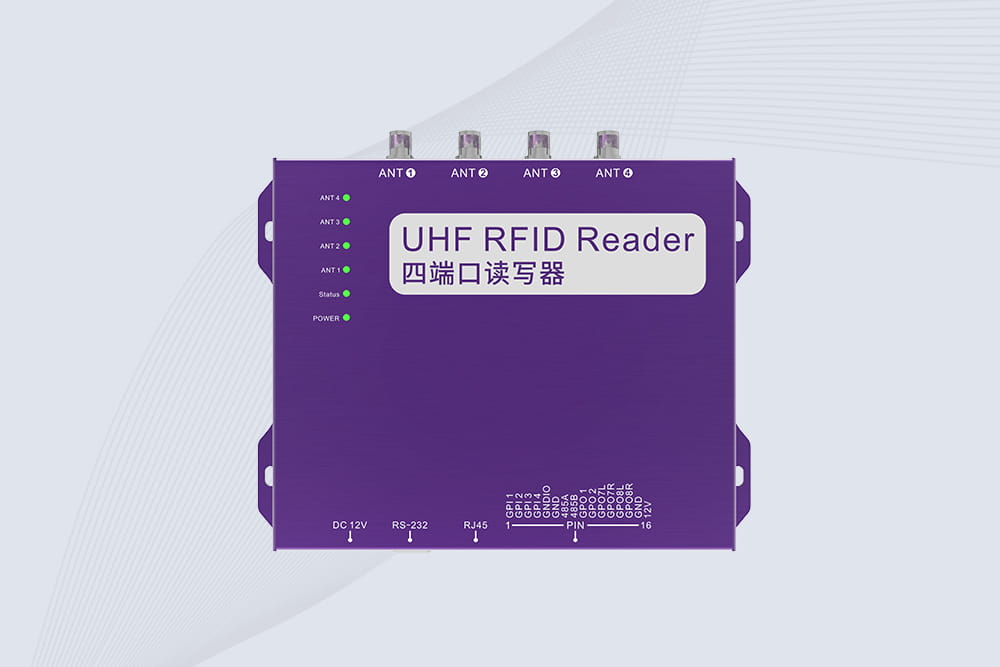
Cykeo CYKEO-R4 industrial UHF RFID Fixed Reader features 4 TNC ports, 400+ tags/sec speed, IP67 housing, and global frequency compliance for vehicle inspection, smart warehouse, and asset management systems.
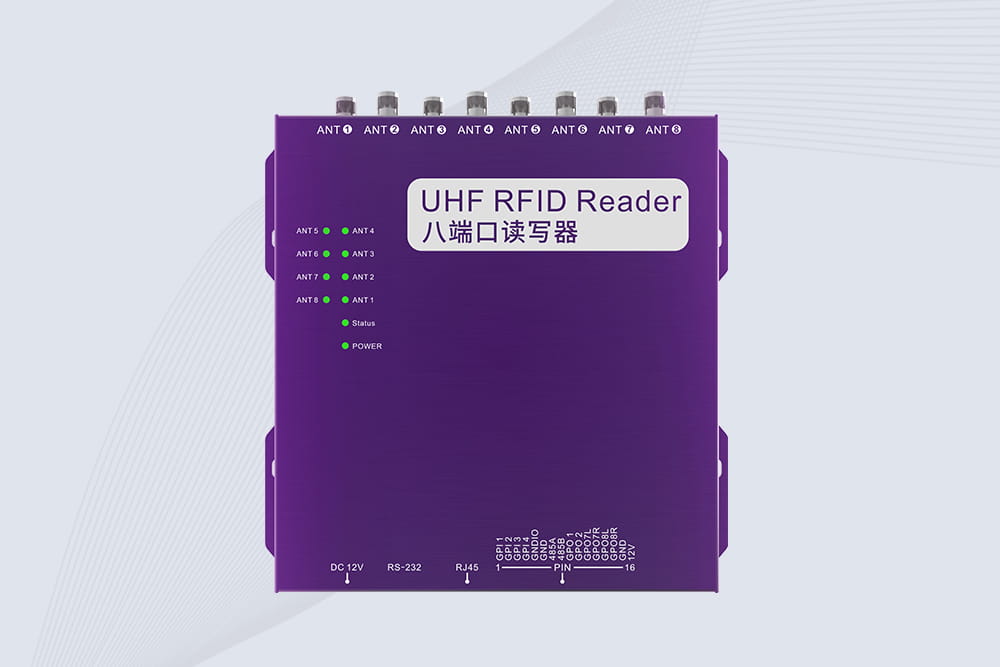
CYKEO CYKEO-R8L Fixed RFID Reader with 8-port UHF design, Impinj-based RF core and up to 20m read range. An industrial Fixed RFID Reader for vehicle inspection, warehouse portals, smart manufacturing lines and secure access checkpoints.
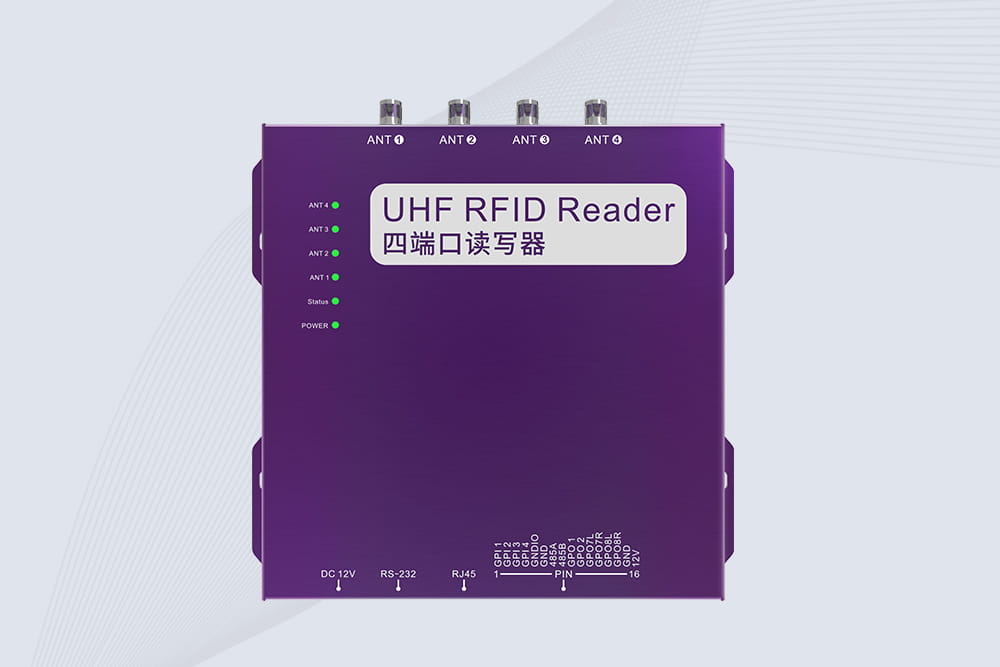
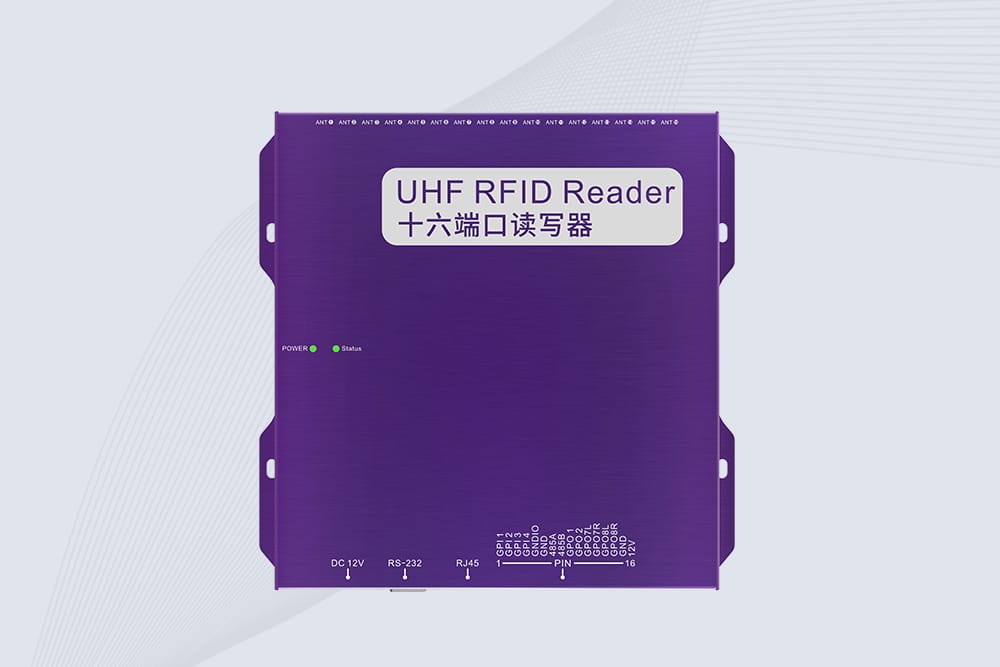
RFID Fixed Reader from CYKEO – the CYKEO-R16L 16-port UHF fixed reader for warehouses, smart cabinets, and production lines. Long-range, multi-tag reading, stable performance for 24/7 industrial use.
A field-based look at RFID cross reading problems in warehouse gate systems. Why misreads happen, how directional RFID antennas help control read zones, and why installation often matters more than replacing hardware.
RFID in logistics improves inventory accuracy, real-time visibility, and cost efficiency across warehouses, transportation, and supply chain operations.
Discover what does an rfid tag do and how RFID technology improves asset tracking, inventory accuracy, and automation with Cykeo professional RFID solutions.
Discover how to select the best RFID handheld reader for warehouse inventory management. Learn Cykeo’s expert tips on durability, range, and software integration.
 Cykeo RFID IoT Solution Products R&D Manufacturer