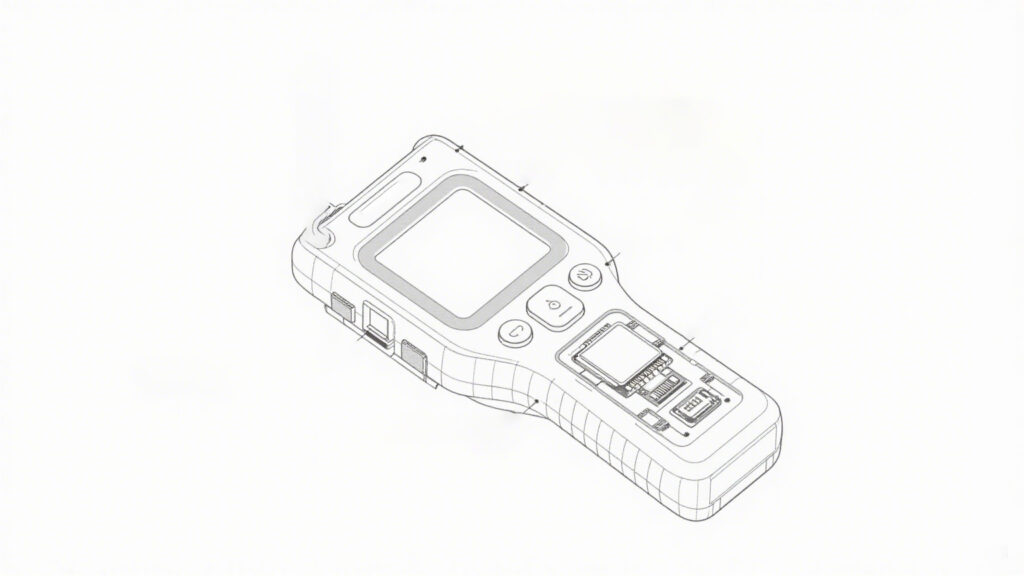
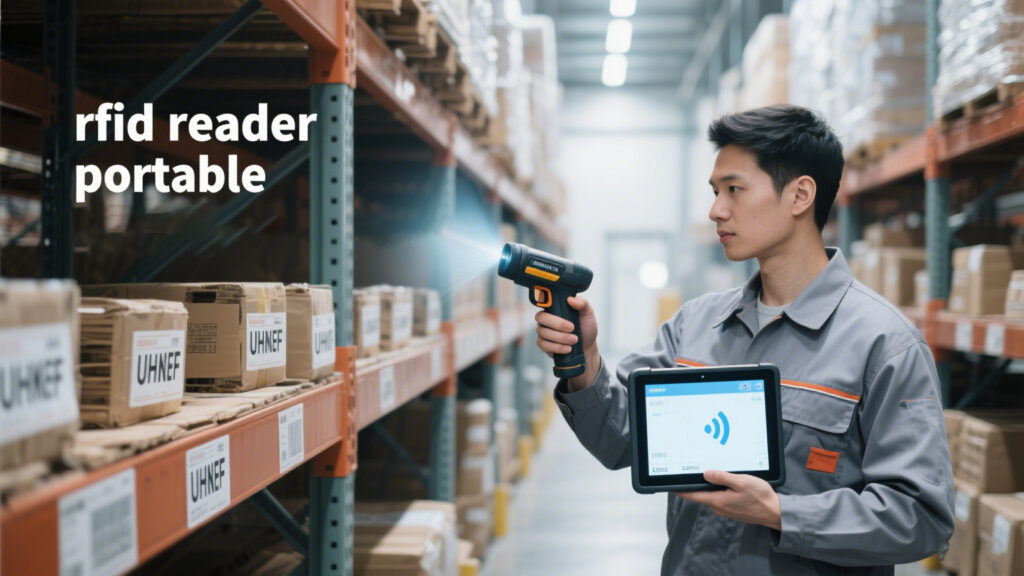
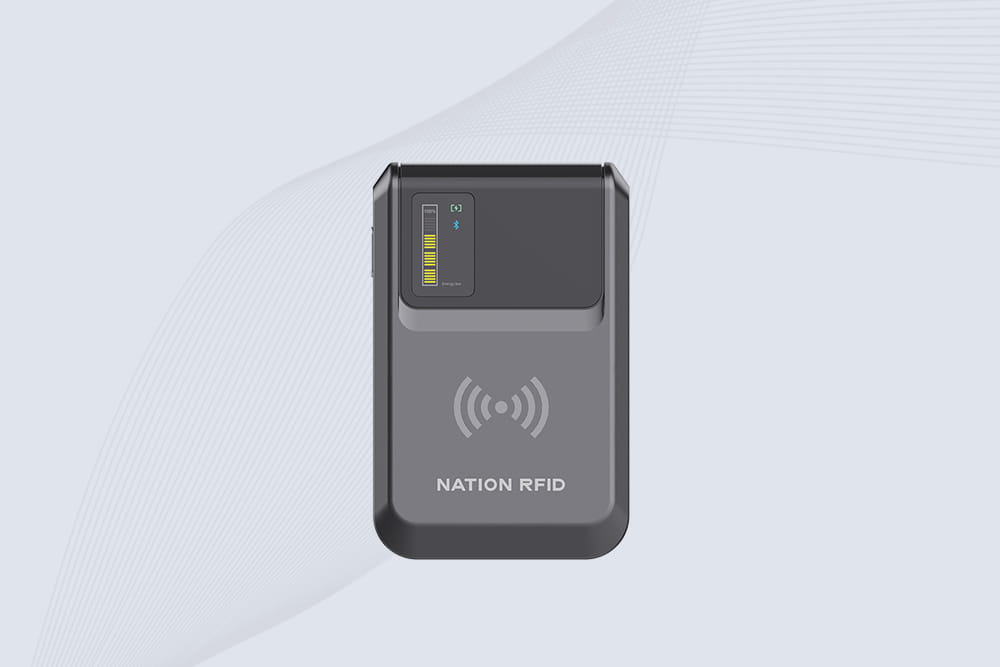
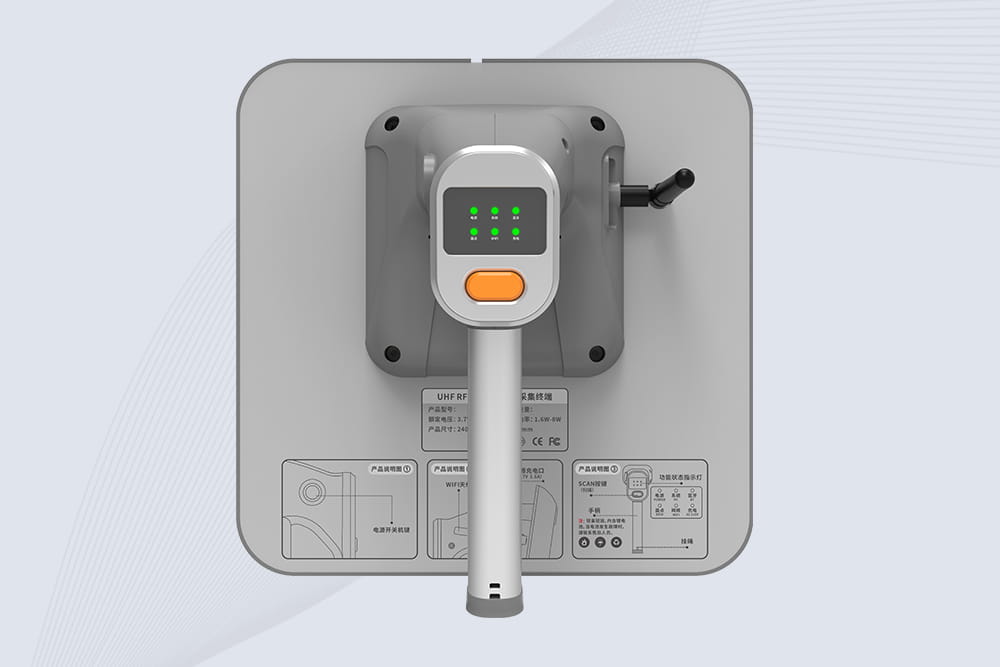
Rfid reader portable, commonly known as a handheld RFID reader, is a portable device integrating an antenna, processor, storage module, communication interfaces, and display functionality used to read or write RFID tag information. Unlike fixed readers, handheld devices offer greater flexibility, suitable for mobile inspections, temporary inventory checks, or operations in complex environments.
Most portable RFID devices support UHF (Ultra High Frequency) technology, offering long reading distances and fast speeds. They are widely used in industries such as warehousing, retail, healthcare, and manufacturing.
Core Functions of rfid reader portable
Modern handheld RFID readers offer multiple expanded capabilities beyond basic tag reading:
Batch Tag Reading (Anti-collision): Reads multiple tags simultaneously to improve inventory efficiency.
Reading EPC, TID, User Memory: Allows reading of specific data blocks based on business needs.
Barcode/QR Code Scanning: Some models support integrated barcode and QR code scanning.
Real-time Data Synchronization and Caching: Uploads data via WiFi, Bluetooth, 4G or stores locally.
Industrial-grade Battery Life and Protection: Supports all-day operation and provides IP65 or higher water and dust resistance.
Common Types of rfid reader portable
Handheld RFID readers can generally be classified by technology and operation type as follows:
Type
Features
Suitable Scenarios
Frequency
UHF (Ultra High Frequency), HF (High Frequency), LF (Low Frequency)
Adapted to tag frequency
Operating System
Android, Windows, Linux
Consider software compatibility
Form Factor
Gun-style, tablet-style, integrated
Mobile use vs. data entry
Functional Modules
Barcode, GPS, camera integration
Preferred for multifunctional use
Typical Application Scenarios of rfid reader portable
Due to their flexibility and adaptability, rfid reader portable devices are widely applied in multiple industries:
Healthcare Management: Tracking equipment and consumables, supporting patient info management
Manufacturing Floors: Work-in-progress tracking, mold identification, quality control
Energy and Power Inspection: Device identification and on-site photo binding
Key Parameters to Consider When Selecting rfid reader portable
When choosing a suitable handheld RFID reader, enterprises should carefully consider the following technical specifications:
Frequency Range: Support for UHF (e.g., ISO 18000-6C) or HF (e.g., ISO 15693)
Reading Distance and Speed: Affects practical efficiency; recommended reading distance is over 6 meters
Operating System and Development Support: SDK, API availability, and compatibility with enterprise systems
Communication Methods: USB, Bluetooth, WiFi, 4G options
Battery Life and Industrial Protection: Long working hours and durability in harsh environments
Expansion Modules: Camera, GPS, NFC, temperature sensors, etc.
Certifications: FCC, CE, RoHS, PTCRB, and other international standards
Future Trends of rfid reader portable
With the development of IoT and Industry 4.0, rfid reader portable devices continue evolving. Future trends include:
Cloud Synchronization combined with Edge Computing: Local data processing with cloud upload
Smarter Operating Systems and UI Designs: Enhanced user interaction experience
AI and Image Recognition Integration: Multi-dimensional recognition combining images and tags
Integration of More Sensor Modules: Enabling temperature, vibration, location sensing
Lighter Weight and Lower Power Consumption Designs: Improving ease of use and battery life
Conclusion
As a critical tool for modern enterprises’ asset management and data collection, the rfid reader portable is evolving toward multifunctionality, intelligence, and platform integration. Whether for warehouse inventory or industrial inspection, selecting the right handheld RFID reader greatly enhances operational efficiency and accuracy. Enterprises should evaluate device features and compatibility based on actual scenarios to ensure stable, long-term RFID deployment benefits.
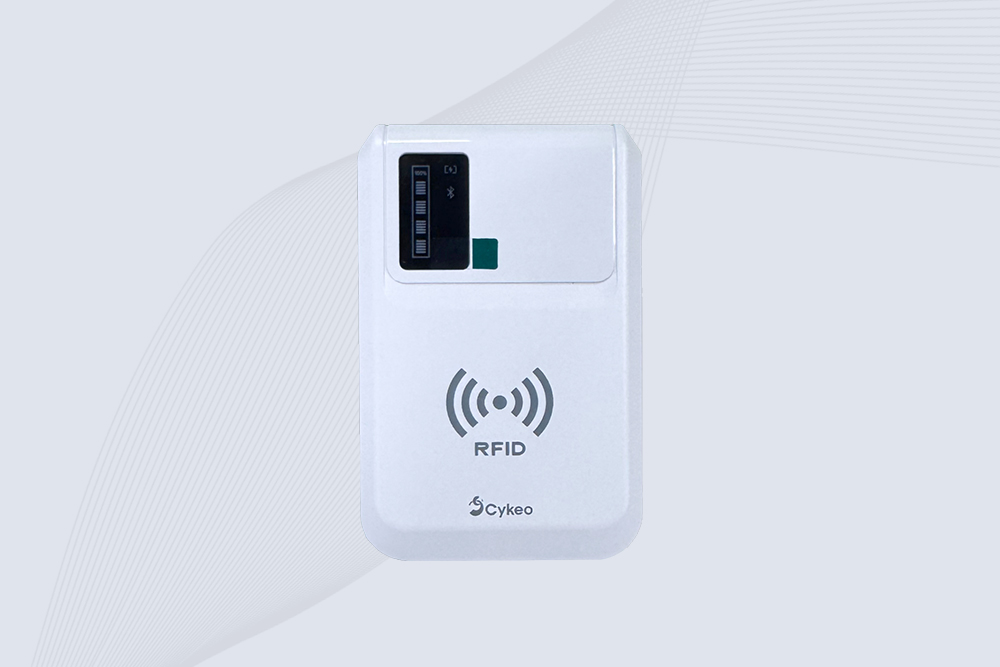
Cykeo CYKEO-B5L portable iPhone RFID reader features 8m range, 500 tags/sec scanning, and built-in 10000mAh charger. Perfect for retail/warehouse teams needing iOS integration.
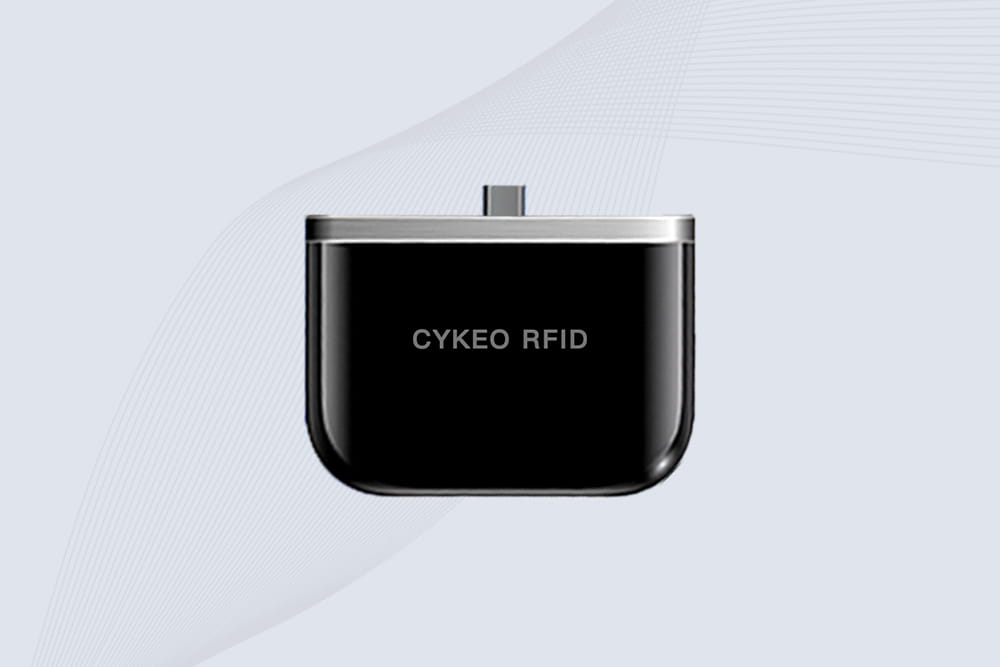
Cykeo CYKEO-B4L Android RFID reader features 37g magnetic phone attachment, 30cm UHF scanning, and Java/C# SDK for mobile asset tracking. Ideal for anti-counterfeit and warehouse verification.
CYKEO CYKEO-B5L RFID Chip Reader iPhone delivers long-range UHF scanning, iOS compatibility, and all-day battery life. A compact RFID Tag Reader iPhone solution for retail, healthcare, and mobile inventory tracking.
RFID antennas are a critical component of radio frequency identification systems, responsible for transmitting and receiving electromagnetic signals to enable communication between tags and readers. This article introduces the working principle, c...
plug and play RFID reader connects instantly with your system—no drivers, no coding, no delays. Boost efficiency, streamline workflows, and unlock smarter automation for logistics, retail, and more.
A hands-on look at the CK-T8D RFID Gate Access Control System. This article breaks down real warehouse performance, read accuracy, direction detection, anti-interference capability, and why this industrial RFID gate fits high-volume access points ...
Discover how to deploy RFID readers effectively for retail loss prevention. Learn about strategic placement, integration with EAS, and real-time inventory tracking.
 Cykeo RFID IoT Solution Products R&D Manufacturer