You should expect several meters of stable reading distance, even in metal-heavy environments.
If your current tags only read within 1 meter or less, something is wrong—usually the tag design.
Common Mistakes Buyers Make
This is where many projects go wrong.
Mistake 1: Choosing the cheapest tag
Low-cost tags often lack proper anti-metal design.
Result: unstable performance, wasted deployment.
Mistake 2: Testing only in ideal conditions
A tag that works on a desk may fail in:
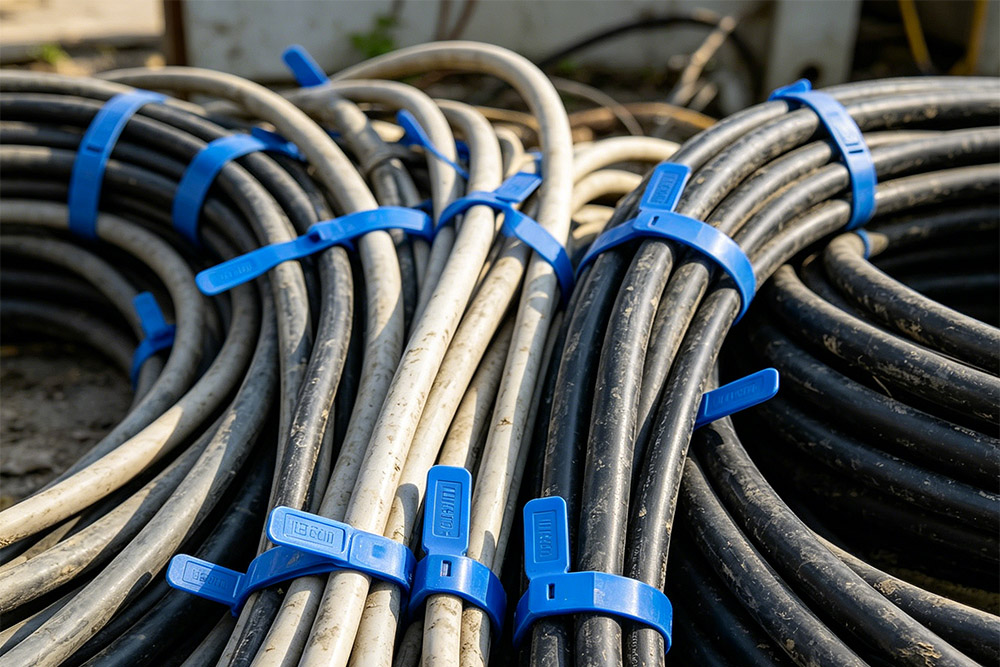
Cable bundles
Outdoor installations
High-interference zones
Mistake 3: Ignoring installation method
Even good tags can perform poorly if:
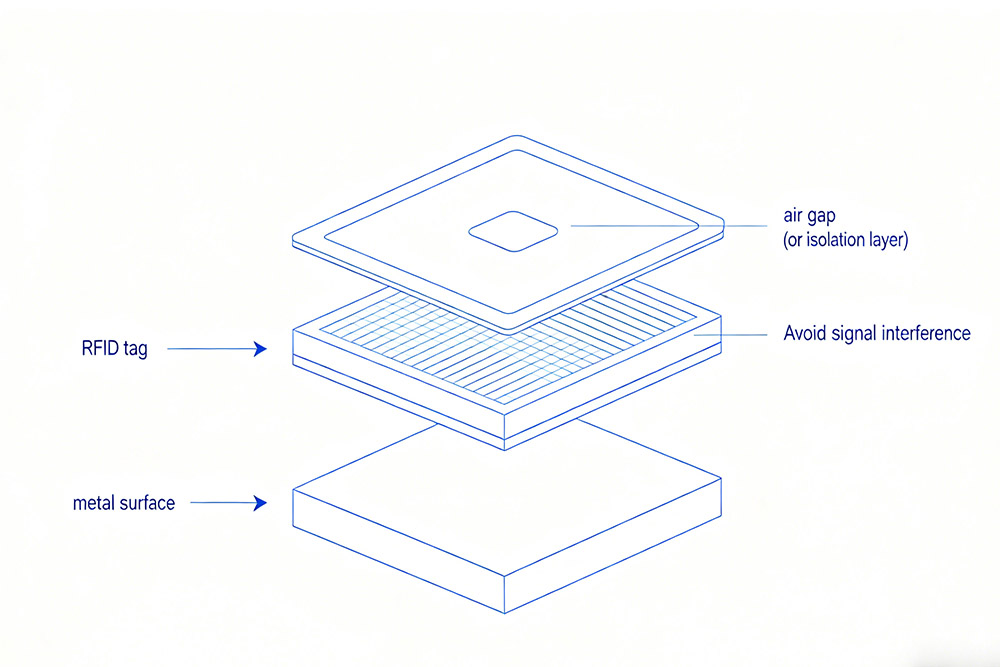
Installed too tightly against metal
Placed in signal-blocked positions
A Simple Selection Checklist
Before placing a bulk order, check:
Is the tag designed for metal surfaces?
What is the tested read range on metal?
What chip is used (Impinj U8 / M4QT)?
Is it suitable for outdoor conditions?
Can it withstand your temperature range?
If a supplier cannot clearly answer these, that’s a red flag.
Real-World Use Case
A power utility company needed to track thousands of outdoor cables.
Initial attempt:
Used standard RFID labels
Result: inconsistent reads, frequent failures
After switching to cable tie RFID tags:
Stable read performance across sites
Faster inspections using handheld readers
No need for frequent relabeling
The difference wasn’t the system—it was the tag design.
When You Definitely Need Anti-Metal RFID Cable Tags
You should consider this type of tag if:
Your assets are metal or near metal
You require long-term outdoor use
You need consistent read performance
Manual scanning is no longer efficient
In these cases, standard tags will cost you more in the long run.
Final Thoughts
RFID on metal is not impossible—it just requires the right tag.
Most failures in RFID projects don’t come from the reader or software. They come from choosing the wrong tag for the environment.
If your application involves cables, equipment, or industrial assets, a properly designed RFID cable tie tag is usually the safest and most stable option.
Discover whether handheld RFID scanners can read tags through metal or liquid, and learn workarounds for industries like healthcare, logistics, and manufacturing.
A practical buying guide for industrial RFID readers used in automation and logistics projects. Covers cost, reliability, long-range options, and procurement risks for large-scale deployments.
Discover why RFID is the top choice for user identification. Compare RFID with BLE and QR codes for security, range, and durability in access control, logistics, and more.
 Cykeo RFID IoT Solution Products R&D Manufacturer