 Cykeo RFID IoT Solution Products R&D Manufacturer
Can a Smartphone Read RFID Tags? Let’s Kill the Confusion Right Now.
148Can a smartphone read RFID tags? Yes, but only NFC at 1cm. For UHF inventory or LF access cards? No. Here's exactly what works and what doesn't.
MoreAll RFID Product
When selecting a UHF RFID fixed reader, one spec confuses a lot of buyers:
How many antenna ports do I actually need?
You’ll see options like:
At first glance, it feels simple:
more ports = better
But in real projects, that’s not always the right way to think about it.
Choosing the wrong configuration can either:
Let’s break it down the way engineers actually approach it.
Each port connects to one antenna.
So:
And antennas are what define your reading coverage area.
More antennas = larger or more controlled coverage
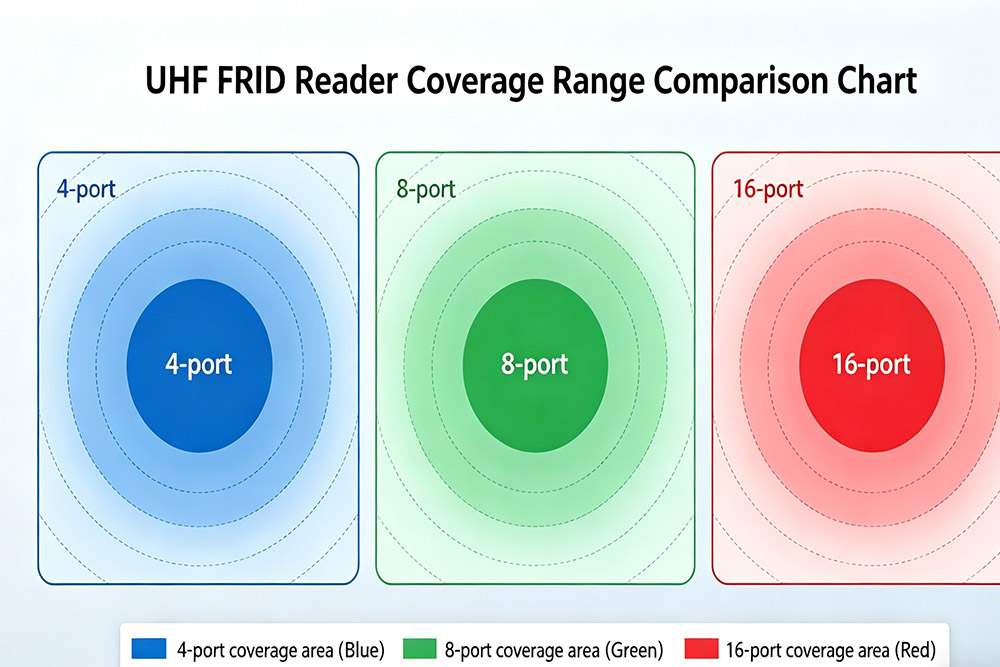
RFID doesn’t work like a camera—it doesn’t “see everything.”
It creates reading zones.
If your coverage is not designed properly:
So port count is not about power—it’s about coverage control.
A 4-port reader is the most common entry point.
Good starting point, but may need upgrading later.
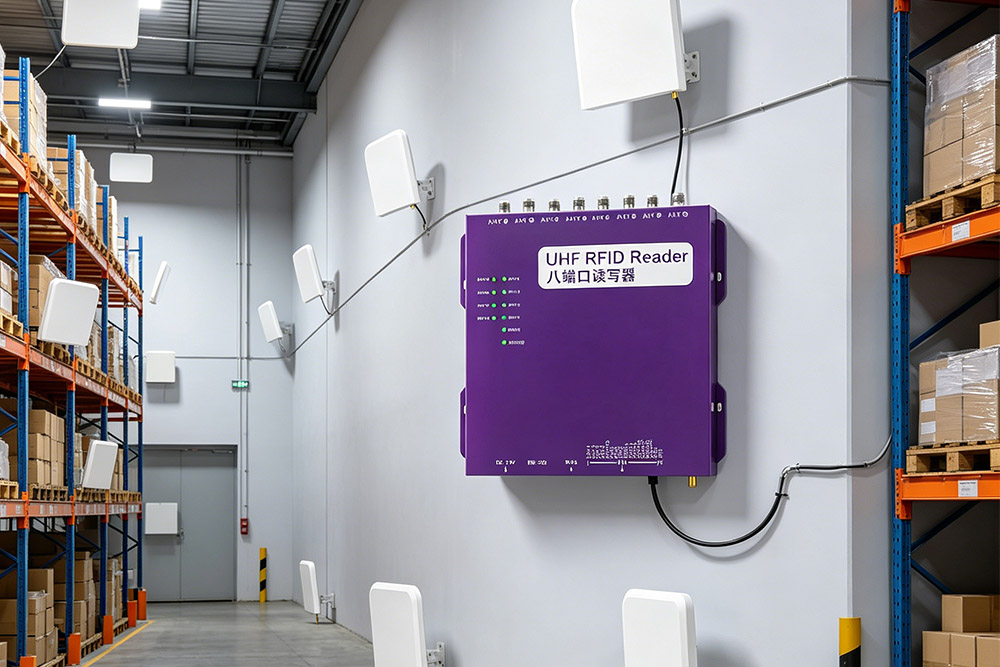
For many industrial projects, 8-port is the “sweet spot.”
If you’re unsure, this is often the safest choice.
A 16-port reader is designed for large-scale deployments.
Overkill for most basic applications—but essential for large systems.
Here’s how most buyers should think about it:
| Reader Type | Coverage | Cost | Use Case |
|---|---|---|---|
| 4-Port | Small | Low | Single gate |
| 8-Port | Medium | Medium | Warehouse |
| 16-Port | Large | High | Industrial system |
The goal is not “maximum coverage”
The goal is “enough coverage without waste”
Some buyers choose 4-port readers to save cost.
Later they realize:
Total cost ends up higher than starting with 8-port.
On the other hand, some buyers go straight to 16-port:
Unless your system is large, this is unnecessary.
Ask yourself:
A warehouse initially installed a 4-port reader at a gate.
Problem:
Solution:
Result:
The upgrade cost was lower than adding more devices later.
Choosing between 4, 8, and 16 port RFID readers is not about buying the most powerful option.
It’s about:
In many cases, the right choice is the one that balances performance and simplicity.
Guide Recommendations
Fixed RFID Reader: Why It’s Becoming Must-Have
Fixed RFID Readers: What I Didn’t Expect and What I Learned
RFID Handheld Reader vs. Fixed Reader: Which Is Better for Retail?
Different Types of RFID Readers: A Simple Introduction
Best Budget USB RFID Readers Under $100 for Small Business Inventory Systems
RFID Module vs. RFID Reader: What’s the Difference?
Fixed RFID Reader Buying Guide: 5 Core Parameters You Must Know
What is an RFID Reader Used For?
How RFID Reader Works: The Simple Explanation
How to Choose the Best Long-Range RFID Reader for Warehouse Management
RFID Readers for Boom Barriers ,Where Efficiency Meets Access Control
Why Your Warehouse Needs Smarter RFID Readers in 2025
Understanding RFID Readers,Essential Devices for Efficient Tracking
Can a smartphone read RFID tags? Yes, but only NFC at 1cm. For UHF inventory or LF access cards? No. Here's exactly what works and what doesn't.
More
Discover the technical workings of RFID gift cards, including data storage, security, and transaction processes. Learn how Cykeo enhances RFID card solutions.
More
Discover if handheld RFID scanners are a smart investment for small businesses. We break down costs, efficiency gains, and real-world ROI.
More
Discover how the RFID Pharmacy Security Cabinet enhances security, automates inventory management, and ensures regulatory compliance. Learn about RFID reader module and antenna integration benefits.
More