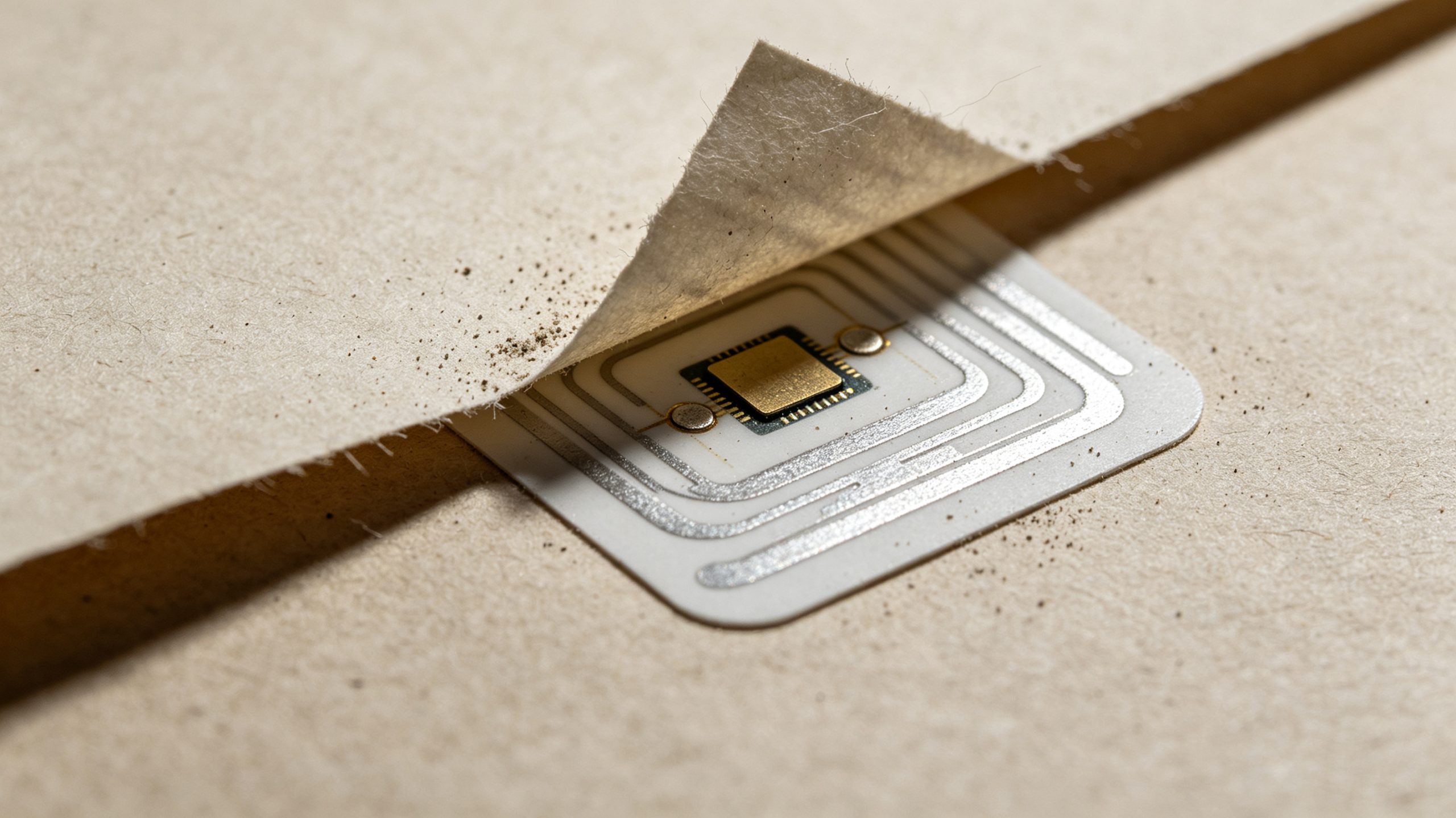
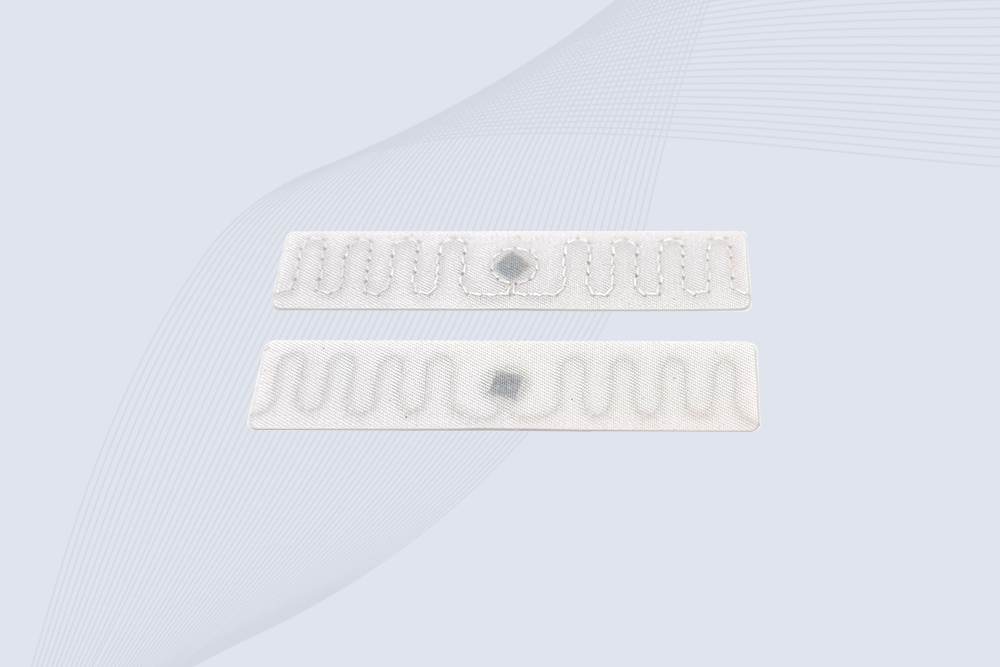
When someone asks “what’s an RFID chip”, they usually mean one of two things: the little black square you can see bonded to a sticker’s antenna, or the thing sewn inside a clothing label. Both are the same component — and almost everything people believe about it is slightly off.
Here’s the core fact: the chip is not the tag. A tag is a chip plus an antenna plus a substrate. The chip is the only part that stores data; the antenna only moves radio energy. If the chip is wrong, no antenna or reader will save the tag — which is why chip choice is the most consequential decision in a UHF project, and the one most often made by accident.
This article covers what the chip actually is, what’s stored inside it, how to tell UHF chips apart on a datasheet, and how to choose one.
The Vocabulary, Untangled
The word “chip” gets used loosely. Five terms, cleanly separated:
Term
What it is
Includes the chip?
RFID chip / IC
The silicon die that stores data and runs the protocol
— (it is the chip)
Inlay
Chip bonded to a printed antenna on a carrier film
Yes
Label / sticker
Inlay sandwiched between paper/plastic with adhesive
Yes
Tag
Any finished package: label, hang tag, hard tag, disc
Yes
Reader
The device that powers and interrogates chips
No — it reads them
An RFID tag contains exactly one chip; on its own, a chip is a bare die the size of a grain of sand — useless until bonded to an antenna. If you’re still sorting out tag vs reader vs system, what “an RFID” actually refers to covers that vocabulary first.
What’s Actually Inside the Chip
An RFID chip is a small integrated circuit with four functional blocks:
RF front end — rectifies the incoming radio energy into DC power, and modulates the reflected signal to answer
Logic / state machine — runs the EPC Gen2 protocol: handles commands, anti-collision, session states
Memory — where the identity and any extra data live
Optional security block — passwords, authentication, or tamper logic
The memory is what buyers care about most, and it’s organized into four banks under the EPC Gen2 (ISO/IEC 18000-63) standard:
Bank
What it holds
Typical size
Writable?
Reserved
Kill password and access password
32 bits each
Yes (once set, protects)
EPC
The unique ID your software uses
96 bits typical (up to 496)
Yes
TID
Chip identity, set by the factory
32–64 bits
No — permanently locked
User
Free space for your own data
0 to 512+ bits, chip-dependent
Yes
Two matter more than beginners expect. EPC is the license plate — 96 bits gives an astronomically large unique space, which is why item-level tagging works at global scale. TID can’t be changed or cloned, so two tags can carry the same EPC but never the same TID — which is how duplicates get caught.
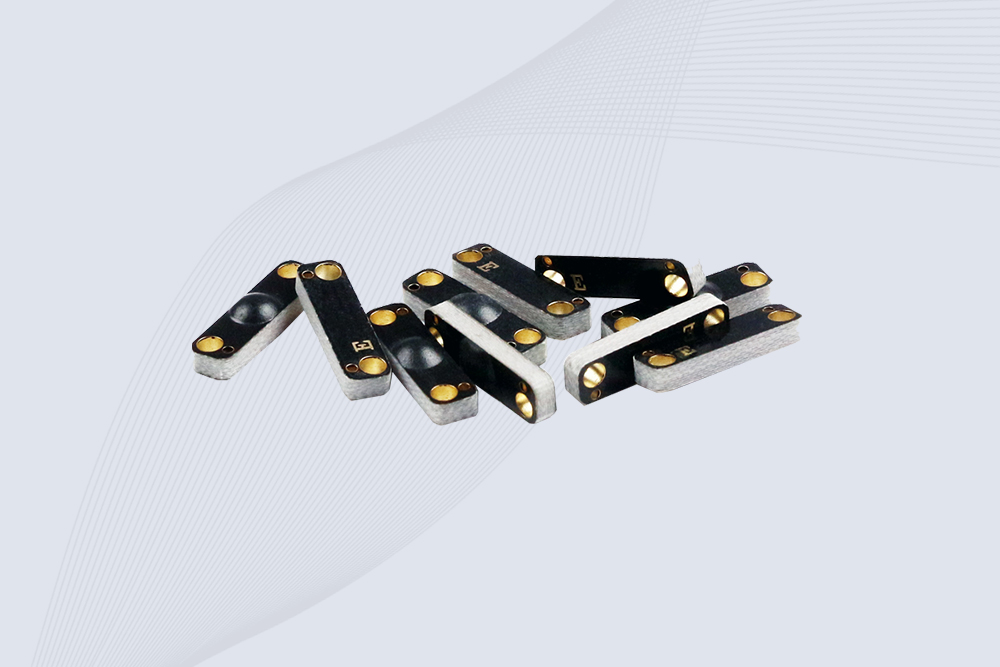
The chip connects to the antenna at two points — that bond is the tag’s weakest physical link.
Why UHF Chips Are a Different Animal
UHF chips operate between roughly 860 and 960 MHz and never transmit. A passive UHF chip works by backscatter: it absorbs the reader’s carrier wave to power itself, then alternately reflects more or less of that wave to encode its answer.
That design decides real deployments:
The power budget is everything. The chip wakes up on a few microwatts harvested metres away. Sensitivity isn’t a spec-sheet nicety — it’s why a tag works at one dock door and fails at the next.
Orientation matters. A tag read edge-on to a linear antenna can drop out entirely. No chip fixes that, but a more sensitive one widens the window.
Hundreds of tags answer at once. Anti-collision is chip logic, not reader magic — in a dense read zone it decides 99% versus 92%.
The band is regional. 865–868 MHz in Europe, 902–928 MHz in North America, 920–925 MHz in China. A chip tuned for the wrong band reads poorly or not at all.
The Chip Families You’ll See on UHF Datasheets
Chip vendors are a small club. The names that appear on UHF label datasheets most often:
Impinj (Monza series) — very common in retail apparel and general inventory
NXP (UCODE series) — broad portfolio, strong in supply chain and industrial
5. Environmental rating. Some chips are specified for extended temperature or harsh conditions; most aren’t.
A label costing 30% more often carries a chip that reads 30% more reliably in your actual environment — usually the right trade, but only if you know which factor your project depends on.
Where UHF Chips Actually Earn Their Keep
Chip requirements are set by the application, not by the datasheet’s best-case number. The same 96-bit EPC means very different things in these six settings:
Application
What the chip must actually handle
Apparel retail, item level
High sensitivity and fast anti-collision on small, flexible inlays; 96-bit EPC is sufficient
Pallet and carton logistics
Reliable wake-up at 3–6 m, survives rough handling; TID lets buyers trace the tag’s origin
Automotive WIP
Extended temperature through paint and oven zones, plus metal-mount inlay designs
Healthcare assets
Chemical resistance, small footprint, survives repeated cleaning cycles
Library media
Tags packed millimetres apart on a shelf — anti-collision is the deciding spec, not range
Textile rental / laundry
200+ wash cycles at high temperature with detergent; the chip package matters more than the die
Read that table again and notice what’s absent: nobody is choosing a chip for memory. In almost every real deployment, a 96-bit EPC with no User memory is the correct answer, and the premium paid for extra memory buys nothing. What people actually pay for is sensitivity, anti-collision behaviour and environmental rating — the three specs that decide whether a read happens at all.
That is also why two labels with the same chip can still perform differently: the inlay design around the chip, not the chip alone, sets the final result.
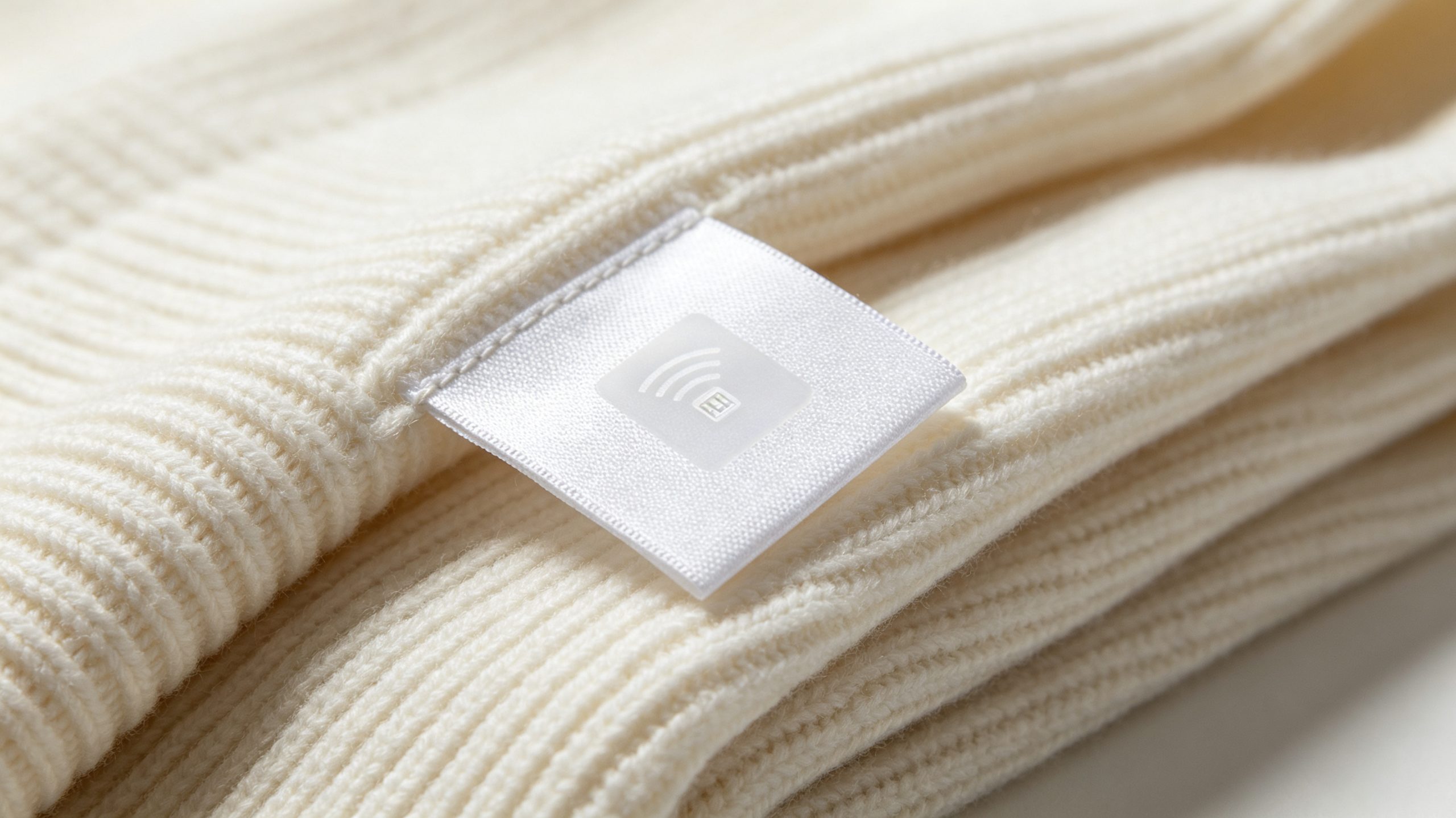
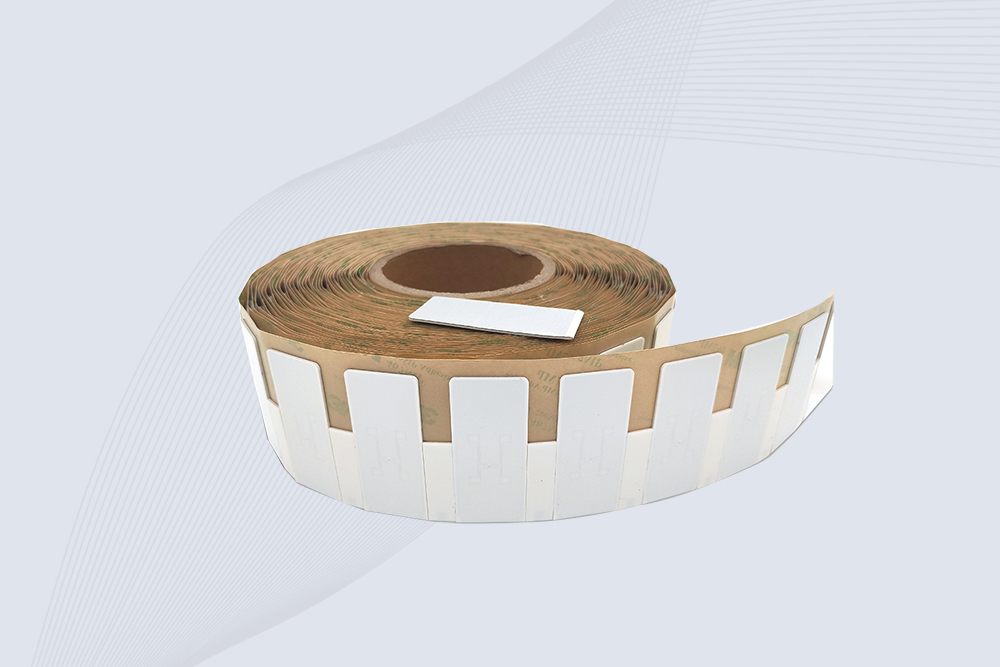
Apparel tags use the same UHF chip, packaged to survive washing and pressing.
How to Read the Numbers on a UHF Chip Datasheet
Four figures tell you most of what you need:
Read sensitivity (dBm). Written as a negative number, and lower is better — −22 dBm beats −20 dBm. Every 6 dB of link budget roughly doubles range, so a 2 dB gap between chips is not a rounding error.
Write sensitivity (dBm). Always worse than read sensitivity, often by several dB — it decides how close your encoder must sit.
Memory map. EPC size, TID length, and whether User memory exists at all.
Protocol version. Gen2 v2 adds authenticated access; dense-reader mode matters with several readers in one aisle.
If a supplier quotes only “10 metres” with no chip name and no sensitivity figure, that was measured on a bench with one tag in the air. Ask for the chip model number — in writing.
A 30-Minute Chip Test You Can Run Yourself
You don’t need a lab to compare chips. You need ten tags, one reader at fixed power, and a tape measure:
Take ten tags from the batch, not one. Chip and antenna variation within a roll is real; one tag tells you nothing.
Find the 90% distance. Walk away from the reader until reads start dropping, then stop at the point where nine of ten tags still read. That number is your usable range — not the manufacturer’s.
Rotate to the worst orientation. Repeat step two with tags turned edge-on. The gap between best and worst orientation is what will bite you at a dock door.
Repeat on the real surface. Metal shelving, liquid-filled bottles, a full carton — not an empty table.
Log misses, not averages. Run 100 passes and count the failures. A chip that reads 100 out of 100 at 2 m is worth more than one that manages 95 out of 100 at 4 m, because the five misses become manual scans someone has to do.
Write those four numbers onto your purchase spec — 90% distance, worst-orientation distance, surface, and miss rate. A supplier who sees them will quote a chip that can meet them. A supplier who sees “we need 10 metres” will quote whatever is on the shelf.
How to Find Out Which Chip You Have
Three practical routes, in order of speed:
Read the TID. Its first bytes carry a vendor/model prefix; compare them against published TID tables to identify the family.
Check the label datasheet. Reputable suppliers name the chip. If a supplier can’t, that’s information in itself.
Ask for a sample and a spec sheet together. Test the sample, then confirm the spec matches what you tested.
Chip substitution is one of the quietest failures in RFID sourcing: two identical-looking labels behave very differently if the chip changed between batches. Lock the chip model into your purchase specification.
Chip Security: What’s Real and What’s Marketing
UHF chips offer several security mechanisms, and they are not equivalent:
Access password — blocks writing without the password. Stops casual overwrites, not cloning.
Kill command — permanently disables the tag. Used at retail checkout for privacy.
TID-based authentication — because TID is factory-locked, it’s a weak but useful authenticity check.
Authenticated access (Gen2 v2) — challenge-response with keys on supported chip families; the practical defense against cloning.
Tamper-evident designs — the tag stops responding or reports tampering if removed.
For inventory and asset tracking, access passwords and TID checks are usually enough. For high-value or regulated goods, authenticated chips are the option — at meaningfully higher cost.
What People Get Wrong About RFID Chips
“It’s a GPS tracker.” No. The chip has no location hardware — you know where an item is only because a reader at a known place read it.
“It stores all the product information.” By default it holds an ID; your database holds the details. That separation keeps tags cheap and lets you update records without rewriting tags.
“Bigger memory is better.” Not usually. Extra memory slows reads and costs money — only buy User memory if you actually write data to the tag.
“All chips read the same distance.” Sensitivity varies more between chip families and generations than between two readers.
“A damaged tag still reads.” A broken antenna bond kills the tag even if the chip is intact, which is why placement matters as much as tag quality.
What a Chip Costs
Chip cost is buried inside label cost, but roughly:
Entry-level UHF chips in paper labels:0.04–0.10 per unit at volume
Mainstream retail-grade UHF chips:0.08–0.15
Large-memory or specialized (sensor, high-temp):0.50–5+
Authenticated / cryptographic chips:1–10+
UHF reader modules for OEM integration:2–20 depending on power and ports
The pattern: the chip is a small fraction of a label’s price, but it decides almost all of its performance. Downgrading the chip is the most expensive saving in RFID.
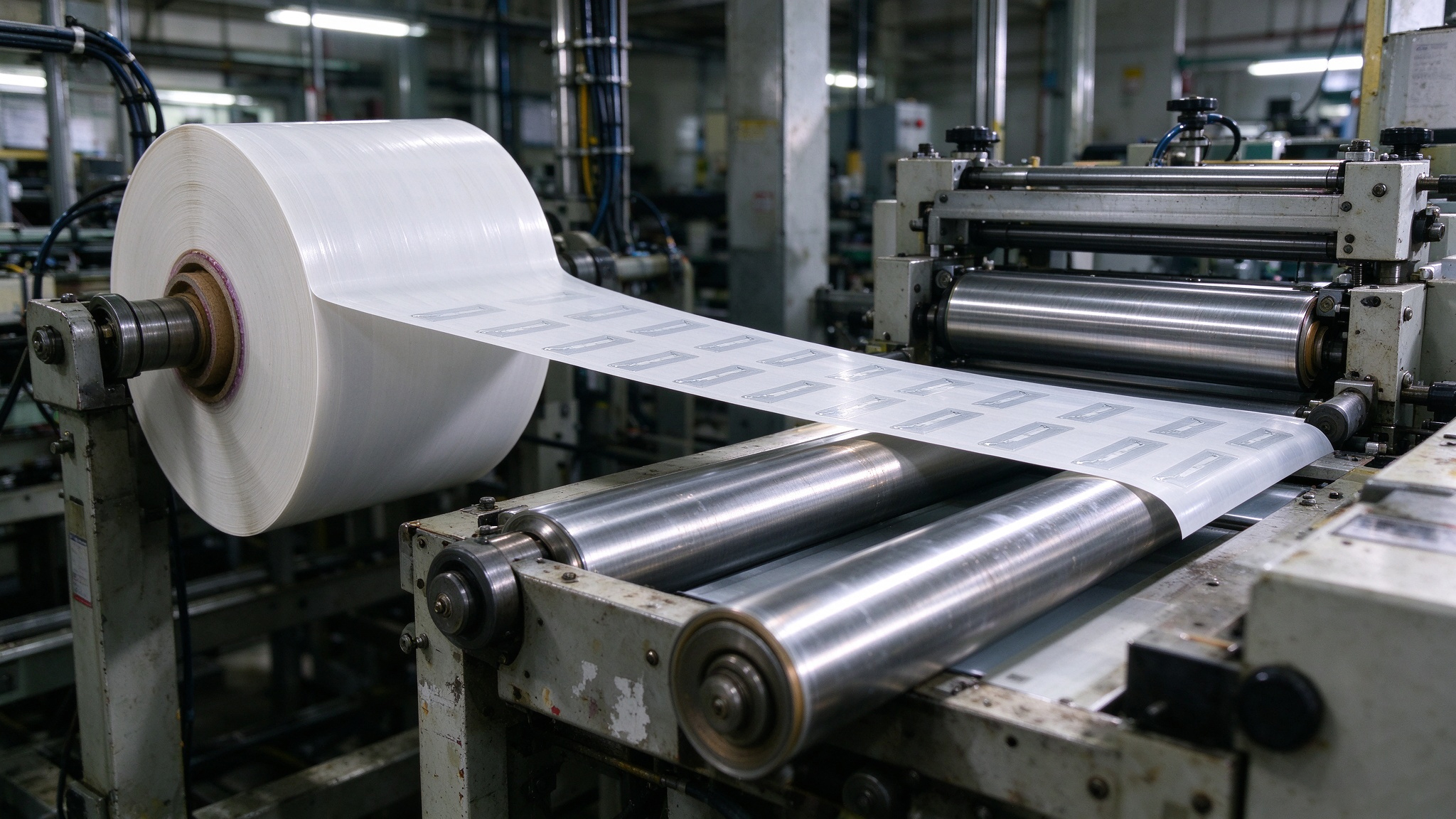
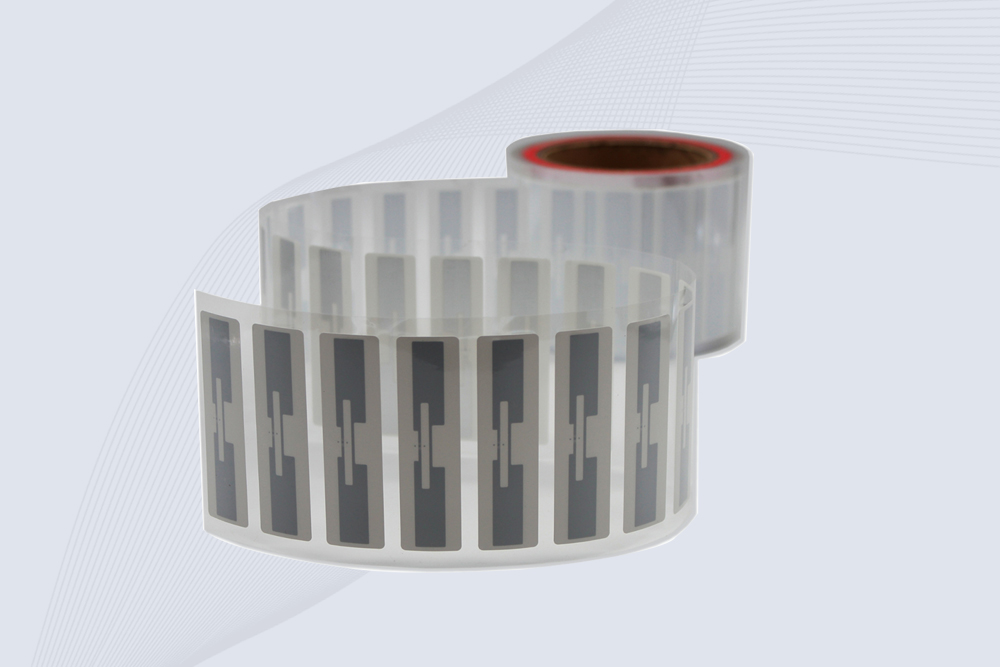
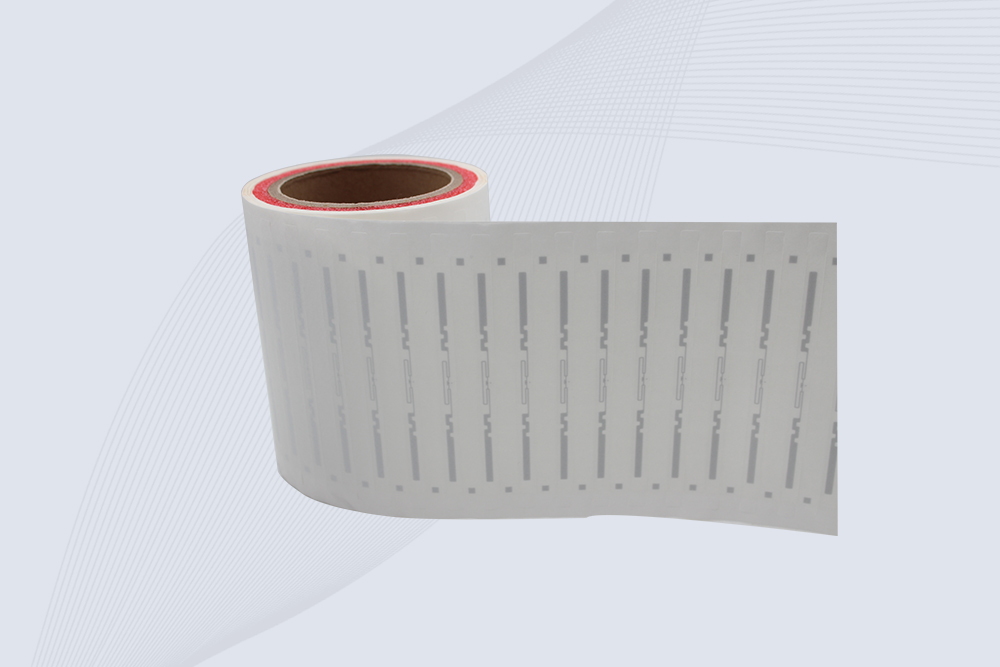
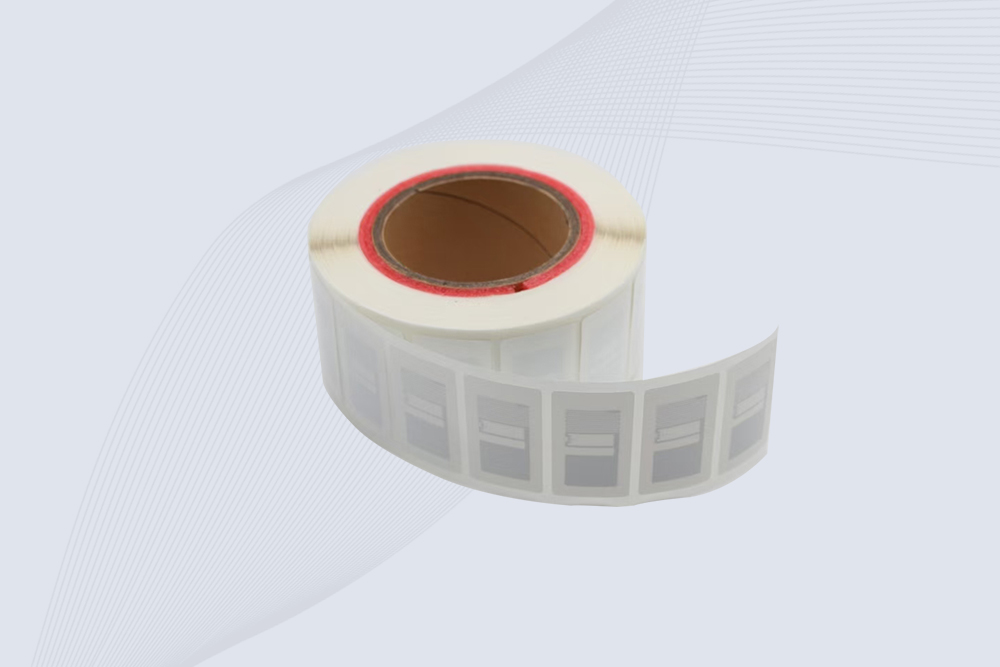
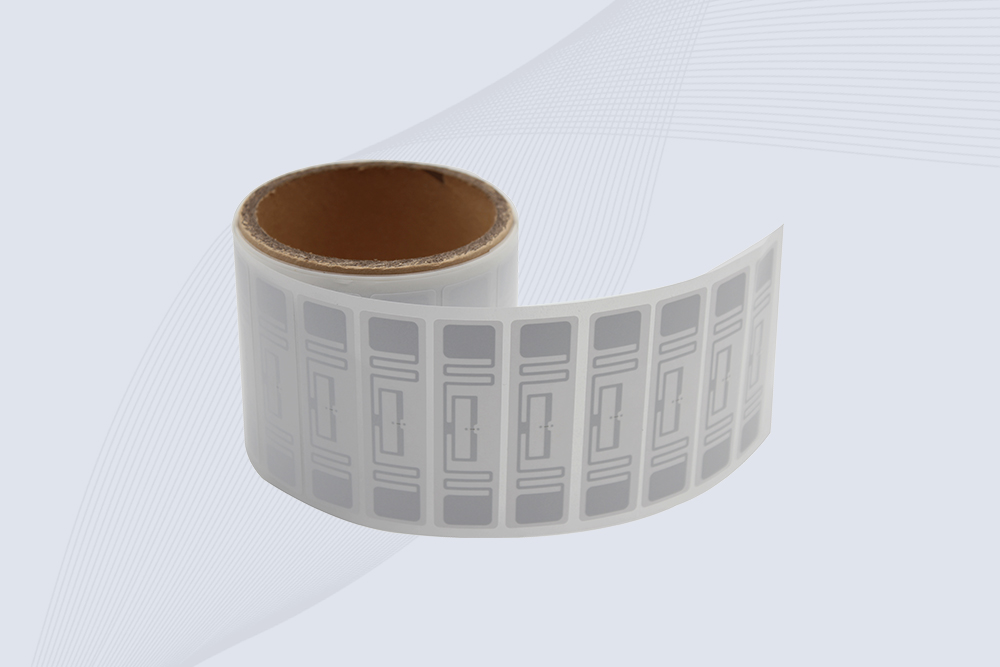
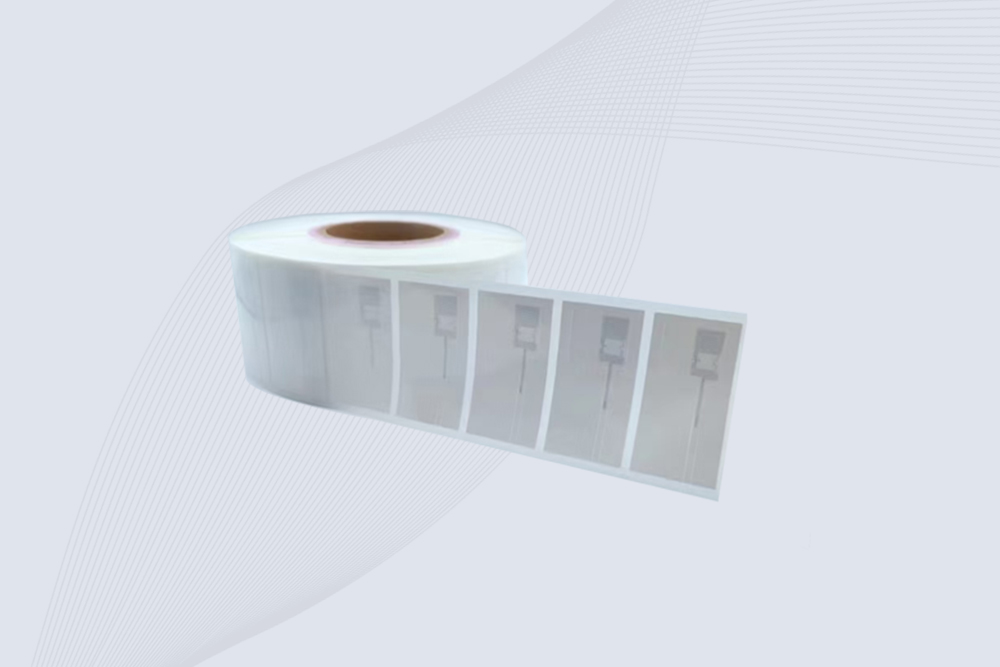
Chips arrive on inlay rolls — the quality of that roll sets the ceiling for every label made from it.
How to Choose a Chip in Five Questions
Which UHF band does your region use? A chip configured for the wrong band is the fastest way to fail a pilot.
Do you need to store data on the tag, or just an ID? If just an ID, skip User memory and save money.
How dense is the read zone? High tag density demands better anti-collision and sensitivity.
What surface is the tag on? Metal and liquid call for specialized inlay designs, which constrain chip choice.
Is authentication or tamper evidence required? If yes, authenticated chip families only.
Answer those five and a supplier can name a chip in one message. Skip them and you’ll get whatever is cheapest in stock — which is how projects end up with labels that work on the bench and fail on the floor. For the device side, see what is used to read an RFID chip; for the physics, how RFID tags are read.
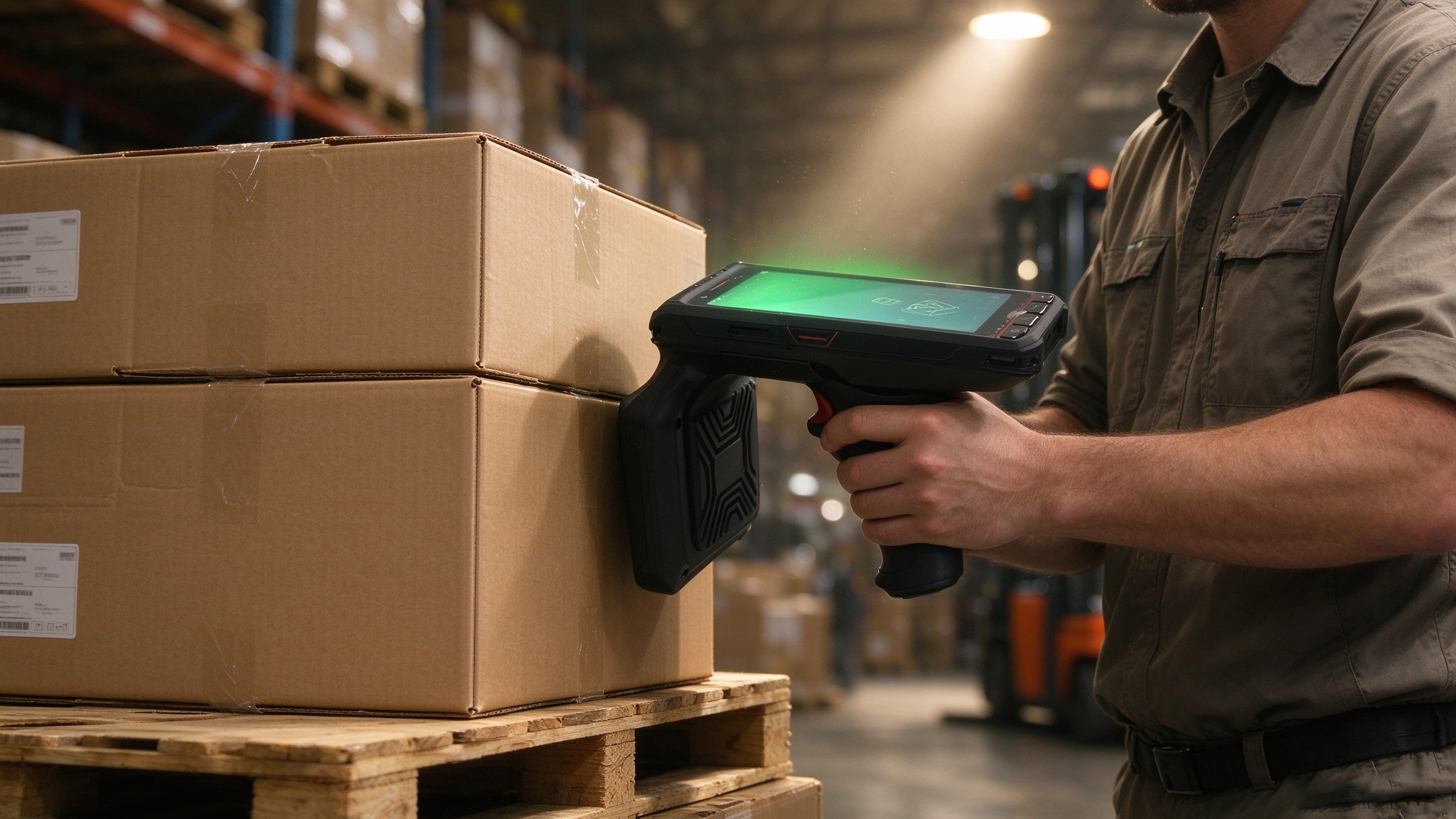
Chip sensitivity decides how far and how reliably this read happens.
Frequently Asked Questions
What’s an RFID chip made of?
A silicon die containing the RF front end, protocol logic, memory and optional security circuits — bonded to an antenna, then packaged in a label, hang tag or hard tag.
Is the RFID chip the same as the tag?
No. The chip is one component inside the tag; the tag also contains an antenna and a substrate. The chip stores the data; the antenna moves the radio energy.
How much data can a UHF RFID chip hold?
Typically a 96-bit EPC ID, a factory-locked 32–64 bit TID, and 0–512+ bits of user memory. Sensor and specialty chips hold more.
What does EPC Gen2 actually mean?
It’s the air-interface standard (ISO/IEC 18000-63) that defines how UHF readers and chips talk: command set, memory banks, anti-collision and session handling. “Gen2 v2” is the later revision that adds authenticated access and privacy features.
Can two RFID chips have the same ID?
They can be written with the same EPC — but their TIDs are unique and factory-locked, which is how duplicates are detected.
Does the chip need a battery?
Not in passive tags, which are the vast majority. The chip harvests power from the reader’s radio signal. Active tags use a battery and cost far more.
CYKEO Passive RFID Tags are made for wet and high-humidity environments where standard labels do not last. This rfid passive tag is often used around liquids, chemicals and temperature changes, providing stable reading distance and long data life for industrial tracking.
CYKEO CYKEO-PCB1504 Metal RFID Tags is a compact anti-metal UHF RFID solution built for direct mounting on metal surfaces. With stable 8-meter read range, Ucode-8 chip, and long data retention, this rfid metal tag fits tools, containers, automotive parts, and industrial asset tracking.
CYKEO CYKEO-PCB7020 On-Metal RFID Tags are designed for reliable tracking on steel and metal surfaces. Built with an FR4 epoxy body and industrial-grade chips, these On-Metal RFID Tags deliver stable performance, long data life, and chemical resistance, making them a dependable RFID anti-metal tag for harsh environments.
The CYKEO CYKEO-60-25 Anti-Metal RFID Tag is built for metal surfaces where standard tags fail. Designed for long-range performance, harsh environments, and stable data retention, this Anti-Metal RFID Tag is ideal for industrial assets, containers, and equipment tracking using on metal RFID tags.
The CYKEO RFID Laundry Tag is designed for long-term textile identification in harsh laundry environments. Built to withstand high heat, chemicals, and repeated washing, this RFID Laundry Tag delivers stable performance for hotels, hospitals, and industrial laundry operations using laundry rfid tags at scale.
The CYKEO CYKEO-125-7 RFID Book Tag is designed for reliable book and document tracking in libraries and archives. This RFID Book Tag delivers long read range, dense placement support, and stable performance on shelves, making it a practical rfid tag on books for library automation, file management, and archival systems.
CYKEO RFID tags in hospitals are designed for sterile environments where accuracy matters. These autoclavable RFID tags support long-term tracking of surgical tools, implants, and medications, helping hospitals improve visibility, compliance, and patient safety.
CYKEO RFID Cable Tie Tag is built for reliable identification on metal surfaces. This UHF RFID Cable Tie Tag is widely used in rfid tags for inventory systems, industrial asset management and Hospital RFID Tags, offering stable read performance, long service life and global EPC Gen2 compatibility.
CYKEO RFID Asset Tag is designed for stable identification of metal assets in industrial environments. This UHF RFID Asset Tag is commonly used for rfid tag asset tracking on equipment, tools and containers, providing reliable reads, long service life and ISO/IEC 18000-6C support.
CYKEO UHF RFID Card is designed for fast identification and long-term use in industrial and commercial systems. Supporting ISO 18000-6C, this UHF RFID Card works at 860–960 MHz and is suitable for custom RFID cards used in asset tracking, access control and inventory management.
CYKEO HF RFID Cards are designed for secure and stable access control systems. These 13.56 MHz RFID key cards support ISO 14443-A, reliable rewriting and long service life, making HF RFID Cards suitable for offices, campuses, events and membership management.
CYKEO UHF RFID Tag is designed for reliable tracking of metal jewelry and high-value items. This Jewelry RFID Tag supports long-range reading up to 8 meters, anti-counterfeit protection and stable performance on metal, making it suitable for retail, inventory control and asset management.
Learn multiple ways for how to connect an RFID reader to computer. Step-by-step guide for USB, Ethernet & serial ports with CYKEO readers, including driver and software setup.
Discover why UHF fixed RFID readers are ideal for logistics tracking. Learn about long-range scanning, high-speed data capture, and warehouse automation benefits.
RFID is used in warehousing, retail, manufacturing, healthcare, libraries, transportation, and access control to identify tagged items, improve inventory vis...
 Cykeo RFID IoT Solution Products R&D Manufacturer