An RFID tag is a small package that answers a radio question with a number. In practice, for the UHF tags used in warehouses, retail and logistics, that means a chip bonded to a printed antenna, sandwiched between a carrier film, a face material and an adhesive — with no battery anywhere.
That’s the whole idea. The tag holds an ID; a reader supplies the energy and asks for it; your software decides what that ID means. Nothing is stored about the product itself, and nothing is transmitted until a reader is in range.
The trouble starts with the second question — “so which tag should I buy?” — because a tag is not one product but a stack of five material decisions, and the spec sheet that arrives with a quotation hides most of them behind numbers. This article opens that stack up, one layer at a time.
Tag vs Barcode: What Actually Changes
Both carry an identifier. The difference is how the identifier gets read, and it changes what you can build:
Barcode / QR
UHF RFID tag
Line of sight
Required, one at a time
Not required
Bulk reading
One scan per item
Hundreds per second
Read range
Centimetres
1–10 m typical, tag-dependent
Rewritable
No
Yes — EPC can be rewritten
Survives smudging
No
Yes, up to a point
Cost per unit
Fractions of a cent
0.03–0.20 for labels
That bulk-read column is why RFID exists commercially: receiving 600 cartons becomes one pass through a doorway instead of 600 separate scans. If your operation never reads more than a handful of items at once, a barcode is the cheaper correct answer.
The Five Layers Inside Every UHF Tag
A tag is built up like a sandwich. Each layer has a job, and each one can be the reason a project fails.
Layer
What it is
What goes wrong when it’s cheap
1. Chip
Silicon die holding EPC, TID and optional user memory
Low sensitivity — short range, missed reads in dense zones
2. Antenna
Printed aluminium or copper trace, tuned to the band
Poor tuning; detunes badly near metal or liquid
3. Carrier film
PET substrate the chip and antenna sit on
Cracks when the label flexes; kills the antenna
4. Face + adhesive
Paper or synthetic face, plus the glue
Peels in cold stores, bleeds adhesive in heat, fails on dusty surfaces
5. Outer packaging
Overlaminate, rigid housing, or none at all
Nothing protects the antenna from abrasion or wash cycles
The order matters when you’re debugging. A tag that reads fine on the bench and fails on the pallet usually lost the argument at layer 2 or 4 — not layer 1. Buyers tend to blame the chip because it’s the only part with a recognisable name, which is why “we need a better chip” is the most common wrong diagnosis in RFID.
If you want the chip layer in detail — memory banks, sensitivity figures, how to identify a chip from its TID — that’s covered separately in what’s an RFID chip.
Wet Inlay, Label, Hard Tag: Three Levels of Finish
The same inlay can be sold at three different levels of completion, and the price difference between them is mostly labour and material, not technology:
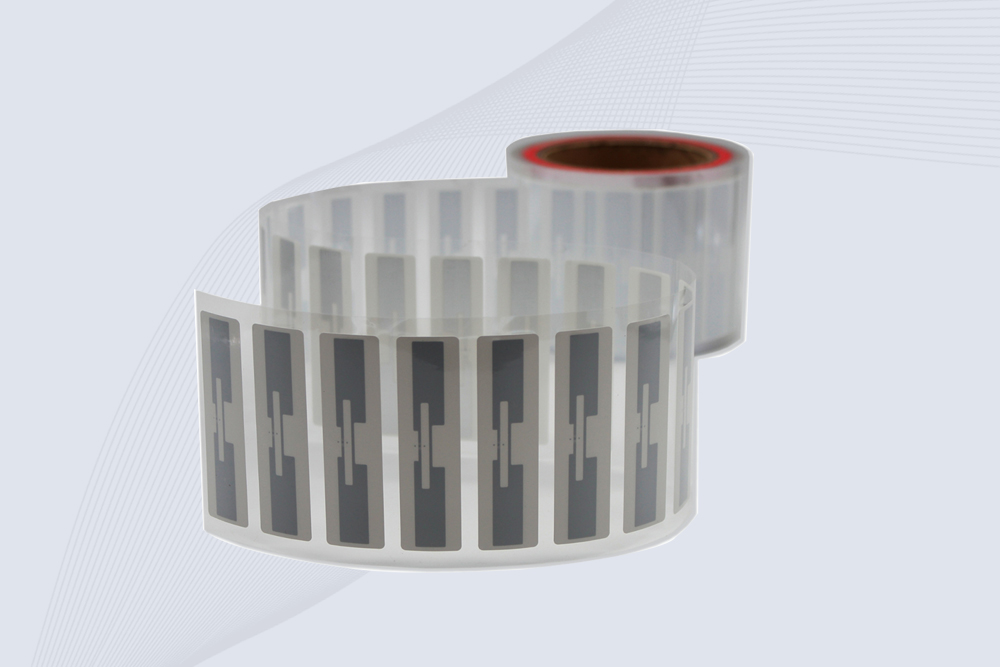
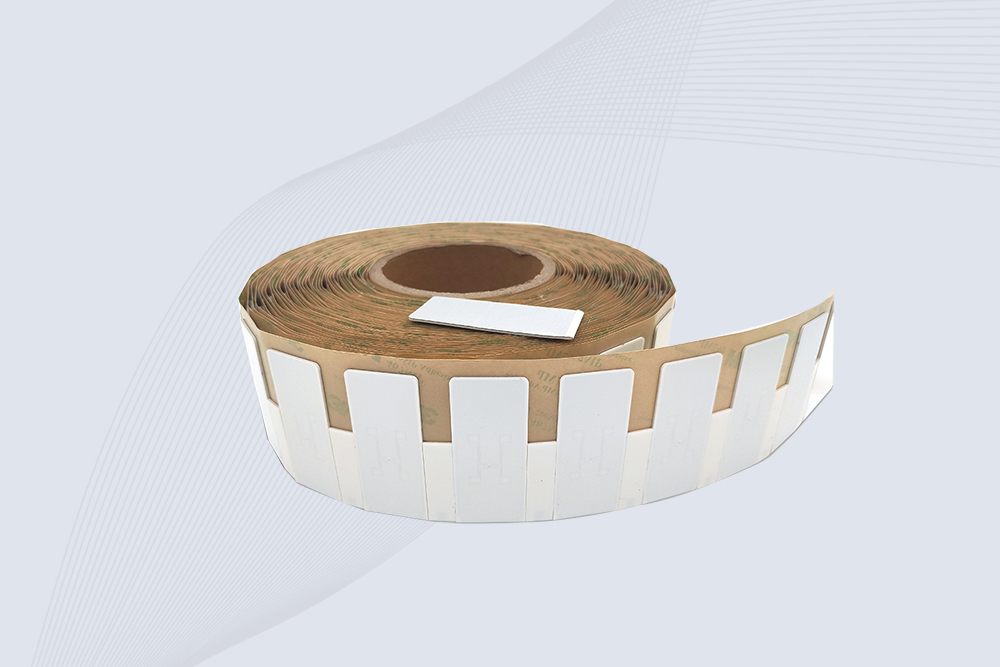
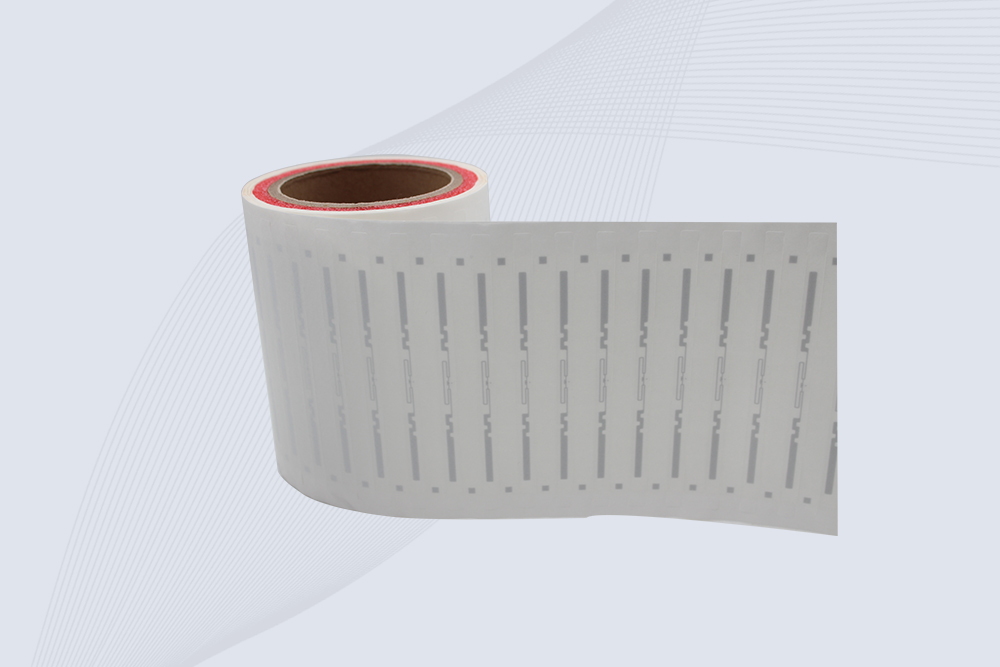
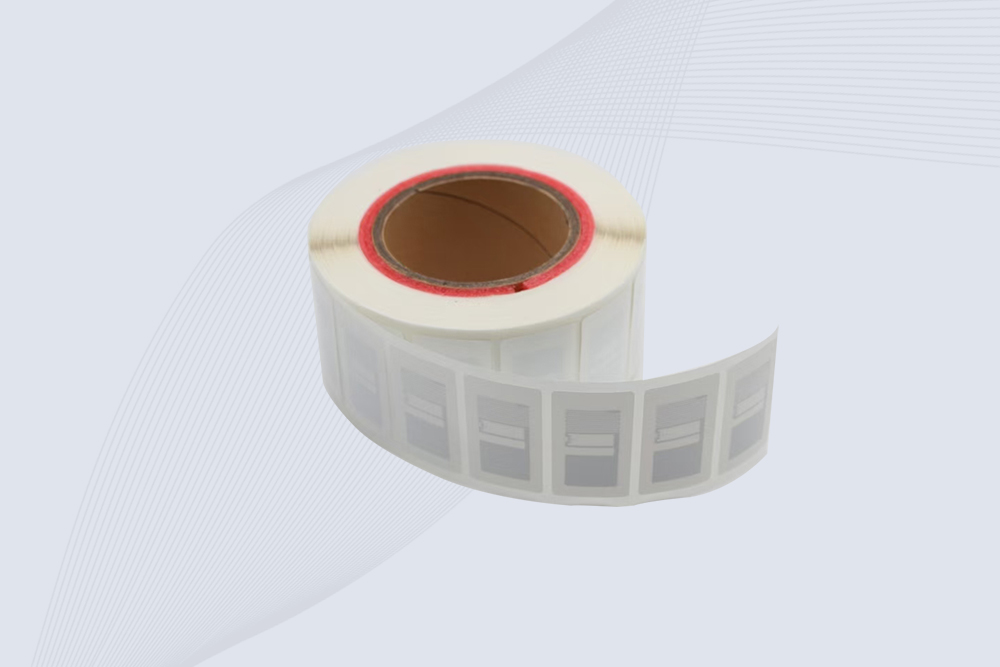
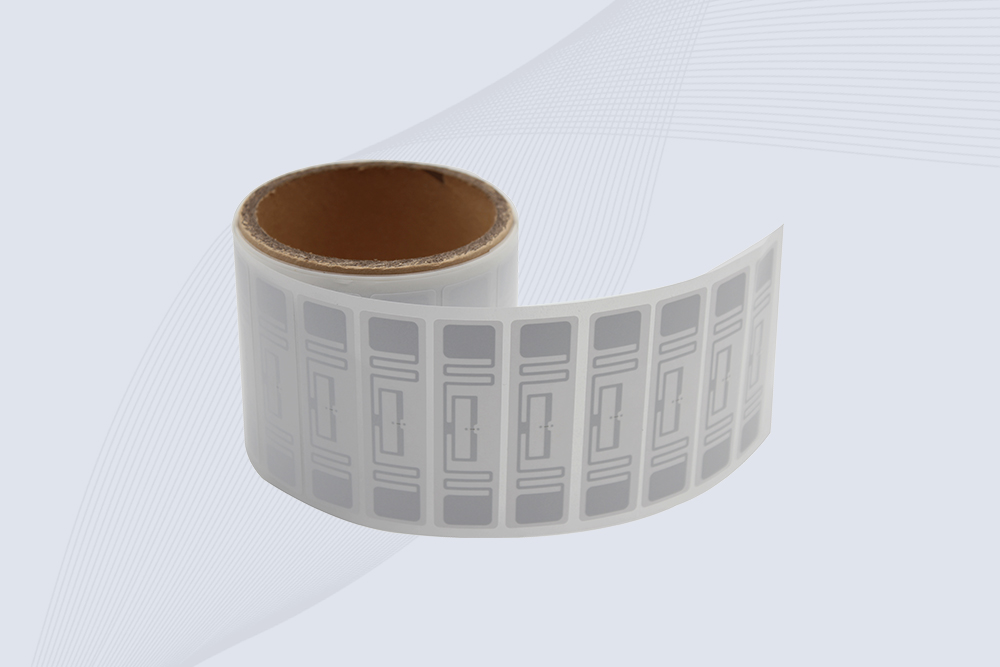
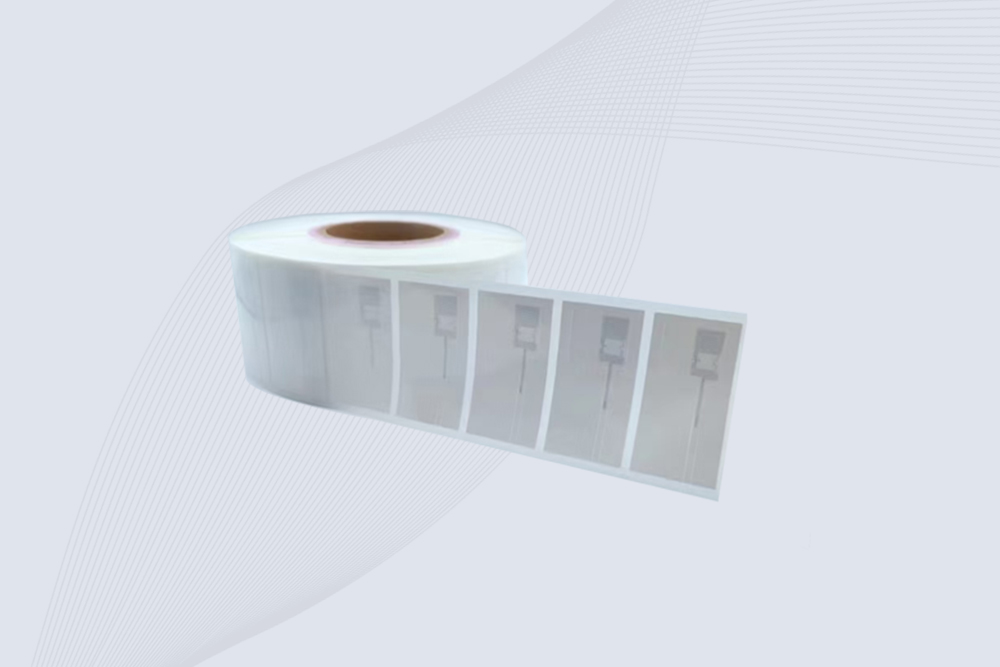
Wet inlay — chip, antenna, film and adhesive on a liner, with no printed face. Cheapest per unit, sold on rolls to converters, and what you buy if you print your own labels.
Dry inlay — the same thing without adhesive, for embedding inside a card, a ticket or a moulded part.
Label — wet inlay plus a printable paper or synthetic face. The default for cartons, pallets and asset tagging.
Hard tag — the inlay inside a rigid ABS or PC housing, mounted with screws, rivets or cable ties. Reusable, and the only sensible option where the tag will be hit, washed or dragged.
A useful rule: inlay for the inside, label for the outside, hard tag for anything that gets abused. Choosing a label where a hard tag belongs is the second most common wrong diagnosis, right after blaming the chip.
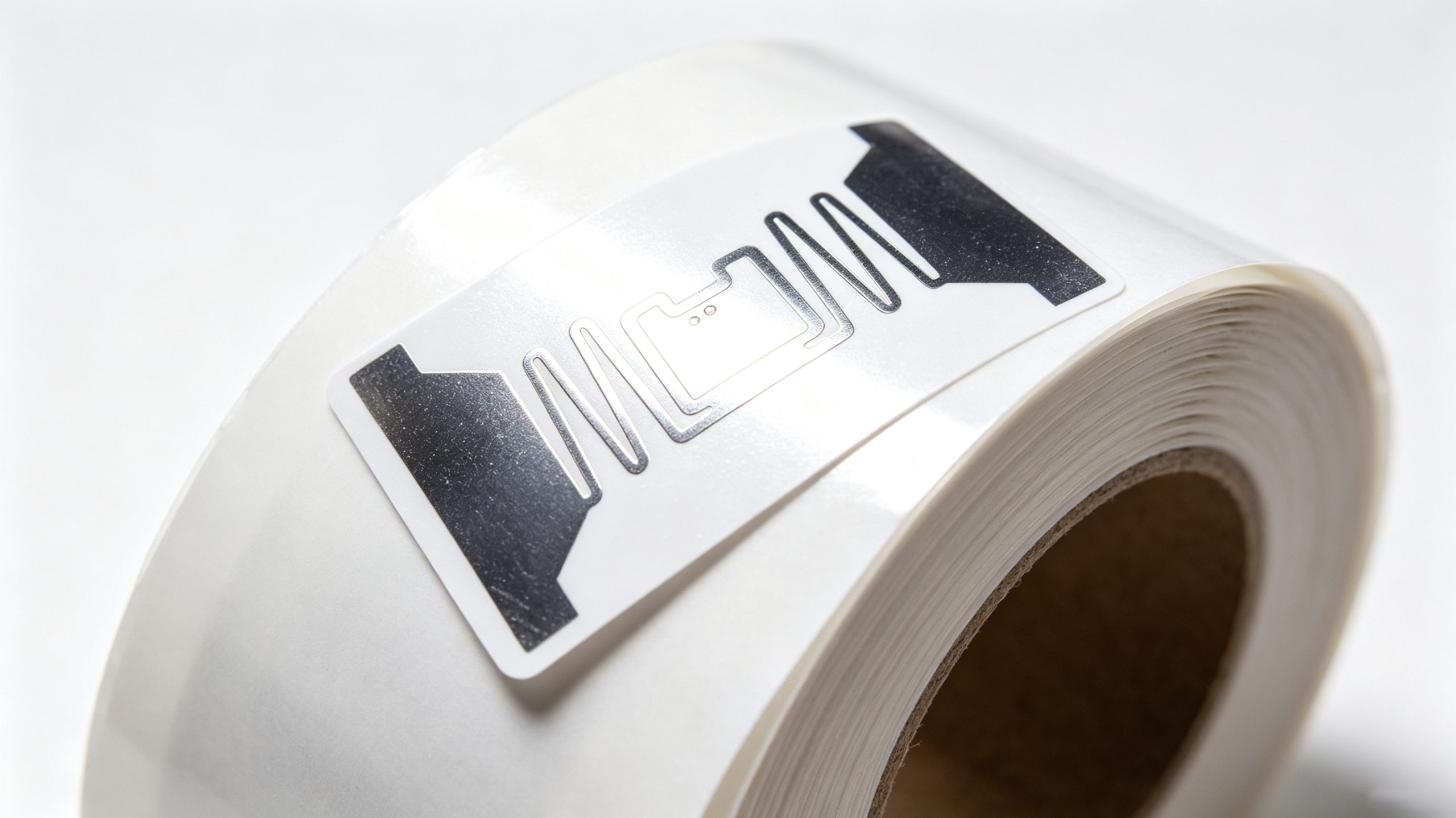
A wet inlay is the tag before anyone decides what it should look like.
The Form Factors You’ll Actually Be Quoted
Nine shapes cover the overwhelming majority of UHF deployments. The right column is the part that matters — each form factor exists because of one physical constraint:
Form factor
Typical use
Constraint it solves
Wet inlay / label
Cartons, pallets, assets
Nothing — the default
Apparel hang tag
Garments
Fabric flex and retail handling
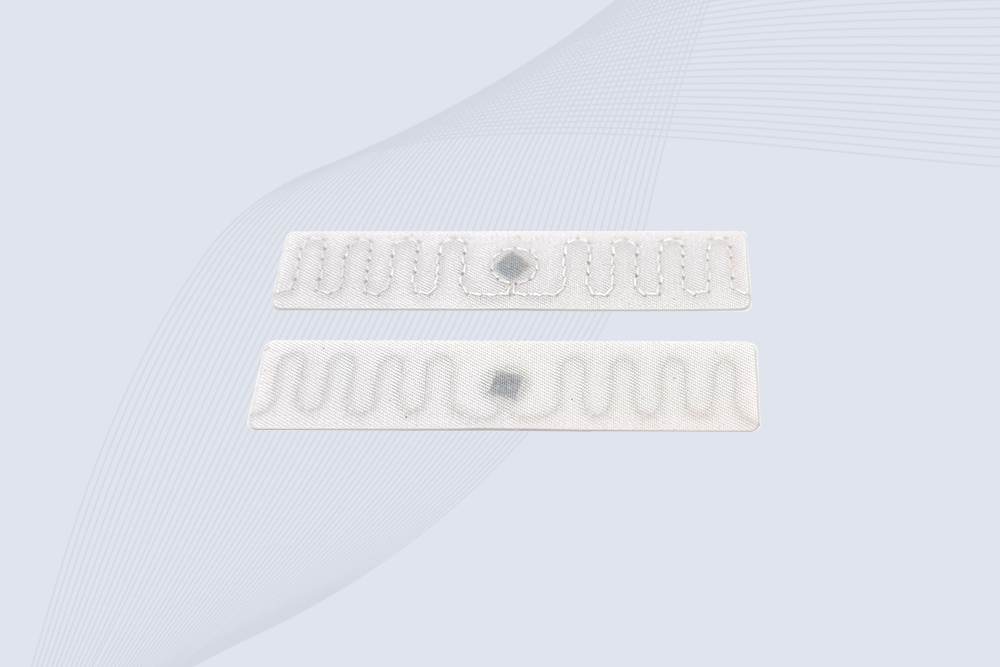
Fabric / sew-in label
Workwear, linen
Survives 200+ wash cycles
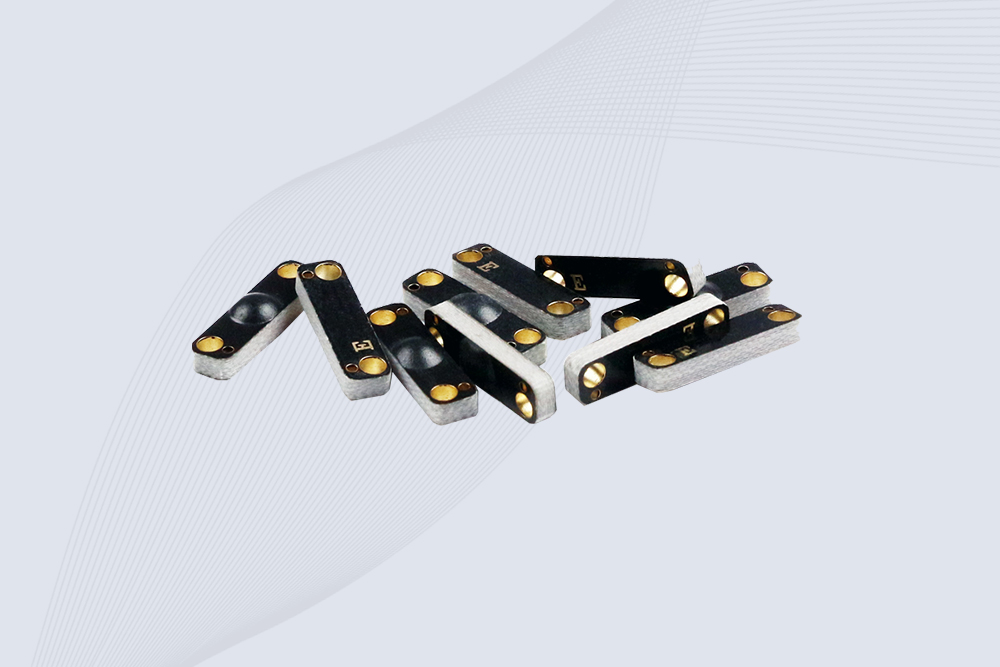
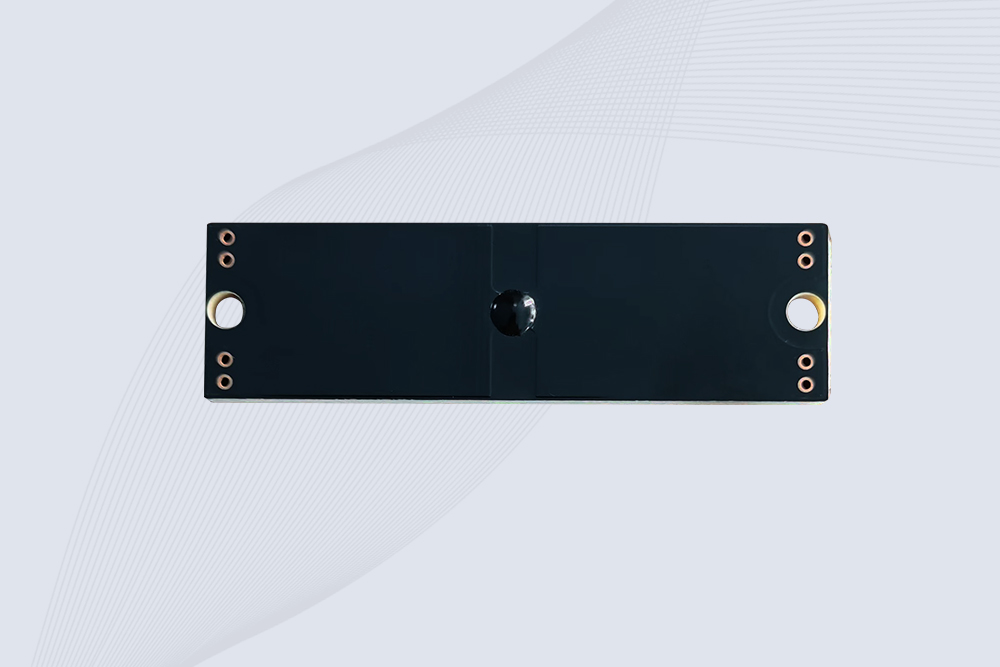
Anti-metal (rigid or foam-backed)
Tools, kegs, machinery
Detuning against conductive surfaces
Anti-liquid label
Bottles, chemical drums
Energy absorbed by water
Cable tie tag
Cables, pipes, cages
Attachment to something round
Hard tag with screws
Returnable containers, vehicles
Impact, reuse, removal resistance
Disc / button tag
Small metal parts, tooling
Tight spaces on metal
High-temperature tag
Paint lines, autoclave
Heat beyond standard adhesive limits
Two of these are worth flagging, because they’re where budgets quietly break. Anti-metal tags cost 10–30× a standard label — a $0.10 label becomes a $1.50 tag — so it’s worth checking whether a foam spacer under a normal label solves the problem at a fraction of the cost. And fabric tags are bought by wash cycle count, not by price: a tag rated for 50 washes in a 200-cycle operation is not a saving, it’s a re-tagging project.
For the surface-by-surface matching logic — metal, liquid, glass, cardboard, textile — the tag selection guide goes deeper than this article needs to.
Decoding the Tag Spec Sheet
A quotation usually arrives as a table of numbers. Eight of them decide whether the tag works:
1. Frequency and region. 860–960 MHz overall, but the legal band is regional: 865–868 MHz in Europe, 902–928 MHz in North America, 920–925 MHz in China. A tag tuned for one band reads poorly in another. Never accept “UHF” alone.
2. Chip model. The single most predictive line on the sheet. If it’s missing, the sheet is a price, not a specification.
3. EPC size. 96 bits is standard and sufficient for item-level uniqueness. 128 or 496 bits exist for cases where you encode structured data into the ID itself.
4. User memory. Usually 0, 32, 64 or 512 bits. Only pay for it if you write data to the tag — a maintenance date, a batch code, a rework flag.
5. Read range — and its test conditions. “Up to 8 m” means 8 m with one tag in free air at maximum reader power. Expect 30–50% of that figure in a real aisle with product around it. A sheet that doesn’t state the test condition is quoting a best case.
6. Dimensions and antenna size. Bigger antennas generally read further but detune harder near metal and take more space on the item. This is a trade, not a spec to maximise.
7. Adhesive and service temperature. Standard acrylic adhesive is fine to roughly −20 °C to +80 °C. Freezers, paint ovens and steam cleaning each need something different, and this is the most common omission on cheap quotations.
8. Protection rating and expected life. IP rating for hard tags, wash-cycle count for textiles, chemical resistance for industrial use. Without it, “durable” is a marketing word.
Add one commercial item that isn’t a spec but behaves like one: minimum order quantity and whether encoding is included. A cheap quote that requires you to encode 50,000 EPCs yourself is not cheap.
Nine shapes, one job — the shape exists because of a physical constraint, not a design choice.
Why the Same Chip Reads Differently in Two Tags
Two labels carrying the identical chip can differ by metres in read range. Three reasons, all in layer 2:
Antenna gain and size. A larger antenna captures more energy and returns a stronger signal — but occupies more of the item and detunes more aggressively against metal.
Tuning to the band. The antenna is cut for a specific frequency range. A tag optimised for the centre of the European band is slightly off-key in North America, and the loss shows up as range.
The material it sits on. An antenna tuned in free air shifts resonance the moment it touches cardboard, plastic, water or metal. Good inlay designs compensate; cheap ones don’t.
This is why “same chip, half the price” is a real offer and a real risk: you’re not buying a different chip, you’re buying a different antenna and a thinner carrier. On a clean pallet in a test room, they’ll look identical. In a cold store with condensation and stacked cartons, they won’t.
The Five Ways a Tag Fails in the Field
Almost every field failure traces to one of these, and four of the five are physical rather than electrical:
Detuning against metal or liquid. The tag still looks perfect. Range quietly collapses to a few centimetres. Fix: on-metal tag, or a foam spacer.
A crease in the antenna. One fold across the trace and the tag is dead — even though the chip is intact. Fix: place it where nothing folds, or move up to a hard tag.
Adhesive failure at temperature. The label lets go in a freezer or in summer sun, and you find it on the floor of the trailer. Fix: specify the adhesive, not just the label.
Overprinting or covering the antenna. A full-bleed print or a second label over the inlay absorbs RF energy. Fix: keep print and secondary labels off the antenna area.
Tags too close together. Inlays coupled at less than a few centimetres apart interfere with each other. Fix: spacing of at least 5 cm where the workflow allows, or accept a lower read rate.
Notice what’s absent from that list: a chip that “isn’t good enough”. In real deployments, the chip is usually fine and the physics around it isn’t.
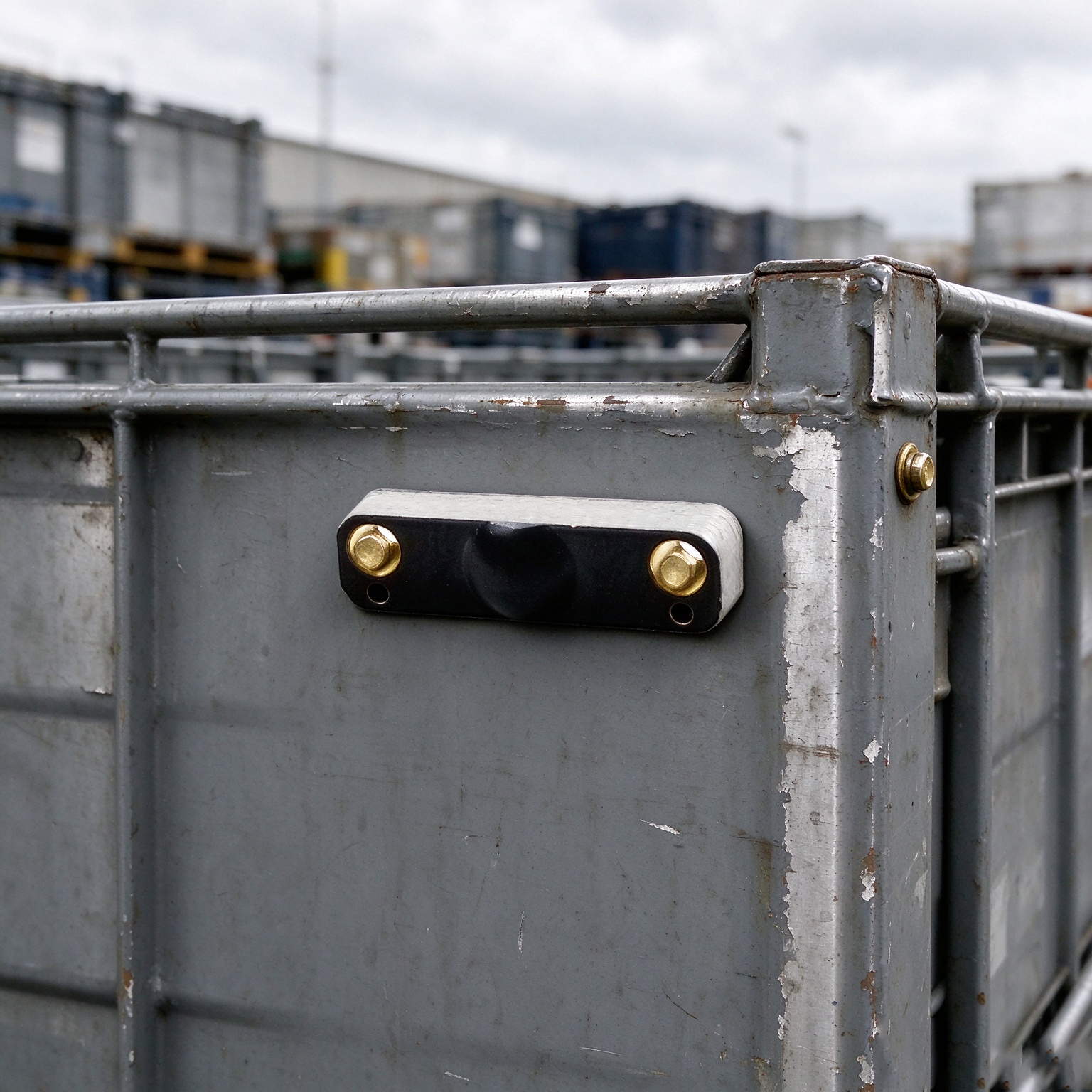
On metal, the housing and the spacer do the work — a plain label would read a few centimetres at best.
What a Tag Costs, and What the Price Buys
Unit price is meaningless without the form factor attached. Rough volume pricing:
Two things move the number more than the chip does: the adhesive (a freezer-grade or high-tack adhesive can double a label’s price) and the volume (the difference between 10,000 and 1,000,000 units per order is usually a 30–50% swing).
And one number that never appears on the quotation but matters more than the unit price: the cost of a missed read. A $0.05 label that misses 3% of cartons costs you 30 manual scans per 1,000 — which is usually more than the difference between the cheap label and the right one.
How to Choose in Five Questions
What’s the item, and what’s it made of? Material first, everything else second.
How is it read — doorway, handheld, or conveyor? This sets the minimum range and the orientation tolerance.
How long must the tag live, in what conditions? Wash cycles, freezer, oven, abrasion — this decides the form factor.
Does anything get written to the tag after encoding? If no, skip user memory.
What’s the annual volume? It decides whether a $1.50 anti-metal tag is a rounding error or a budget line.
Answer those five and the form factor follows almost automatically — which is a much faster path than comparing spec sheets line by line. And if you’re still unsure whether you need a tag at all, versus a reader or a whole system, start with what “an RFID” actually refers to.
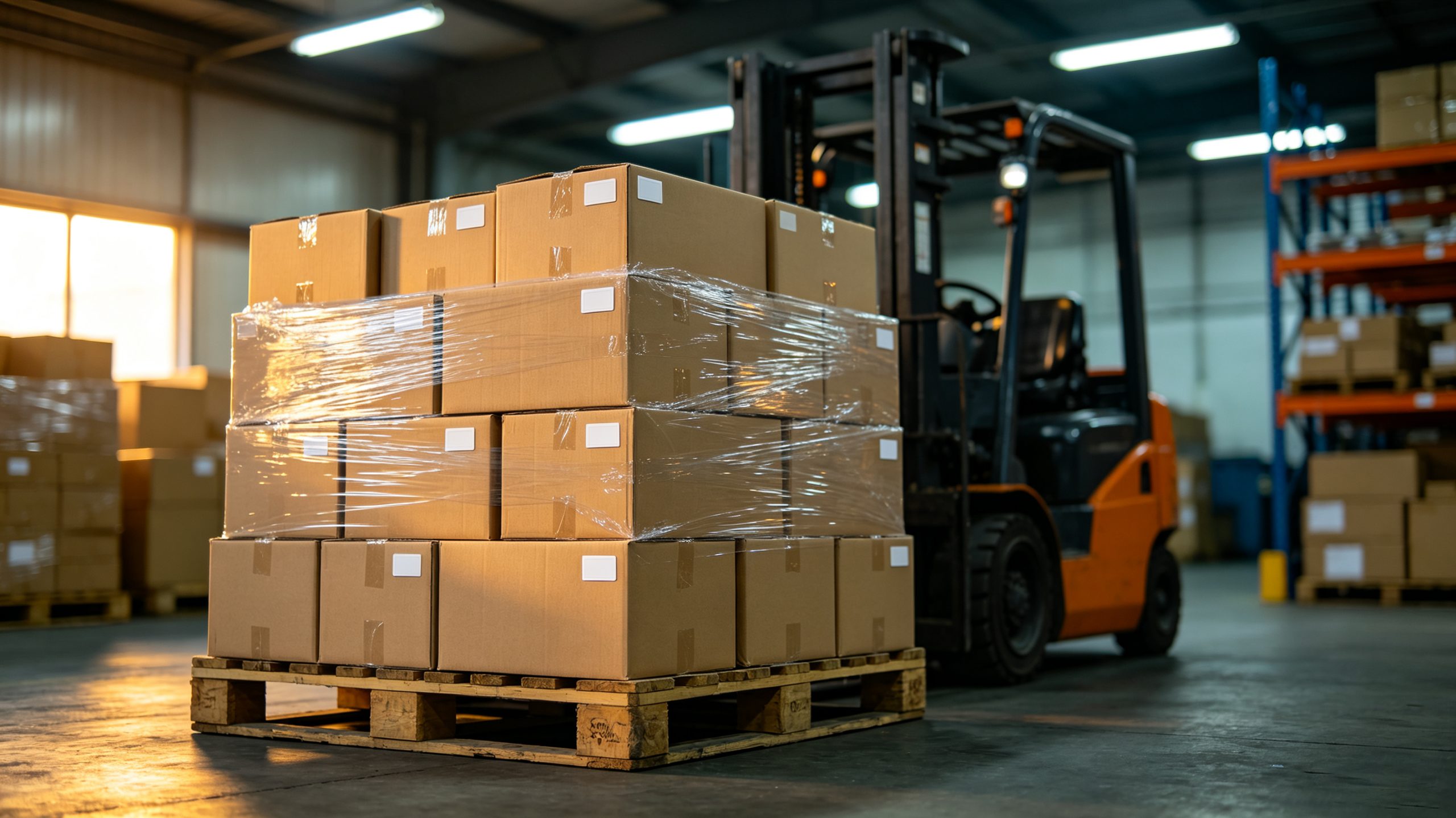
Fabric and hang-tag choices decide whether this scan finishes in one pass.
Frequently Asked Questions
Is an RFID tag just a sticker?
Sometimes. A label is a sticker containing an inlay; a hard tag is the same electronics in a plastic housing. The electronics are similar, the durability is not.
Does an RFID tag need a battery?
Not the passive UHF tags used for inventory, which are the vast majority. They harvest power from the reader’s signal. Active tags carry a battery and cost far more.
How many tags can be read at once?
Hundreds per second in good conditions; realistically 100–300 in a dense doorway read. The limit is anti-collision handling and the physical environment, not the tag alone.
Can an RFID tag be reused?
Yes — the EPC is rewritable. Hard tags on returnable containers are reused for years. Labels usually aren’t, because the adhesive and the paper don’t survive removal.
How long does the data last?
Decades for the chip itself, in normal conditions. The realistic failure point is the physical package: adhesive, face material or antenna — not data retention.
Do RFID tags work on metal?
Not standard labels. Metal detunes the antenna, so you need an on-metal construction or a spacer. This is a tag-design problem, and it has well-understood solutions
CYKEO Passive RFID Tags are made for wet and high-humidity environments where standard labels do not last. This rfid passive tag is often used around liquids, chemicals and temperature changes, providing stable reading distance and long data life for industrial tracking.
CYKEO CYKEO-PCB1504 Metal RFID Tags is a compact anti-metal UHF RFID solution built for direct mounting on metal surfaces. With stable 8-meter read range, Ucode-8 chip, and long data retention, this rfid metal tag fits tools, containers, automotive parts, and industrial asset tracking.
CYKEO CYKEO-PCB7020 On-Metal RFID Tags are designed for reliable tracking on steel and metal surfaces. Built with an FR4 epoxy body and industrial-grade chips, these On-Metal RFID Tags deliver stable performance, long data life, and chemical resistance, making them a dependable RFID anti-metal tag for harsh environments.
The CYKEO CYKEO-60-25 Anti-Metal RFID Tag is built for metal surfaces where standard tags fail. Designed for long-range performance, harsh environments, and stable data retention, this Anti-Metal RFID Tag is ideal for industrial assets, containers, and equipment tracking using on metal RFID tags.
The CYKEO RFID Laundry Tag is designed for long-term textile identification in harsh laundry environments. Built to withstand high heat, chemicals, and repeated washing, this RFID Laundry Tag delivers stable performance for hotels, hospitals, and industrial laundry operations using laundry rfid tags at scale.
The CYKEO CYKEO-125-7 RFID Book Tag is designed for reliable book and document tracking in libraries and archives. This RFID Book Tag delivers long read range, dense placement support, and stable performance on shelves, making it a practical rfid tag on books for library automation, file management, and archival systems.
CYKEO RFID tags in hospitals are designed for sterile environments where accuracy matters. These autoclavable RFID tags support long-term tracking of surgical tools, implants, and medications, helping hospitals improve visibility, compliance, and patient safety.
CYKEO RFID Cable Tie Tag is built for reliable identification on metal surfaces. This UHF RFID Cable Tie Tag is widely used in rfid tags for inventory systems, industrial asset management and Hospital RFID Tags, offering stable read performance, long service life and global EPC Gen2 compatibility.
CYKEO RFID Asset Tag is designed for stable identification of metal assets in industrial environments. This UHF RFID Asset Tag is commonly used for rfid tag asset tracking on equipment, tools and containers, providing reliable reads, long service life and ISO/IEC 18000-6C support.
CYKEO UHF RFID Card is designed for fast identification and long-term use in industrial and commercial systems. Supporting ISO 18000-6C, this UHF RFID Card works at 860–960 MHz and is suitable for custom RFID cards used in asset tracking, access control and inventory management.
CYKEO HF RFID Cards are designed for secure and stable access control systems. These 13.56 MHz RFID key cards support ISO 14443-A, reliable rewriting and long service life, making HF RFID Cards suitable for offices, campuses, events and membership management.
CYKEO UHF RFID Tag is designed for reliable tracking of metal jewelry and high-value items. This Jewelry RFID Tag supports long-range reading up to 8 meters, anti-counterfeit protection and stable performance on metal, making it suitable for retail, inventory control and asset management.
Learn how to use RFID tags on metal surfaces. Explore industrial metal RFID tags, placement tips, durability, read range, and how to track tools, equipment, and metal assets reliably.
Discover how rfid tags labels improve inventory accuracy, asset visibility, and supply chain efficiency. Learn how to choose the right RFID labels with expert insights from Cykeo.
 Cykeo RFID IoT Solution Products R&D Manufacturer