 Cykeo RFID IoT Solution Products R&D Manufacturer
What Is Retail RFID? Advantages of Cykeo Retail RFID Systems
49Retail RFID technology improves stock accuracy, loss prevention, and inventory visibility with ultra high frequency RFID solutions for modern retail stores.
MoreAll RFID Product
RFID frequency range refers to the radio frequencies used for communication between RFID tags and readers. Most RFID systems operate in three main bands—LF (125–134.2 kHz), HF (13.56 MHz), and UHF (860–960 MHz)—with each frequency offering different read distances, speeds, and application advantages.
I have spent more than a decade working with RFID deployments in warehouses, manufacturing plants, retail environments, and industrial automation projects. One lesson appears repeatedly: selecting the wrong RFID frequency causes more project failures than choosing the wrong hardware.
Many companies initially focus on reader specifications. In practice, frequency selection often determines overall system performance.
Written by Cykeo RFID Engineering Team
Our team has participated in RFID deployments across logistics centers, manufacturing facilities, retail chains, and industrial asset management projects. The observations in this guide come from real project implementation experience combined with standards published by GS1, RAIN RFID Alliance, and ISO organizations.
| Frequency Type | Frequency Range | Typical Read Distance | Common Applications |
|---|---|---|---|
| LF RFID | 125–134.2 kHz | Up to 30 cm | Animal identification, access control |
| HF RFID | 13.56 MHz | Up to 1 meter | NFC, libraries, ticketing |
| UHF RFID | 860–960 MHz | Up to 15+ meters | Logistics, retail, manufacturing |
| Active RFID | 433 MHz / 2.45 GHz | 100+ meters | RTLS, vehicle tracking |
According to the RAIN RFID Alliance, UHF RFID technology is now widely used for large-scale inventory and supply-chain visibility due to its long read range and ability to read hundreds of tags simultaneously.
A longer read distance is not always better.
Several years ago, during a warehouse deployment in Germany, a customer initially requested maximum reading distance. After field testing, we intentionally reduced the effective range because neighboring pallet zones created unwanted tag reads.
The best RFID frequency range is the one that matches operational requirements.
Factors influenced by frequency include:
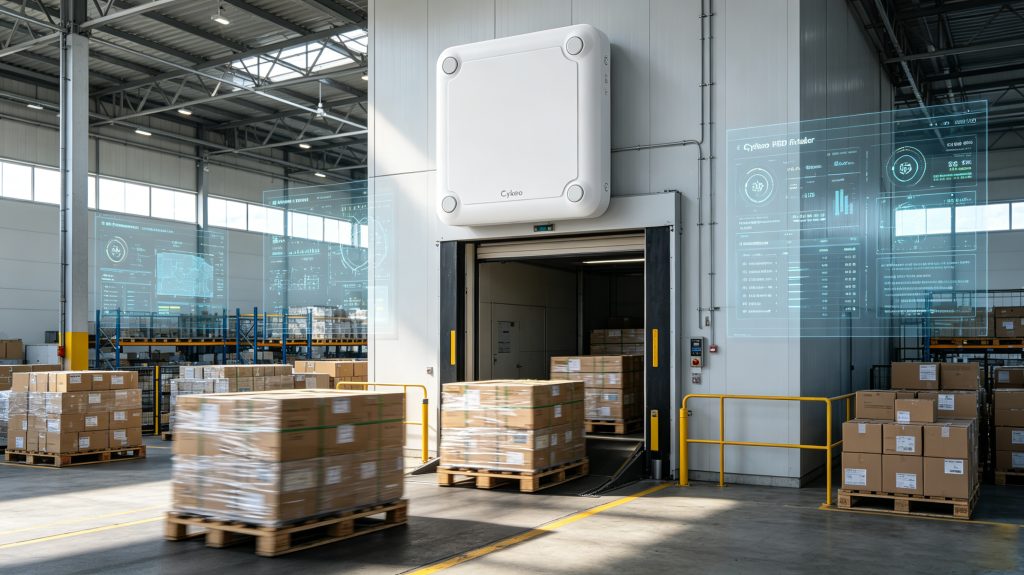
UHF RFID operates between approximately 860 MHz and 960 MHz depending on regional regulations.
Typical performance:
According to GS1, RFID-enabled inventory systems can significantly improve inventory visibility and accuracy compared with manual counting processes.
In one automotive parts facility, handheld barcode audits required nearly two full shifts every month.
After deploying UHF RFID portals, inventory verification was completed within hours rather than days. The biggest gain was not labor reduction—it was real-time visibility into misplaced work-in-progress components.
HF RFID at 13.56 MHz performs exceptionally well when:
Typical uses include:
UHF becomes the preferred option when:
The decision is rarely about which technology is superior.
It is about operational fit.
Even within the same RFID frequency range, performance varies significantly.
Key variables include:
| Factor | Impact |
| Reader power | Higher power increases range |
| Antenna gain | Improves signal coverage |
| Tag size | Larger antennas improve performance |
| Metal surfaces | Can reduce readability |
| Water content | Absorbs RF signals |
| Installation angle | Influences consistency |
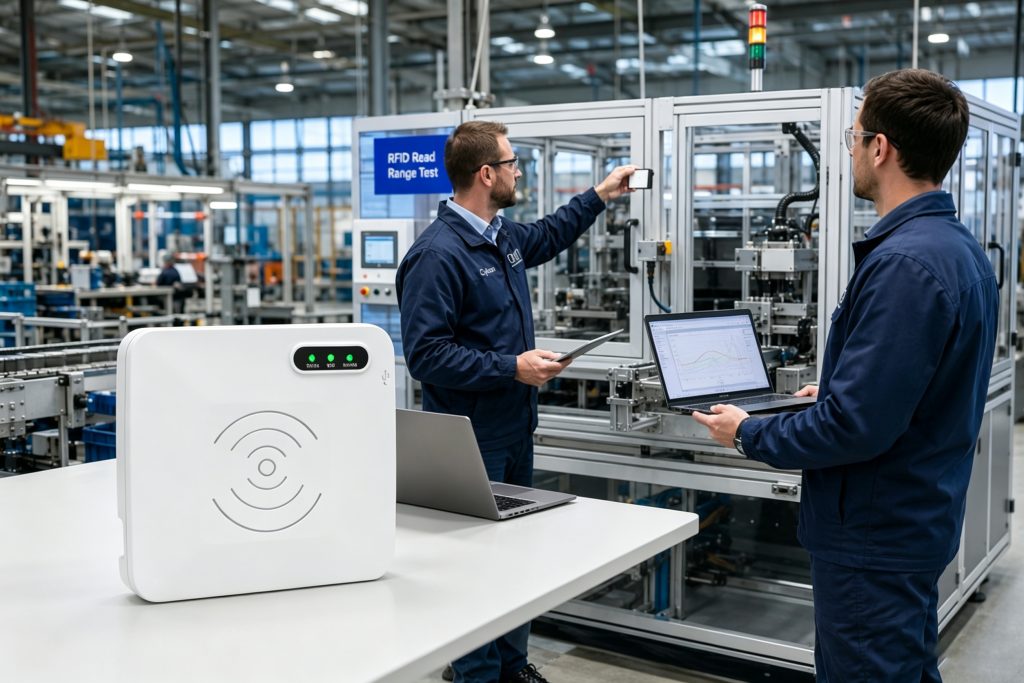
One field test showed identical UHF tags achieving 12 meters on cardboard cartons but less than 3 meters when mounted directly against liquid-filled containers.
The frequency remained unchanged. The environment changed everything.
Use LF RFID when:
Use HF RFID when:
Use UHF RFID when:
For most industrial IoT projects today, UHF remains the dominant choice.
Passive UHF RFID systems commonly achieve 10–15 meters under ideal conditions. Active RFID solutions can exceed 100 meters.
UHF RFID provides the longest read range among passive RFID technologies.
No. Higher frequencies typically offer longer range and faster reads but may experience greater sensitivity to liquids and environmental conditions.
Yes. UHF RFID is widely used for work-in-progress tracking, inventory visibility, asset management, and production automation.
Some specialized readers support multiple bands, but most industrial deployments use readers optimized for a specific RFID frequency range.
The best rfid frequency range depends on the application. LF works well for animal identification, HF excels in secure and NFC-based systems, while UHF delivers the long-range, high-speed performance required for modern inventory tracking, manufacturing automation, and industrial asset visibility. At Cykeo, most large-scale logistics and Industry 4.0 deployments rely on UHF RFID because it balances read distance, speed, and scalability more effectively than alternative frequencies.

Retail RFID technology improves stock accuracy, loss prevention, and inventory visibility with ultra high frequency RFID solutions for modern retail stores.
More
Can phones read RFID tags? We explain what's possible with phone NFC, what isn't, and why you need different hardware for business RFID tracking.
More
How to test RFID with a phone? With NFC functionality and mobile apps, users can quickly read high-frequency RFID tags. This is ideal for field testing, verification, and early project identification. Learn the exact steps and how to troubleshoot ...
More
Can iPhone read RFID card by itself? Learn the real limits of iPhone RFID, what works, what doesn’t, and how CYKEO solves it.
More