 Cykeo RFID IoT Solution Products R&D Manufacturer

Why Healthcare Industry Is Need RFID Medical Tracking?
119rfid in healthcare industry improves medical inventory control, reduces manual errors, and enables real-time UHF RFID tracking for hospital consumables and supplies.
MoreAll RFID Product
What is rfid technology in library? RFID technology in library uses radio frequency identification to connect books, readers, and management systems through RFID tags and readers, enabling faster borrowing, returning, inventory checking, and automated library services.
RFID technology has changed the way modern libraries manage physical collections. Instead of relying only on barcode scanning and manual registration, libraries can attach RFID tags to books and use readers, self-service stations, and management software to create a more efficient circulation process.
From my experience working with RFID hardware integration and library automation projects, the biggest improvement is not simply faster scanning. The real change happens behind the counter: librarians spend less time on repetitive registration tasks, while readers gain more independence during borrowing and returning.
A typical library may manage thousands or even millions of items. Every book needs an accurate identity, circulation record, and security status. RFID technology creates this connection by allowing each item to communicate its identification information wirelessly.
The international standard ISO 28560-1:2023 specifically defines data elements and implementation guidelines for RFID use in libraries, including item circulation, acquisition, inventory checking, and interoperability between library systems. ISO
RFID library systems are built around three main components:
| Component | Function |
|---|---|
| RFID Book Tag | Stores identification data attached to library items |
| RFID Reader | Communicates wirelessly with tags and captures information |
| Library Management Software | Processes borrowing, returning, and inventory data |
The working process is straightforward, but the engineering behind reliable operation requires careful design.
When a book with an RFID tag enters the reading area:
Unlike traditional barcode systems, RFID does not require direct visual alignment. A reader can identify multiple tagged books placed within its operating area, which is especially useful for self-service borrowing stations.
GS1 explains that RFID uses electronic identifiers such as EPC data to provide unique identification for physical objects. In RFID applications, these identifiers connect physical items with information systems.
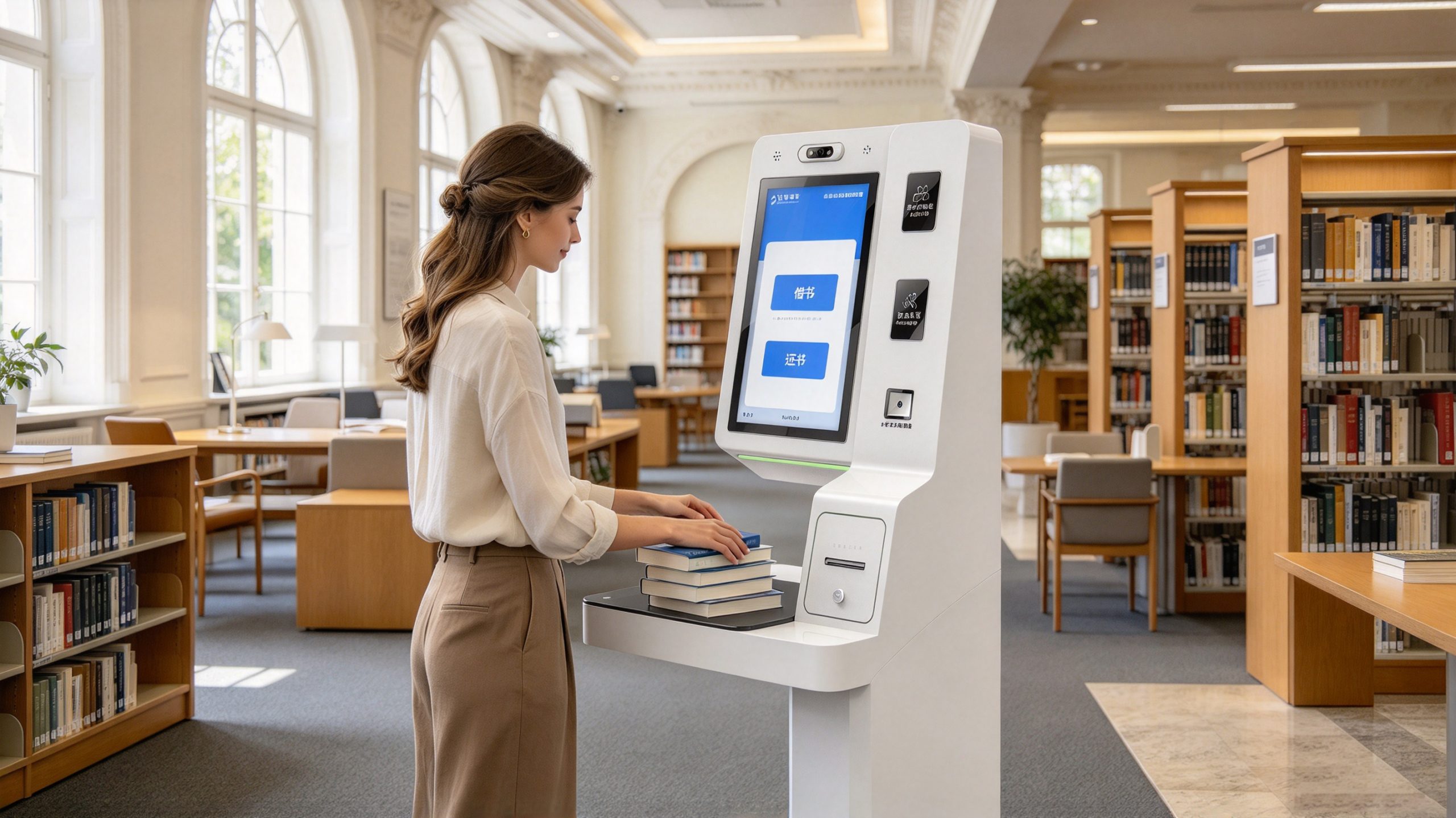
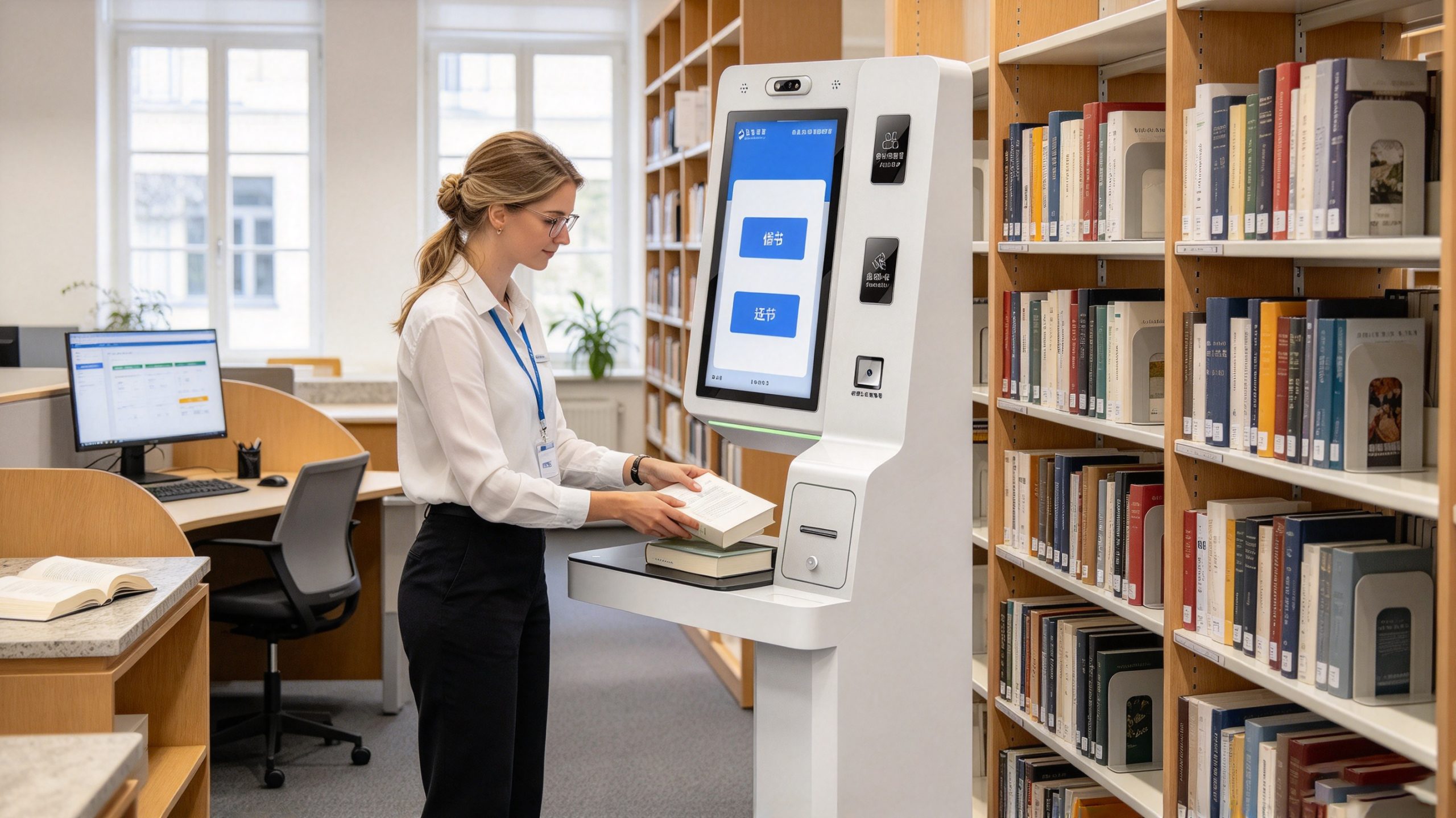
One of the most visible applications of RFID technology in libraries is the self-service borrowing and returning station.
Traditional borrowing requires:
An RFID self checkout system changes this workflow.
Readers can place books near the self-service machine, and the system automatically identifies the tagged items.
A modern RFID self-service borrowing and returning machine typically provides:
Cykeo’s RFID self-service borrowing and returning equipment is designed around this workflow. The system uses a user-friendly graphical interface with support for Chinese and English language switching. The 21.5-inch touchscreen provides a clear operation experience, allowing readers to complete borrowing and returning procedures independently.
For libraries, this reduces repetitive manual registration work and improves circulation efficiency.
Book tracking is one of the most important functions of RFID technology in library environments.
Each RFID tag provides a unique identity for a book.
The system can associate the tag with:
This allows librarians to perform faster inventory checks.
Instead of manually scanning books one by one, RFID readers can identify multiple tagged items during collection management activities.
ISO 28560 standards support RFID implementation for library circulation, inventory, stock checking, and data exchange between systems.
One of the main reasons libraries adopt RFID technology is reducing repetitive administrative tasks.
With automated borrowing and return processes, librarians can spend more time on:
RFID systems allow multiple books to be processed together.
This is especially valuable during busy periods when many readers need borrowing or return services at the same time.
A self-service system can simplify the entire process:
| Traditional Process | RFID-Based Process |
|---|---|
| Manual barcode scanning | Wireless tag recognition |
| One item at a time | Multiple book processing |
| Staff-assisted operation | Reader self-service |
| Manual record entry | Automatic data update |
The purpose of introducing RFID technology in a library is not simply replacing barcode scanners with RFID readers. A successful RFID library system changes the relationship between readers, librarians, and physical collections.
In traditional library workflows, many tasks depend heavily on manual intervention:
RFID technology creates a more connected workflow by allowing books and management systems to exchange information automatically.
During RFID library deployment projects, I have observed that user experience often determines whether a system is accepted. A technically advanced system can still fail if readers find the operation complicated. This is why modern RFID self-service equipment focuses on intuitive interfaces, fast recognition, and simple interaction.
A well-designed RFID self-service borrowing and returning machine allows users to complete the process independently while maintaining accurate circulation records.
An RFID self checkout system allows library users to complete transactions without waiting for staff assistance.
The typical workflow includes:
This approach improves convenience during peak periods, such as:
Cykeo’s RFID self-service borrowing and returning machine is designed for these environments. The equipment provides a graphical user interface with Chinese and English language switching options, allowing different users to operate the system easily.
The 21.5-inch touchscreen provides a larger interaction area compared with traditional small display terminals, improving visibility and user experience.
A library system needs not only to identify books but also confirm who is responsible for borrowed items.
RFID technology can work together with user authentication systems to connect:
Reader Identity → Borrowing Action → Book RFID Tag → Library Record
This creates a clear responsibility chain.
A complete RFID library solution may support:
This helps libraries reduce disputes and improve collection management.
Library materials represent valuable information resources. Losing books or failing to track circulation status creates operational costs.
RFID systems help libraries monitor:
The RFID tag provides the identity of each item, while the software records the movement history.
Not every RFID tag is suitable for library applications.
Important considerations include:
The tag must remain readable throughout the service life of the book.
Library self-service equipment requires controlled identification.
Too wide a reading range may capture nearby books unintentionally. Too narrow a range may reduce user convenience.
Professional RFID equipment balances:
Cykeo RFID solutions use high-efficiency signal processing algorithms to maintain stable RFID recognition performance in practical environments.
RFID hardware provides identification data, but the library management platform creates the complete service experience.
Integration commonly includes:
| System | RFID Function |
|---|---|
| Library management software | Borrowing and return records |
| User database | Identity verification |
| Inventory system | Collection checking |
| Security system | Item protection |
A complete RFID library solution requires cooperation between hardware, software, and operational processes.
RFID technology in library uses RFID tags, readers, and management software to identify and manage books automatically. It supports borrowing, returning, inventory checking, security management, and self-service operations.
RFID works in libraries by attaching electronic tags to books. RFID readers communicate with these tags through radio waves, capture book identification information, and update library management systems automatically.
An RFID self checkout system is a self-service device that allows readers to borrow and return books independently. It identifies multiple RFID-tagged books and records transactions without requiring manual librarian assistance.
Yes. RFID systems can recognize multiple tagged books simultaneously depending on reader capability, tag design, and operating conditions. This makes RFID useful for library circulation and inventory management.
Libraries use RFID because it provides wireless identification, faster processing, and additional functions such as tag writing, automatic inventory checking, and self-service borrowing.
Yes. RFID reduces manual registration work, improves borrowing speed, supports self-service operation, and helps librarians manage collections more efficiently.
What is rfid technology in library? It is a smart identification system that connects books, readers, and library management platforms through wireless RFID communication.
Modern libraries are moving from manual circulation processes toward automated and user-centered services. RFID technology supports this transition by improving book identification, simplifying borrowing procedures, and creating more accurate collection records.
However, successful implementation depends on more than installing RFID equipment. Libraries need suitable tags, reliable readers, practical software integration, and an interface that users can understand immediately.
Cykeo develops RFID solutions focused on real library workflows. The RFID self-service borrowing and returning machine combines a large 21.5-inch touchscreen interface, multilingual operation support, multi-book recognition capability, and user identification functions to help libraries improve service quality while reducing repetitive administrative work.
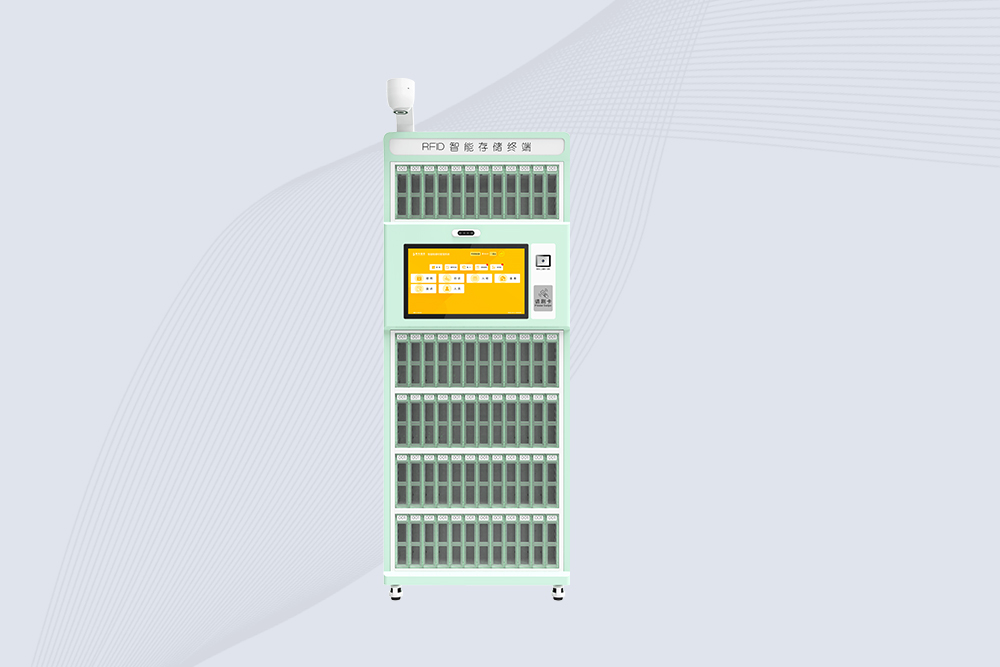
Cykeo’s RFID Library Management Cabinet offers 72-cell precision control for archives/labs/retail. Features dual-band UHF/HF scanning, facial authentication & cloud sync. ISO 18000-6C/15693 certified.
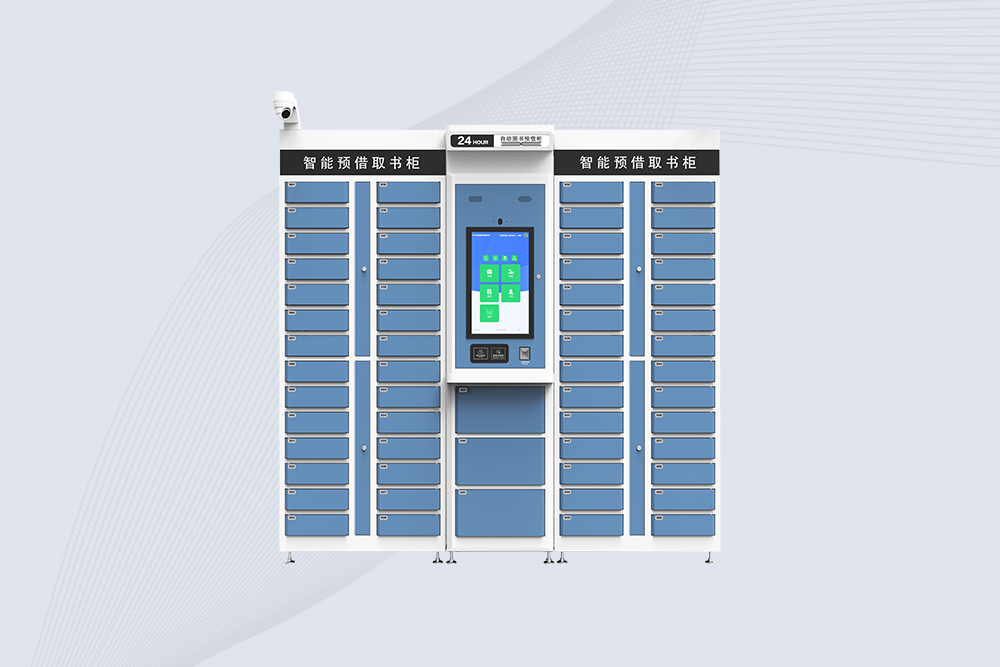
Cykeo’s RFID Smart Library Cabinet enables 24/7 book reservations with 59 compartments, biometric security & cloud sync. Ideal for universities/public libraries. Windows/Android OS.
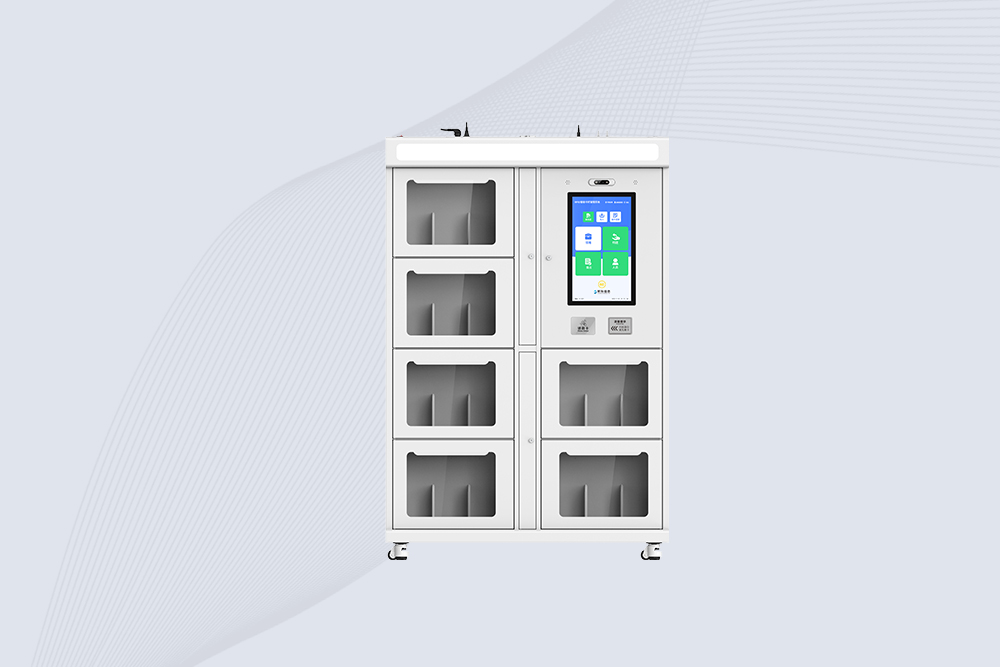
Cykeo’s RFID Book Inventory Cabinet features 7 compartments, Impinj R2000 UHF technology & dual OS for libraries/archives. 99.98% recognition accuracy with solar/cloud options.
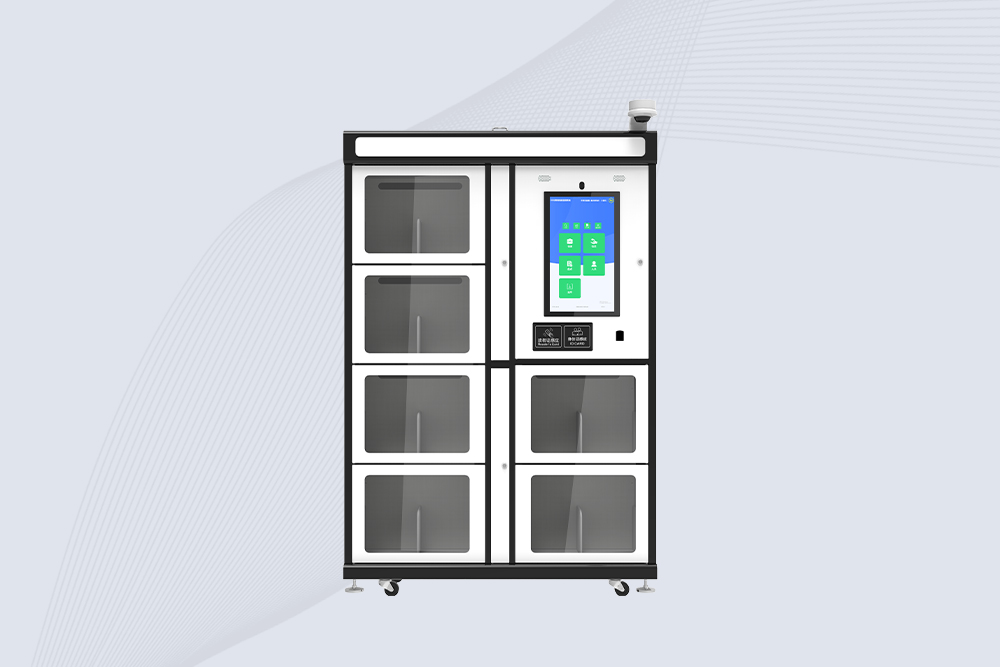
Cykeo’s industrial RFID School Library Cabinet features Impinj R2000 UHF technology, 21.5″ touchscreen & customizable compartments for academic archives, museums and libraries. Dual OS supports Windows/Android.
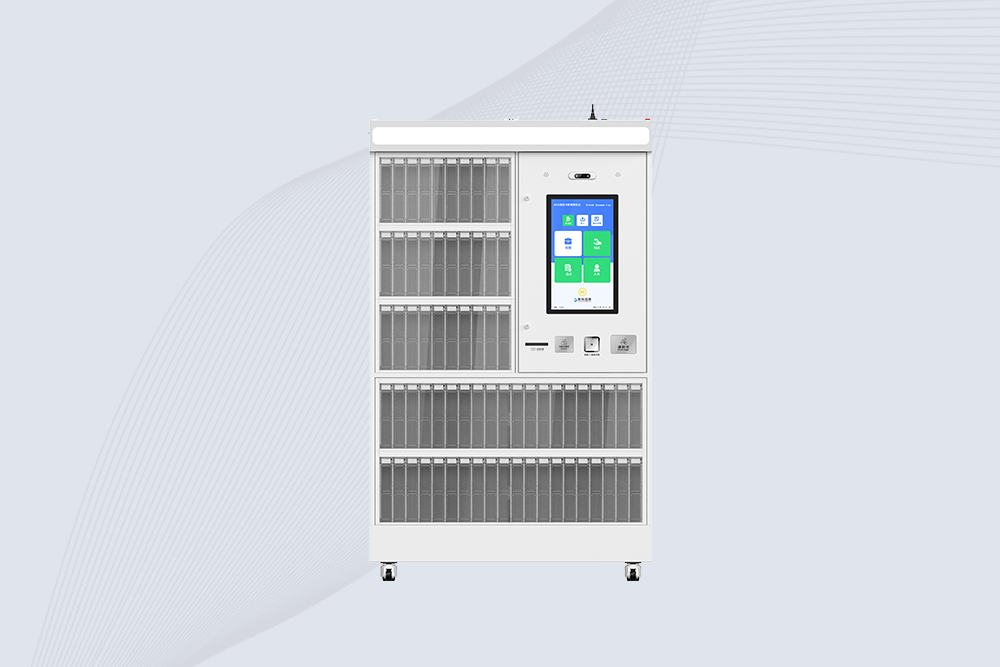
Cykeo’s RFID Mobile Library Cabinet enables 24/7 self-service book lending with 100-tag RFID scanning, facial recognition & solar power. Ideal for schools/communities.
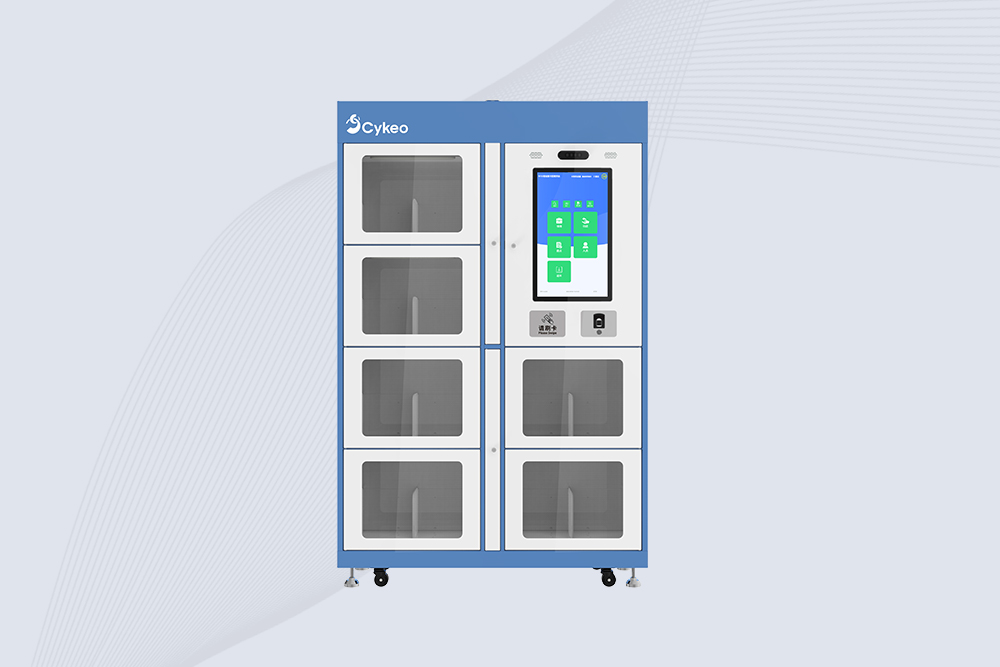
Cykeo CYKEO-G68B RFID smart bookcase features BookEye™ technology, 175-book capacity, and SAP integration for automated library management. Industrial-grade construction for 24/7 unmanned operations.

rfid in healthcare industry improves medical inventory control, reduces manual errors, and enables real-time UHF RFID tracking for hospital consumables and supplies.
More
Learn how to choose a long range RFID scanner antenna for warehouse, logistics, vehicle, and industrial RFID projects, including antenna gain, polarization, installation, and reading range.
More
How to block RFID signals in real scenarios. Learn practical shielding methods, what actually works, and how CYKEO tests RFID signal control.
More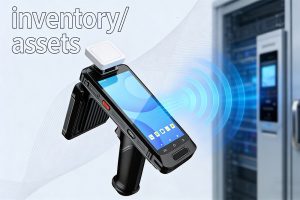
A practical look at handheld RFID readers for developers and system integrators, covering integration advantages, internal development use cases, and real-world RFID projects beyond inventory counting.
More