RFID tag frequency determines how far, how fast, and how accurately RFID systems communicate with tagged assets. In industrial inventory environments, UHF RFID frequencies deliver the best performance for long-range, high-speed bulk identification.
That answer sounds simple until you stand inside a live warehouse.
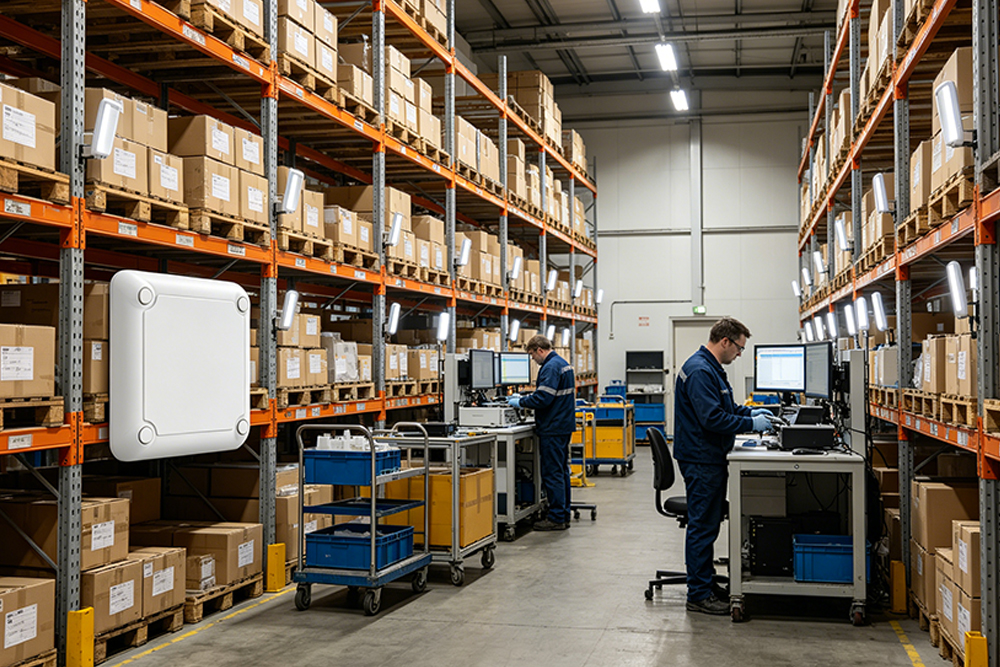
We learned this during a garment logistics deployment where operators complained that one area consistently missed carton reads. The issue was not software. It was frequency behavior near dense metal shelving and stacked liquid-packed products. After adjusting antenna positioning and optimizing UHF frequency tuning, read performance stabilized above 99%.
Frequency selection changes everything in RFID.
At Cykeo, our engineering team has worked with UHF RFID systems across warehouses, hospitals, textile plants, and manufacturing workshops where reading speed matters more than theory diagrams.
What Is RFID Tag Frequency?
RFID tag frequency refers to the radio wave range used for communication between RFID tags and RFID readers.
The three major RFID frequency categories are:
RFID Type
Frequency Range
Typical Read Distance
Common Applications
LF RFID
125–134 kHz
Short
Access control, animal ID
HF RFID
13.56 MHz
Medium
Payment cards, library systems
UHF RFID
860–960 MHz
Long
Warehousing, logistics, retail
For industrial inventory tracking, UHF RFID is now the dominant technology because it supports:
Long-distance reading
Fast multi-tag identification
Bulk inventory scanning
Automated warehouse operations
Real-time asset visibility
According to GS1 US, UHF RFID significantly improves supply chain transparency and inventory efficiency in retail and logistics operations.
uhf rfid tags for Large-Scale Inventory
UHF RFID is different from older RFID systems because it performs well in motion.
A forklift moving through a warehouse gate does not pause for perfect alignment. Operators push rolling cages quickly. Cartons tilt. Labels wrinkle. Real environments are messy.
That is exactly why UHF RFID became critical for modern logistics.
Real Operational Observation
Inside one distribution center, we tested inventory throughput using barcode scanning versus UHF RFID tunnel reading.
The barcode process required workers to rotate cartons manually one by one.
The UHF RFID system identified hundreds of tagged garments simultaneously within seconds.
The labor difference became obvious before management even reviewed the data.
Why Frequency Matters in RFID Performance
Read Distance
Higher RFID frequencies generally support longer reading distances.
Typical UHF systems can achieve:
3–10 meters with fixed readers
Rapid bulk identification
Simultaneous multi-tag reading
By comparison, HF RFID systems usually operate within centimeters.
Reading Speed
Frequency also affects communication speed.
UHF RFID systems support high-speed anti-collision algorithms, allowing hundreds of tags to respond nearly simultaneously.
That matters in:
Warehouse receiving
Laundry tracking
Retail inventory
Industrial production lines
According to Auburn University RFID Lab research, RFID deployments can improve inventory accuracy to above 95% while reducing manual labor substantially.
UHF RFID frequency optimization improves inventory accuracy and bulk reading performance.
rfid frequency range and Environmental Interference
Not every environment behaves the same.
RF signals react differently around:
Metal surfaces
Liquids
Dense packaging
Electronic interference
Reflective warehouse structures
One hospital project taught us this clearly.
A storage cabinet placed beside stainless-steel medical equipment produced unstable reading behavior during initial testing. The solution was not stronger power output. Instead, we redesigned antenna angles and adjusted read zones to reduce signal reflection.
That experience changed how our team approaches deployment.
Good RFID performance is rarely about maximum power. It is about controlled RF design.
UHF RFID Frequency Standards
Different countries use slightly different UHF frequency ranges.
Region
UHF RFID Frequency
North America
902–928 MHz
Europe
865–868 MHz
China
920–925 MHz
Modern Cykeo UHF RFID equipment supports configurable regional frequency standards for international deployment compatibility.
This becomes important for:
Cross-border logistics
Global manufacturing
International retail supply chains
industrial rfid tracking in Fast-Moving Operations
Industrial environments create pressure that office demonstrations never show.
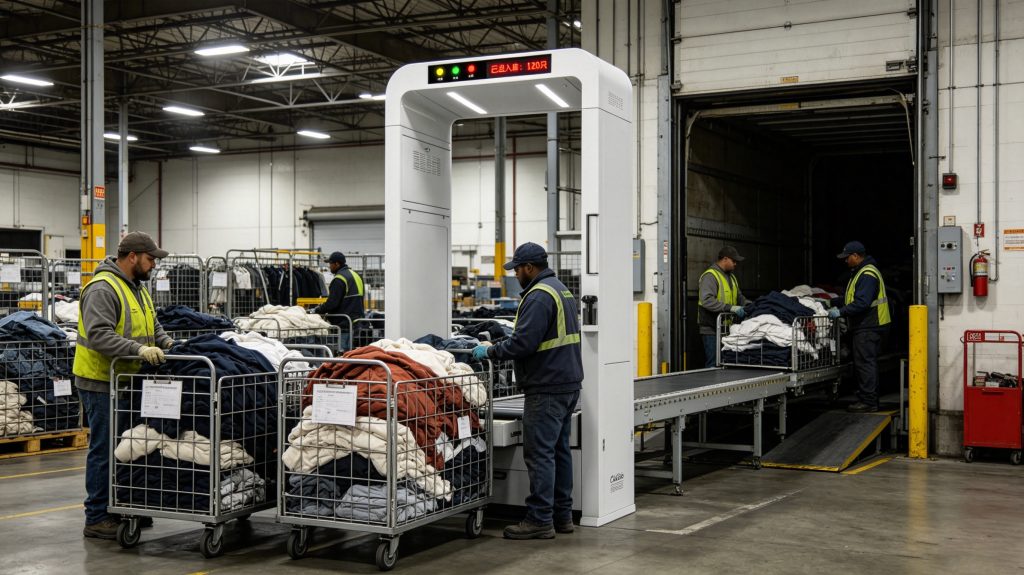
In one textile inventory project, workers pushed fully loaded laundry carts through an RFID tunnel continuously for hours. Traditional scanning methods would have required multiple employees and manual recounting.
The UHF RFID system processed bulk inventory automatically in seconds.
The atmosphere changed noticeably. Less waiting. Fewer arguments over missing inventory. Faster outbound shipping.
Operational calm is often the hidden value of RFID.
Bulk RFID scanning enables rapid inventory processing with minimal manual labor.
How to Choose the Right RFID Tag Frequency
Choosing the correct RFID frequency depends on operational needs.
Choose UHF RFID When You Need:
Long reading distance
Bulk inventory scanning
Warehouse automation
High-speed logistics
Industrial asset management
Choose HF RFID When You Need:
Short-range secure interaction
NFC compatibility
Payment or identification systems
For most warehouse and industrial tracking projects today, UHF RFID delivers the best balance between speed, scalability, and automation capability.
FAQ About RFID Tag Frequency
What is the best RFID frequency for inventory tracking?
UHF RFID is considered the best option for large-scale inventory tracking because of its long-range and high-speed reading capabilities.
Can RFID frequency affect accuracy?
Yes. Environmental conditions, antenna design, and tag placement all influence reading accuracy.
Is higher RFID frequency always better?
Not necessarily. Higher frequencies improve speed and distance but may become more sensitive to interference from metal or liquids.
What frequency does UHF RFID use?
Most UHF RFID systems operate between 860 MHz and 960 MHz depending on regional regulations.
Can one RFID reader support multiple frequency standards?
Yes. Many industrial UHF RFID readers support configurable regional frequency settings.
Final Thoughts on RFID Tag Frequency
RFID tag frequency is not just a technical specification buried inside a datasheet. It directly affects operational speed, inventory accuracy, labor efficiency, and system reliability.
In real warehouses and industrial environments, properly designed UHF RFID systems create something companies notice immediately:
Less manual correction work.
At Cykeo, that is usually the first sign a deployment is succeeding.
Wondering "how does RFID card reader work"? Discover the step-by-step process from electromagnetic activation to data decoding. Full explanation of RFID reader technology with CYKEO.
RFID file cabinet lets you track files automatically, locate them instantly, and secure access with real audit trails. A practical, honest look at why it’s replacing traditional file cabinets in modern offices.
Discover what kind of antenna RFID use for different applications. We explain coil antennas for proximity and patch/dipole antennas for long-range UHF systems.
 Cykeo RFID IoT Solution Products R&D Manufacturer