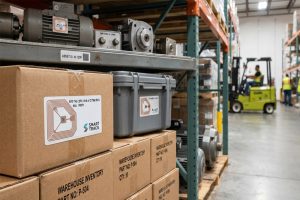
RFID near field communication is widely used for secure tag encoding, short-range RFID reading, and controlled RFID data writing. In practical warehouse, retail, and industrial environments, near-field UHF RFID systems reduce accidental tag reads and improve writing accuracy significantly.
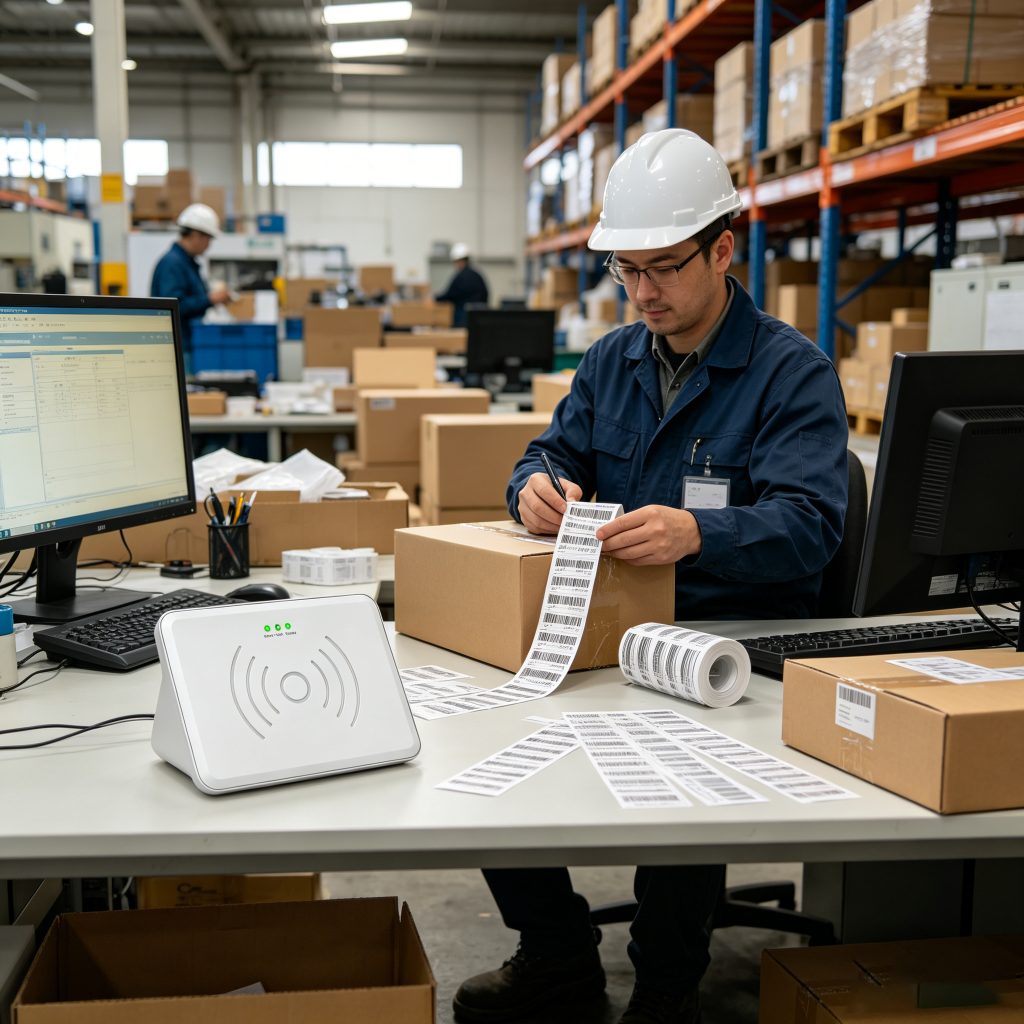
A few months ago, during a textile inventory deployment in Southeast Asia, our engineers noticed a recurring issue: operators were unintentionally writing the wrong EPC data into adjacent RFID labels stacked on the same desk. The problem disappeared after replacing the traditional wide-range reader with the CYKEO-D2L near-field RFID desktop encoder. That single adjustment reduced duplicate encoding errors almost immediately.
At Cykeo, we have spent years building UHF RFID hardware for warehouse automation, smart manufacturing, and item-level tracking systems. The reality is simple — read distance is not always better. In encoding environments, control matters more.
Why RFID Near Field Communication Matters in UHF Systems
Most people associate near field communication with NFC phones. In industrial RFID, however, RFID near field communication often refers to controlled short-range UHF reading and writing.
That distinction matters.
In high-density RFID encoding stations, excessive reading distance creates chaos:
Nearby labels are read unintentionally
EPC duplication risks increase
Encoding speed slows down
Operators repeat verification steps
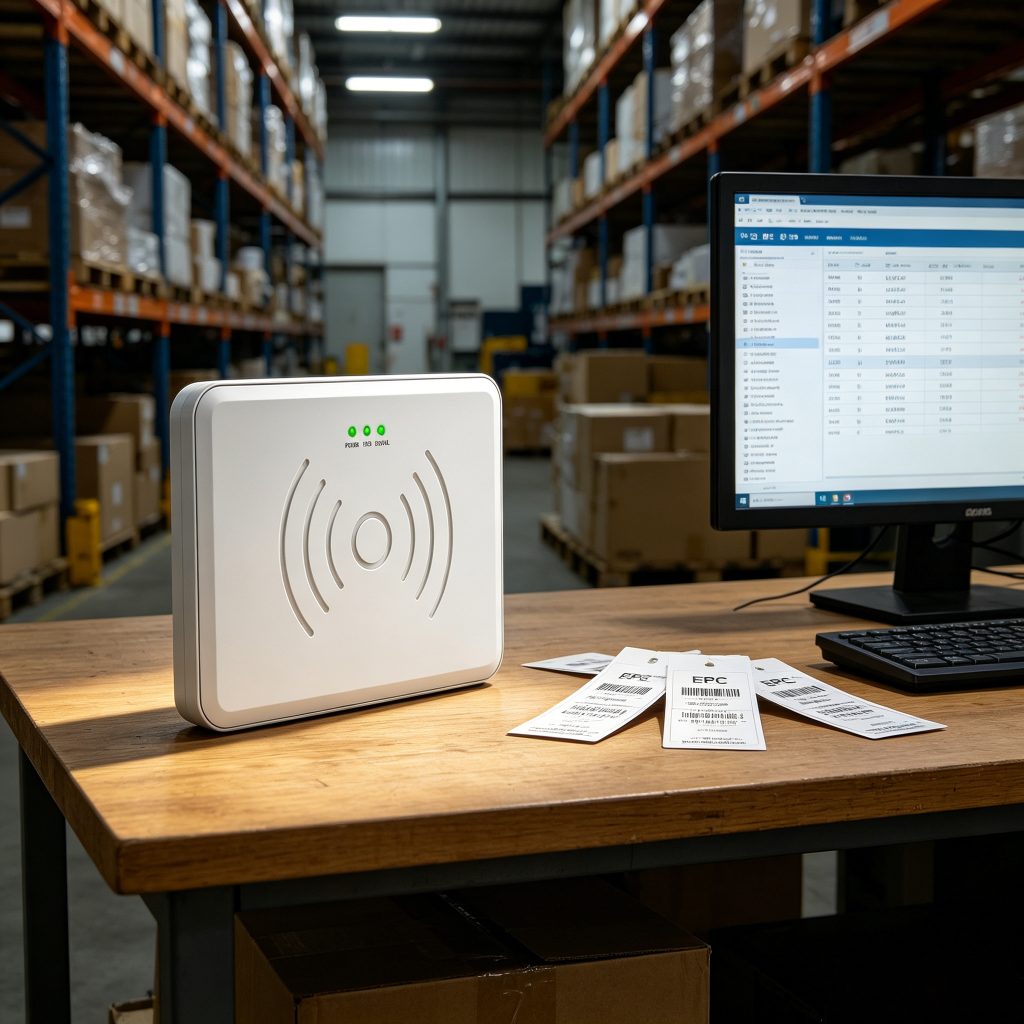
The CYKEO-D2L desktop RFID issuer was designed specifically to solve this operational problem.
Core Advantages of Near-Field UHF RFID
Feature
Practical Benefit
Controlled reading zone
Prevents accidental tag interference
10cm write distance
Improves tag encoding precision
30cm read limitation
Reduces surrounding tag capture
IMPINJ R500 module
Stable high-success RFID writing
Mini USB communication
Fast workstation integration
In real deployments, this type of controlled reading environment becomes especially important for:
Field Experience From Real RFID Deployment Projects
In one European apparel warehouse project, workers encoded over 18,000 garment tags daily. Originally, the customer used a standard long-range UHF reader.
The issue was subtle but expensive.
Tags placed beside the encoding area occasionally received duplicate EPC data. Inventory discrepancies began appearing weeks later inside the WMS database. Nobody suspected the encoder at first.
After switching to a near-field RFID desktop device, the false-write rate dropped sharply because the antenna field became highly localized.
That is where RFID near field communication becomes valuable — not in theory, but during repetitive industrial operations where thousands of tags move through a workstation every hour.
According to research published by Auburn University RFID Lab, item-level RFID accuracy in retail environments can exceed 95% when encoding and tag commissioning processes are properly controlled.
Meanwhile, GS1 reports that RFID adoption continues growing across logistics and retail supply chains because accurate item-level visibility reduces inventory distortion and replenishment delays.
CYKEO-D2L RFID Desktop Encoder Overview
The CYKEO-D2L was engineered for desktop RFID issuance and controlled EPC writing tasks.
Main Technical Features
Stable RFID Writing
The device supports up to 33dBm output power and uses the IMPINJ R500 RFID engine, known for stable multi-tag processing and reliable EPC writing performance.
Near-Field Antenna Design
Unlike wide-area readers, the D2L intentionally limits its operational range:
Read range: within 30cm
Write range: within 10cm
This significantly improves encoding precision.
Compact Deployment
The unit fits easily onto:
warehouse desks
retail service counters
RFID issuing stations
manufacturing worktables
No complicated mounting structure is required.
Secondary Development Support
Cykeo provides:
C# SDK
Java SDK
Demo encoding software
Batch writing support
For integrators, this shortens deployment cycles considerably.
Near-field UHF RFID technology helps reduce accidental tag reading during batch encoding operations.
Why Short-Range RFID Performs Better in Encoding Environments
Long-range RFID systems are excellent for portals and inventory tunnels.
Desktop encoding is different.
Operators need precision instead of coverage.
A controlled RFID field improves:
encoding consistency
operator confidence
EPC uniqueness
database cleanliness
We have seen customers reduce manual verification steps simply because unintended reads disappeared.
That operational detail rarely appears in marketing brochures, but technicians notice it immediately during live deployment.
RFID Near Field Communication vs Standard UHF Reading
Scenario
Near-Field RFID
Standard UHF RFID
Tag encoding
Excellent
Risk of interference
Portal inventory
Limited
Excellent
Batch commissioning
Highly accurate
Moderate
Dense tag environment
Stable
Possible collision
Retail counter use
Ideal
Excessive range
Neither technology is universally better. The application determines the correct choice.
Controlled RFID writing distance improves encoding accuracy in high-volume RFID operations.
FAQ About RFID Near Field Communication
What is RFID near field communication?
RFID near field communication refers to short-range RFID interaction designed for precise tag reading and writing, commonly used in desktop encoding systems and controlled RFID workstations.
Why use near-field RFID instead of long-range RFID?
Near-field RFID reduces accidental tag reads and improves writing precision, especially in environments where many RFID labels are placed close together.
Is near-field RFID still UHF RFID?
Yes. Near-field communication can exist within UHF RFID systems using specially designed antennas that intentionally control the reading zone.
What industries use near-field RFID desktop encoders?
Retail apparel, pharmaceutical management, archives, textile laundry systems, warehouse logistics, and RFID tag manufacturing commonly use near-field RFID devices.
RFID is a radio-frequency identification technology used to identify and manage physical objects. UHF RFID systems connect tags, readers, antennas, and softw...
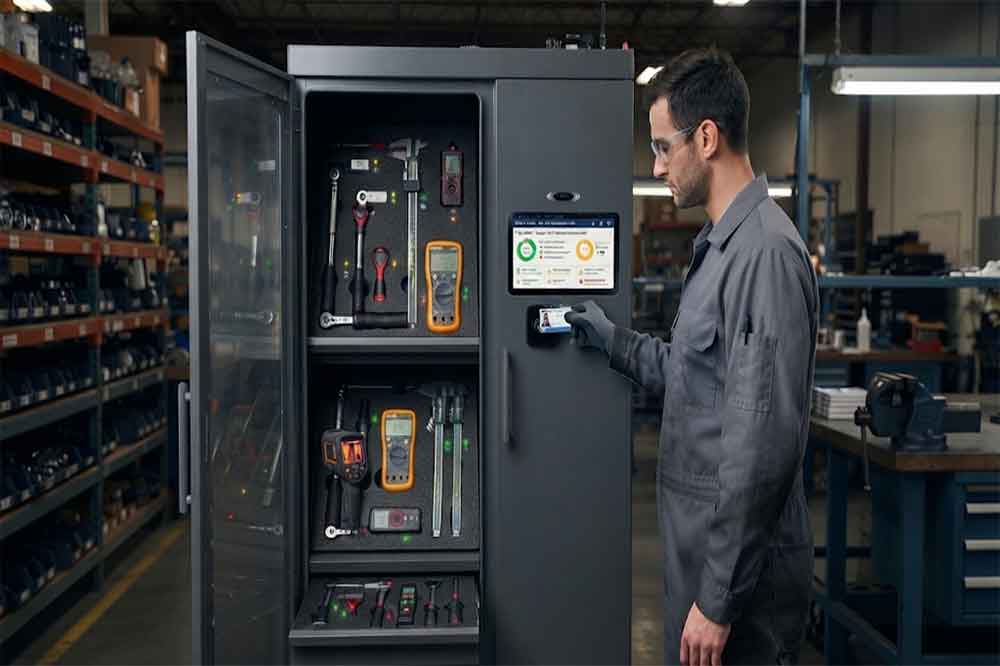
RFID tool cabinet can connect tool issuing and return processes with user identity, tool status, inventory, and transaction records. This helps tool rooms re...
Learn how long passive RFID tags last, what affects RFID tag lifespan, and how businesses choose durable RFID tags for inventory, logistics, retail, and industrial tracking.
RFID asset management software improves inventory visibility, asset tracking, and operational efficiency using UHF RFID technology and real-time monitoring.
 Cykeo RFID IoT Solution Products R&D Manufacturer