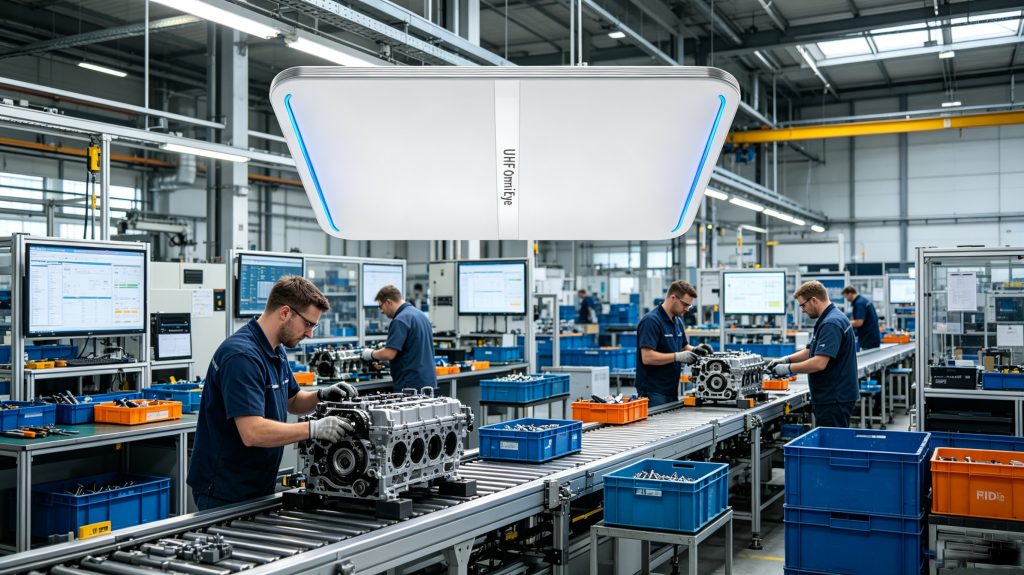
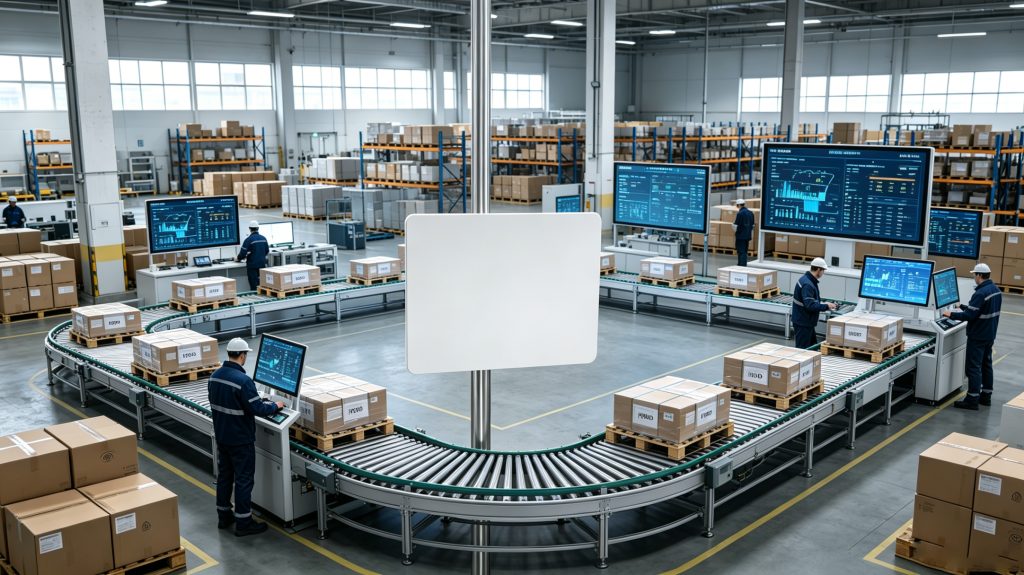
RFID for manufacturing enables real-time tracking of materials, tools, work-in-progress (WIP), and finished goods across production facilities, reducing manual errors, improving inventory accuracy, and increasing operational visibility from receiving to shipment.
Manufacturers are no longer struggling with a lack of data. The challenge today is obtaining accurate data at the exact moment decisions need to be made. RFID solves that problem.
As an RFID solution consultant with over 10 years of experience supporting manufacturing automation projects, I have seen production teams spend hours searching for missing tools, locating pallets, or verifying inventory counts. After RFID deployment, many of those tasks become automatic background processes.
Why RFID for Manufacturing Is Growing Rapidly
According to the RFID Lab at Auburn University and GS1 US, RFID adoption continues to accelerate across industrial supply chains because it enables automated identification without line-of-sight scanning.
Unlike traditional barcode systems, RFID can identify dozens or even hundreds of tagged items simultaneously.
Typical manufacturing benefits include:
Real-time asset visibility
Faster inventory audits
Reduced labor costs
Improved traceability
Lower production delays
Better compliance reporting
In one automotive component facility we visited in Europe, operators previously spent nearly 45 minutes per shift locating reusable containers. After RFID deployment, location data became available instantly through the MES dashboard.
RFID for Manufacturing Asset Tracking
Tracking High-Value Equipment
Manufacturing plants often manage:
CNC tools
Injection molds
Calibration equipment
Testing devices
Maintenance tools
Losing visibility of these assets directly impacts productivity.
RFID readers installed at production entrances automatically detect tagged assets entering or leaving work areas.
Why Long-Range RFID Matters
Many factories prefer ceiling-mounted RFID readers because they cover large areas while minimizing floor-space requirements.
The Cykeo ceiling-mounted UHF RFID integrated reader offers:
Feature
Benefit
Up to 10m read range
Covers wide production zones
Strong bulk reading capability
Reads multiple tagged assets simultaneously
Integrated antenna
Simplifies installation
Audible and visual alarm
Detects unauthorized asset movement
Automatic logging
Eliminates manual data entry
One practical advantage often overlooked is alarm functionality. When unauthorized tagged equipment passes through monitored areas, operators receive immediate alerts instead of discovering losses during inventory audits.
Real-time RFID asset tracking helps manufacturers locate tools, containers, and work-in-progress automatically.
RFID Production Tracking and Work-in-Progress Visibility
Eliminating Blind Spots Between Production Stages
Work-in-progress tracking is one of the strongest use cases for RFID for manufacturing.
Traditional systems rely on:
Manual scanning
Paper travelers
Human data entry
These processes introduce delays.
RFID creates automatic event records whenever tagged products move through:
Assembly stations
Inspection points
Packaging lines
Warehouse staging areas
Managers can instantly identify bottlenecks without waiting for shift-end reports.
Industry Data
According to GS1, inventory accuracy in many operations improves significantly when RFID replaces manual counting processes. Several retail and industrial deployments have reported inventory accuracy levels above 95%.
RFID and Manufacturing Inventory Management
Faster Inventory Counts
One warehouse supervisor told me something interesting during an implementation review:
“We stopped scheduling weekend inventory counts.”
The reason was simple.
RFID readers automatically recorded inventory movement throughout the week.
Instead of manually scanning thousands of items, the system continuously maintained inventory records.
Key Improvements
Metric
Before RFID
After RFID
Inventory visibility
Periodic
Real-time
Audit effort
High
Low
Human error
Frequent
Minimal
Search time
Hours
Minutes
The biggest operational improvement is not counting speed. It is decision-making speed.
When inventory data is current, purchasing and production planning become much more reliable.
RFID enables automated inventory visibility without manual scanning.
Manufacturing RFID ROI: Where Savings Usually Come From
Many companies initially focus on labor reduction.
In reality, the larger savings often come from:
Fewer production interruptions
Reduced asset loss
Lower inventory discrepancies
Improved compliance reporting
Faster root-cause analysis
In regulated industries such as aerospace, medical devices, and automotive manufacturing, traceability alone can justify RFID investment.
Author Experience
This article was reviewed by the Cykeo Industrial RFID Engineering Team, which has participated in RFID deployments across manufacturing, logistics, warehouse automation, and industrial asset management environments.
The observations presented here are based on field implementation experience involving UHF RFID readers, industrial asset tracking systems, and automated inventory management projects.
FAQ
Does RFID work in manufacturing environments with metal equipment?
Yes. Industrial RFID tags designed for metal surfaces can achieve reliable performance when properly selected and positioned.
What read range is typically required in manufacturing?
Most production environments use UHF RFID systems with read ranges from 3 to 10 meters depending on the application and installation conditions.
Can RFID replace barcode systems?
In many manufacturing processes RFID complements barcodes rather than replacing them entirely. RFID provides automated tracking, while barcodes remain useful for manual verification.
Is RFID suitable for work-in-progress tracking?
Yes. RFID is widely used to track WIP movement between production stations and automatically update MES or ERP systems.
How does RFID improve inventory accuracy?
RFID captures item movement automatically, reducing missed scans and manual entry errors while maintaining real-time inventory records.
Final Thoughts
RFID for manufacturing is no longer limited to large enterprises. Modern UHF RFID solutions make it practical for factories seeking real-time visibility of assets, inventory, and production flow. Companies that struggle with locating tools, tracking WIP, or maintaining inventory accuracy often discover that RFID for manufacturing delivers value far beyond simple identification.
A long range RFID scanner helps pharmaceutical manufacturers track raw materials, reusable containers, production equipment, laboratory tools, and finished p...
RFID technology brings greater operational efficiency and visibility to logistics providers. This article explores five critical factors for successful RFID deployment in logistics, helping companies reduce implementation risks and achieve intelli...
A technical guide for selecting long-range RFID readers for industrial applications. Covers reading distance, throughput, protocol compatibility, and environmental durability for warehouses, production lines, and gate access systems.
how long-range RFID readers work, what affects their reading distance, and where they’re making automation smarter — from logistics to industrial systems
 Cykeo RFID IoT Solution Products R&D Manufacturer