Bracelet RFID systems use ultra high frequency RFID technology to identify, track, and manage people or assets in real time with high speed, contactless scanning, and reliable data accuracy.
I first saw the practical difference of a bracelet RFID deployment during a warehouse-event hybrid project in Rotterdam last year. Staff members moved through three separate security gates carrying equipment cases while temporary visitors used disposable RFID wristbands for controlled access. What surprised me was not the scan speed. It was the silence. No queues. No repeated badge swipes. The UHF readers captured movement instantly from several meters away.
That deployment changed how I look at RFID wearables.
At Cykeo, our engineering team has spent years testing ultra high frequency RFID systems across industrial inventory, hospital identification, personnel attendance, and secure access management. Bracelet RFID is no longer just an “event wristband.” In modern operations, it has become a mobile identity layer.
What Is a Bracelet RFID System?
A bracelet RFID system combines wearable RFID tags with fixed or handheld readers to automatically identify individuals or assets without physical contact.
Unlike barcode systems, UHF RFID bracelets support:
Long-range identification
Multi-tag reading
Fast personnel movement
Real-time attendance logging
Secure permission control
Typical operating frequencies include:
LF: 125 kHz
HF/NFC: 13.56 MHz
UHF RFID: 860–960 MHz
For large-scale identification, Cykeo mainly recommends UHF RFID because of its faster batch reading capability and wider detection range.
According to GS1 Official Website, RFID deployments can improve inventory and operational visibility dramatically in logistics and identification environments.
Why UHF Bracelet RFID Performs Better in High-Traffic Environments
In practice, short-range NFC wristbands work well for ticket tapping. But once crowds increase, read congestion becomes obvious.
UHF bracelet RFID behaves differently.
During a field test near an industrial expo entrance in Düsseldorf, our team configured four overhead UHF readers above a 4-meter passageway. More than 400 participants entered within minutes. The system continuously captured wristband IDs without requiring users to stop walking.
That operational fluidity matters.
Key Advantages of UHF Bracelet RFID
Feature
Traditional Barcode
HF RFID
UHF Bracelet RFID
Contactless Reading
Limited
Yes
Yes
Multi-Tag Reading
No
Limited
Excellent
Reading Distance
Short
Very Short
Long Range
Crowd Throughput
Slow
Medium
High
Real-Time Tracking
Limited
Moderate
Strong
A 2024 report published by RAIN Alliance estimated billions of UHF RFID tags are now deployed annually across retail, healthcare, logistics, and personnel identification systems.
bracelet rfid Applications in Real Operations
Hospital Patient Identification
Hospitals increasingly use bracelet RFID systems for:
Patient identity confirmation
Medication matching
Infant security
Staff access management
A nurse in a surgical preparation area once described the difference clearly: “We stopped checking paper charts every few minutes because the RFID wristband already confirmed patient movement.”
That operational confidence reduces human error.
According to NIH National Library of Medicine, RFID-based healthcare systems help reduce identification mistakes and improve workflow efficiency in clinical environments.
Event Access and Security Management
Large venues benefit heavily from UHF bracelet RFID.
Typical functions include:
Fast attendee verification
VIP access control
Cashless payment linking
Anti-counterfeit ticket validation
Crowd analytics
At one European motorsport venue, the biggest challenge was actually rain. Paper tickets failed after several hours outdoors. RFID wristbands continued operating normally even after exposure to mud and moisture.
That is where industrial-grade RFID matters.
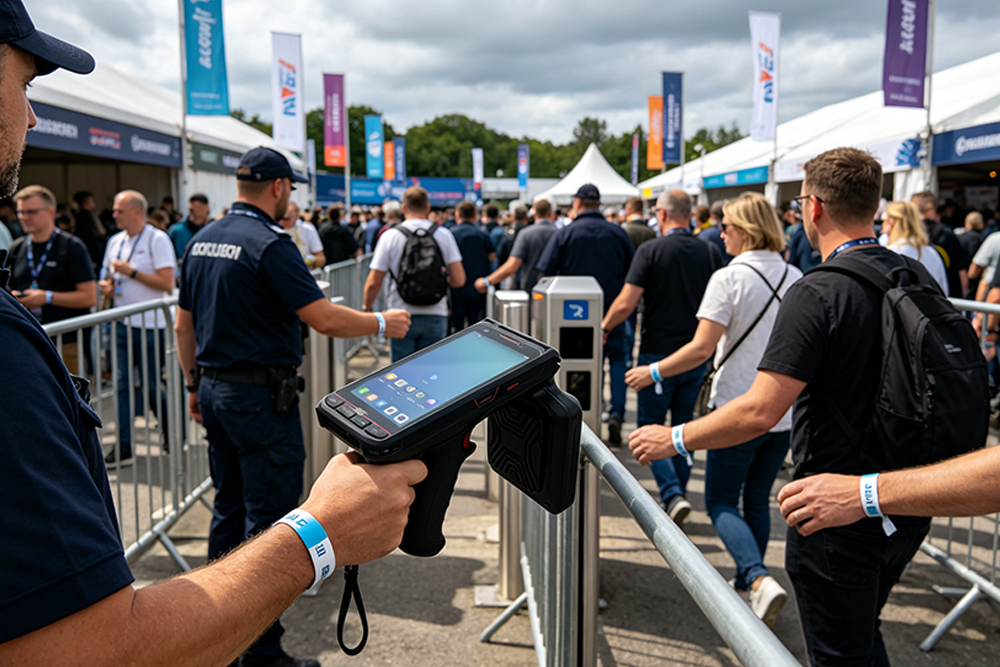
Cykeo bracelet RFID technology enables rapid identification and secure access control in crowded venues.
RFID Wearables Inside Industrial Facilities
Most people associate bracelet RFID with entertainment. In reality, industrial usage is growing faster.
Factories now deploy RFID wearables for:
Staff attendance
Restricted-area access
Tool checkout authorization
Emergency evacuation tracking
Contractor management
A manufacturing client in northern Germany reduced manual shift registration from nearly 40 minutes to less than 5 minutes after deploying wearable RFID authentication.
That operational improvement was immediate.
Technical Considerations Before Deployment
Material Environment
Metal-rich environments may affect UHF performance if antenna tuning is poor.
Cykeo engineers usually test:
Reflection interference
Human-body absorption
Reader positioning
Dense tag collision behavior
Recommended Reading Distances
RFID Type
Typical Distance
LF
<10 cm
HF/NFC
1–10 cm
UHF RFID
1–10 meters
For bracelet RFID systems involving large moving crowds, UHF remains the most scalable solution.
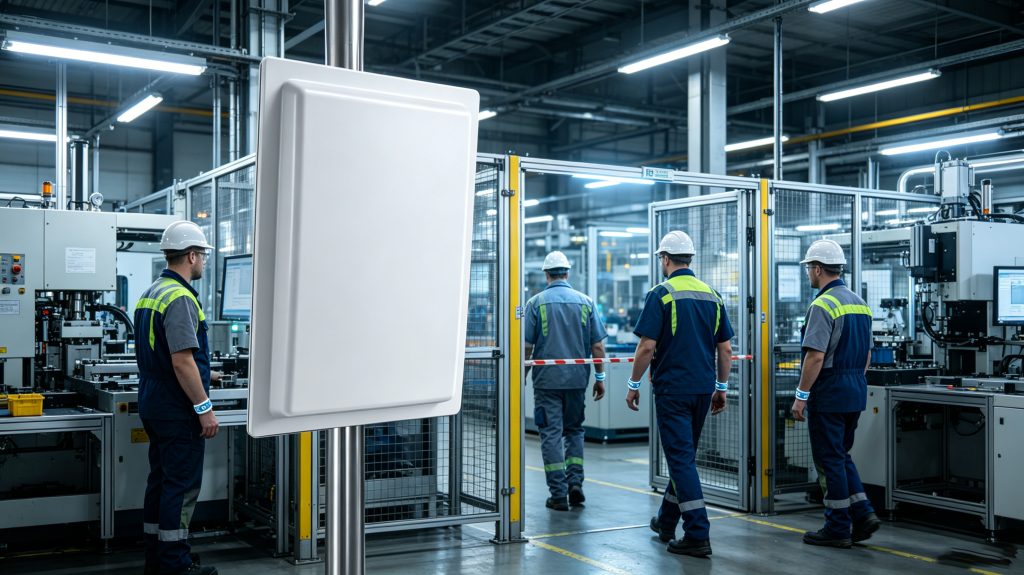
Cykeo UHF bracelet RFID enables real-time worker identification and secure facility access.
FAQ About bracelet rfid
Is bracelet RFID safe for daily use?
Yes. RFID wristbands operate at regulated radio frequencies widely used in healthcare, logistics, and commercial identification systems.
Can bracelet RFID work outdoors?
Yes. Industrial-grade RFID wristbands are designed for rain, dust, and continuous operational environments.
Why choose UHF RFID instead of NFC?
UHF RFID supports longer reading distance and faster batch identification, making it more suitable for industrial and high-density environments.
Can RFID wristbands track people in real time?
Yes. Combined with fixed readers and software platforms, bracelet RFID systems can provide live movement visibility and attendance records.
Final Thoughts on bracelet rfid
Bracelet RFID is no longer a niche wearable technology. In hospitals, industrial facilities, logistics hubs, and event venues, UHF RFID wristbands now function as intelligent identity infrastructure.
The biggest shift is operational invisibility.
People stop noticing the system because movement becomes smoother, verification becomes faster, and manual checkpoints disappear into the background. That is usually the sign of a mature RFID deployment.
At Cykeo, we continue focusing on ultra high frequency RFID identification systems that perform reliably under real-world pressure — crowded entrances, industrial interference, long working hours, and unpredictable environments.
That is where bracelet RFID proves its value most clearly.
RFID technology offering significant improvements in safety, asset visibility, and cost control—while strengthening hospitals' competitiveness in the healthcare market.
Discover how rfid for asset tracking solutions improve asset visibility, reduce losses, and automate inventory with Cykeo industrial RFID systems. Trusted insights, real data, and deployment expertise.
Learn if RFID handheld readers can scan tags through metal or liquid containers. Discover solutions for interference and Cykeo’s industrial-grade scanning technology.
Deep dive into impresoras RFID (RFID printers): differences between office and industrial models, selection criteria, pitfalls, and real-world experience from interfaces to tag matching.
 Cykeo RFID IoT Solution Products R&D Manufacturer