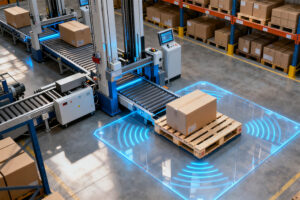
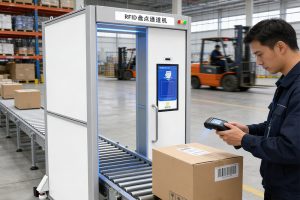
A bluetooth asset tracker improves industrial inventory visibility by combining Bluetooth communication with ultra high frequency RFID identification, enabling fast long-range asset tracking, real-time inventory updates, and reliable data transmission in warehouses, factories, hospitals, and tool management environments.
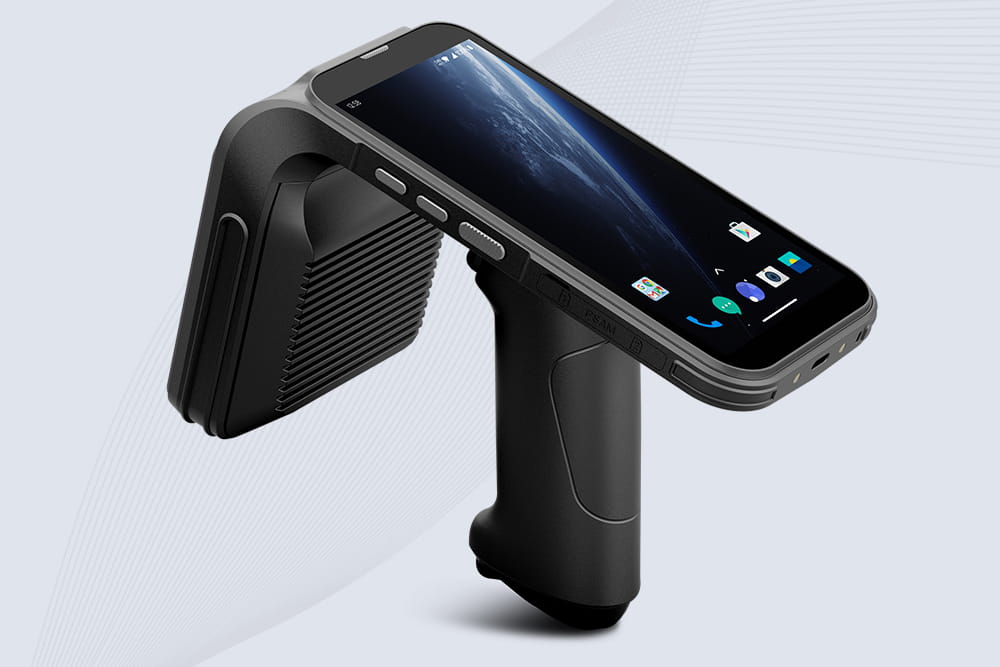
In practice, most industrial users no longer want simple barcode scanning. They want continuous visibility. Over the last three years, our Cykeo engineering team has deployed UHF RFID handheld systems in warehouse aisles, equipment rental centers, and manufacturing workshops where operators scan hundreds of tagged assets every few minutes. Bluetooth connectivity changed the workflow more than many buyers expected. Instead of carrying dedicated terminals everywhere, workers simply pair the handheld reader with Android tablets or smartphones and upload inventory data instantly.
The result is faster movement, fewer missed records, and less manual reconciliation at the end of a shift.
Why Bluetooth Matters in Industrial RFID Tracking
Traditional wired RFID readers still exist in factories, but they create friction. Cable damage, fixed workstations, and delayed synchronization slow operators down.
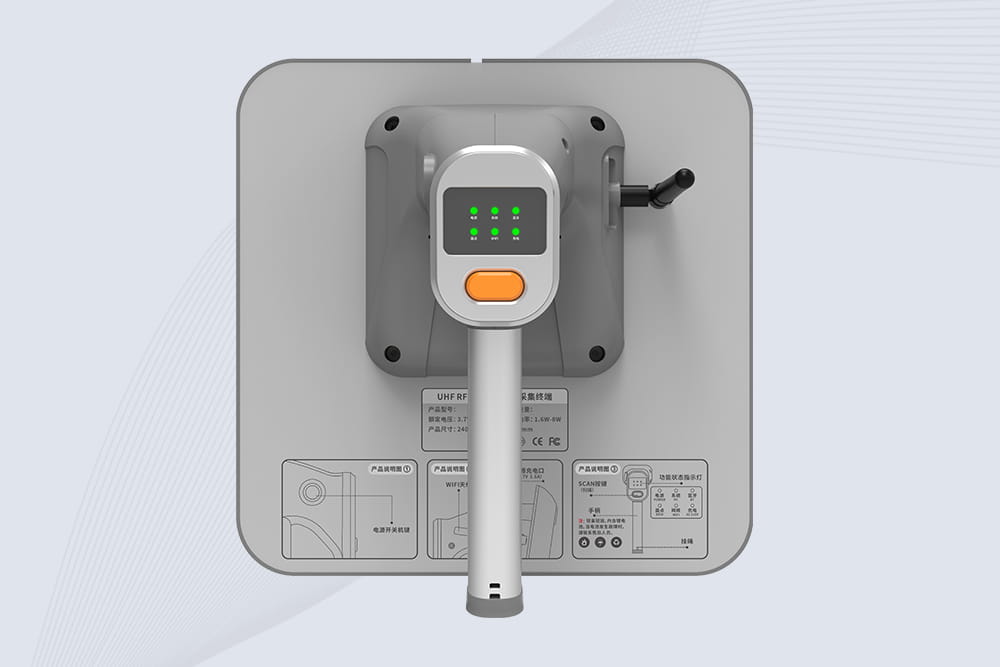
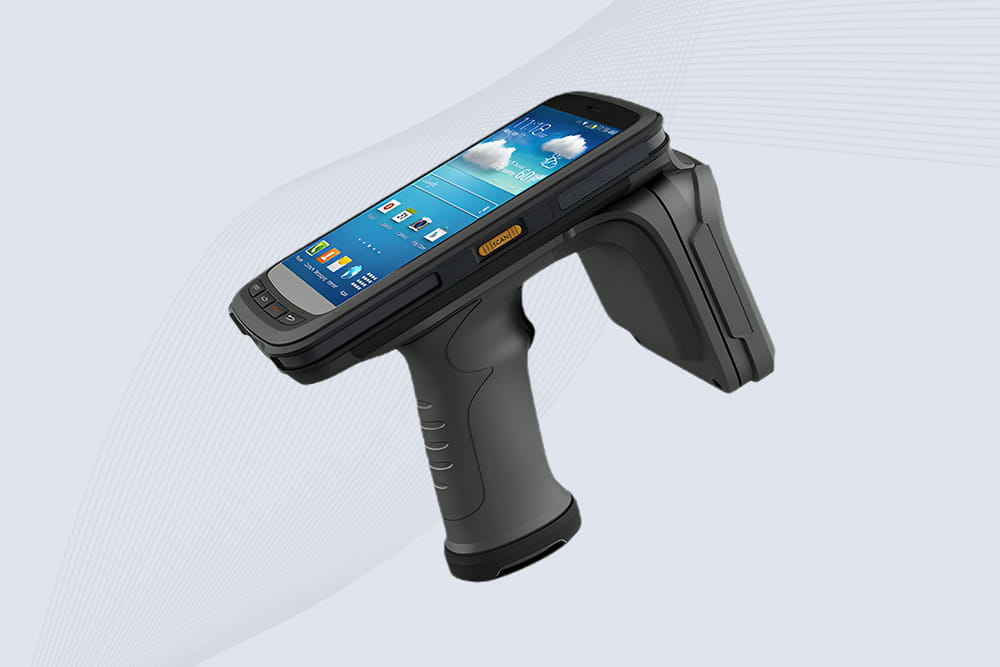
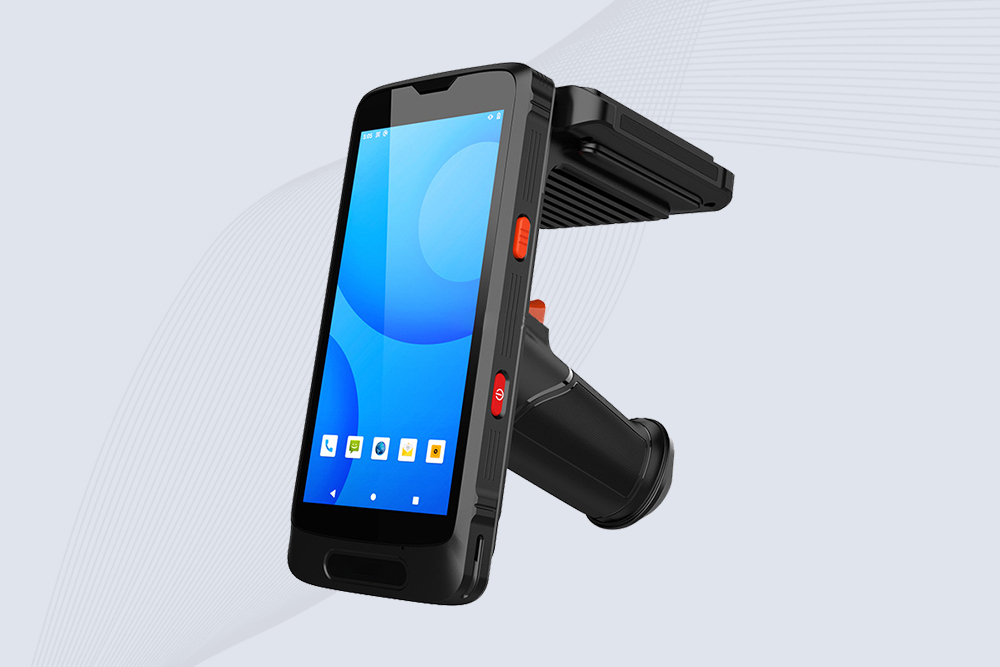
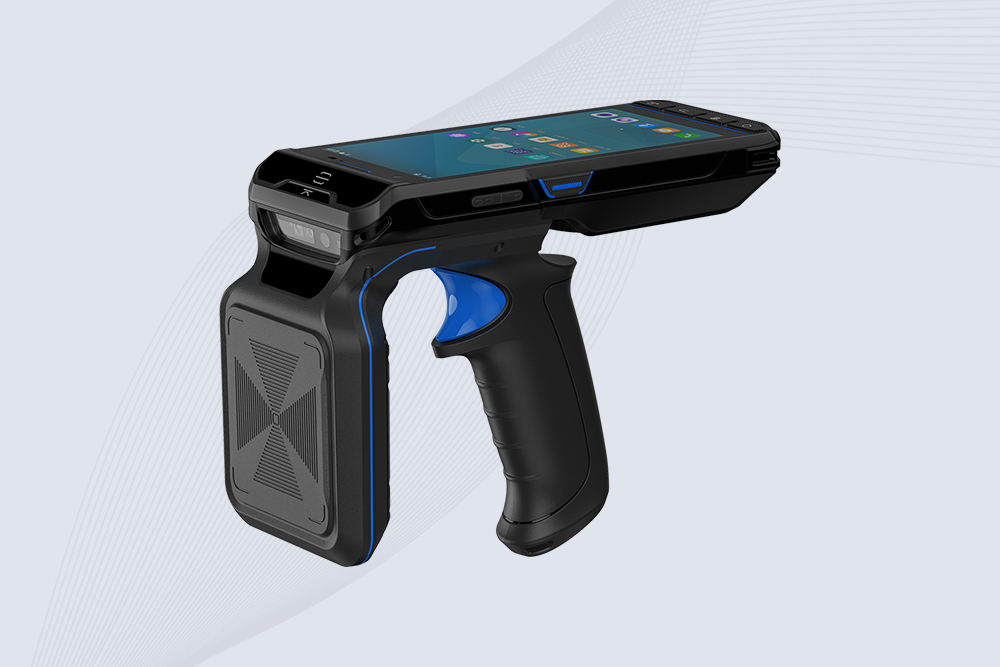
The Cykeo CYKEO-B9 handheld bluetooth asset tracker was designed specifically to reduce that friction.
The aluminum alloy rear cavity noticeably improves heat dissipation during continuous inventory sessions. That detail sounds small on paper, but it becomes important after four or five hours of dense scanning in metal-heavy environments.
I still remember a logistics customer in Eastern Europe testing handheld readers beside steel shelving. Several low-cost devices lost stability after prolonged scanning. The CYKEO-B9 maintained consistent tag uploads because the carrier cancellation and anti-interference design reduced reflection noise around metallic assets.
UHF RFID Is Driving Modern Asset Visibility
According to the RFID Journal and Auburn University RFID Lab, retailers and industrial operators using UHF RFID systems commonly achieve inventory accuracy levels above 95%, compared with roughly 65%–75% for manual barcode-based inventory processes.
That accuracy matters financially. A 2024 Deloitte supply chain report also highlighted that real-time asset visibility significantly reduces operational delays and unnecessary replacement purchasing.
In manufacturing environments, we regularly see three operational problems:
Missing handheld tools
Delayed maintenance equipment return
Inventory mismatches between ERP systems and physical stock
A properly deployed bluetooth asset tracker solves these issues faster than most companies expect because workers can scan hundreds of UHF RFID tags simultaneously without direct line of sight.
Real-World Workflow Inside a Factory
Incoming Material Verification
Operators unload pallets while using a Bluetooth-connected handheld RFID reader. Tag data uploads directly into the warehouse management platform through Android tablets.
No paper sheets. No USB export later.
Production Tool Tracking
Maintenance staff scan shared torque tools, calibration instruments, and testing devices before and after use. Missing assets appear immediately in the dashboard.
Finished Goods Inventory
During cycle counts, workers can complete aisle scans while walking naturally. There is no need to stop and individually align each label like barcode scanning requires.
That difference becomes dramatic in large facilities.
A 12,000-square-meter warehouse we supported reduced weekly inventory time from nearly two full days to under four hours after switching from barcode-only operations to UHF RFID handheld tracking.
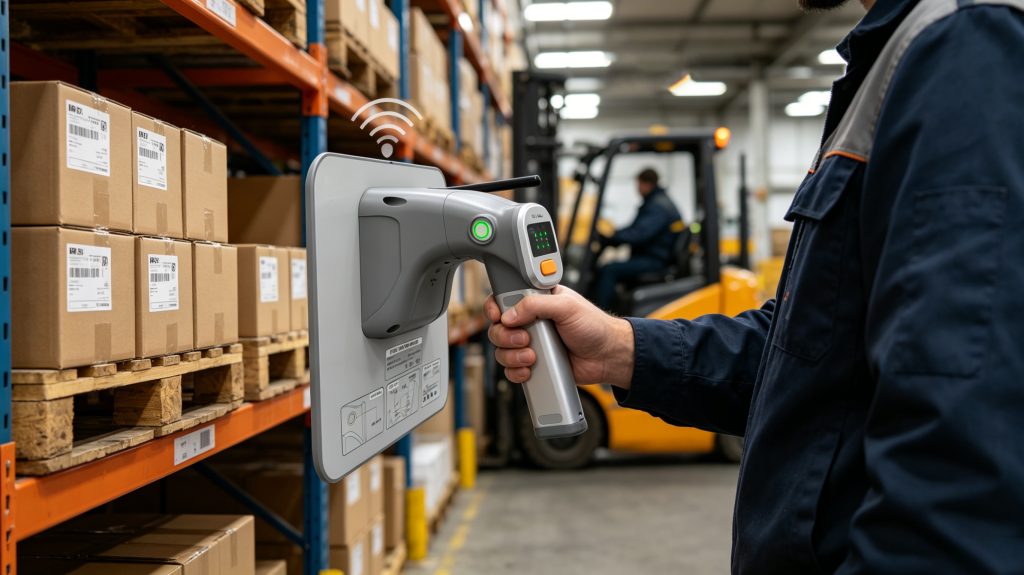
Cykeo handheld UHF RFID reader performs high-speed warehouse inventory tracking through Bluetooth communication.
Why Ultra High Frequency RFID Performs Better
Many buyers confuse Bluetooth with the actual identification technology. Bluetooth handles communication between the handheld device and terminal. UHF RFID performs the asset identification itself.
That distinction matters.
Advantages of UHF RFID in Asset Tracking
Long-distance reading capability
Simultaneous multi-tag reading
Faster inventory processing
Better large-scale asset visibility
Reduced labor costs
Non-line-of-sight scanning
In dense inventory conditions, the anti-collision algorithm inside the CYKEO-B9 becomes critical. Without it, multiple tags replying simultaneously create unstable reads.
This is especially visible in IT asset rooms, medical equipment storage, and tool cribs.
Bluetooth Asset Tracker vs Barcode Systems
Function
Barcode
UHF RFID Bluetooth Tracker
Line of Sight Required
Yes
No
Multi-Tag Reading
No
Yes
Scan Speed
Slow
High
Inventory Automation
Limited
Excellent
Real-Time Upload
Limited
Supported
Industrial Durability
Medium
High
Factories rarely return to barcode-only operations once workers experience simultaneous RFID scanning.
The operational rhythm changes.
People stop thinking about “checking items individually” and start thinking in terms of continuous visibility.
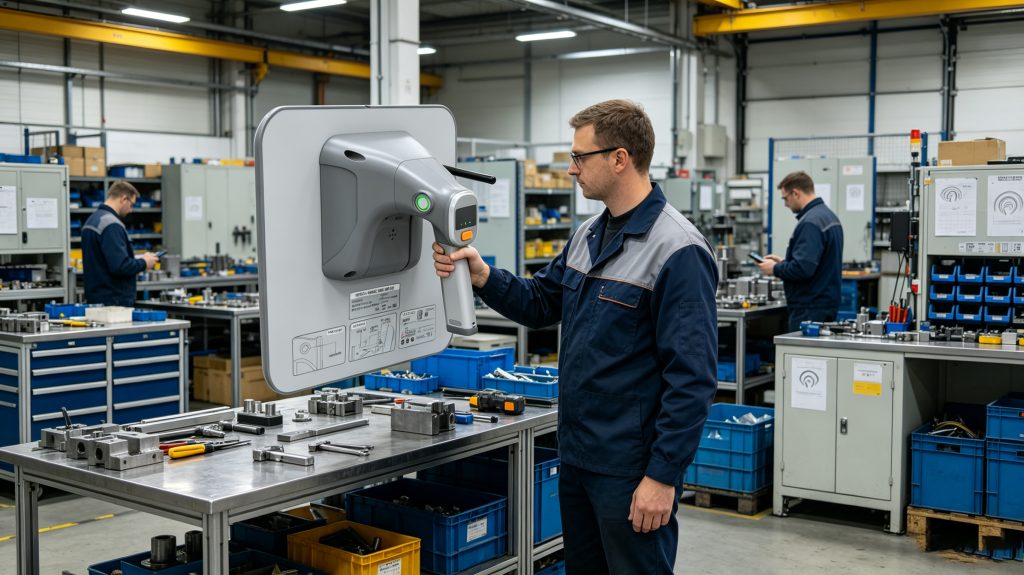
Cykeo CYKEO-B9 enables fast RFID tool tracking and wireless data synchronization inside industrial production environments.
FAQ About bluetooth asset tracker
What is a bluetooth asset tracker used for?
A bluetooth asset tracker is used for real-time inventory management, equipment tracking, warehouse operations, and industrial asset visibility through wireless RFID communication.
Does Bluetooth replace RFID technology?
No. Bluetooth only handles communication between devices. UHF RFID performs the actual identification and long-range asset scanning.
How far can UHF RFID read tags?
Read distance depends on antenna gain, environment, and tag type. Industrial handheld readers commonly achieve several meters of reading range.
Is UHF RFID suitable for manufacturing environments?
Yes. UHF RFID is widely used in factories because it supports rapid bulk reading, anti-collision processing, and durable industrial workflows.
Final Insight
The biggest operational change caused by a bluetooth asset tracker is not technical. It is behavioral.
Workers stop delaying inventory updates because the process becomes fast enough to happen naturally during movement. That subtle shift is where most long-term efficiency gains actually appear.
For industrial environments managing thousands of assets daily, Cykeo ultra high frequency RFID systems provide a scalable path toward accurate, wireless, and real-time asset intelligence.
how HF RFID antennas improve read performance and system integration. Practical tips, real-world applications, and flexible antenna solutions for RFID solution providers and system integrators.
Struggling with weak signals? Learn how to improve RFID read range with actionable tips on antenna selection, tag placement, and system tuning from CYKEO experts.
Compare RFID and barcode stock management systems to find the best solution for your warehouse. Learn how RFID automation, including CK‑TP1B tunnel scanners, improves inventory accuracy and efficiency.
 Cykeo RFID IoT Solution Products R&D Manufacturer