 Cykeo RFID IoT Solution Products R&D Manufacturer






What is an RFID Reader?
408Discover what an RFID reader is. This guide explains how readers power tags, capture data, and drive real-world applications from logistics to access control.
MoreAll RFID Product
You’re setting up an RFID system, and now you’re stuck: Do I pick UHF or HF antennas? Get it wrong, and you’ll face dead zones, missed tags, and endless headaches. But here’s the kicker: there’s no “best” frequency—only what’s best for your use case. Let’s break down UHF and HF RFID antennas so you can stop guessing and start scanning.
UHF (Ultra-High Frequency)
HF (High Frequency)
Key Difference: UHF is the sprinter (long-range, bulk scans), HF is the surgeon (precision in tough conditions).
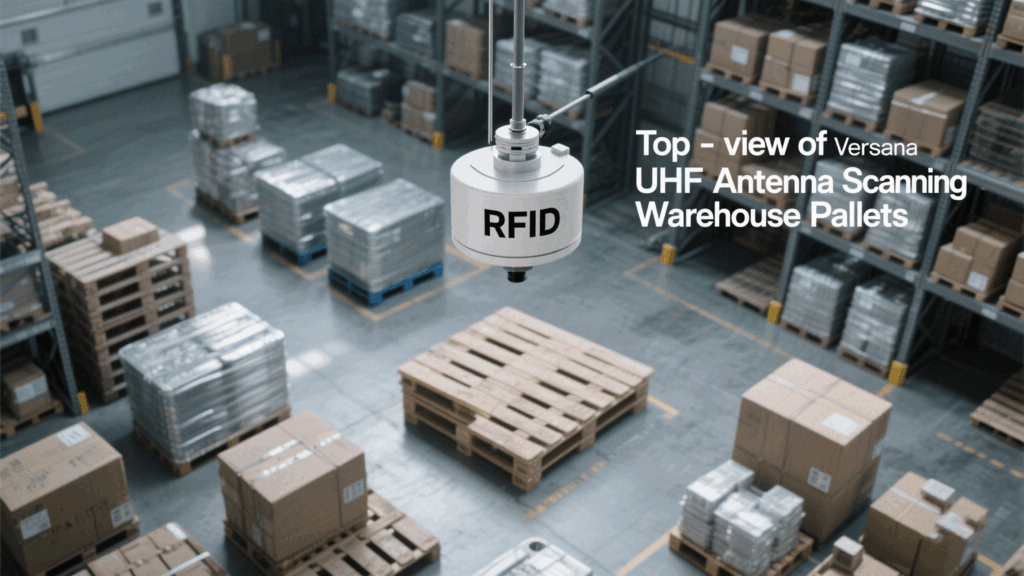
a. You Need Speed and Range
b. You’re on a Budget
UHF systems cost less per tag (as low as $0.10) and cover more ground with fewer antennas.
c. You’re in an Open, Dry Environment
UHF struggles near water and metal but thrives in open spaces.
Real-World Win: A Cykeo client slashed warehouse inventory time by 70% using UHF antennas for bulk scanning.
a. Precision Over Power
b. You’re Battling Interference
HF’s shorter wavelength penetrates water, metal, and dense materials better than UHF.
c. Security Matters
HF’s shorter range makes eavesdropping harder—key for tracking sensitive items.
Pro Tip: Use HF near MRI machines, freezers, or metal shelves where UHF would fail.
Rule of Thumb: If you scan >500 items/day, UHF saves time. If accuracy > speed, choose HF.
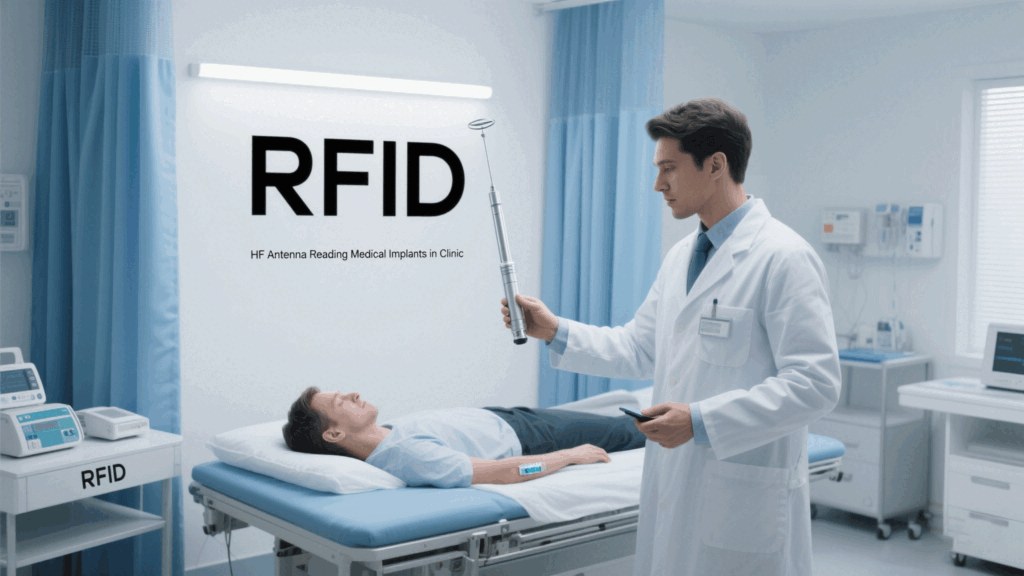
Pair UHF and HF antennas in mixed environments:
Takeaway: UHF RFID antennas dominate speed and scale; HF rules in chaos and precision. Your industry, environment, and workflow decide the winner. Still torn? Start with a pilot—test 50 tags in your space with both frequencies. Data beats guesswork every time.
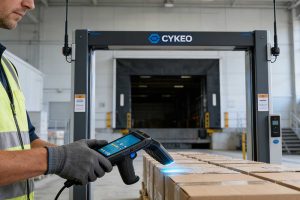
Discover what an RFID reader is. This guide explains how readers power tags, capture data, and drive real-world applications from logistics to access control.
More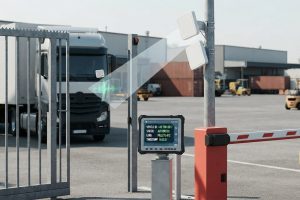
Learn how long range RFID scanners are used for vehicle tracking, parking access, and logistics management. A practical guide for RFID integrators, distributors, and industrial buyers.
More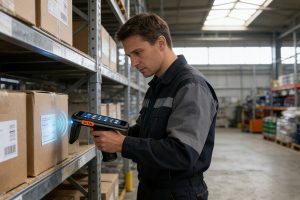
Wondering "how hard is it to read RFID signals"? Discover real challenges like interference from metal, water, and noise. Learn how to overcome them with CYKEO.
More
Find an RFID tag number by scanning the tag with a compatible RFID reader and checking its EPC or TID data. EPC identifies the tagged object, while TID ident...
More