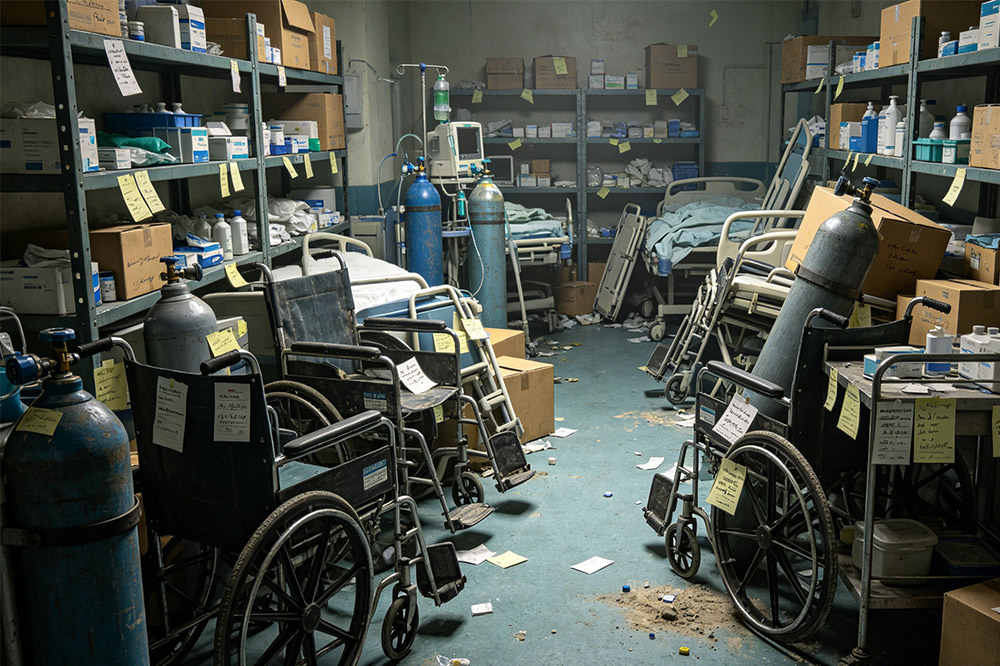
Most hospitals don’t fail with RFID because the technology doesn’t work.
They struggle because of how it’s implemented.
On paper, everything looks fine.
Based on real deployments, here are the most common mistakes.
1. Starting Without a Clear Use Case
One of the most common issues is simply starting too broadly.
Hospitals try to track everything at once:
All equipment
All departments
All supplies
But without a clear starting point, the system becomes hard to manage.
What usually works better is focusing on one area first—like high-value items or frequently misplaced equipment.
2. Ignoring Daily Workflow
This is where many projects quietly fail.
A system might look good during setup, but if it slows people down, it won’t be used.
In hospitals, staff priorities are always patients first.
So if RFID adds extra steps, even small ones, it often gets bypassed.
That leads back to manual work—and inconsistent data.
3. Choosing the Wrong Tracking Method
Not all hospital environments are the same.
Some areas deal with metal equipment, dense storage, or fast-moving items.
In those cases, simple barcode systems often fall short because they still depend on manual scanning.
RFID medical cabinets are usually introduced in these situations because they remove that dependency and capture usage automatically.
4. No Clear Responsibility Defined
Even with a good system, things break down if ownership is unclear.
Common situations:
Items are taken but not returned properly
No one follows up on missing equipment
Alerts are ignored because no one is assigned responsibility
The system can track data, but it doesn’t manage accountability by itself.
5. Trying to Over-Engineer the System
Some projects start with too many requirements:
Complex permission layers
Advanced reporting from day one
Multiple integrations before basic use is stable
In practice, this often slows down deployment and makes adoption harder.
Most successful systems start simple and expand gradually.
Where RFID Medical Cabinets Fit In
In many hospitals, RFID medical cabinets are introduced to handle controlled environments, such as:
High-value consumables
Surgical instruments
Critical medical supplies
Systems like an RFID medical cabinet are used because they combine storage, access control, and tracking in one place.
What Successful Projects Usually Look Like
From what we’ve seen in real cases, successful RFID adoption in hospitals usually has a few things in common:
They start small
They focus on real pain points
They keep the system simple at first
They adjust based on actual usage
It’s less about technology complexity, more about fit with daily operations.
Final Thoughts
RFID in hospitals is not difficult to deploy.
But it only works well when it matches how people actually work—not how the system is designed on paper.
Most problems come from implementation choices, not the technology itself.
If those are handled properly, the system usually becomes part of daily workflow very quickly.
 Cykeo RFID IoT Solution Products R&D Manufacturer