Picture this: your warehouse’s RFID system tracks $1M in inventory, but a hacker parked outside intercepts tag data and clones your shipments. Poof—goods vanish, and you’re left with phantom stock. Wireless RFID modules are convenient, but their signals can be shockingly leaky. Let’s lock things down with security practices that actually work.
1. Why Wireless RFID is a Hacker’s Playground
RFID’s Achilles’ heel? Most systems broadcast data like a megaphone. Common risks:
Eavesdropping: Hackers intercept signals from parking lots or nearby buildings.
Tag Cloning: Copy a CEO’s access card in seconds with a $50 reader.
Data Tampering: Alter tag info to redirect shipments or falsify records.
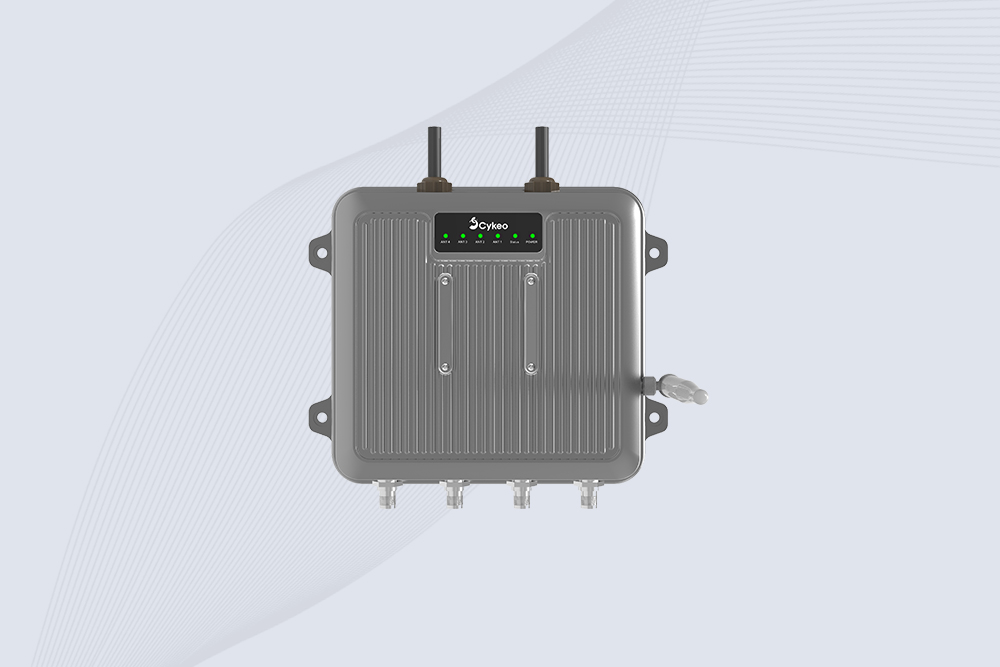
Wake-Up Call: A retailer using Cykeo’s modules stopped a $200k theft by encrypting pallet tags—after their old system got hacked twice.
2. Basic Fixes You Can’t Afford to Skip
a. Ditch Default Passwords
The Sin: 90% of RFID modules ship with admin/password as the login.
The Fix: Change credentials immediately. Use 12+ character passwords with symbols.
b. Turn Off Unused Features
Why: Unnecessary ports or APIs are hacker gateways.
How: Disable Telnet, FTP, or Bluetooth if not needed.
c. Segment Your Network
Isolate RFID Traffic: Keep tags/readers on a separate VLAN from your main network.
Firewall Rules: Block unauthorized IPs from accessing RFID data.
3. Encryption: Your RFID Bodyguard
a. AES-128/256 Encryption
Encrypts tag data so hackers see gibberish, not “Ship to 123 Main St.”
Bonus: Some tags (like Cykeo’s secure line) have encryption built-in.
b. SSL/TLS for Reader-Server Comms
Encrypts data between readers and your database.
Must-Have: For cloud-based RFID systems.
c. Dynamic Key Rotation
Change encryption keys weekly/monthly—stale keys are easy prey.
4. Tag-Level Security: Stop Cloning Dead in Its Tracks
a. Password-Protect Tags
Require a PIN to read/write data.
Use Case: High-value assets or restricted zones.
b. Use Unique TIDs
Burn unique tag IDs during encoding. Clones can’t replicate these.
c. Kill Switches
Deactivate lost/stolen tags remotely via your RFID software.
5. Physical Security: Because Locks Still Matter
Tamper-Proof Tags: Self-destruct if peeled off (great for pharmaceuticals).
Secure Reader Mounts: Prevent USB port access to stop physical tampering.
GPS Tracking: For mobile readers that “walk away” from job sites.
6. Audit Like a Spy
Log Everything: Who scanned what, when, and where.
Regular Pen Tests: Hire ethical hackers to probe your RFID system yearly.
Update Firmware: Patch vulnerabilities faster than hackers exploit them.
Pro Tip: Cykeo’s auto-update feature cut breach risks by 70% for a logistics client.
7. When to Go Full James Bond
For military, healthcare, or high-risk ops:
Frequency Hopping: Readers jump channels to dodge eavesdroppers.
Faraday Cages: Block signals in secure rooms.
Biometric Readers: Pair RFID with fingerprint/face scans.
Takeaway: Securing wireless RFID isn’t about fancy tools—it’s about rigor. Encrypt everything, assume hackers are lurking, and never skimp on updates. Start with low-hanging fruit (password changes, network splits), then layer in encryption and audits. Because losing data hurts worse than losing sleep over “what ifs.”
Learn how to integrate a long range RFID reader SDK with Java, C#, Android, Linux and Windows. Explore REST API, TCP, Serial communication, development examples and logistics integration tips.
Curious about how RFID technology reads the details from the chip? CYKEO breaks down the RF activation, memory bank access, and backscatter process. Learn the mechanics today.
Explore the RFID Smart Recycling Cabinet designed for developers and software integrators. Automate scrub, uniform, and linen returns, integrate RFID readers and antennas, and enable real-time tracking. Ideal for bulk deployment and scalable softw...
Discover how to choose and deploy UHF RFID antennas for retail smart shelves. Real-world insights on polarization, near-field control, metal interference, and system optimization for integrators.
 Cykeo RFID IoT Solution Products R&D Manufacturer