Why Hospitals Start Looking at Smart Cabinets in the First Place
Most hospitals don’t start with smart cabinets.
They usually begin with a simple problem:
RFID tracking helps with movement.
A lot of problems actually happen at the storage level—not just during movement.
That’s where smart cabinets start becoming relevant.
What an RFID Smart Cabinet Actually Does
If you’ve never seen one in action, the idea is pretty straightforward.
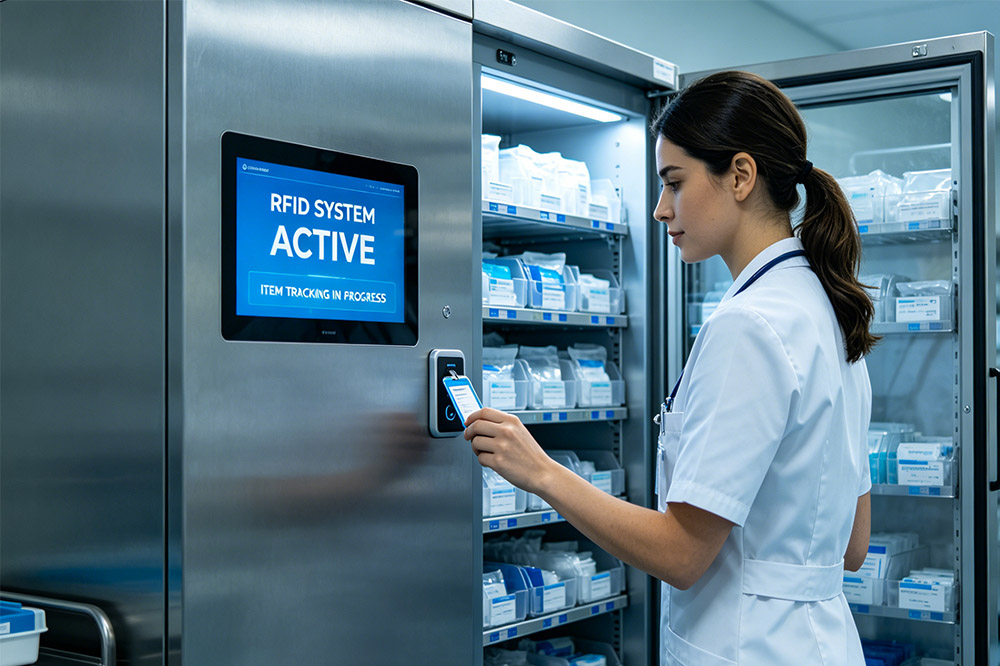
An RFID medical cabinet is basically a controlled storage system that automatically detects what goes in and what comes out.
No manual logging.
Inside the cabinet, RFID readers identify tagged items instantly.
So instead of relying on people to record inventory changes, the system records it automatically.
The Real Problem It Solves
From experience, the biggest issue in hospital inventory isn’t tracking movement.
It’s this gap:
Items are used
But inventory records are not updated immediately
So the system slowly drifts away from reality
By the time someone notices, the numbers are already wrong.
Smart cabinets close that gap at the source—right at the moment of access.
How It Works in Daily Hospital Use
In real use, the workflow is actually very simple:
Staff open the cabinet
Take or return items
System automatically logs the action
Inventory updates instantly
No extra steps added to the workflow.
That’s an important point.
Why RFID Smart Cabinets Work Better Than Manual Storage
Traditional storage systems rely heavily on discipline.
People have to:
Record what they take
Update stock sheets
Double-check quantities
The problem is consistency. It breaks under pressure.
Smart cabinets remove that dependency.
Instead of “people updating the system,”
Where Hospitals Actually Use Smart Cabinets
They’re not used everywhere—and that’s normal.
Most common use cases include:
High-value consumables
Controlled medical supplies
Frequently used surgical items
Emergency department stock
Small but critical equipment
In these areas, even small inventory mistakes can create real operational issues.
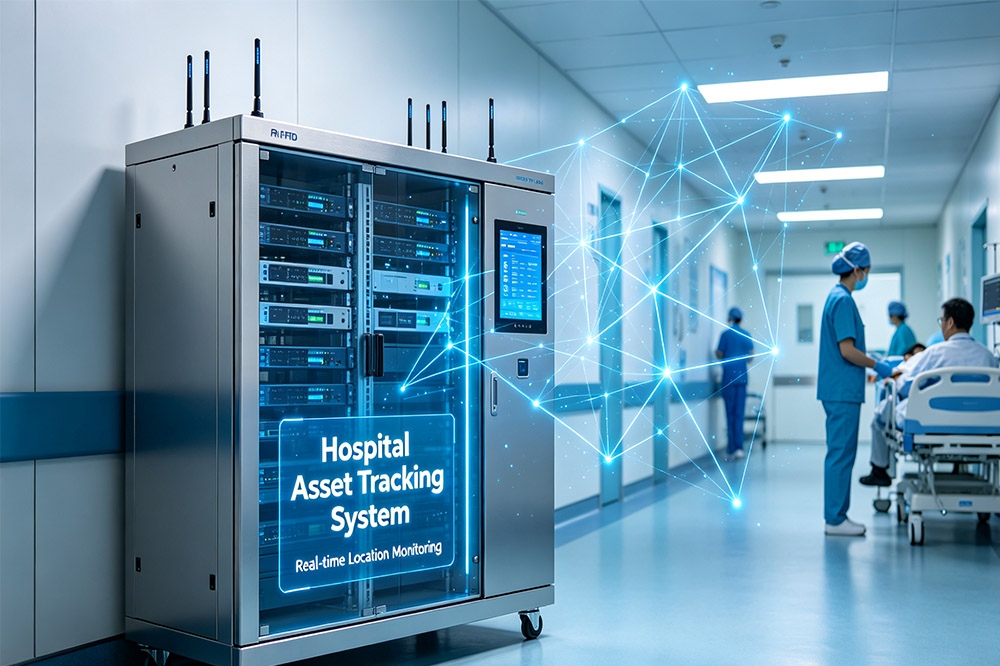
How Smart Cabinets Connect to RFID Tracking Systems
This is where things start to work better as a system, not just a product.
RFID tracking systems show:
Where equipment is
How it moves across departments
Smart cabinets show:
What is being used
What is being removed or restocked
Together, they give a more complete picture of hospital operations.
That combination is often more useful than either system alone.
A Practical Advantage: Less “Invisible Inventory”
One issue hospitals often don’t talk about openly is “invisible stock.”
This happens when:
Departments keep extra hidden supplies
Inventory systems show higher numbers than reality
Emergency shortages still happen unexpectedly
Smart cabinets reduce this by making every access event visible and recorded.
Not in theory—but in actual usage behavior.
Where RFID Smart Cabinets Make the Biggest Difference
From what I’ve seen, the impact is strongest in places where:
Usage is frequent
Errors are costly
Items are shared between staff
Inventory changes happen daily
In these environments, manual systems struggle to stay accurate for long.
Smart cabinets don’t eliminate complexity—but they reduce human dependency.
Integration Matters More Than Features
One mistake some hospitals make is focusing only on cabinet features.
In reality, integration is more important:
Does it connect with existing hospital systems?
Can data be exported or analyzed easily?
Does it work with broader RFID tracking infrastructure?
A smart cabinet alone is useful.
Common Misunderstanding: It’s Not Just a “Storage Box”
A lot of people initially think RFID cabinets are just “smarter lockers.”
But in real deployments, they function more like:
Access control systems
Inventory recording systems
Usage monitoring tools
Storage is just the physical layer.
Final Thoughts
RFID smart cabinets are not meant to replace existing hospital systems.
They’re meant to fix a very specific problem:
When combined with RFID tracking across departments, they help close the gap between “what should be there” and “what is actually there.”
And in hospital environments, that gap is usually where most operational problems start.
RFID Medical Cabinet Guide
RFID Medical Cabinet Guide
 Cykeo RFID IoT Solution Products R&D Manufacturer