In today’s fast-paced world, access control is no longer just about locking doors. For businesses, residential complexes, and industrial facilities, controlling who enters and exits—and how seamlessly they do it—can make or break operations. Enter the RFID gate access control system, a technology that merges speed, security, and simplicity.
Why RFID Matters in Gate Access
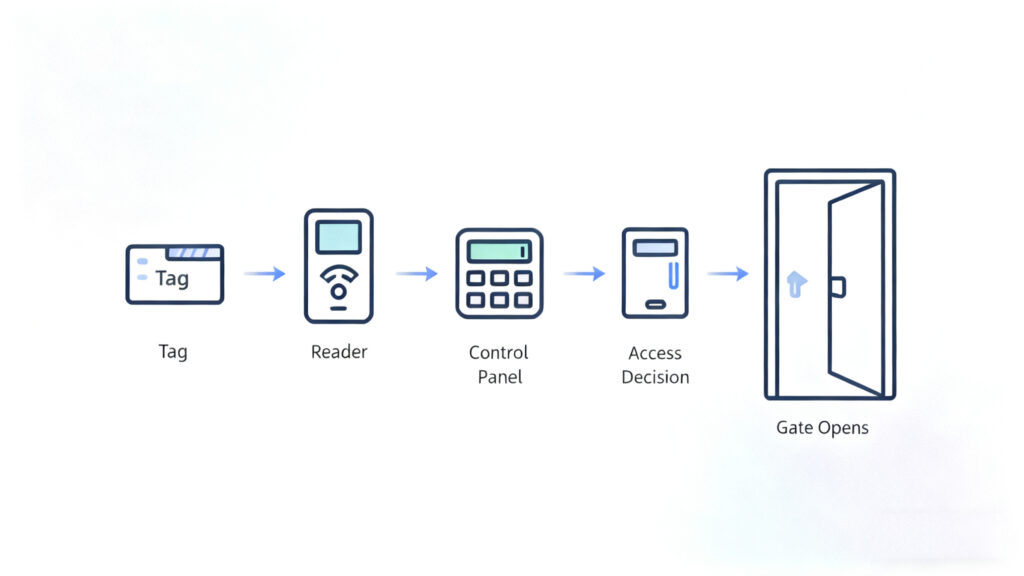
You’ve probably swiped a card to enter an office building or passed through a parking barrier without stopping. Behind that simple motion lies a sophisticated technology: Radio Frequency Identification (RFID). Unlike traditional locks or manual verification, RFID systems recognize tags carried by vehicles or individuals, granting access automatically.
Think of a busy corporate campus at 8 AM. Employees are arriving with coffee in one hand, phones in the other. Stopping each car for a guard check would create traffic chaos. An RFID system ensures authorized vehicles pass without delay, while still maintaining high security standards.
Key Components
Tags: Can be passive, active, or semi-active. Passive tags are budget-friendly, powered by the reader’s field, while active tags have their own power source, offering longer read distances.
Readers & Antennas: Strategically placed to detect tags without interference from neighboring lanes or metal structures.
Access Management Software: Tracks entries, generates reports, and integrates with other security systems.
Real-World Examples
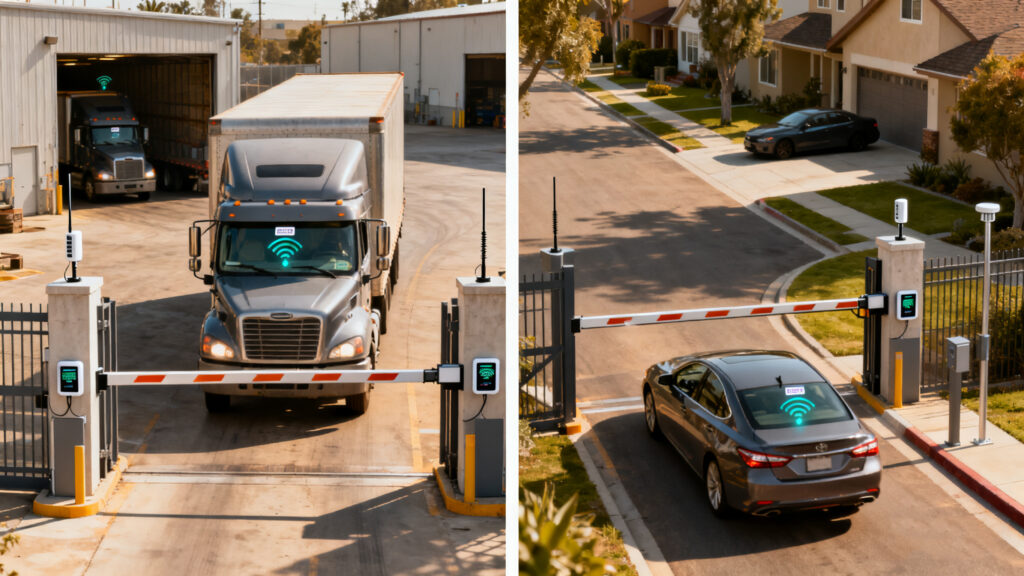
Industrial Facility Security: A manufacturing plant dealing with hazardous materials needed rapid vehicle identification for safety compliance. By installing long-range UHF RFID readers at each gate, the plant reduced queue times and ensured only authorized vehicles entered restricted zones. The system also logged entries for audit purposes, saving hours of manual record-keeping.
Residential Complex Efficiency: A gated community adopted RFID for both vehicles and bicycles. Residents no longer needed to stop at the gate. The system recognized each tag instantly, even in rainy weather—a challenge given that metal gates can interfere with signals. Proper antenna placement and testing eliminated misreads, making access effortless for hundreds of daily users.
Event Parking Management: During a music festival, organizers used temporary RFID tags for VIP parking. By integrating the tags with mobile passes, they avoided bottlenecks and enhanced user experience, proving that RFID is not just for permanent installations.
Tips for Effective RFID Gate Implementation
Analyze Your Flow: Map out vehicle speeds, gate widths, and peak hours. Understanding the traffic pattern helps decide between passive or active tags and antenna placement.
Consider Environmental Factors: Metal structures, water tanks, and even parked cars nearby can affect signal strength. Testing in real conditions is crucial.
Integrate Thoughtfully: Combine your RFID system with existing security software. For instance, a gate can trigger lights, cameras, or alarms if an unauthorized vehicle tries to enter.
Manage Tags Wisely: Create a lifecycle for tags—distribution, expiration, replacement. Lost tags should be quickly deactivated to maintain security.
Future-Proofing: Choose scalable systems that can expand to multiple gates or integrate with license plate recognition, biometric verification, or mobile credentials.
The Human Angle
RFID systems are often marketed as purely technical solutions, but they have a direct impact on people’s daily experience. Employees appreciate smoother entry, residents value convenience, and security teams gain time to focus on real threats rather than routine checks. Implementing an RFID gate access control system is not just about hardware—it’s about enhancing trust, efficiency, and peace of mind.
Conclusion
Whether for industrial, residential, or event-based applications, RFID gate access control systems have transformed how we approach security and convenience. By thinking beyond the tag and reader, considering real-world conditions, and integrating smart management practices, organizations can unlock both operational efficiency and user satisfaction.
In short: it’s not just a gate—it’s the gateway to smarter, safer, and smoother access.
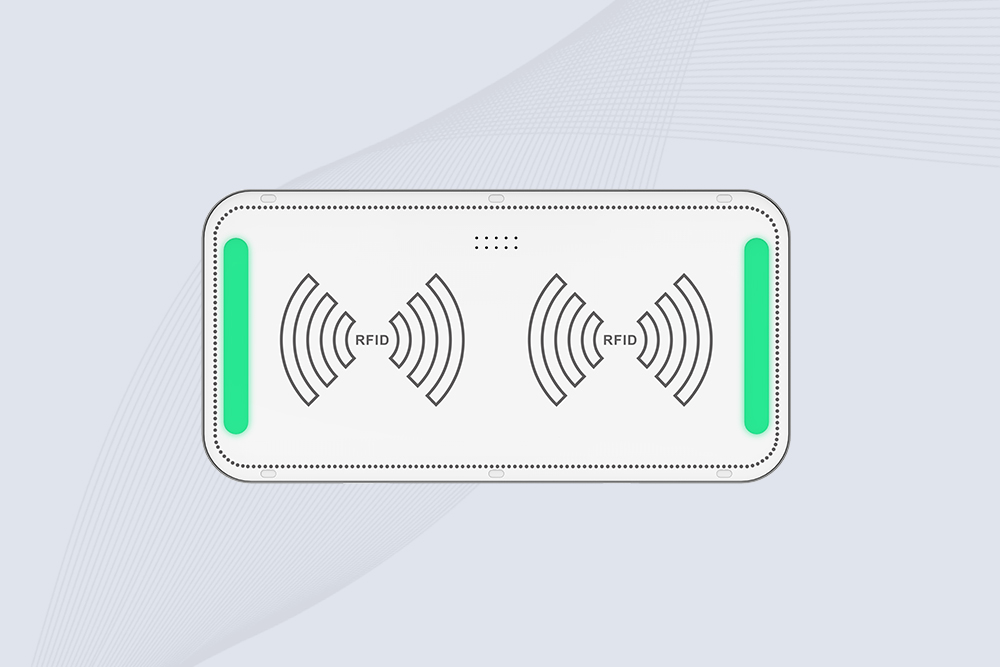
Cykeo’s CYKEO-T1D industrial RFID ceiling reader features 500 tags/sec scanning, IP54 protection, and -20℃~60℃ operation for retail/warehouse security. Supports ISO18000-6C and GB/T29768 protocols.
Cykeo’s ceiling-mounted RFID reader enables hands-free 5m inventory tracking with 500 tags/min speed. Features dual alerts, ERP integration, and IP54 rating for warehouse security.
Cykeo CK-T1E RFID gate system features 120° coverage, AI motion filtering, and 5m detection for retail/warehouse security. IP67 rugged design with ERP integration.
A hands-on, realistic guide to wiring the RC522 RFID module with Arduino. Written from real bench experience — voltage quirks, wiring mistakes, multiple readers setup, and what actually happens when it doesn’t work.
Discover how RFID technology enhances agricultural traceability, reduces waste, and improves compliance. Learn how farms and food brands are leveraging RFID for safer, sustainable food supply chains.
Discover the truth about battery-free RFID tags. Are they a sustainable, cost-saving solution for your business? Cykeo breaks down the facts, benefits, and real-world applications.
Curious about the components of RFID tag? Learn how chips, antennas, and substrates come together to create RFID functionality, plus some real-world notes from the field.
 Cykeo RFID IoT Solution Products R&D Manufacturer