 Cykeo RFID IoT Solution Products R&D Manufacturer

What is an RFID Card for Electric Car Charging?
1053Discover how RFID cards streamline electric car charging access, authentication, and billing. Learn about their benefits, security, and Cykeo’s charging solutions.
MoreAll RFID Product
When people first hear the term RFID, they often picture a tiny chip or a sticker on a product. That’s understandable. A lot of articles explain it in one sentence and move on.
But after working with companies that actually deploy RFID, I’ve come to think the definition is a little deeper than that.
A few years ago, I visited a warehouse where employees were counting inventory with handheld barcode scanners. The process looked exhausting. One worker joked that he spent more time looking for labels than moving goods.
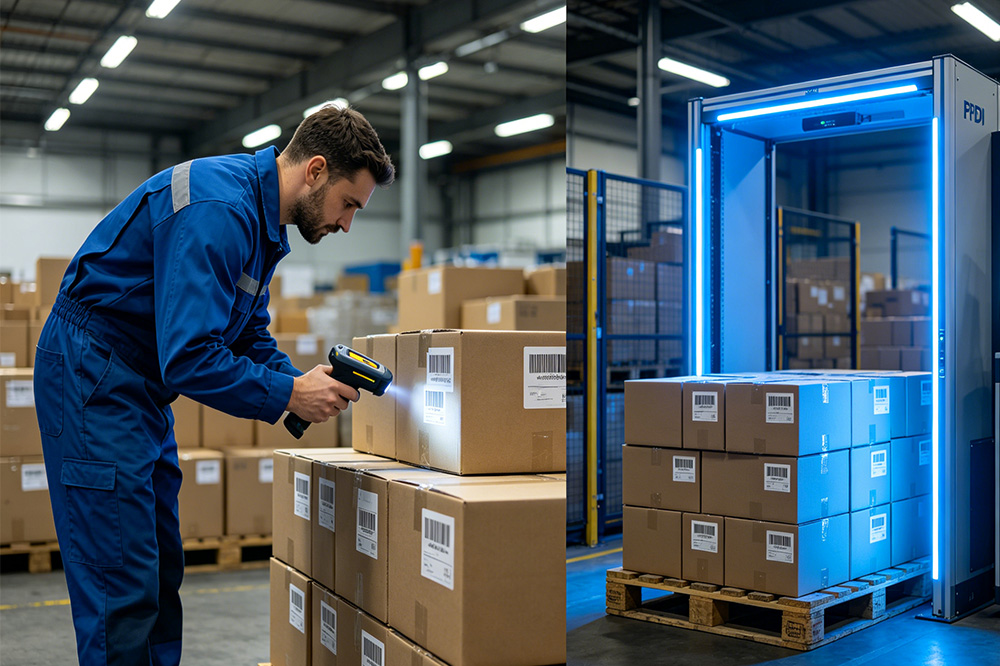
Months later, the same site had introduced RFID. Forklifts passed through a reading zone, and pallets were identified automatically. The technology didn’t make the warehouse futuristic overnight, but it quietly removed dozens of repetitive tasks that had been slowing people down every day.
That experience changed the way I explain RFID.
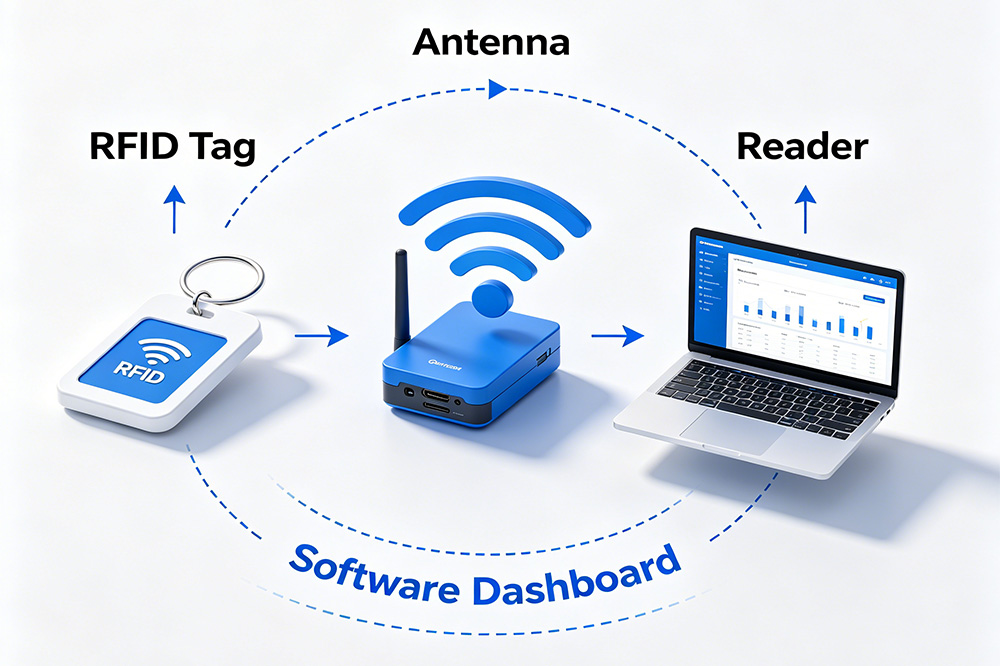
From a technical perspective, RFID stands for Radio Frequency Identification. It uses radio waves to let a reader communicate with an electronic tag and identify an object without direct physical contact.
That definition is accurate, but it still feels incomplete.
In practical terms, RFID gives physical objects a digital identity. Once tagged, an item can often be recognized automatically as it moves through a process, whether that process involves shipping cartons, medical equipment, garments, tools, or employee badges.
It’s less about replacing barcodes and more about reducing the amount of manual work needed to understand what’s happening in the real world.
One question comes up surprisingly often:
“Can’t I just print a QR code instead?”
Sometimes the answer is yes.
If a business only needs occasional identification and employees are already comfortable scanning labels one at a time, barcodes may be perfectly adequate.
RFID starts to show its strengths when speed matters or when there are simply too many items to handle individually.
Imagine checking 500 cartons arriving at a loading dock. Scanning each one manually works, but it takes time and depends on people following the process consistently. An RFID setup can often identify many tagged items in a single movement, allowing operations to continue with much less interruption.
That difference may seem small on paper. Over months or years, it can reshape how a warehouse operates.
People tend to focus on the tag because it’s visible.
The interesting work happens elsewhere.
A complete RFID system usually combines readers, antennas, software, and tags into a connected workflow. The reader emits radio energy, compatible tags respond, and software translates those responses into useful business information.
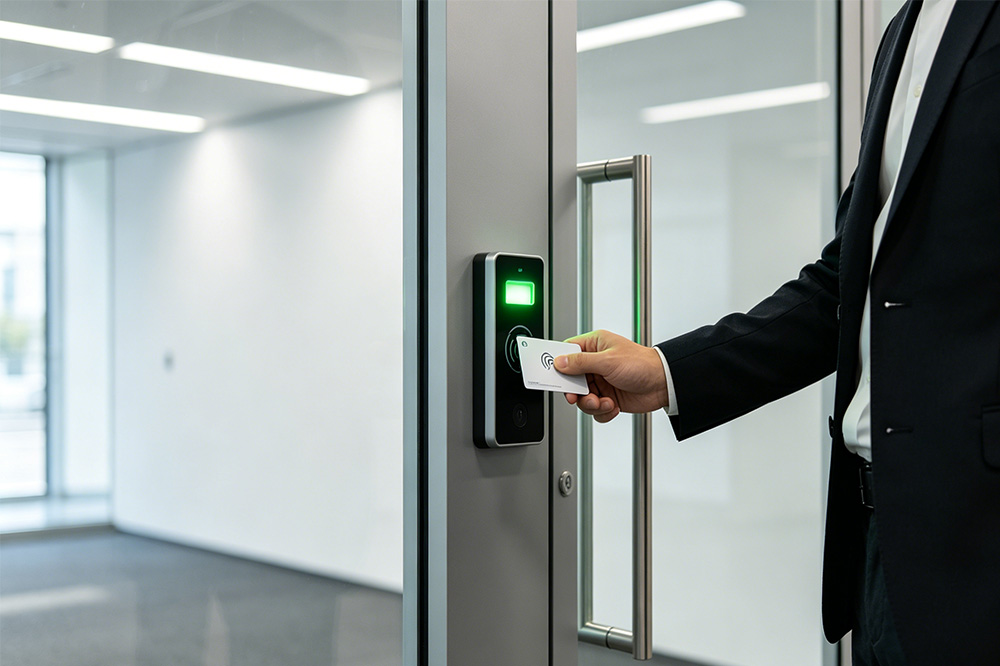
If inventory is updated automatically or an access gate unlocks at the right moment, it’s because all those components are working together.
I’ve seen projects fail not because the tags were poor quality, but because antennas were positioned incorrectly or software integration was treated as an afterthought.
Retail companies often use RFID to improve inventory accuracy.
Manufacturers may attach tags to tools or reusable containers.
Hospitals track high-value medical devices that frequently move between departments.
Event organizers issue RFID wristbands to speed up entry while controlling access to restricted areas.
Even commercial laundries can sew washable RFID tags into uniforms and linens, making it easier to monitor thousands of items through repeated wash cycles.
These examples have very different goals, yet they all rely on the same basic principle: identify objects quickly without depending on constant manual scanning.
People sometimes ask which type of RFID tag is “the best.”
I usually answer with another question: what are you trying to track?
Passive tags are inexpensive and have no battery. They work well for retail, logistics, libraries, and many industrial applications where readers can provide the necessary energy.
Active tags include their own power source and support longer communication distances. They’re often chosen for tracking vehicles, large equipment, or assets spread across wide areas.
There isn’t a universal winner. The environment, budget, and workflow matter just as much as technical specifications.
One project involved tagging metal equipment in a production facility.
On paper, everything looked straightforward.
In practice, the initial read rates were inconsistent because standard labels had been attached directly to metal surfaces.
After switching to tags designed for that environment and adjusting reader placement, performance improved dramatically.
That experience reinforced something I’ve noticed repeatedly: RFID isn’t difficult, but it rewards careful planning.
If you ask managers why they invested, many won’t mention radio frequencies or digital transformation.
They’ll talk about missed shipments.
Time wasted searching for tools.
Inventory records that never matched reality.
Unauthorized access to restricted areas.
Employees spending hours on repetitive counting.
RFID addresses those operational frustrations by making information available automatically instead of requiring someone to collect it by hand.
The formal explanation of RFID fits comfortably into a dictionary.
The business value doesn’t.
As supply chains become more connected and automation becomes more common, knowing where assets are and how they move is no longer a luxury. For many organizations, it’s becoming part of everyday operations.
That’s probably the simplest way to think about RFID.
It isn’t just a technology that reads tags.
It’s a way of giving physical objects a reliable digital identity so businesses can spend less time searching, scanning, and correcting errors—and more time making decisions based on accurate information.
For companies planning large-scale deployments, choosing application-specific tags, compatible readers, and an experienced manufacturing partner is often more important than chasing the highest specifications on a product sheet. The best RFID solution is usually the one that matches the workflow it’s meant to improve.
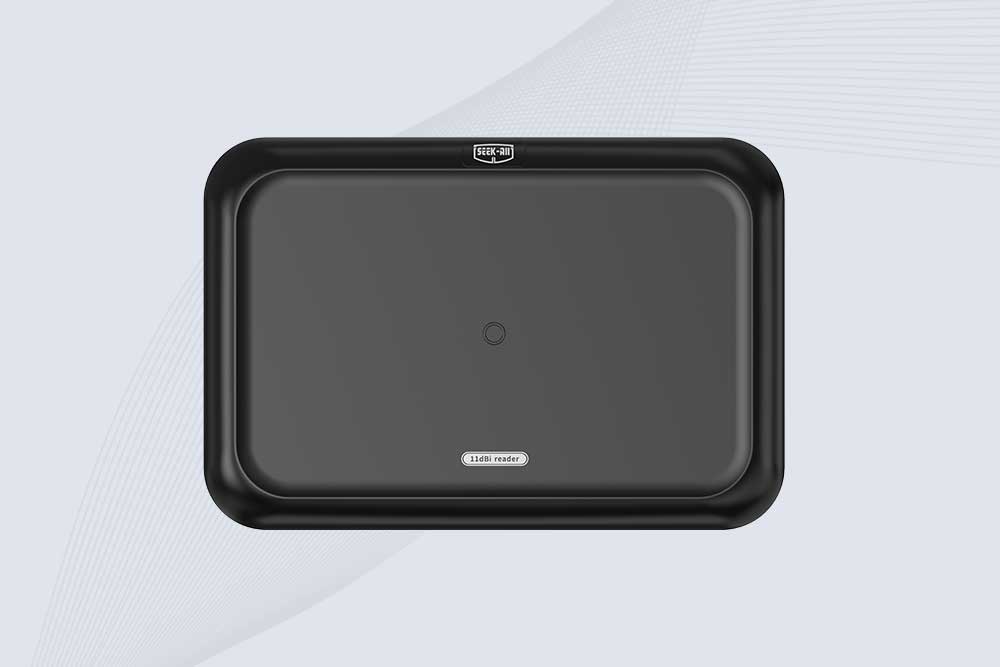
SSD-RA11L is an 11 dBi UHF RFID reader with up to 15m reading distance, 600+ tags/s speed, integrated antenna and flexible connectivity.
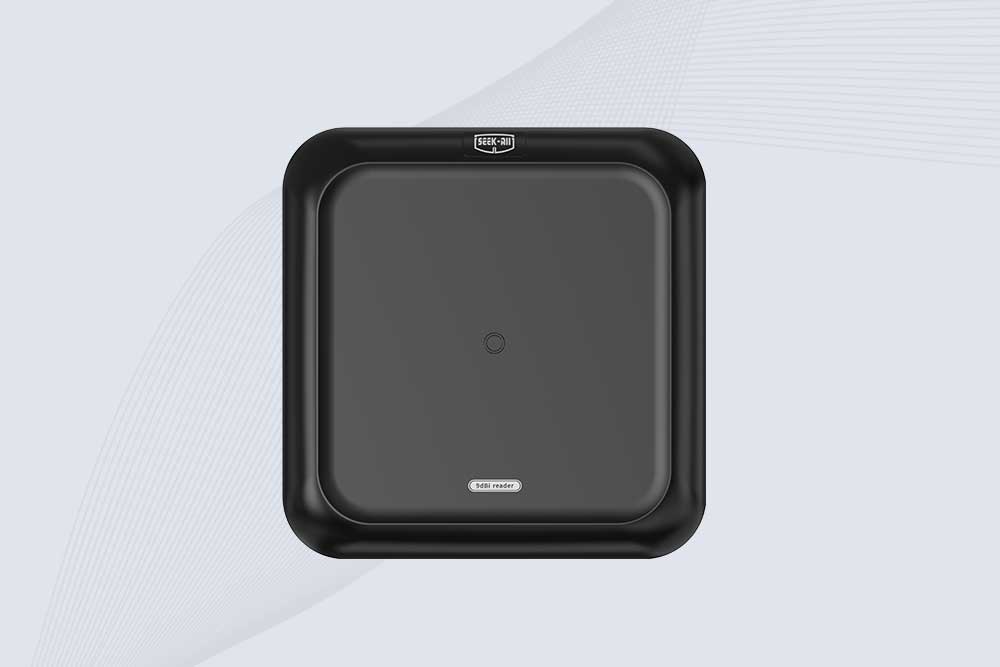
SSD-RA09L is a long range UHF RFID reader with a built-in 9 dBi antenna, 10m reading range, 600+ tags/s speed and flexible interfaces.
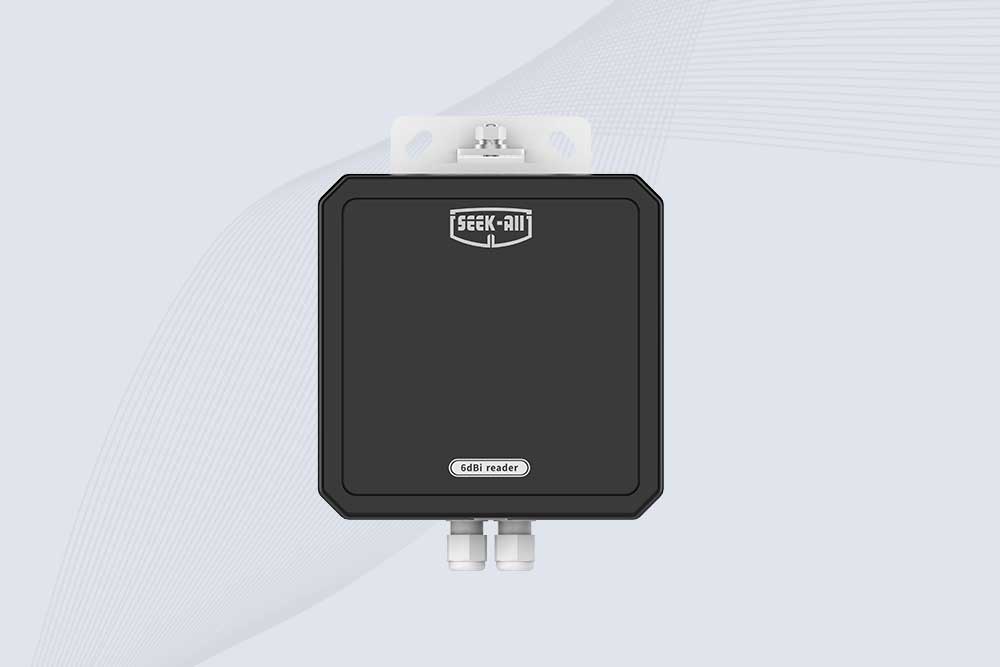
SSD-RA06L is an industrial UHF RFID reader with a built-in 6 dBi antenna, 3 m read range, 600+ tags/s, Ethernet, RS232, and optional Wi-Fi, 4G, and PoE.
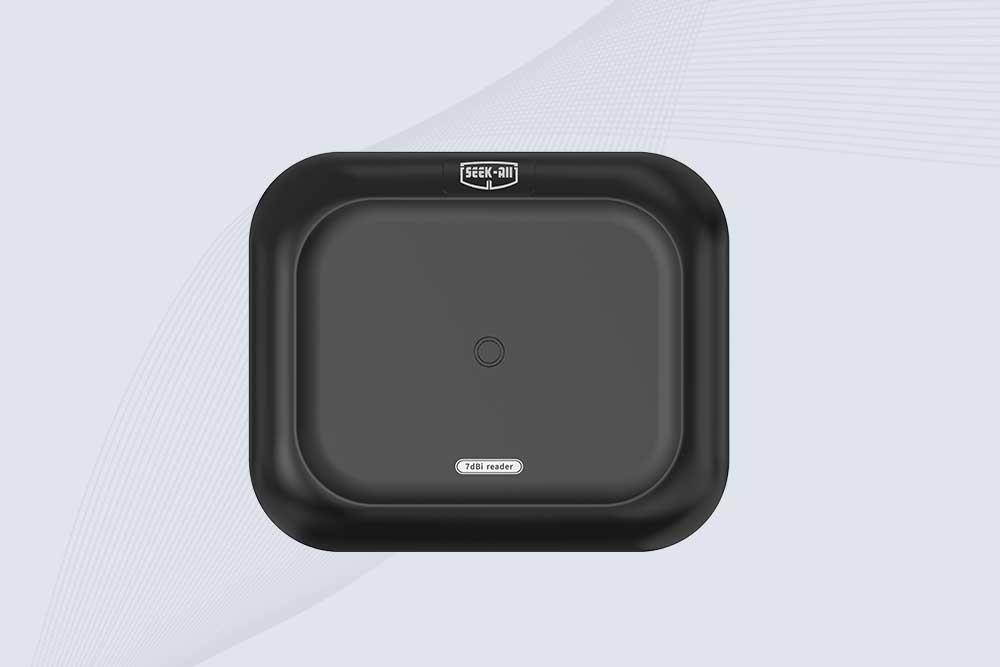
SSD-RA07L industrial UHF RFID reader with integrated 7 dBi antenna, up to 6 m reading distance, over 600 tags/s, Ethernet, RS232, and optional Wi-Fi, 4G, and PoE.
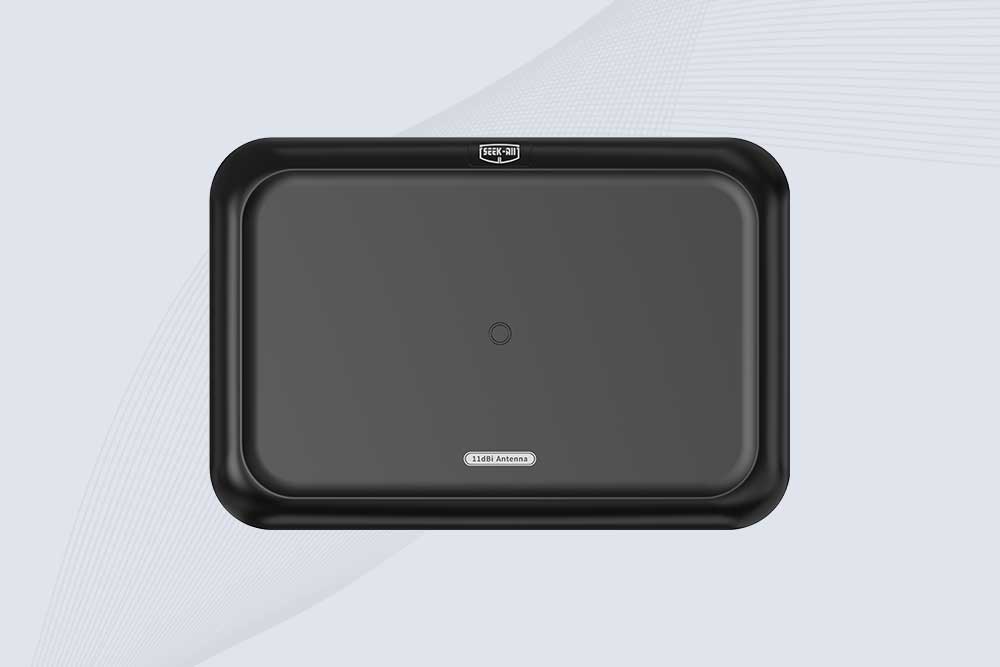
SSD-A11 UHF RFID antenna features 840–960 MHz adjustable frequency, ≥10.5 dBi gain, circular polarization and 50Ω impedance for fixed RFID systems.
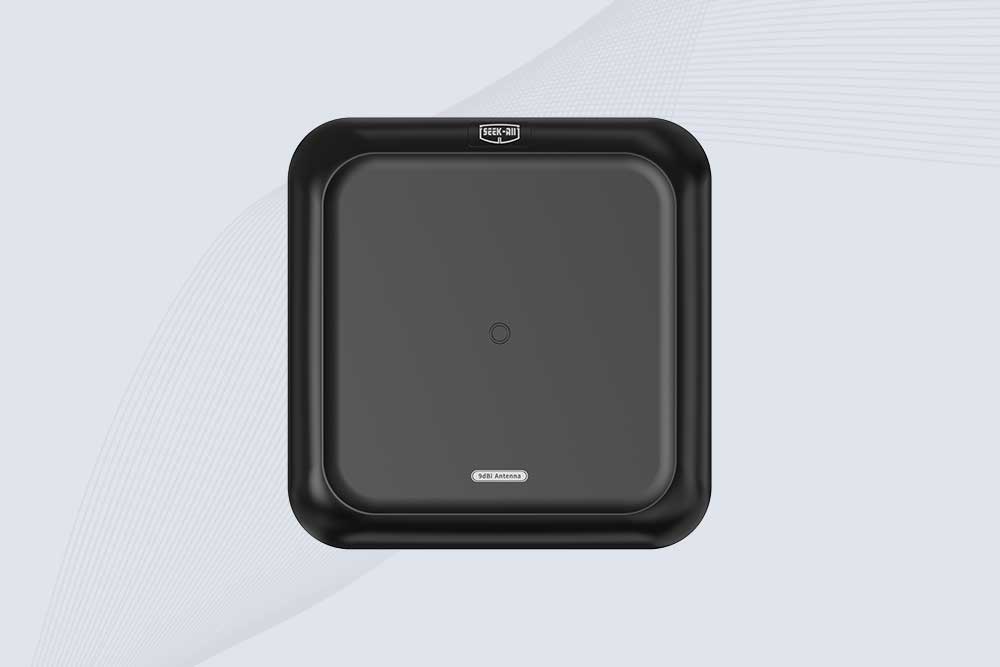
SSD-A09 is a 9 dBi UHF RFID antenna with 840–960 MHz adjustable frequency, circular polarization, 50Ω impedance and directional 60° × 60° coverage.
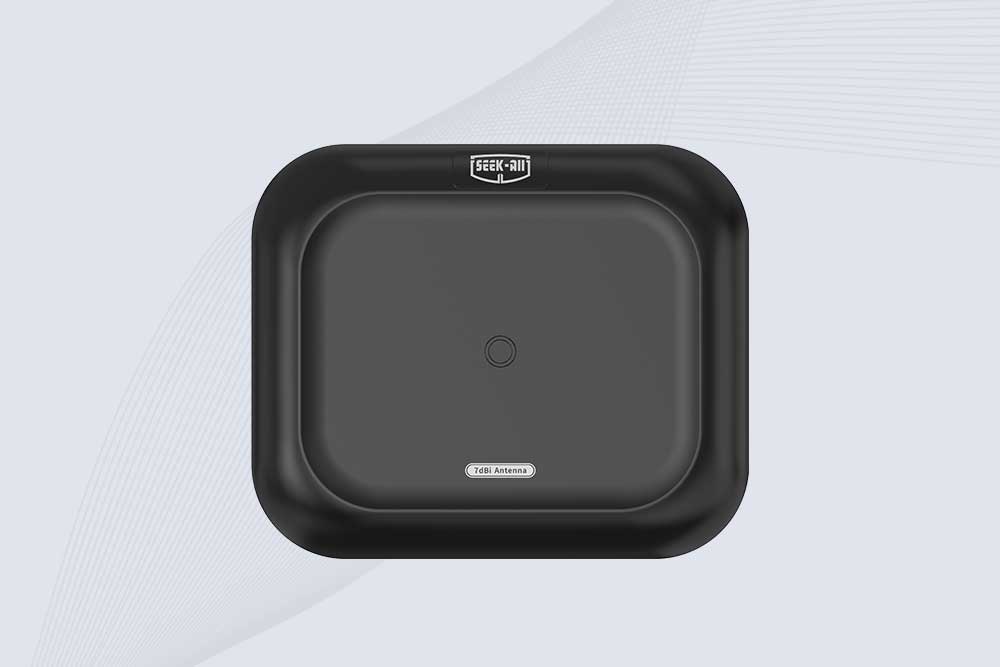
Explore the SSD-A07 UHF RFID antenna with 7 dBi gain, circular polarization, adjustable 840–960 MHz frequency, and 60°/75° beamwidth for stable RFID read/write performance.

SSD-A06 UHF RFID antenna with circular polarization, adjustable 840–960 MHz frequency, ≥4.5 dBi gain, and a compact directional design for RFID systems.

SSD-R16L Multi-Channel RFID Infrastructure for Automated Inventory Management ✔️ 16-Port High-Density RFID Reading Equipped with 16 SMA antenna ports, SSD-R16L supports multi-antenna deployment for warehouses, retail stores, logistics, production lines, and large-area RFID identification. ✔️ High-Speed & Long-Range Performance With up to 33…
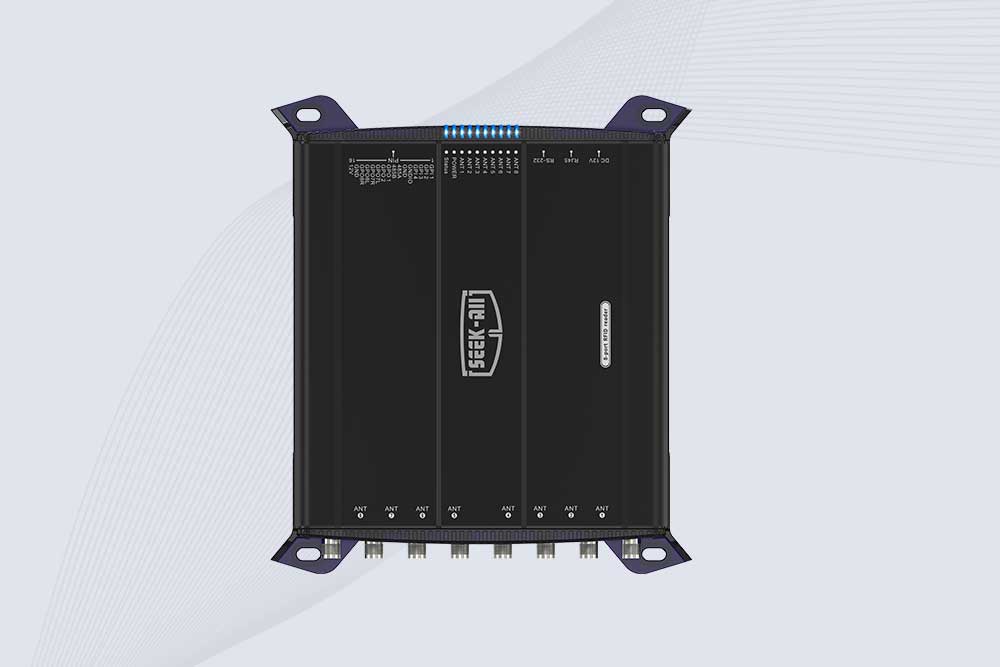
SSD-R8L 8-port UHF RFID reader with 33dBm output, up to 20m reading range and 600+ tags/s recognition. Ideal for warehouse, logistics, retail and asset tracking.
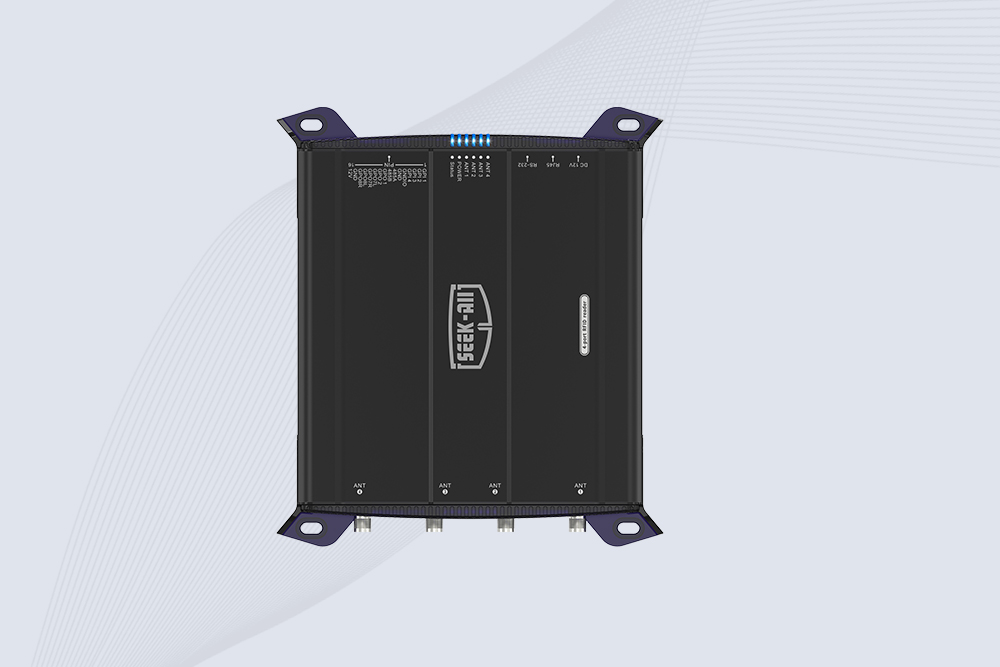
SSD-R4L is a 4-port UHF RFID fixed reader with 33dBm output power, up to 20m reading range, EPC C1G2 support and 600+ tags/s reading speed.
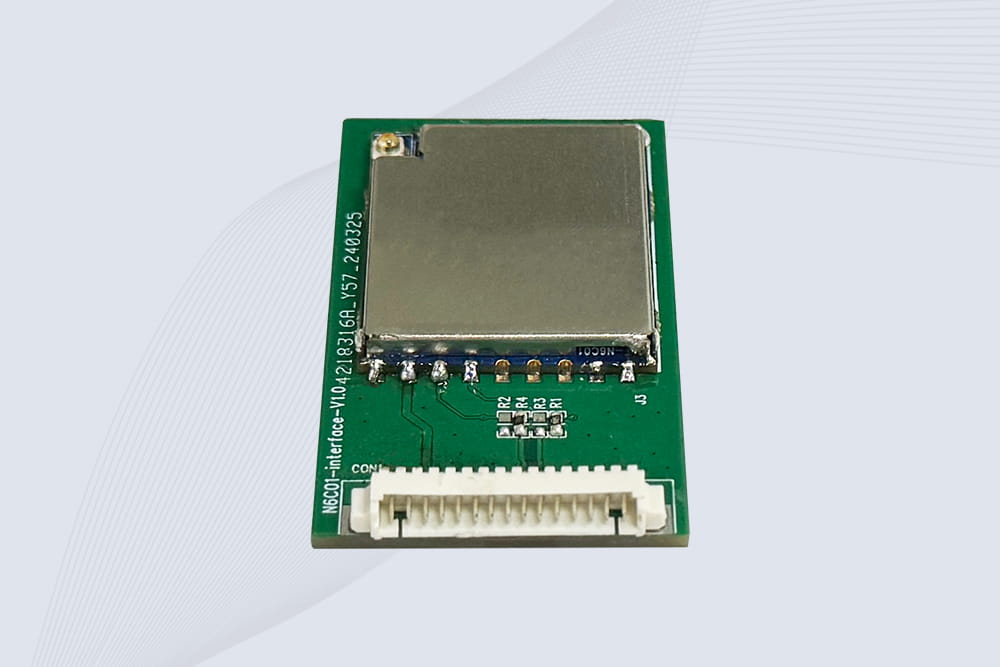
CYKEO Embedded RFID Modules are designed for compact industrial and IoT devices that require stable UHF performance. These UHF RFID Modules support global protocols, flexible power control, and reliable multi-tag reading for smart cabinets, production lines, and asset tracking systems.
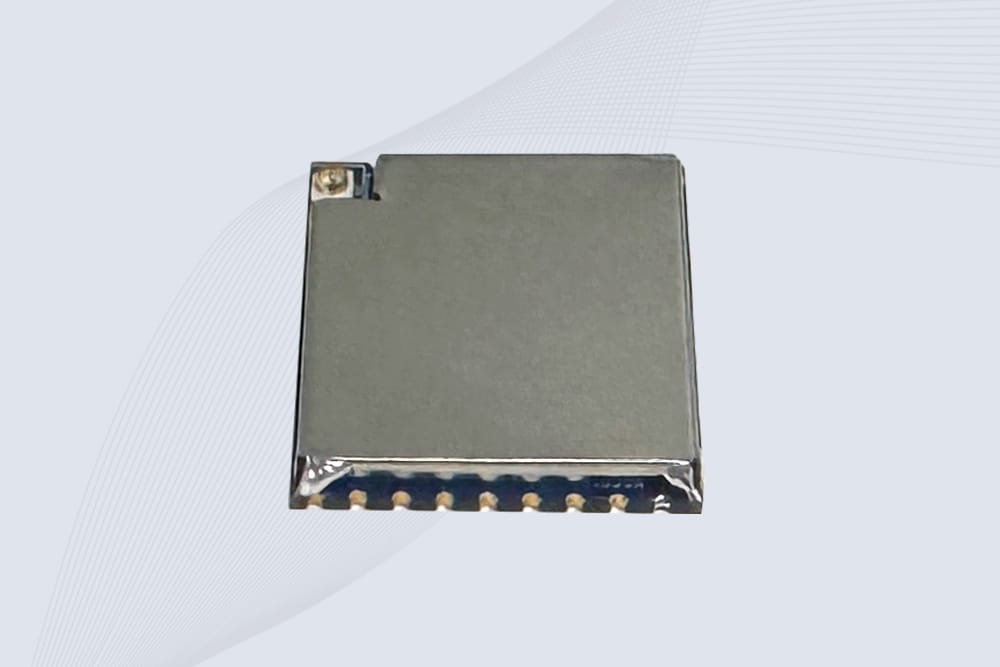
CYKEO Embedded RFID Module is built for compact IoT and industrial devices that need stable UHF performance. This UHF module supports global protocols, low power operation, and reliable multi-tag reading for smart lockers, production lines, and always-on RFID systems.
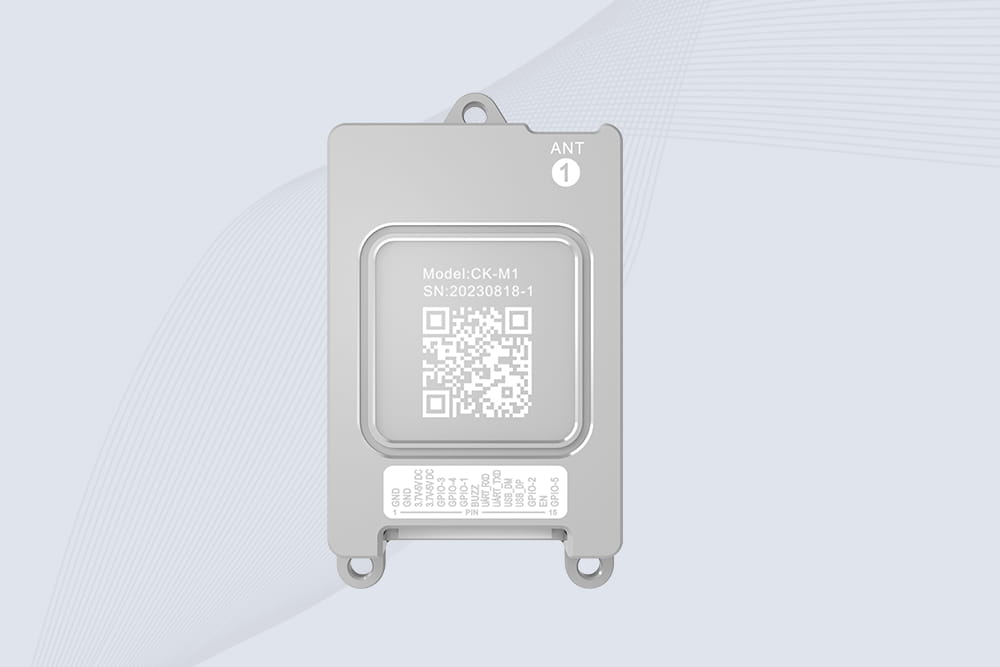
CYKEO CYKEO-M1 drone rfid module is a compact UHF RFID reader module designed for drones and UAV platforms. It supports long-range aerial scanning, fast multi-tag reading, and stable performance in wind, vibration, and outdoor environments.
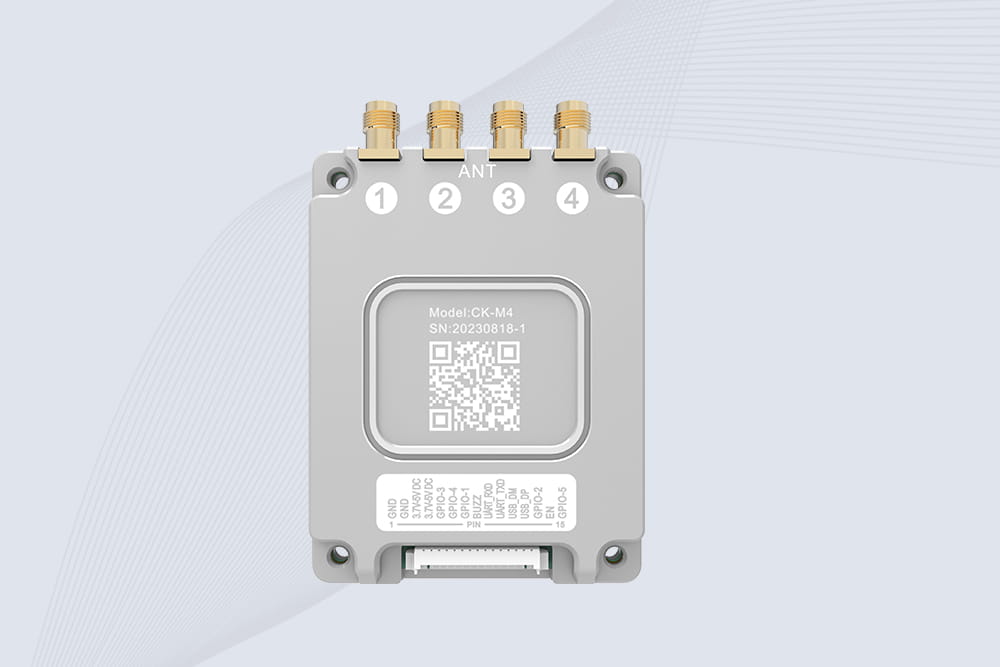
CYKEO CYKEO-M4 RC522 RFID Module is an industrial-grade UHF RFID reader with 4 ports, supporting ISO, EPC, and GB protocols. High-speed, accurate reading for IoT, automation, and warehouse applications.
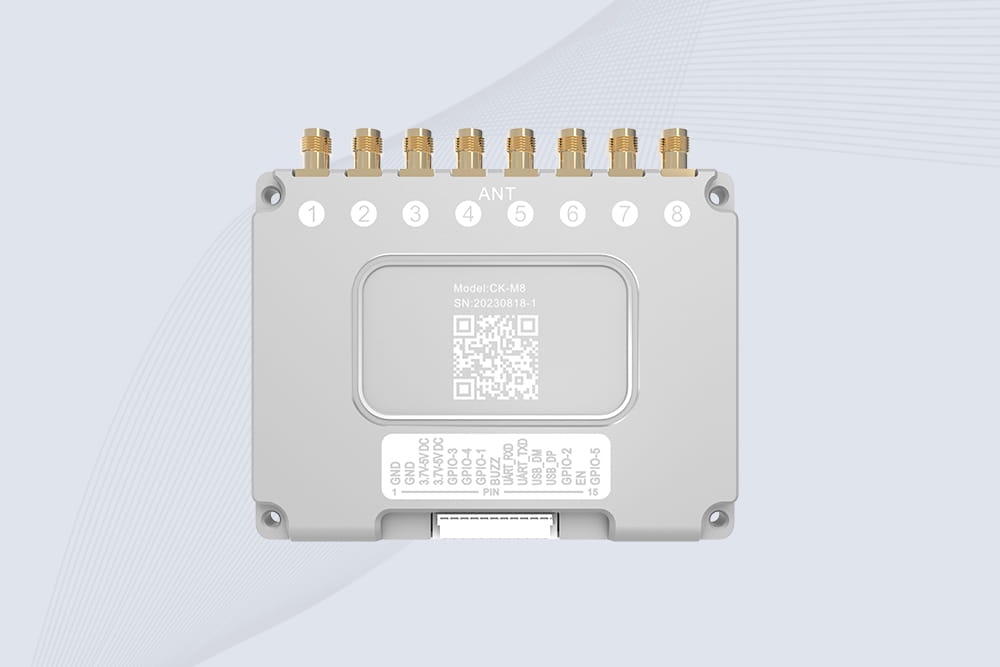
CYKEO CYKEO-M8 Module RFID is an 8-port UHF R2000 RFID Module designed for high-density, multi-tag environments. Stable 33dBm output, ISO & GB protocol support, ideal for warehouses, factories, and automated systems.
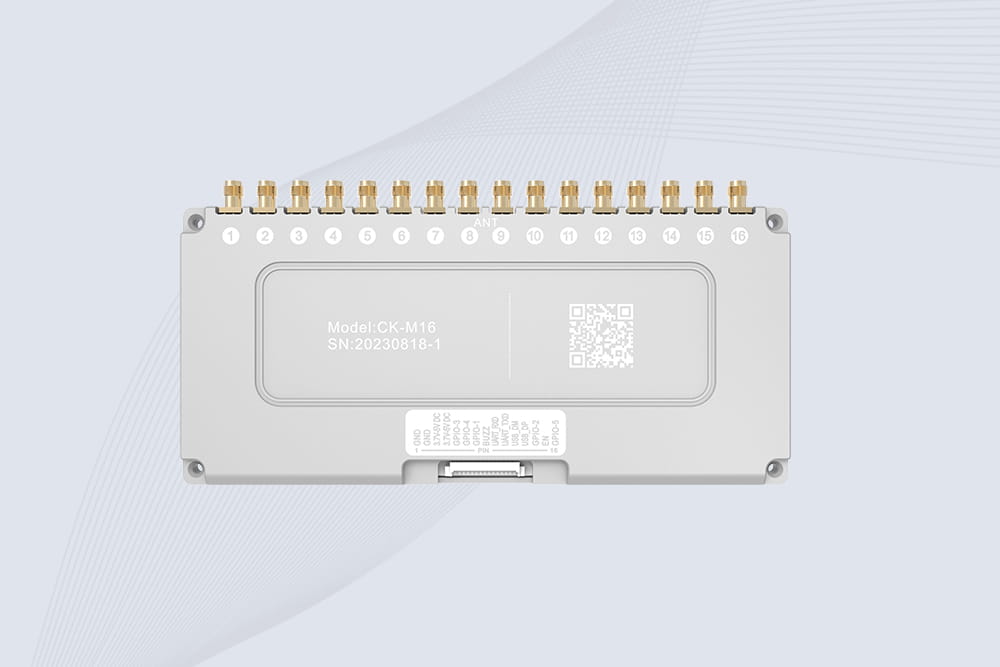
CYKEO CYKEO-M16 RFID Module is a 16-port UHF RFID reader module based on the R2000 chipset. Designed for dense tag environments, it supports ISO and GB standards and delivers stable multi-antenna control for industrial automation.
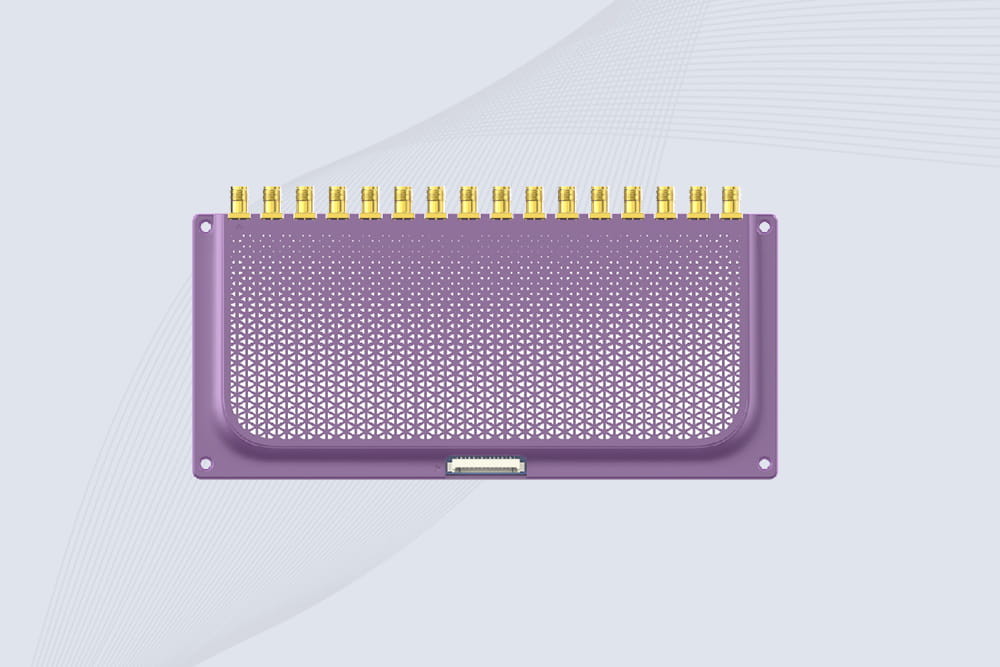
The CYKEO CYKEO-M16L RFID Reader Module is a 16-channel UHF RFID core designed for dense tag environments. With adjustable 33dBm output, multi-protocol support, and stable multi-antenna control, this RFID Tag Reader Module fits industrial automation, warehouse systems, and large-scale IoT deployments.
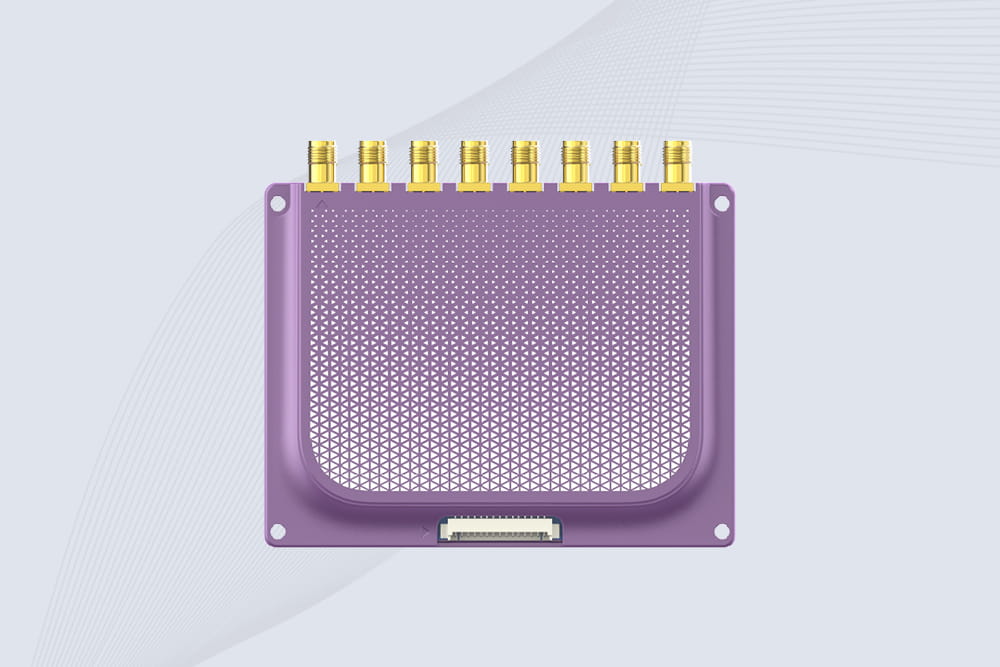
CYKEO CYKEO-M8L module RFID is a compact industrial UHF module built for dense tag and multi-antenna environments. With 8 RF ports, adjustable 33 dBm output, and ISO & GB protocol support, it is widely used in factories, warehouses, and automated tracking systems.
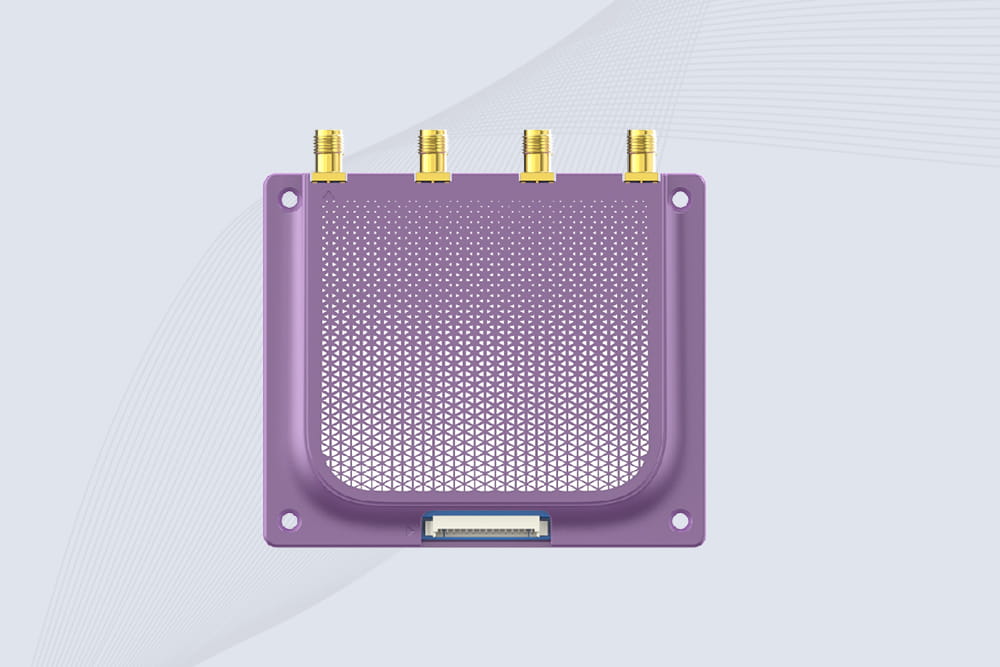
CYKEOCYKEO-M4L UHF RFID Module is a compact 4-channel RFID tag reader module designed for dense tag environments. Supporting ISO and GB protocols, it delivers stable reads up to 10 meters for industrial and IoT systems.

Cykeo CYKEO-A11 UHF RFID reader antenna delivers 11dBi gain, 840-960MHz frequency range, and IP65 ruggedness for retail, logistics, and industrial RFID systems. Features low VSWR and easy installation.

CYKEO Antenna RFID Reader delivers stable long-range UHF performance with a 10.5dBi directional design, built for warehouses, conveyor portals, and industrial RFID systems. This rfid reader antenna provides 20m+ read distance and rugged IP67 protection.

Cykeo CYKEO-PHF3 industrial HF RFID Antenna offers 24-point dynamic tracking, ISO 14443A/15693 protocols, metal-environment stability for archives/libraries/manufacturing.

Cykeo CYKEO-A5B industrial Linear RFID Antenna delivers 5dBi gain, ≤1.5:1 VSWR, and IP65 rugged design for warehouse, production line, and logistics UHF systems.

Cykeo’s CYKEO-B12 Long Range RFID Antenna delivers 15m+ read range with 12dBi gain, IP65 rugged design, and global 840-960MHz UHF support. Ideal for warehouse/logistics asset tracking.

Cykeo CYKEO-B10 Long Distance RFID Antenna offers 10dBi gain, 840-960MHz frequency range, IP65 rating, and 20m+ coverage for logistics/warehousing/ETC systems. Low VSWR ensures stable signal transmission.

Cykeo CYKEO-A6 UHF RFID panel antenna features 6dBi gain, 840-960MHz broadband, IP65 metal-ready housing for logistics/smart retail. 18mm ultra-thin design with tool-free mounting.

Cykeo CK-A3 industrial antenna RFID UHF offers 5m+ tag detection, ≤1.3:1 VSWR, IP65 rugged design, and global UHF spectrum compatibility (840-960MHz) for warehouses, factories, and retail.

Cykeo CYKEO-B5 directional RFID antenna provides 5dBi gain with 60° narrow beamwidth for precise inventory tracking. IP65-rated, global UHF frequency support, and low VSWR.

Create your own high-performance DIY RFID antenna! 5dBi gain, 840-960MHz tunable, step-by-step guides. Compatible with Arduino, Raspberry Pi, and commercial UHF readers.

Cykeo CYKEO-A7 Flexible RFID Antenna features 840-960MHz wideband tuning, 7dBi gain, and IP68 rating for medical/retail/industrial curved surface deployments. 98% read accuracy with peel-and-stick installation.

Cykeo CYKEO-B5A industrial Passive RFID Antenna delivers 5dBi gain, 70° beamwidth, and -40°C~55°C operation for warehouses/smart cabinets. Compatible with Zebra/Impinj readers.

Cykeo’s CYKEO-A9B High Gain RFID Antenna delivers 15m+ read range with 9dBi amplification. Features IP54 rugged design, 840-960MHz bandwidth, and 80° beamwidth for warehouse/manufacturing RFID systems.

Cykeo’s enterprise-grade 8dbi Impinj RFID Antenna 10m+ read range with 840-960MHz tuning. Features IP65 housing, 1.4 VSWR, 35° beamwidth for retail/warehouse RFID systems.

Cykeo CYKEO-A9 industrial UHF RFID antenna delivers 9dBi gain, 840-960MHz frequency range, and IP65 protection for warehouse/logistics/retail RFID systems. Features N-type connector and ≤1.3:1 VSWR.

CYKEO UHF RFID Antenna built for long-distance and industrial applications. This antenna rfid uhf delivers strong gain, outdoor durability, and reliable tag performance in warehouses, yards, and vehicle ID systems.

CYKEO Antenna RFID delivers reliable long-range UHF performance in warehouses, retail shelves, and cold-chain environments. This compact uhf rfid antenna provides stable reads with circular polarization and ultra-wide 840–960 MHz support, ideal for industrial tracking, smart shelves, and asset monitoring.

Cykeo’s CYKEO-C8 UHF RFID antennas delivers 8dBi gain, 840-960MHz full-band coverage, and IP65 ruggedness for manufacturing/warehouse RFID systems. Industrial RFID Antennas Features

Cykeo’s 8dBi UHF RFID antenna and reader kit delivers 10m+ range, 840-960MHz broadband, and IP65 ruggedness for factories, warehouses, and logistics. ISO 18000-6C & EPC Gen2 certified.

Cykeo CYKEO-A9A industrial UHF RFID reader and antenna kit delivers 10m range, 500 tags/sec, IP65 ruggedness for manufacturing/logistics. Supports EPC Gen2, ISO18000-6C.
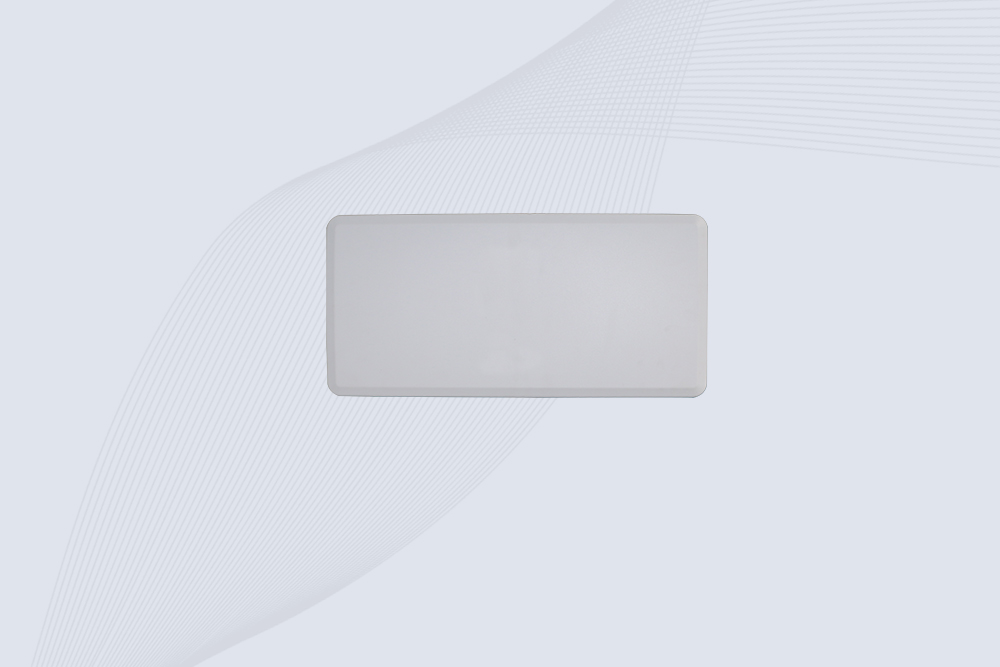
Cykeo’s CYKEO-A12C UHF Large RFID Antenna delivers 12dBi gain, 840-960MHz global frequency, IP65 ruggedness for logistics/warehousing/automotive. 40° beamwidth ensures stable 15m+ tag reads.

CYKEO Near Field RFID Antenna provides precise 5–30 cm reading for shelves, cabinets, and workstations. This compact rfid shelf antenna delivers stable short-range performance around metal and clutter, ideal for pharmacies, libraries, and electronics sorting.
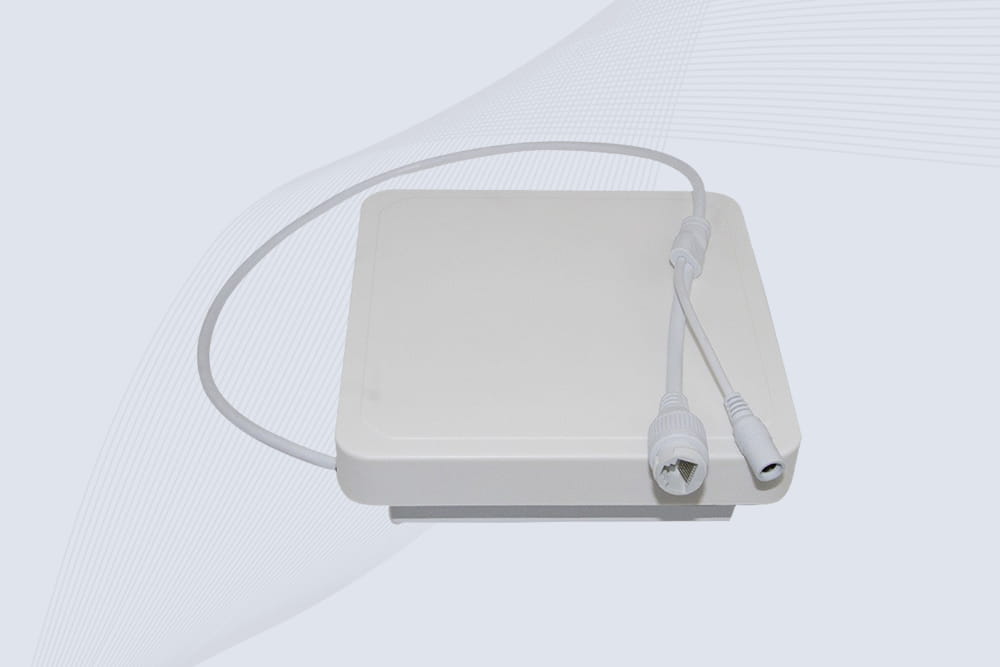
Cykeo’s industrial long range RFID reader delivers 20-meter scanning, 500+ tags/sec speed, and IP67 waterproof design for automated warehouses, logistics, and harsh environment applications.
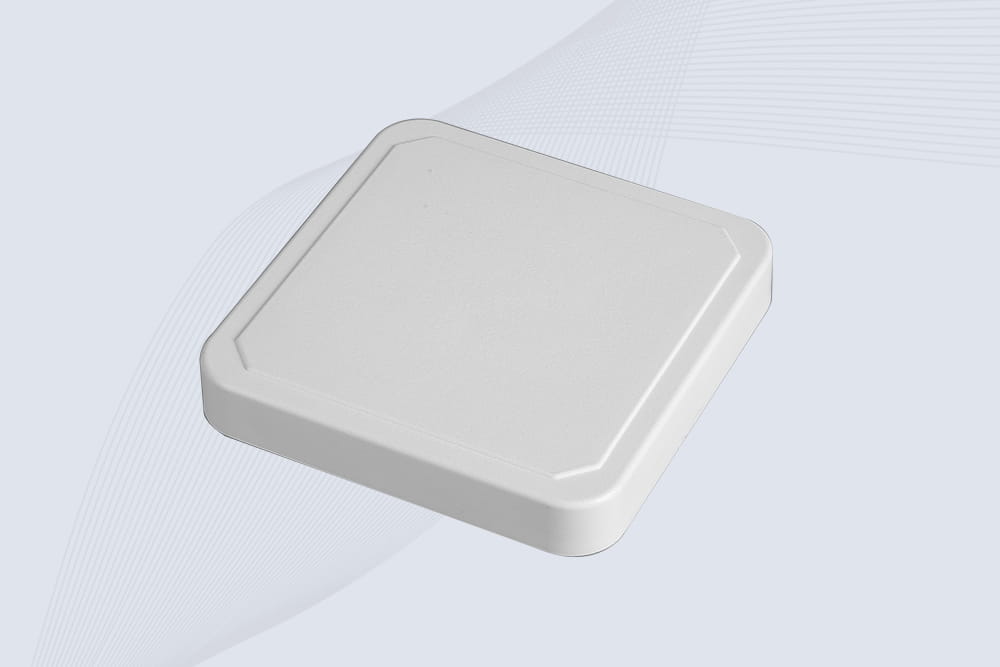
Cykeo’s CYKEO-RA6L industrial RFID long range reader features 20m read distance, 500 tags/sec speed, and IP67 protection. Ideal for warehouse automation, manufacturing WIP tracking, and smart logistics. Supports ISO 18000-6C/6B protocols.
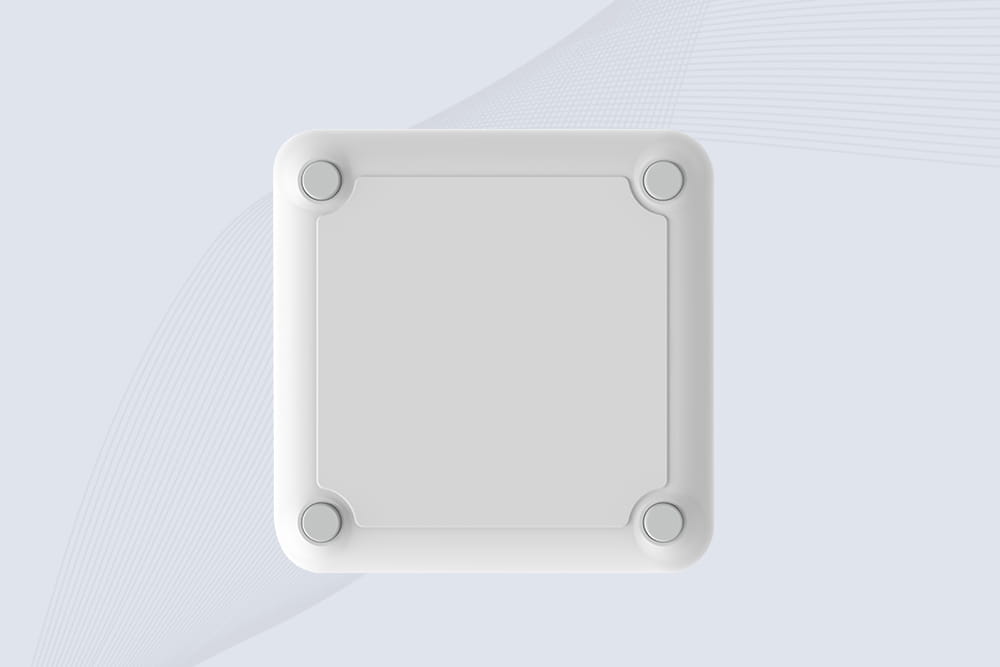
CYKEO Long Range RFID Tag Reader built for outdoor and industrial operations. This Outdoor RFID Reader delivers 20m read distance, fast tag processing, and IP67 durability for wide-area tracking.
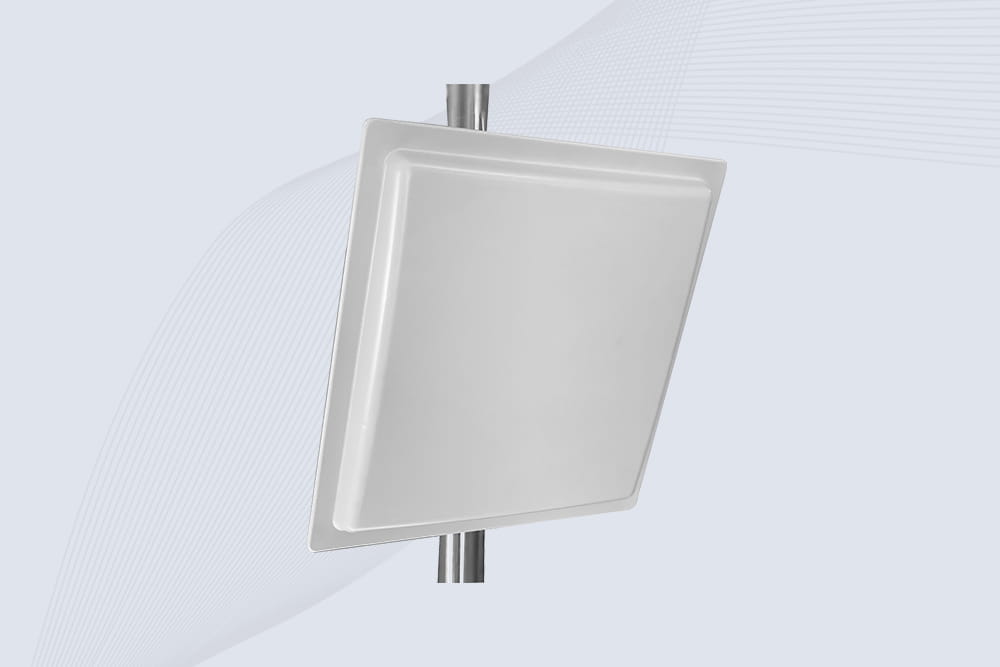
Cykeo CYKEO-RA12L industrial Long Range RFID Reader delivers 20m read range, 200+ tags/sec scanning, and IP67 protection for manufacturing/logistics applications. Supports ISO 18000-6C/GB protocols.
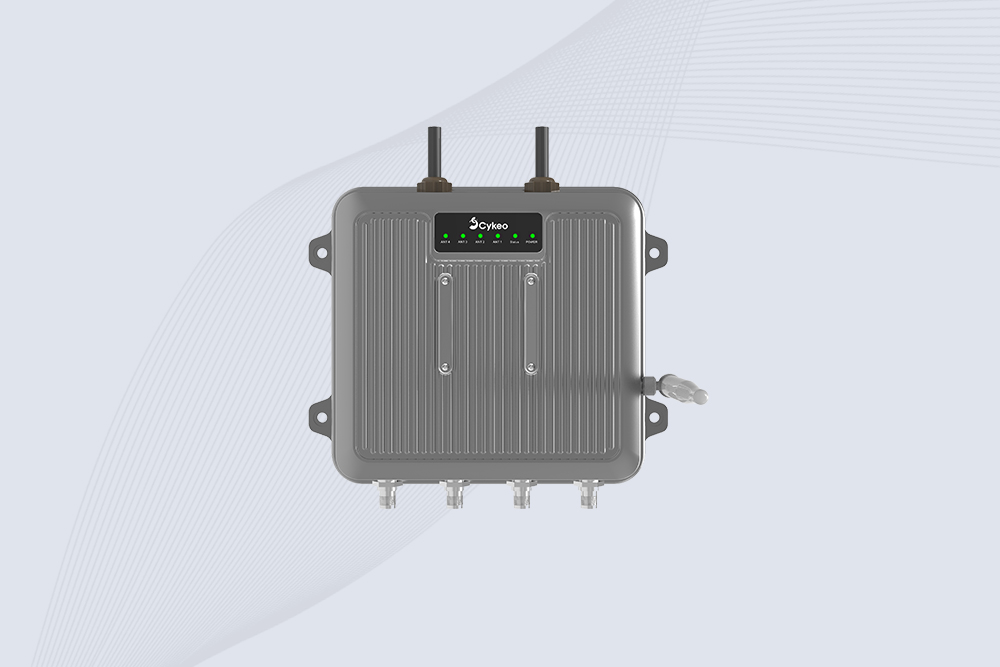
Cykeo CYKEO-C1 industrial Forklift RFID Reader features 20m read range, 600 tags/sec scanning, Impinj R2000 chipset, and IP67 rugged design. Ideal for warehouse logistics and manufacturing. Supports ISO 18000-6C/6B protocols.
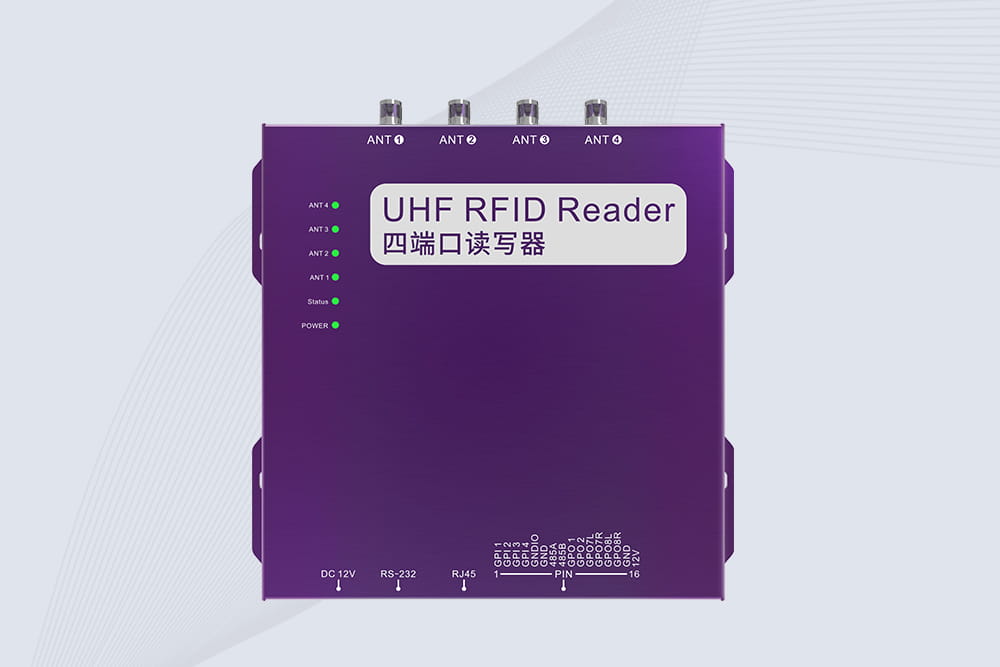
Cykeo CYKEO-R4 industrial UHF RFID Fixed Reader features 4 TNC ports, 400+ tags/sec speed, IP67 housing, and global frequency compliance for vehicle inspection, smart warehouse, and asset management systems.
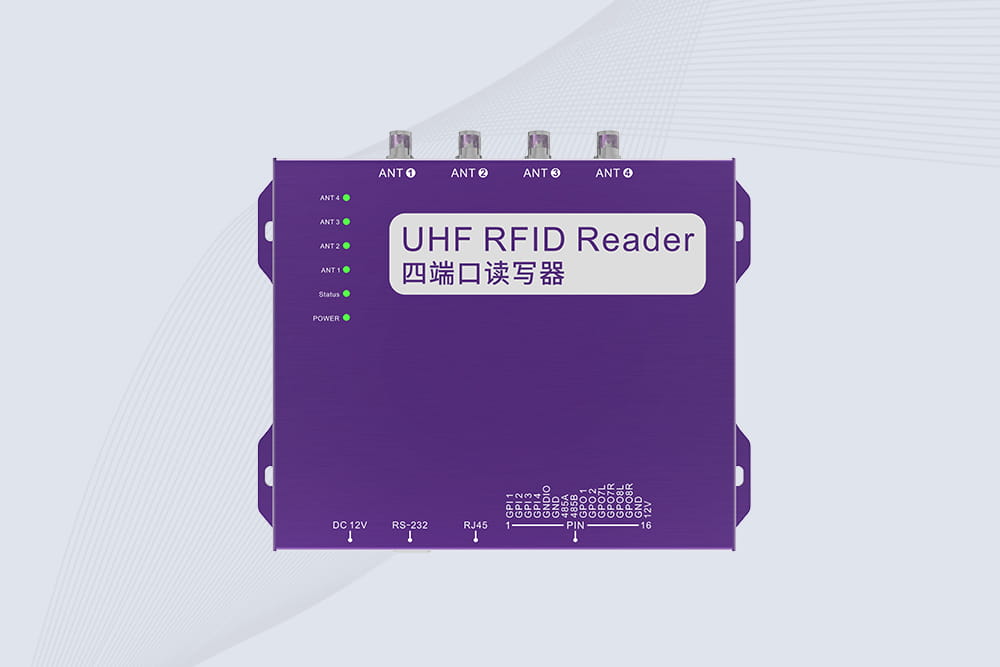
Cykeo’s CYKEO-R4L 4-port Fixed UHF RFID Reader delivers 400 tags/sec scanning, ISO 18000-6C compliance, and IP65 protection. Ideal for warehouse automation, manufacturing WIP tracking, and logistics management.
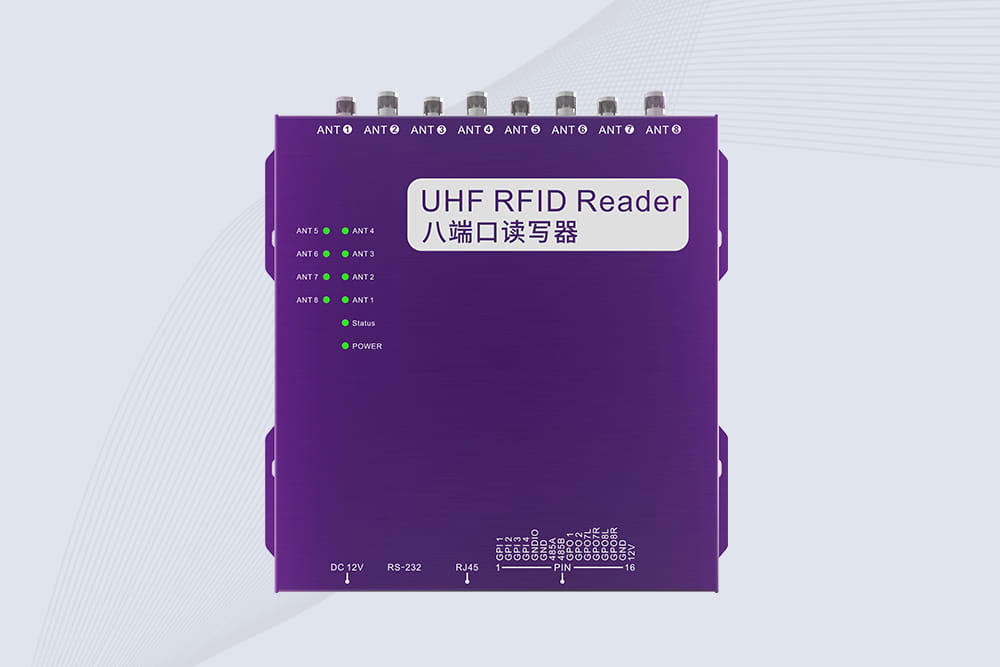
CYKEO CYKEO-R8L Fixed RFID Reader with 8-port UHF design, Impinj-based RF core and up to 20m read range. An industrial Fixed RFID Reader for vehicle inspection, warehouse portals, smart manufacturing lines and secure access checkpoints.
RFID Industry Writer | IoT & Asset Tracking Analyst
James writes about RFID technology, asset tracking, and the practical challenges of digital transformation across warehousing, retail, manufacturing, and logistics.
His work focuses on how RFID is applied in real-world operations—improving inventory visibility, automating workflows, and helping businesses manage assets with greater accuracy and efficiency.
He regularly covers topics including UHF RFID, smart cabinets, RFID portals, tool tracking, warehouse automation, and industrial IoT trends..

Discover how RFID cards streamline electric car charging access, authentication, and billing. Learn about their benefits, security, and Cykeo’s charging solutions.
More
rfid reader/writer solutions improve UHF tag encoding, asset tracking, and inventory accuracy. Discover Cykeo desktop RFID platforms for fast multi-tag reading.
More
Exploring the applications of RFID in the automotive industry, from manufacturing and supply chain optimization to vehicle security and maintenance, and understanding how it improves efficiency and safety.
More
A practical guide to RFID USB readers, focusing on real application scenarios, tag writing workflows, and how developers use USB RFID readers for testing, encoding, and system integration.
More