RFID asset tracking systems use RFID tags, rfid readers, rfid antennas, and software to automatically identify, locate, and manage physical assets in real time. They reduce manual inventory work, improve asset visibility, and help organizations prevent loss, misplacement, and operational inefficiencies.
After participating in RFID deployments across warehouses, manufacturing plants, healthcare facilities, and government institutions over the past decade, I have found that most organizations do not initially struggle with asset shortages—they struggle with asset visibility. RFID solves that visibility gap.
Why RFID Asset Tracking Systems Are Becoming Essential
Many businesses still rely on spreadsheets, barcode scans, or manual audits to manage equipment and inventory. These methods work until asset volumes grow.
At one industrial warehouse project, operators spent nearly two full days every month locating misplaced equipment. The assets were not stolen. They were simply invisible within daily operations.
RFID changed that process completely.
According to research published by the U.S. Department of Defense RFID Program Office, RFID technology significantly improves inventory accuracy and asset visibility across large-scale logistics operations.
Similarly, GS1 reports that RFID deployments can substantially improve inventory accuracy compared with traditional manual counting methods.
How RFID Asset Tracking Systems Work
A typical RFID asset tracking system consists of four primary components:
Component
Function
RFID Tags
Store unique asset identity
RFID Readers
Capture tag information
RFID Antennas
Extend reading coverage
Management Software
Visualize and analyze asset data
The process is simple:
RFID tags are attached to assets.
Readers automatically identify tagged items.
Data is transmitted to software platforms.
Asset movements become visible in real time.
Unlike barcode systems, RFID does not require direct line-of-sight scanning.
RFID Asset Tracking Systems in Warehouse Operations
The Difference Between Inventory and Visibility
Inventory counts tell you what should exist.
RFID tells you where it actually is.
This distinction becomes critical in large warehouses.
During a recent deployment, forklifts continuously moved tagged pallets through loading zones. Managers no longer waited for end-of-day reports. Asset movements appeared instantly within the dashboard.
The operational impact was immediate:
Faster inventory audits
Reduced search time
Improved shipping accuracy
Lower labor requirements
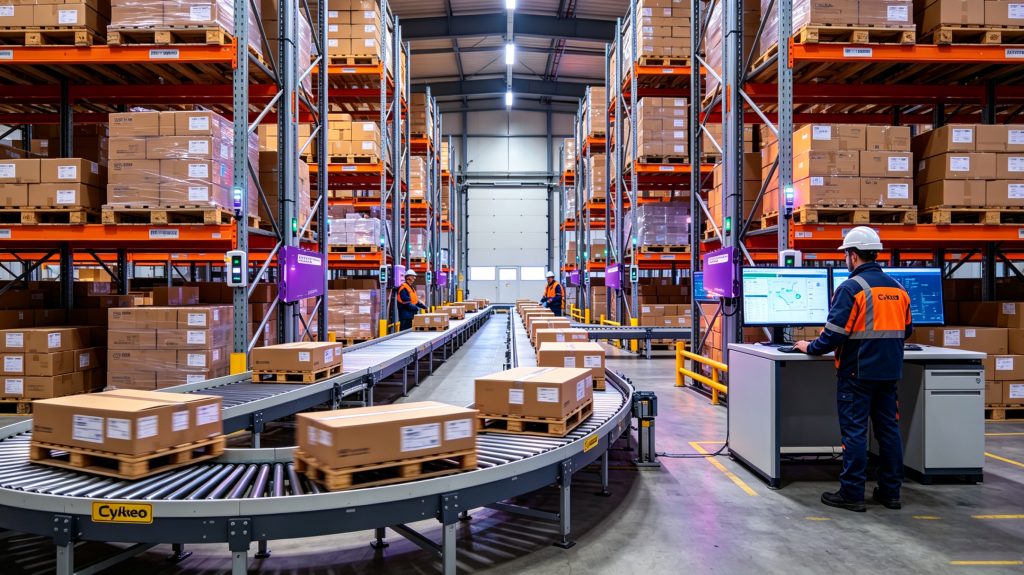
Cykeo RFID asset tracking solution deployed within a modern logistics facility.
Key Benefits of RFID Asset Tracking Systems
Improved Inventory Accuracy
One of the most cited benefits of RFID is inventory accuracy.
According to Auburn University’s RFID Lab, many retail RFID implementations achieve inventory accuracy levels exceeding 95%.
Higher inventory accuracy translates into better planning and fewer operational surprises.
Reduced Asset Loss
Misplaced tools, equipment, and inventory often represent hidden operational costs.
RFID provides accountability by creating digital movement records.
Faster Audits
Organizations that previously required days for asset verification can often complete audits within hours.
Enhanced Compliance
Healthcare, government, and manufacturing organizations frequently use RFID records to support regulatory compliance and reporting requirements.
Yet these are precisely the environments where RFID often delivers the highest value.
At a factory deployment, tagged tooling moved between machining cells throughout the day. Prior to RFID, operators frequently spent valuable production time searching for shared tools.
After deployment, tool location became instantly visible through the asset management platform.
Production interruptions dropped noticeably within the first operational quarter.
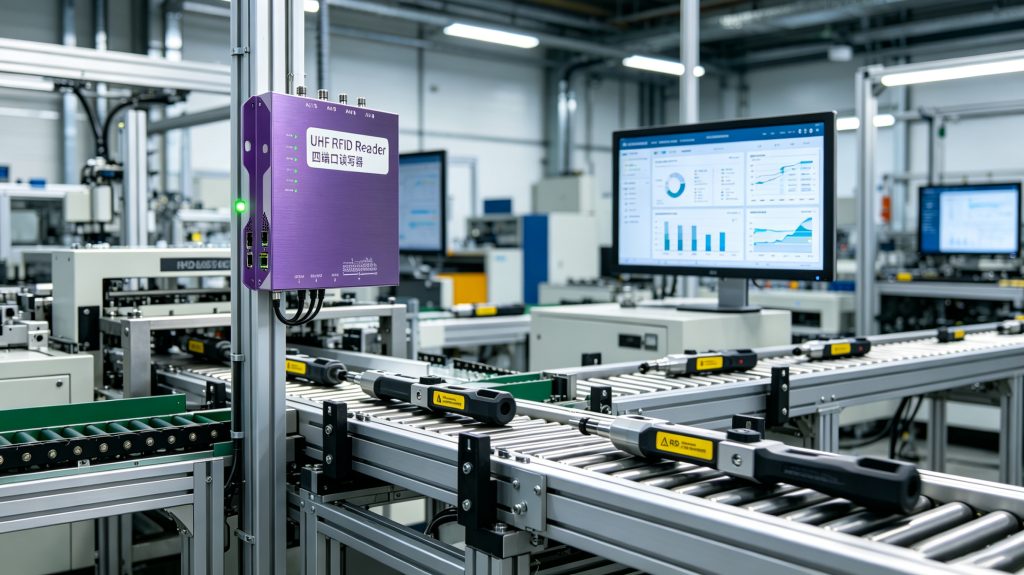
Cykeo RFID infrastructure providing real-time visibility of manufacturing assets.
Common RFID Asset Categories
Organizations typically track:
IT assets
Medical equipment
Warehouse inventory
Manufacturing tools
Returnable transport items
Government records
Archive boxes
High-value instruments
The technology scales from hundreds to millions of assets.
Expert Insight from Cykeo Deployments
A common misconception is that RFID projects fail because of hardware.
In reality, most deployment challenges originate from workflow design.
Reader placement.
Tag selection.
Process integration.
These decisions often determine project success more than hardware specifications alone.
The best RFID deployments are operational projects first and technology projects second.
FAQ
What are RFID asset tracking systems used for?
RFID asset tracking systems automatically identify, monitor, and manage physical assets throughout their lifecycle.
How accurate are RFID asset tracking systems?
Well-designed systems commonly achieve inventory accuracy levels above 95%, depending on deployment conditions and asset types.
Can RFID track assets in real time?
Yes. Fixed readers and RFID software can provide continuous asset visibility and movement records.
Which industries use RFID asset tracking systems?
Warehousing, healthcare, manufacturing, retail, government, logistics, education, and energy sectors widely deploy RFID asset tracking solutions.
Discover how rfid in hospital improves medical supply management with Cykeo RFID smart cabinets, enabling real-time inventory, 99.9% read accuracy, full traceability, and automated hospital workflows.
RFID technology offers powerful theft prevention solutions for libraries. This article explores how RFID tags help libraries enhance security, reduce book theft, and promote intelligent management.
Disposable RFID Tags enable flexible short-term identification for healthcare, logistics, and events. Explore Cykeo RFID solutions with expert insights.
How to use RFID card: Match the card with a compatible reader, present it within the operating field, and verify that the connected system processes the corr...
 Cykeo RFID IoT Solution Products R&D Manufacturer