 Cykeo RFID IoT Solution Products R&D Manufacturer

Can I obtain data from RFID via Bluetooth?
1201Learn how to obtain data from RFID tags via Bluetooth for seamless wireless workflows. Discover compatible devices, setup steps, and Cykeo’s Bluetooth-enabled RFID solutions.
MoreAll RFID Product
qué es rfid? RFID, or Radio Frequency Identification, is a technology that uses radio waves to identify and exchange data with tagged objects. An RFID system typically includes tags, readers, and software. It helps businesses identify products, count inventory, track assets, and record item movements without scanning every label individually.
RFID is often introduced as a faster alternative to barcodes. That description is useful, but incomplete. The important difference is not simply reading speed. A barcode usually requires a scanner to see a printed code, while an RFID reader can communicate with compatible tags through radio waves. Depending on the tag type, frequency, antenna arrangement, and surrounding materials, it may identify several tagged items in one reading zone.
This changes how information is collected in a warehouse, retail store, factory, or library. Instead of asking an employee to locate and scan each individual label, a business can create a controlled reading point and capture tag information as goods pass through it.
The technology is not magic, however. A tag does not automatically provide an object’s live GPS position, and an RFID reader cannot reliably identify every tag in every environment. Good results depend on the relationship between the tag, reader, antenna, software, and physical operating conditions.
RFID stands for Radio Frequency Identification. It describes a method of identifying objects by using radio-frequency communication between a reader and an electronic tag.
The tag stores an identifier and, depending on its design, may contain additional information. When it enters a reader’s effective field, the reader sends a radio signal. A compatible tag responds, allowing the system to capture its stored data.
A typical RFID solution has three main layers:
The reader does not necessarily know that a tag represents a carton of electronic components or a garment in a retail store. It receives an identifier. The business application then looks up the corresponding record in a database or management platform.
This distinction matters. RFID captures an identity; the connected information system gives that identity business meaning.
RFID works through radio-frequency communication between a reader and a tag. The exact communication process varies by frequency and tag design, but a passive UHF system provides a useful example because it is widely used in logistics, retail, and inventory management.
An RFID reader is connected to one or more antennas. When activated, it transmits a radio-frequency signal into a defined area.
The size and shape of that area depend on several factors:
A high-power reader does not guarantee reliable identification. If the antenna is poorly positioned or the tags are unsuitable for the objects they are attached to, increasing output power may create more stray reads rather than solve the problem.
A passive RFID tag has no internal battery. It uses energy from the reader’s radio-frequency field to power its chip and respond.
The tag generally consists of:
When the tag receives enough energy, its chip can respond according to the communication protocol supported by the system.
Active RFID tags work differently because they contain their own power source. Battery-assisted passive tags are another category: they use a battery to support the chip or sensing functions, while communication may still rely on a reader’s signal.
In a common passive UHF system, the tag communicates by changing or modulating the way it reflects the reader’s signal. This is known as backscatter communication.
The reader detects the response and decodes the information. If multiple tags are present, anti-collision procedures help the reader identify them without treating every response as one combined signal.
This is why RFID can be useful for reading groups of products. The system is designed to manage multiple tag responses, although the actual number of tags identified in a single pass depends on the reader, protocol settings, tag population, antenna configuration, and environment.
After reading a tag, the reader sends the captured data to a connected computer, controller, or application.
For example, a warehouse system may associate an EPC with:
The RFID reader captures the identifier. The warehouse management system determines what that identifier represents and what action should follow.
A useful implementation therefore needs more than successful radio communication. It also needs correct tag encoding, data mapping, event handling, and integration with the business application.
RFID systems are commonly classified by their operating frequency: Low Frequency (LF), High Frequency (HF), and Ultra-High Frequency (UHF). These categories differ in reading distance, communication characteristics, and typical applications.
The choice should be based on the object and operating process, not simply on which frequency offers the longest read range.
| RFID frequency | Common frequency | Typical reading characteristics | Common applications |
|---|---|---|---|
| LF | 125–134 kHz | Short range, often close to the reader | Animal identification, industrial identification, access applications |
| HF | 13.56 MHz | Short to moderate range, depending on standard and antenna | Smart cards, library systems, NFC-related applications, ticketing |
| UHF | Approximately 860–960 MHz, depending on regional allocation | Several metres may be possible in suitable conditions | Retail inventory, warehouse operations, logistics, asset tracking |
GS1 describes HF RFID as commonly operating at 13.56 MHz. Passive UHF, also known as RAIN RFID, operates in the 860–930 MHz range under the relevant GS1/EPC Gen2 system. GS1 notes that UHF reading distances can reach up to 10 metres depending on the environment. These are general technical characteristics, not guaranteed distances for every product or installation.
One detail is easy to overlook: UHF frequency allocations vary by country. A reader configured for one market may not be suitable for another. GS1 Japan, for example, documents the UHF frequency allocation used in Japan and highlights the need to check local radio regulations when deploying RFID equipment across borders.
LF RFID is often selected for applications where short-range identification is sufficient. It is used in areas such as animal identification and certain industrial or access-control systems.
Its relatively short reading distance can be useful when the system needs a clearly defined interaction point. A reader positioned near a tagged object can identify it without creating a large reading zone.
HF RFID operates at 13.56 MHz and supports several established standards. It is widely used in contactless cards, ticketing, library applications, and other systems where a controlled reading interaction is appropriate.
NFC is also based on 13.56 MHz technology, although NFC and other HF RFID applications do not all use the same protocols or serve identical purposes. Compatibility must be checked at the standard and device level.
UHF RFID is widely used when businesses need to identify many tagged objects over a larger reading area.
For example, a warehouse can install fixed readers near receiving or dispatch points. When tagged cartons pass through a configured reading zone, the system can capture their identifiers and compare them with expected shipment records.
UHF is also suitable for handheld inventory checks, retail stocktaking, and production-line identification. Its performance is strongly affected by antenna placement, tag orientation, the density of tagged objects, and the surrounding materials.
A UHF tag attached directly to a metal surface may behave very differently from the same tag attached to a cardboard carton. Metal can detune or shield an ordinary tag antenna, while water-rich materials can absorb or alter radio-frequency energy. Specialized on-metal tags and careful antenna positioning may be needed.
RFID tags can be classified by their power source, physical construction, and intended application. Understanding these differences helps prevent a common purchasing mistake: selecting a tag based only on its frequency or price.
Passive RFID tags do not have an internal battery for normal communication. They receive energy from the reader’s radio-frequency field and use backscatter to send information back.
They are commonly used for:
Because passive tags do not need a battery, they can be made small and economical enough for item-level identification. Their actual performance still depends on tag design, the material they are attached to, and the reader system.
Active RFID tags contain their own power source, usually a battery, and use it to operate their electronic circuitry and transmit a signal.
They are generally used where longer communication distances or additional functionality justify their higher cost and larger physical size. Examples include certain vehicle, railway, and high-value asset tracking applications.
GS1 explains that active tags can have a much longer reading range than passive tags, while passive tags rely on energy supplied by the reader. The two categories therefore serve different operational needs rather than competing as interchangeable products.
Battery-assisted passive tags sit between the two categories. A battery supports the chip or sensor functions, but the tag may still communicate by backscattering a signal from the reader.
These tags can be useful when an application needs capabilities that a conventional passive tag cannot easily provide, such as certain sensor-related functions.
The same RFID technology can be packaged in very different physical forms.
Thin, lightweight formats commonly used on retail products, cartons, and shipping labels.
More durable housings for equipment, tools, returnable containers, and demanding environments.
Commonly used for access control, identification, and contactless interactions.
Designed for attachment to garments, uniforms, and reusable textiles that undergo repeated handling.
A tag’s physical format is not a reliable indication of its frequency. A card, label, or hard tag may use different RFID technologies. Always confirm the frequency, protocol, memory configuration, and reader compatibility before ordering.
RFID is used wherever an organization needs to identify objects, record their movement, or verify that specific items are present. The most useful applications are usually connected to a defined business process rather than a standalone reading demonstration.
Retailers use RFID labels to identify individual products and improve visibility across stores, stockrooms, and distribution operations.
A handheld reader can collect information from tagged products during a stock count. A fixed reader may be installed at a receiving point or another controlled location to capture product movement.
This can help staff identify discrepancies between recorded inventory and physical stock. It can also support replenishment decisions when the RFID data is integrated with the retailer’s inventory system.
There is published research behind this application. A study by Bill C. Hardgrave, John A. Aloysius, and Sandeep Goyal, published in Production and Operations Management in 2013, examined RFID-enabled inventory visibility in two retail field experiments.
The first experiment covered 13 stores over 23 weeks and reported an approximately 26% decrease in inventory record inaccuracy. The second expanded the research to 62 stores and five product categories. The researchers found that results varied by category, with improvements ranging from no statistically significant improvement to 81%. Sage Journals+1
The practical lesson is not that every RFID installation will improve inventory accuracy by 26%. The study shows that RFID can make a measurable difference under specific operating conditions. Product category, tagging coverage, data quality, and the way a retailer uses the captured information all matter.
In a warehouse, RFID can support receiving, put-away, picking, packing, and dispatch operations.
For example, a business may attach UHF RFID labels to cartons or pallets. At goods receiving, a fixed reader can capture identifiers as tagged items pass through a designated zone. The warehouse management system can then compare the captured data with the expected purchase order.
This approach may reduce repetitive manual scanning, but it needs careful configuration. If tags from nearby storage locations are also read, the system may record items that have not actually crossed the receiving point. Antenna direction, shielding, reader power, and software filtering help define the intended reading zone.
Manufacturers can use RFID to identify work-in-process items, tools, fixtures, and reusable containers.
A tag can carry a unique identifier that links a component to its production record. When the item reaches a workstation, an RFID reader can capture its identity and allow the production system to retrieve the relevant process information.
The value is often found in reducing uncertainty: which component arrived, which batch it belongs to, and whether the expected item has reached the next operation.
Libraries use RFID to support circulation, returns, inventory checks, and self-service operations. The technology can help identify books and other media without requiring staff to scan each barcode individually.
Businesses also use RFID to manage tools, IT equipment, reusable transport items, and other assets. The tag identifies the asset; the connected system records its assigned location, status, or movement history.
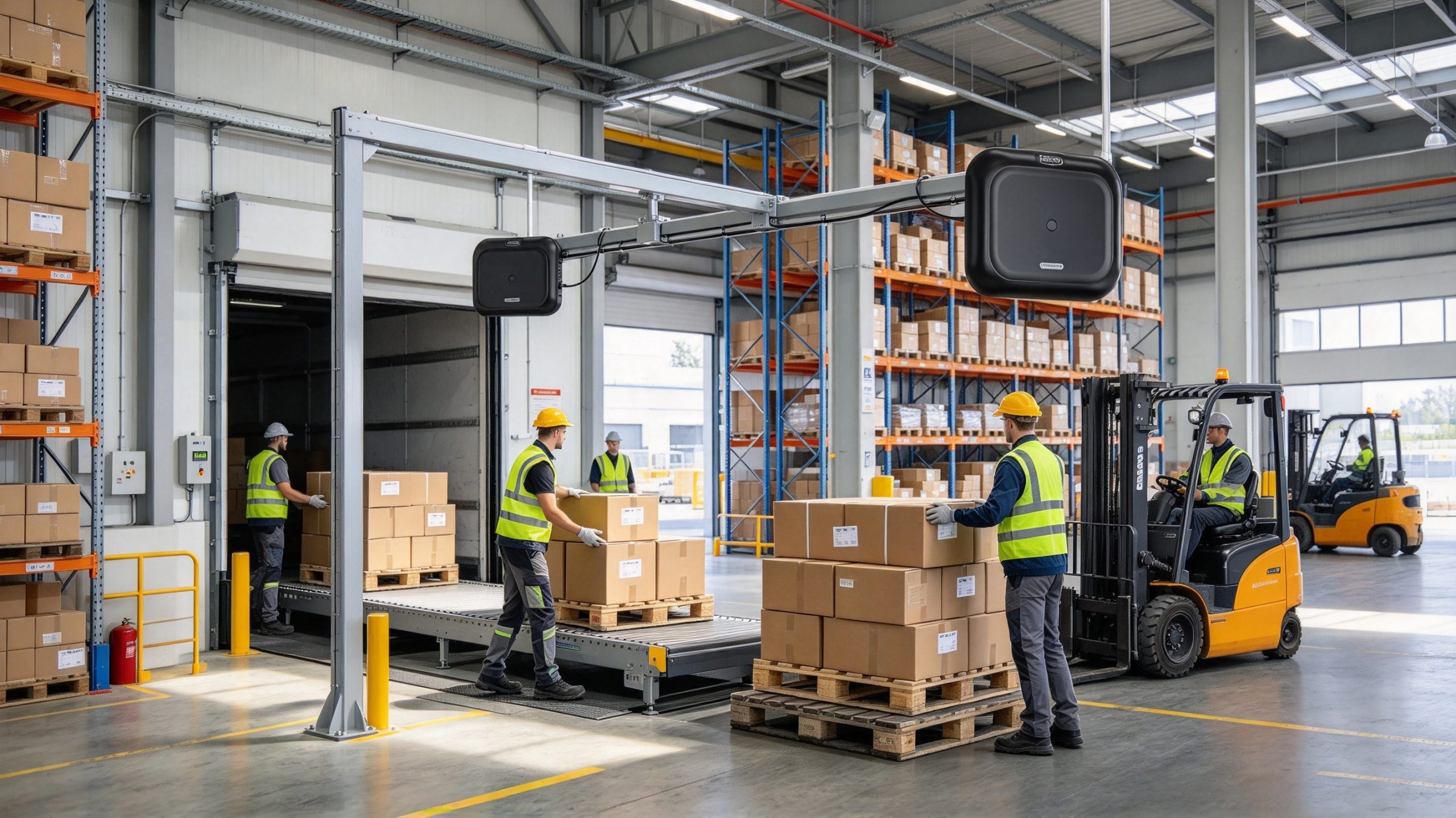
RFID and barcodes both help businesses identify products and assets, but they collect information in different ways. A barcode scanner reads a printed visual pattern, while an RFID reader communicates with an electronic tag using radio waves.
This difference affects how each technology performs during stocktaking, receiving, and tracking operations.
| Comparison | RFID | Barcode |
|---|---|---|
| Identification method | Radio-frequency communication | Optical scanning |
| Line of sight | Usually not required | Usually required |
| Multiple-item reading | Supported by suitable RFID systems | Generally scanned one code at a time |
| Data storage | Depends on tag chip and memory type | Usually encoded in the printed symbol |
| Reading distance | Depends on frequency, tag, and reader configuration | Depends on scanner and barcode quality |
| Physical durability | Can be protected inside a suitable tag or label | Printed code can become damaged or obscured |
| Typical costs | Tags and infrastructure can cost more | Labels and scanners are often less expensive |
| Common applications | Inventory visibility, logistics, asset tracking | Product identification, checkout, document tracking |
RFID is worth evaluating when the operation involves large quantities of items, frequent stock counts, reusable assets, or movement through controlled checkpoints.
Consider a distribution centre receiving hundreds of cartons. With barcode scanning, an employee generally needs to position the scanner so that each label can be read. A UHF RFID system may capture multiple tagged cartons as they pass through a configured reading area.
That does not mean RFID is automatically the better option. If a business handles a small number of products and scans them individually at a checkout counter, a barcode system may be simpler and more economical.
A practical decision should consider:
Some organizations use both technologies. A product may carry a barcode for conventional scanning and an RFID label for automated inventory identification. The two methods can serve different stages of the same supply chain.
RFID can improve how organizations collect and use identification data. Its benefits are most apparent when the technology is connected to a process that previously depended on repeated manual scanning or incomplete records.
A suitable RFID reader can identify several tags within its reading zone. This is useful for stocktaking, carton verification, and tracking groups of tagged assets.
The actual reading performance depends on the tag population, protocol, reader capability, antenna configuration, and operating environment. A published maximum read rate should not be treated as a guaranteed result in a warehouse.
Unlike conventional barcodes, RFID tags do not normally need to be visually exposed to the reader. This can make identification easier when labels are inside cartons, attached to garments, or positioned in locations that are awkward to scan optically.
There are limits. Radio signals can be affected by metal, liquids, tag orientation, and interference. A tag hidden behind an unsuitable material may not be read reliably.
When RFID events are integrated with inventory software, businesses can compare recorded stock with the items actually detected at a reading point.
For example, a receiving system can compare tag identifiers against an expected delivery list. If an expected tag is missing, the system can flag the discrepancy for investigation.
RFID tags can identify tools, containers, equipment, and other reusable assets. A business can associate each tag with an asset record and use reader events to support check-in, check-out, or movement records.
This is particularly useful when assets are shared between teams or locations.
A well-designed RFID installation can capture identification events at defined points in a workflow. This reduces reliance on employees remembering to scan every item manually.
However, automation does not eliminate the need for process controls. Incorrectly encoded tags, duplicate records, missed reads, and poorly configured software can still produce inaccurate information.
RFID is useful, but it is not a universal identification solution. Many problems attributed to the technology are actually caused by a mismatch between the tag, reader, installation, and application.
Metal surfaces can alter the behaviour of an RFID tag antenna. Liquids can absorb or affect radio-frequency energy, particularly in UHF applications.
For these environments, businesses may need specialized on-metal tags, suitable mounting positions, or antenna configurations designed for the application.
A standard low-cost label should not be assumed to work equally well on a metal machine, a bottle of liquid, and a cardboard carton.
A reader may detect tags outside the intended area. In a warehouse, this could mean reading inventory from a nearby shelf while the system is supposed to record only goods passing through a receiving point.
Common ways to manage this include:
The goal is not simply to maximize the number of reads. It is to capture the correct tags at the correct moment.
A tag may not respond if it receives insufficient energy, is poorly oriented, is damaged, or is affected by nearby materials. Dense tag populations can also make reliable identification more challenging.
A useful troubleshooting process starts with a small test group. Confirm that each tag is compatible, correctly encoded, and readable at the intended position before expanding the installation.
An RFID project may require tags, readers, antennas, cabling, mounting hardware, software development, and system integration. The total cost depends on the number of reading points and the complexity of the process.
For that reason, a pilot installation is often more useful than purchasing a large quantity of equipment immediately. It allows the business to measure actual performance under operating conditions.
Choosing an RFID system begins with the business task, not the reader specification sheet.
A warehouse that needs to verify pallets at a loading bay has different requirements from a library that needs to identify books at a self-service station. Both may use RFID, but the tag format, frequency, antenna arrangement, and software are not necessarily interchangeable.
Write down exactly what the system needs to identify.
Examples include:
Also define where identification should happen: at a workstation, on a conveyor, at a doorway, or across a storage area.
Check the tag and reader specifications together. For passive UHF applications, EPC Class 1 Gen 2 and ISO/IEC 18000-63 are widely used references.
The correct regional frequency configuration is also essential. A reader intended for one regulatory market should not be assumed to operate legally or correctly in another.
Suitable for automated reading points such as warehouse entrances, production stations, and conveyor systems. The reader can be connected to external antennas or use an integrated antenna, depending on the model.
Useful for mobile inventory checks, asset searches, shelf audits, and tasks where employees need to move between reading locations.
Designed for workstation-based applications such as tag encoding, registration, testing, and small-scale item identification.
A tag must be selected for the object and environment where it will be used.
For example:
| Object or environment | Tag consideration |
|---|---|
| Cardboard cartons | Standard UHF label may be suitable |
| Metal tools or machinery | Consider an on-metal RFID tag |
| Garments | Lightweight textile or label format |
| Reusable plastic containers | Durable tag with suitable mounting |
| Books and documents | Tag format compatible with the library system |
| Laundry textiles | Washable tag designed for repeated laundering |
Do not evaluate a reader using only one tag placed directly in front of its antenna.
Test the actual products, tag positions, movement speeds, and expected item quantities. Include difficult cases: cartons stacked closely together, tags facing different directions, and objects positioned near metal structures.
Record both successful and unsuccessful reads. A system that reads every tag in a carefully arranged demonstration may perform differently during a busy shift.
An RFID reader can successfully identify a tag without automatically updating the company’s inventory.
The reader must send the captured data to an application that understands the tag identifier and knows what action to take. Depending on the project, integration may involve a warehouse management system (WMS), enterprise resource planning (ERP) platform, manufacturing execution system (MES), library management software, or a custom application.
Before selecting equipment, confirm:
An RFID installation should be designed around the movement of objects. The physical reading zone is just as important as the electronic specifications.
Consider a warehouse that wants to record cartons entering a receiving area. Installing a fixed reader above the doorway may seem straightforward, but the actual result depends on how cartons move through the entrance, how tags are attached, and whether nearby inventory can also be detected.
A more controlled installation usually follows several stages.
Identify where items enter, leave, change location, or require verification. Mark the points where an RFID reading event should occur.
For a warehouse, these may include:
Not every movement requires a reader. Start with the points where automatic identification can replace a repetitive manual task or reduce a specific operational risk.
Antenna placement should match the direction and expected position of tagged objects.
For example, a portal reading zone may use antennas positioned on both sides of a passage. A workstation may need only one antenna positioned close to the item. A conveyor application may require a different arrangement to accommodate moving products.
The installation should be tested with real items rather than empty cartons or demonstration tags alone.
Reader output power, antenna selection, session settings, frequency configuration, and tag filtering all influence performance.
Higher transmission power is not always better. It can increase the likelihood of detecting tags outside the intended area. The objective is a stable, predictable reading zone.
The application should associate tag identifiers with the correct product or asset records. It should also handle repeated reads, missing tags, and unexpected items.
For example, if a carton passes a receiving point several times during a test, the application should not automatically create several independent goods-receipt transactions. Reader data needs to be interpreted within the context of the workflow.
A pilot should include normal operations, not just ideal laboratory conditions.
Measure:
These measurements help determine whether the system is ready to expand and where adjustments are necessary.
RFID return on investment should be measured against a specific operational problem. Faster reading is only one possible benefit. Labour savings, fewer inventory discrepancies, improved asset availability, and more reliable receiving records may also contribute.
A simple calculation is:
For illustration, assume a business spends 20 labour hours per week on a recurring inventory task. After introducing RFID, the task requires 8 hours per week.
The potential time saving is:
This is an illustrative calculation, not a published RFID industry benchmark. It also does not mean the full 624 hours automatically become financial savings. The business must determine whether the released time reduces overtime, avoids additional labour, or allows employees to complete other productive tasks.
A more complete project evaluation should include:
| Cost or benefit | What to measure |
|---|---|
| RFID tags | Cost per tagged item and annual tag volume |
| Readers and antennas | Equipment, installation, and maintenance |
| Software integration | Development, licensing, and support |
| Labour | Time spent on inventory and identification tasks |
| Inventory accuracy | Frequency and cost of stock discrepancies |
| Asset utilization | Lost equipment, idle assets, and search time |
| Process reliability | Receiving errors, dispatch errors, and manual rechecks |
The most useful baseline is the current process. Record how long it takes, how often errors occur, and what those errors cost before introducing new equipment. Without that comparison, it is difficult to distinguish a genuine improvement from a more expensive way of performing the same task.
The appropriate equipment depends on the reading environment and the required workflow. The following examples illustrate how different reader formats can support different RFID tasks.
Industrial fixed readers are commonly used at warehouse entrances, production stations, and other locations where tagged objects pass through a defined reading area.
For example, Cykeo’s CYKEO-RA9L / CK-D9L product family is designed for industrial UHF RFID applications. The supplied product specifications describe an integrated 9 dBi antenna configuration, with RS-232 and Ethernet options, anti-collision functions, and support for ISO 18000-6C/6B. A 12 dBi variant is also available.
These specifications should be confirmed against the current product datasheet and the intended regional frequency configuration before publication or purchase.
Desktop RFID reader-writers are suitable for workstation-based tasks, including tag encoding, registration, and testing.
The Cykeo SSD-D1AL is a desktop UHF RFID reader-writer specified with an Impinj R500 chip and a near-field antenna design. The supplied specifications state a maximum port output of 33 dBm, a reading distance of up to 30 cm, and a writing distance of up to 10 cm.
It also supports batch writing, tag filtering, and demonstration software, with C# and Java development materials.
These operating distances are product-specific stated limits, not guaranteed results for every tag or working environment. Actual performance should be verified with the tags and materials used in the application.

RFID stands for Radio Frequency Identification. It is a technology that uses radio waves to identify electronic tags attached to products, assets, or other objects. An RFID reader communicates with the tag and captures its stored identifier, which connected software can use to retrieve related information.
RFID uses radio-frequency communication rather than optical scanning. A compatible reader sends a signal, and the RFID tag responds with stored information. Passive tags obtain the energy needed for communication from the reader’s field. Because visual line of sight is generally unnecessary, RFID can identify suitable tagged objects even when their labels are not directly visible.
No. Basic RFID communication between a reader and a tag does not require an internet connection. However, a connected application may need a local network, server, or internet access to transfer records, synchronize inventory, or share information with other business systems. The communication requirements depend on the application architecture.
Yes. Suitable RFID systems use anti-collision procedures to identify multiple tags within a reading zone. The number of tags successfully read depends on the reader, protocol, tag design, antenna arrangement, and operating conditions. Dense tag populations and poorly controlled reading zones may require additional configuration and testing.
NFC is a short-range wireless technology operating at 13.56 MHz and is closely related to HF RFID. However, not every HF RFID device is NFC-compatible. NFC supports specific communication modes and standards commonly used in contactless payments, device pairing, and access applications. Compatibility depends on the protocols supported by the card, tag, and reader.
RFID can record an item’s presence or movement when it passes a reader or enters a defined reading area. A conventional passive RFID system does not automatically provide continuous GPS-style location tracking. To determine location, businesses typically use multiple readers, fixed checkpoints, or other location technologies combined with software.
Neither technology is universally better. RFID can be useful for identifying multiple items without scanning each label individually, while barcodes are often simpler and less expensive for individual product identification. The right choice depends on the number of items, operating process, required reading speed, environment, and total system cost.

Discover SSD-D4AL, a USB-HID UHF RFID reader with 4/8/16 antenna options, Impinj E710/X3M1 chipset, plug-and-play USB power, and OEM customization.
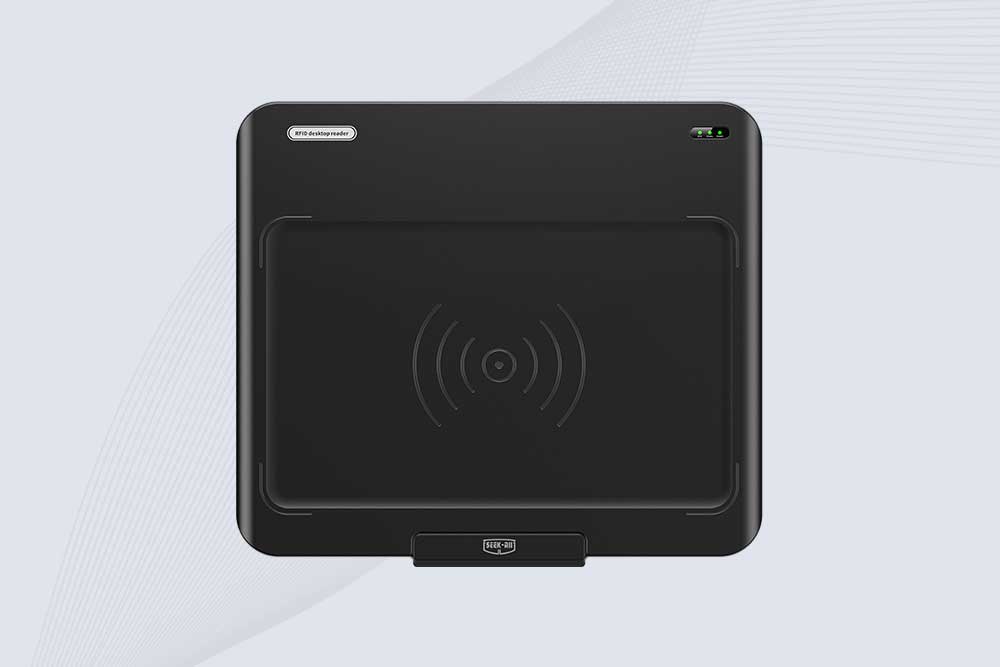
SSD-D3AL is a USB-HID UHF RFID reader with 0–30 cm reading, 0–15 cm writing, over 600 tags/s recognition, USB plug-and-play operation and OEM Logo customization.
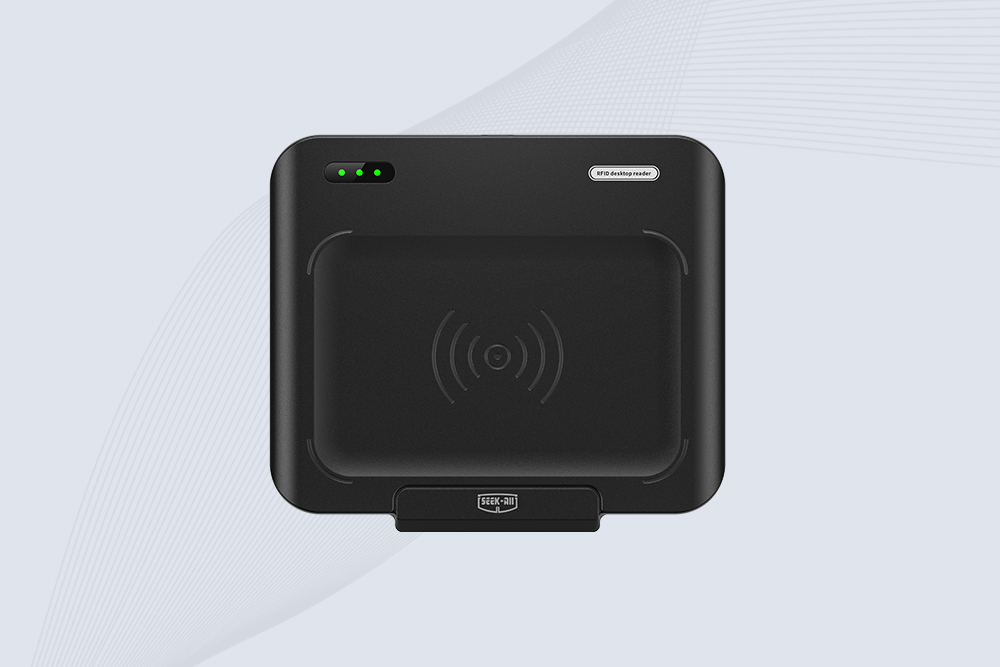
SSD-D1AL is a compact USB UHF RFID reader with Impinj E710/X3M1 chipset, USB-HID, 600+ tags/s recognition, 4/8/16 antenna support and plug-and-play USB power.
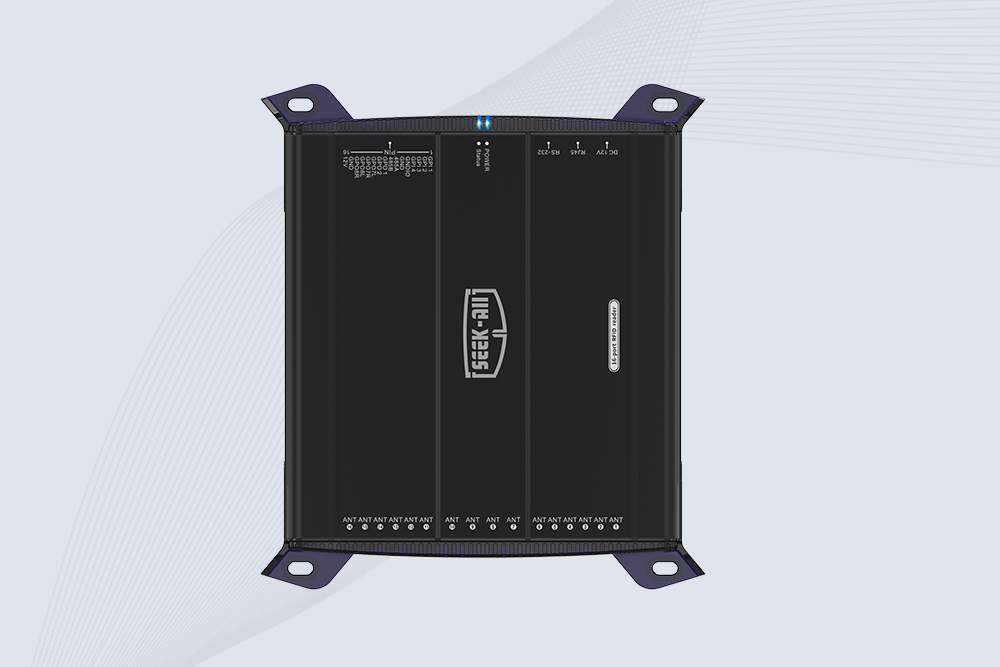
SSD-R16L Multi-Channel RFID Infrastructure for Automated Inventory Management ✔️ 16-Port High-Density RFID Reading Equipped with 16 SMA antenna ports, SSD-R16L supports multi-antenna deployment for warehouses, retail stores, logistics, production lines, and large-area RFID identification. ✔️ High-Speed & Long-Range Performance With up to 33…
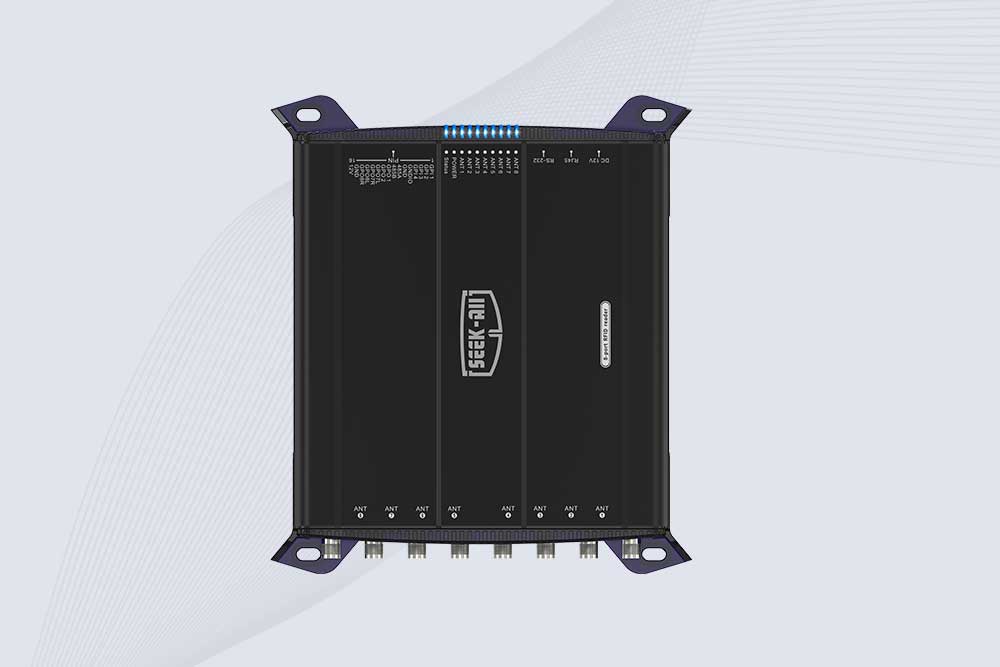
SSD-R8L 8-port UHF RFID reader with 33dBm output, up to 20m reading range and 600+ tags/s recognition. Ideal for warehouse, logistics, retail and asset tracking.
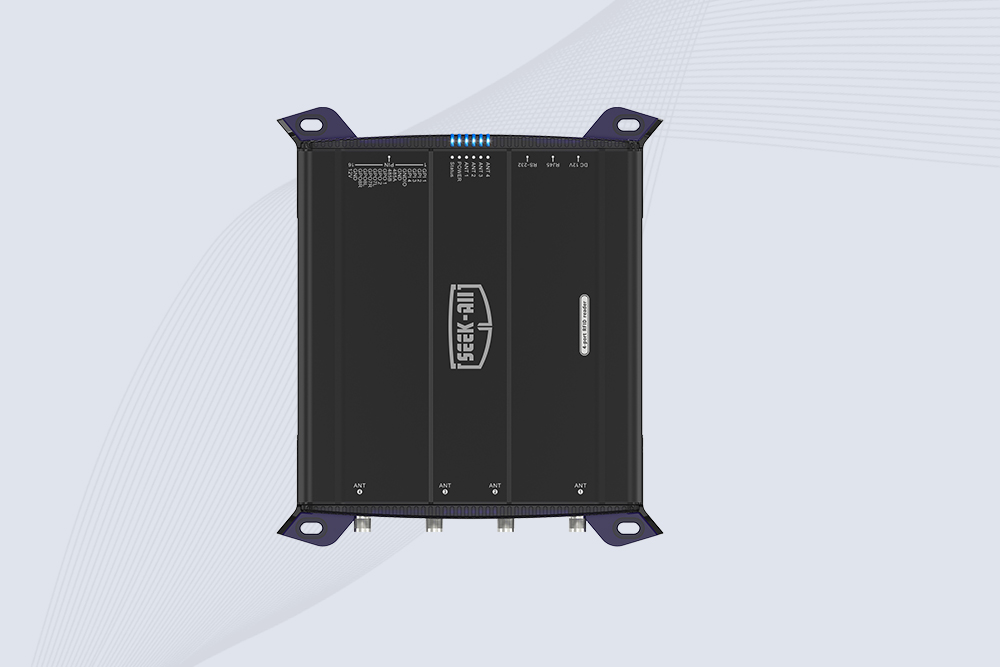
SSD-R4L is a 4-port UHF RFID fixed reader with 33dBm output power, up to 20m reading range, EPC C1G2 support and 600+ tags/s reading speed.

CYKEO CYKEO-D1LA USB RFID Reader is a compact desktop solution with near-field control for precise tag reading and encoding. Powered by USB, supporting ISO 18000-6C, and built for stable batch writing, this usb rfid tag reader fits retail, libraries, offices, and controlled RFID encoding tasks.
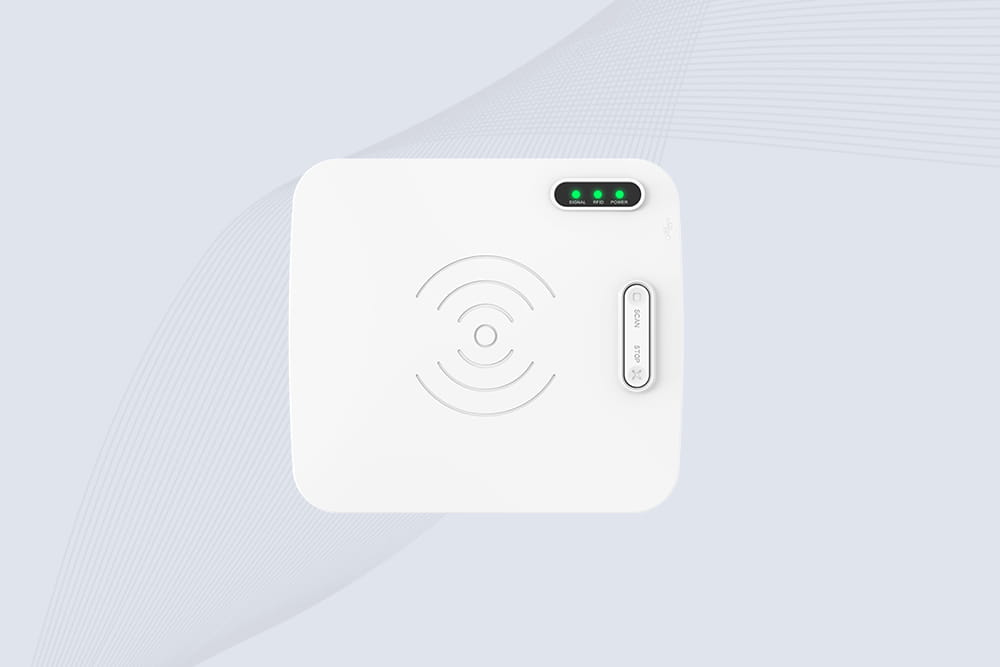
CYKEO CYKEO-D1L RFID scanner USB is a compact desktop UHF RFID scanner designed for short-range tag writing and verification. This usb rfid scanner supports batch encoding, stable 0–26 dBm output, and works across Windows, Linux, and Android systems.
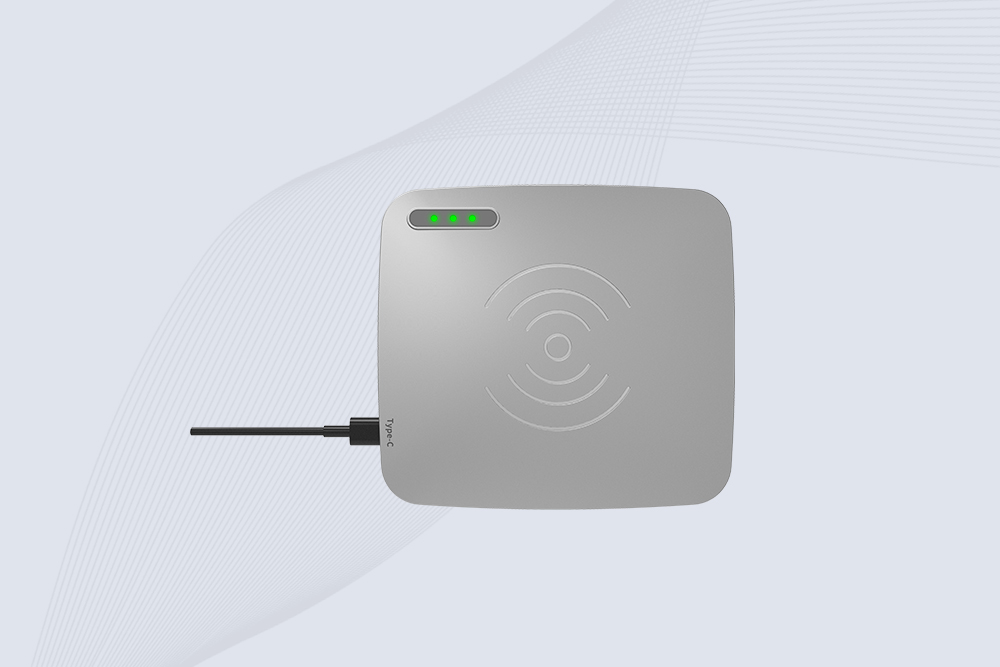
CYKEO CYKEO-D1C USB RFID Card Reader is a near-field UHF desktop writer designed for secure, short-range tag encoding. With USB-C connectivity and stable 26 dBm output, this rfid reader usb c is ideal for badge issuance, label encoding, and controlled desktop RFID workflows.
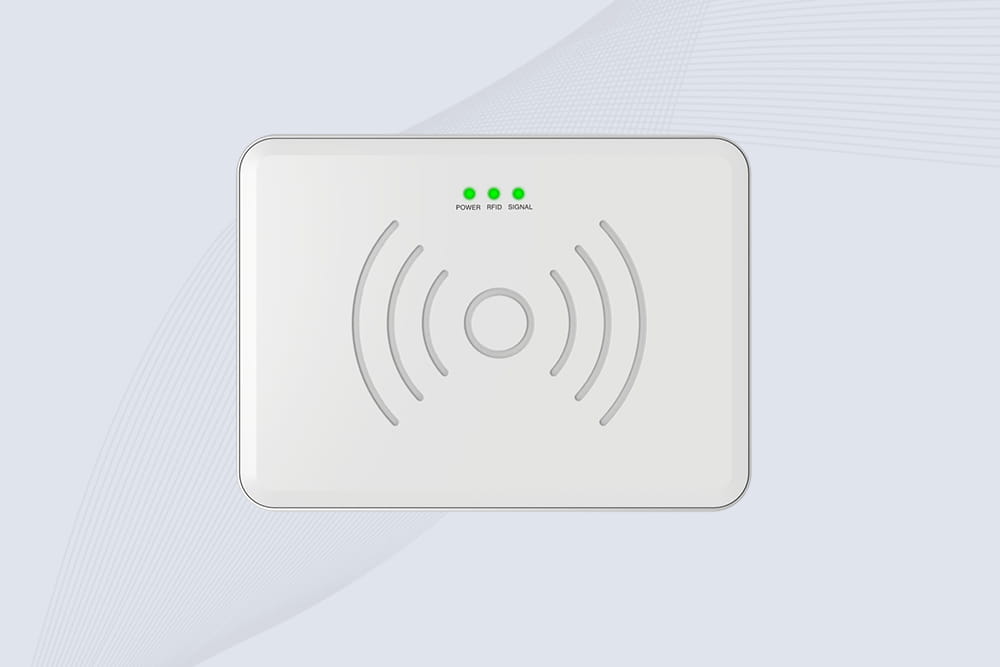
CYKEO CYKEO-D2L RFID Reader USB is a compact desktop encoder built on the Impinj R500 chip. With near-field control and stable USB power, this usb rfid card reader delivers precise tag writing for offices, retail counters, and small-scale logistics encoding tasks.
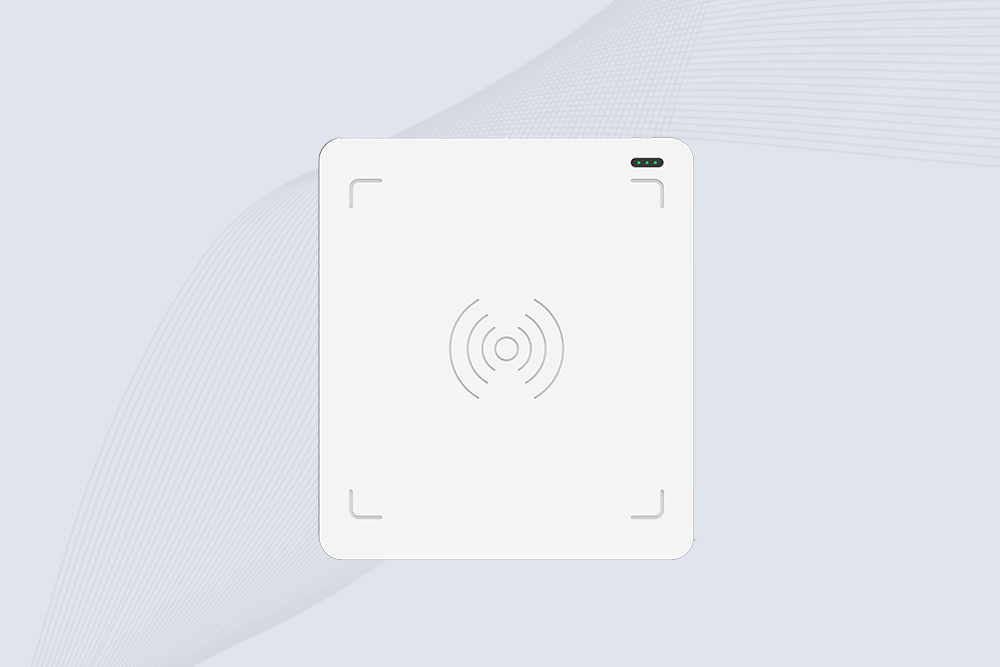
CYKEO CYKEO-D3L USB RFID Tag Reader delivers stable UHF tag reading and writing for daily desktop and light industrial tasks. Designed for controlled short-range operation, this USB RFID Tag Reader works reliably with rfid tag and reader systems in libraries, tool tracking, and inventory registration.
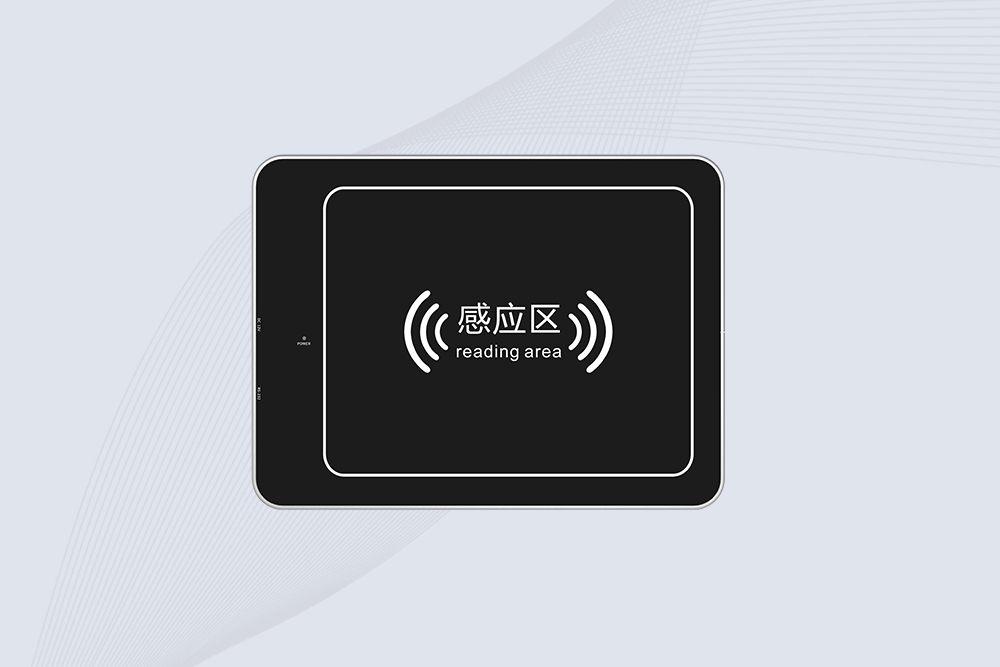
The CYKEO CYKEO-D4L UHF RFID Tag Reader is a stable Desktop RFID Reader designed for accurate tag registration, borrowing, and return workflows. Built with the Impinj R2000 chip, this UHF RFID Tag Reader delivers controlled short-range reads for libraries, asset tracking, and inventory management environments.
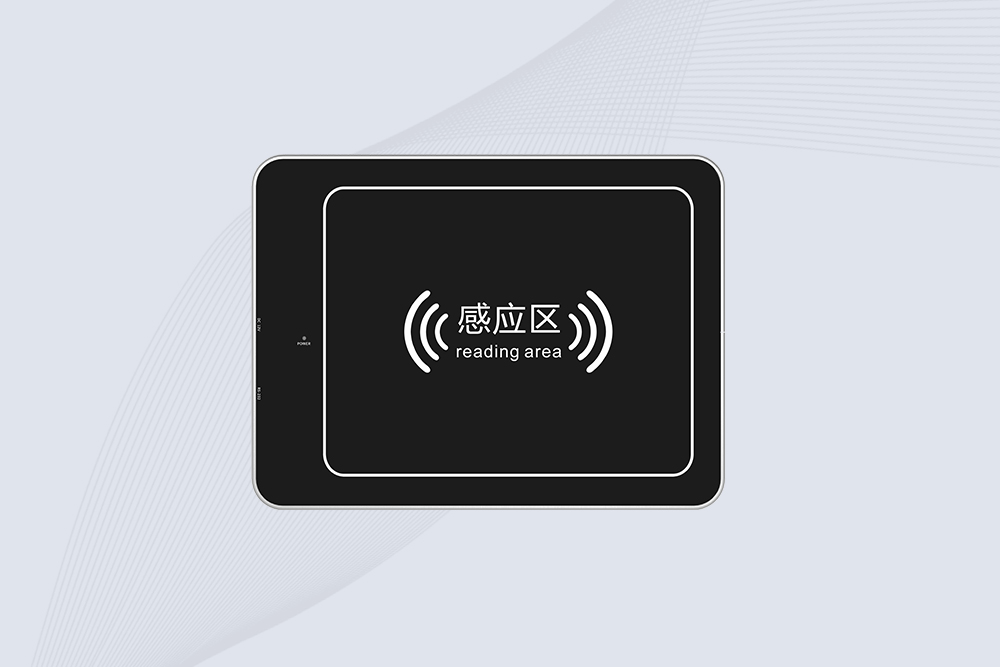
The CYKEO CYKEO-D5L Desktop RFID Card Reader is a stable UHF RFID Card Reader designed for controlled short-range reading and writing. Built for libraries, tool rooms, and asset desks, this UHF RFID Card Reader supports dense tag handling, secure data processing, and easy USB integration.
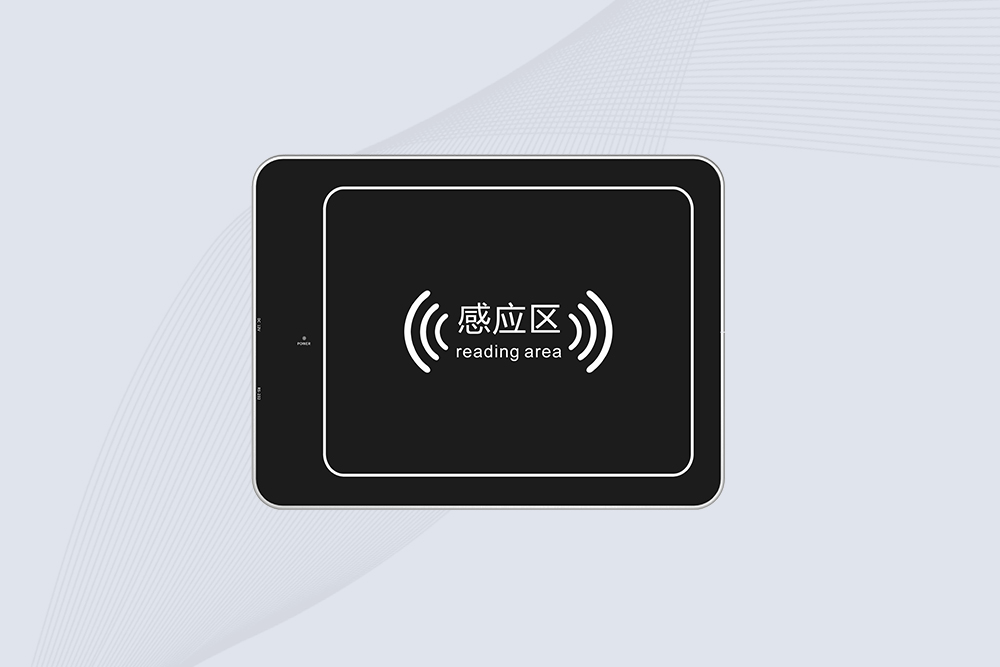
The CYKEO CYKEO-D6L RFID Reader Writer is a heavy-duty Desktop RFID Reader designed for short-range, high-accuracy tag programming. Built for libraries, labs, and asset desks, this RFID Reader Writer supports batch processing, stable 33dBm output, and seamless integration with existing management systems.
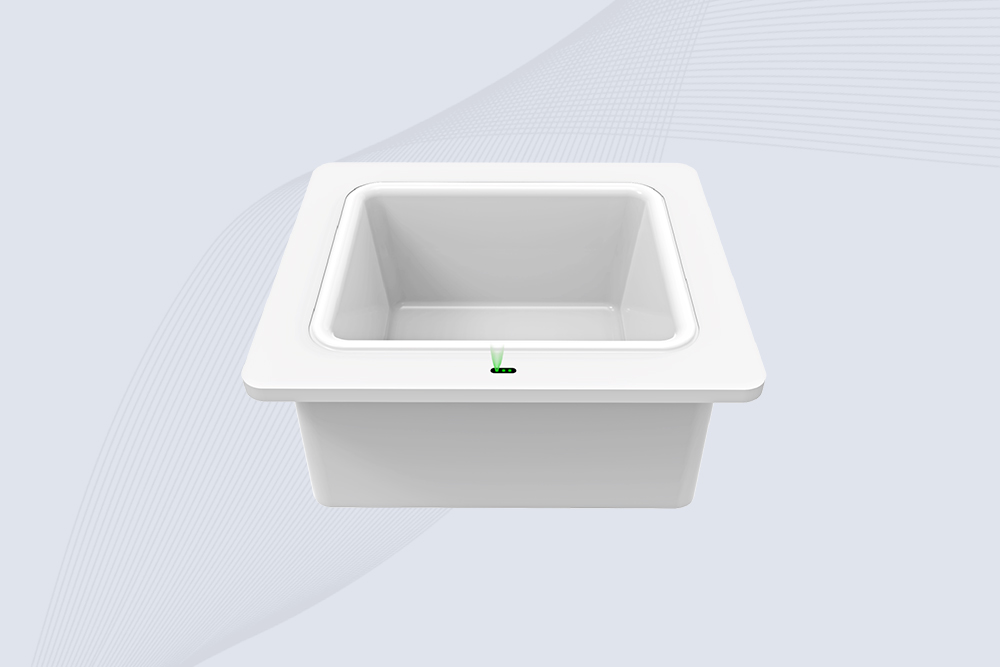
Cykeo CYKEO-D8B UHF RFID tunnel and RFID Desktop Reader features 30+ items batch reading,
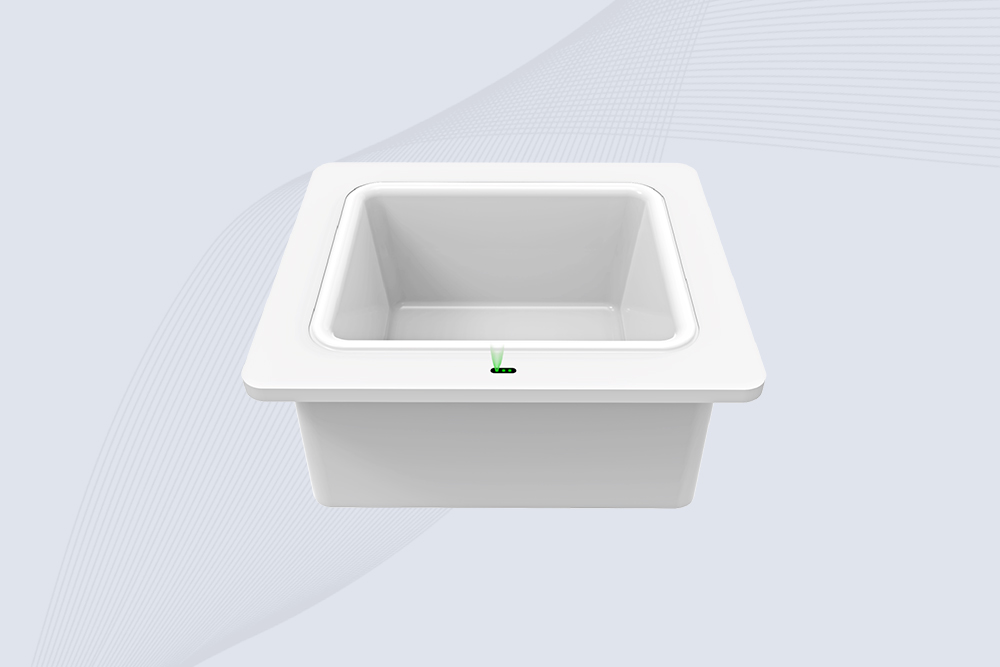
Cykeo CYKEO-D8A embedded RFID badge reader offers 30+ tags/sec scanning, 20cm anti-crosstalk precision, and DC 12V power for unmanned stores, warehouses, and smart inventory systems.
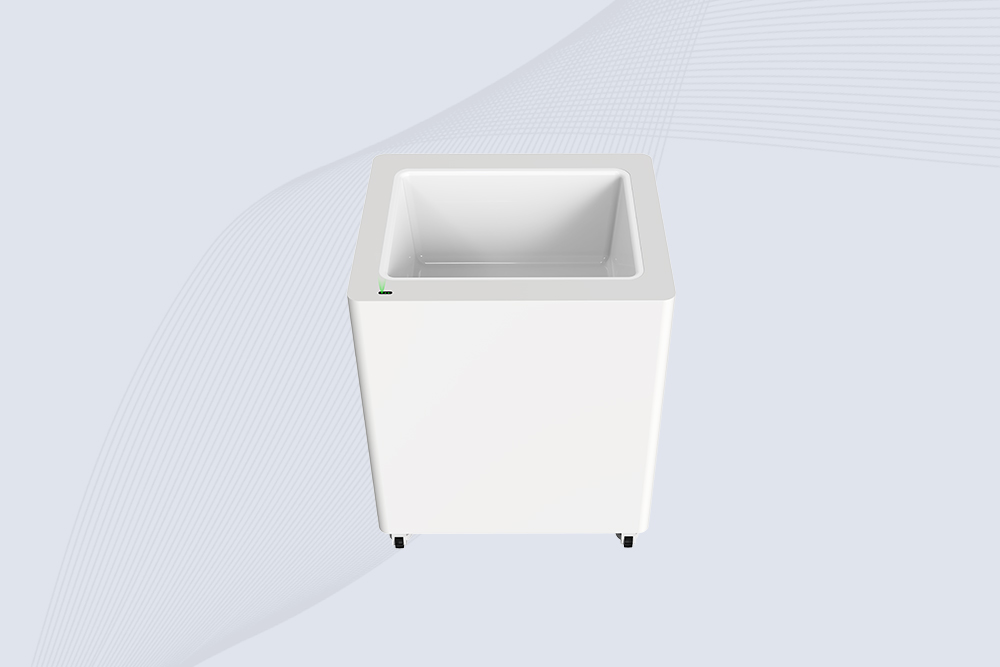
Cykeo’s CYKEO-D8C UHF RFID gate reader achieves 200-tag/batch scanning with adjustable power control, ideal for retail inventory and smart warehouse management.
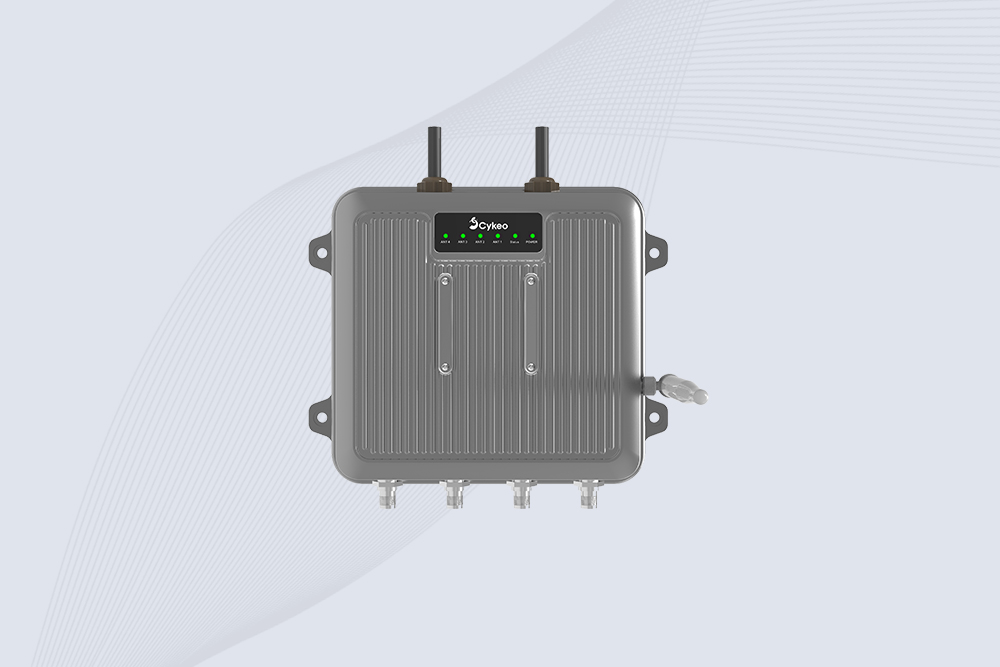
Cykeo CYKEO-C1 industrial Forklift RFID Reader features 20m read range, 600 tags/sec scanning, Impinj R2000 chipset, and IP67 rugged design. Ideal for warehouse logistics and manufacturing. Supports ISO 18000-6C/6B protocols.
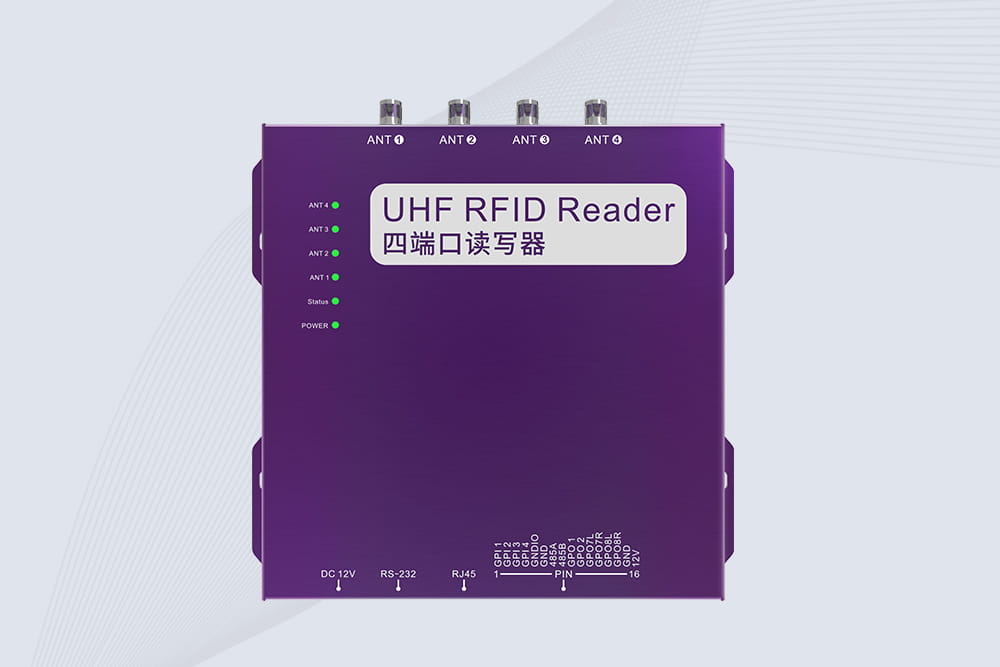
Cykeo CYKEO-R4 industrial UHF RFID Fixed Reader features 4 TNC ports, 400+ tags/sec speed, IP67 housing, and global frequency compliance for vehicle inspection, smart warehouse, and asset management systems.
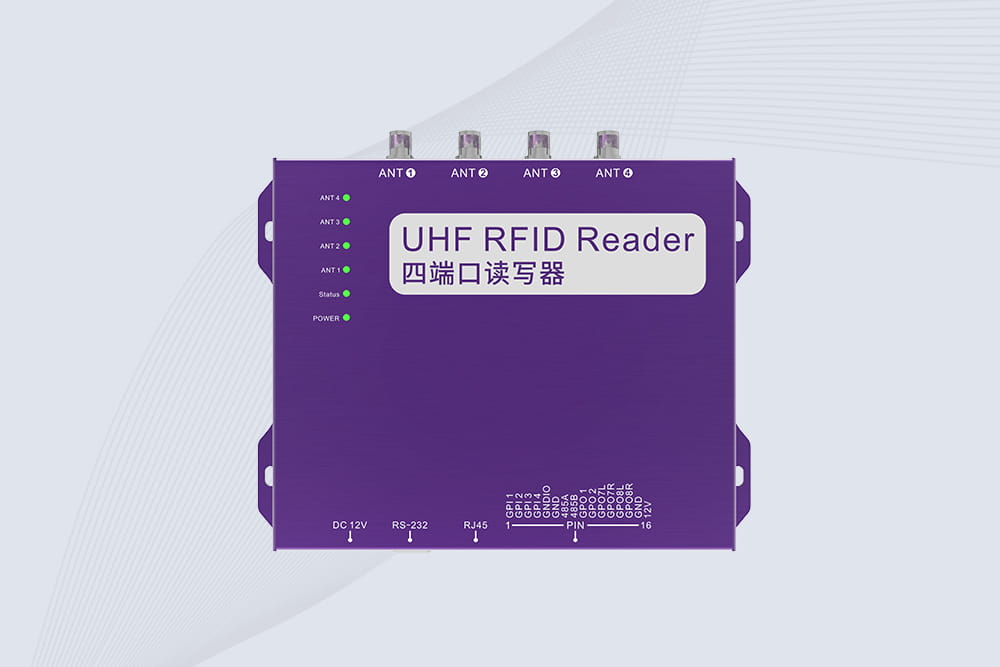
Cykeo’s CYKEO-R4L 4-port Fixed UHF RFID Reader delivers 400 tags/sec scanning, ISO 18000-6C compliance, and IP65 protection. Ideal for warehouse automation, manufacturing WIP tracking, and logistics management.
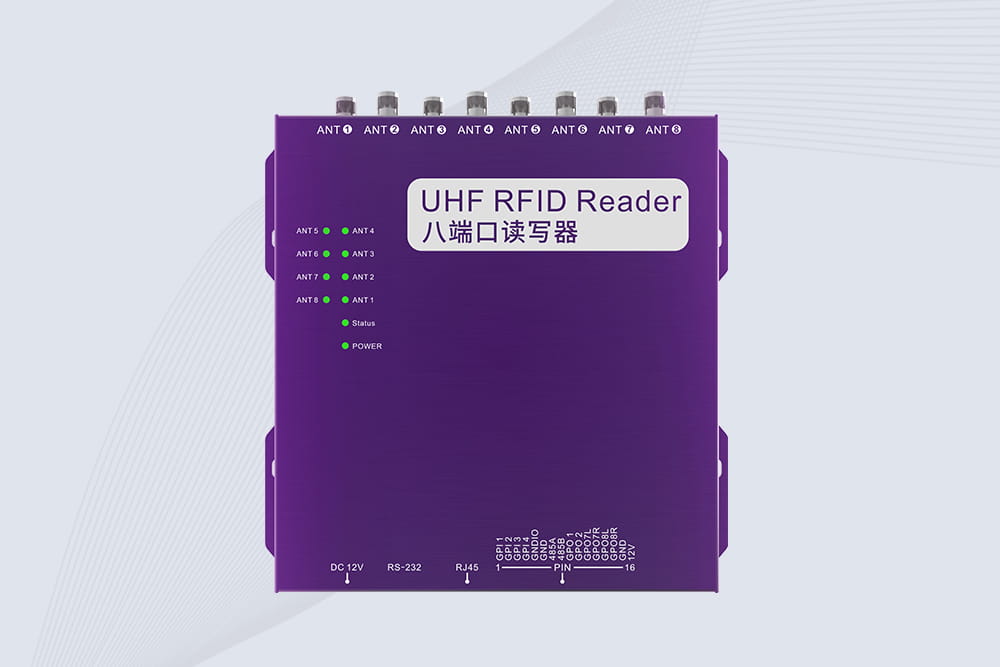
CYKEO CYKEO-R8L Fixed RFID Reader with 8-port UHF design, Impinj-based RF core and up to 20m read range. An industrial Fixed RFID Reader for vehicle inspection, warehouse portals, smart manufacturing lines and secure access checkpoints.
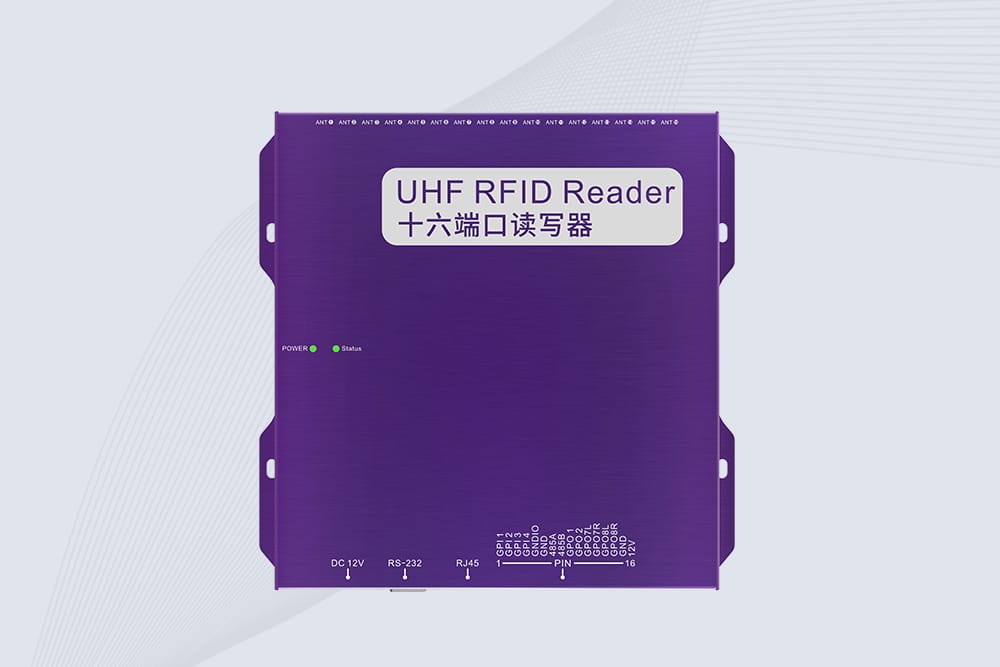
RFID Fixed Reader from CYKEO – the CYKEO-R16L 16-port UHF fixed reader for warehouses, smart cabinets, and production lines. Long-range, multi-tag reading, stable performance for 24/7 industrial use.
Learn how to obtain data from RFID tags via Bluetooth for seamless wireless workflows. Discover compatible devices, setup steps, and Cykeo’s Bluetooth-enabled RFID solutions.
More
Long range RFID scanners can help factories and warehouses identify tools, equipment, containers, and other assets without manually scanning every item. For ...
More
Wondering how RFID tag reader works? CYKEO explains the RF activation, backscatter, and anti-collision processes. Learn passive vs active tag reading today.
More
Discover how an rfid scanner phone works in real projects. Learn mobile scanning methods, compatibility tips, and field usage advice with CYKEO RFID solutions.
More