 Cykeo RFID IoT Solution Products R&D Manufacturer
how to program rfid reader
88Programming an RFID reader requires configuring communication, RF parameters, commands, SDK/API integration, and validating performance in real applications.
MoreAll RFID Product
You can write an RFID card by using a compatible UHF RFID reader writer and encoding software to store data in the card’s writable memory. For UHF systems, the process normally involves identifying the EPC-compatible card, selecting the correct memory bank, writing the required data, and verifying it immediately.
When people search for how to write rfid card, they often expect a simple answer: place the card on a reader, enter a number, and click Write.
That description is too broad for a professional UHF RFID system.
UHF RFID writing is primarily about communicating with the chip through the reader’s RF interface and writing information into supported memory. In many supply-chain applications, the important identifier is the EPC, while additional application information may be stored in User Memory when the selected IC provides it.
For Cykeo engineering projects, I normally treat the card, reader, antenna, software, and data structure as one system. This matters because a card can be detected perfectly while still failing to accept a write command. The cause may be an unsupported memory bank, incorrect access parameters, unsuitable tag placement, or simply the wrong UHF RFID chip.
For UHF RFID, ISO/IEC 18000-63 is the relevant air-interface standard. GS1’s EPC UHF Gen2 specifications are also built around the same UHF RFID communication family.
A useful starting structure is:
| Part | Role in UHF RFID card writing |
|---|---|
| UHF RFID card/tag | Receives and stores supported data |
| UHF RFID reader writer | Sends RF commands to the chip |
| Antenna | Creates the RF communication field |
| Encoding software | Controls reading and writing |
| Database/system | Provides the correct identification data |
The important point is that writing is a controlled memory operation, not simply a card-scanning function.
Before writing a UHF RFID card, determine which memory bank the application needs.
A typical EPC Gen2 / ISO 18000-63 UHF RFID IC can expose several memory areas, including:
They do not serve the same purpose.
EPC memory is particularly important for supply-chain identification. GS1 describes the Electronic Product Code as a unique identifier designed to identify physical objects, logistics units, locations, and other entities within EPC-enabled systems.
TID memory is associated with the tag’s identification information and is not normally treated as the application’s freely editable product-number field.
User memory, when available, can provide additional storage for application-specific information.
This distinction becomes very practical when programming cards in batches. If a customer asks for a product code, serial number, or asset identifier to be written into a UHF RFID card, I first establish whether that value belongs in EPC memory or another application-defined area.
Trying to solve that question at the encoding station is already too late.
A UHF RFID card is not defined merely by its plastic housing.
The embedded IC determines important technical characteristics such as memory organization, supported commands, security features, and available user memory.
For a production project, record at least:
This becomes particularly important for UHF RFID cards designed for different environments.
A standard PVC card may behave differently from an industrial UHF RFID card designed for attachment to equipment or other challenging surfaces. Material, antenna construction, orientation, and nearby metal can all influence RF performance.
In field testing, I prefer to test the exact card on the exact reader and with the final mounting condition. A card that writes reliably on a clean laboratory desk may behave differently once it is placed inside a badge holder, stacked with other cards, or mounted near metal equipment.
The basic UHF RFID writing sequence is straightforward, but the engineering details sit inside each step:
Inventory → Select target → Access memory → Write data → Verify
The reader first identifies tags within its RF field. The software then determines which tag should receive the command. The writer accesses the required memory area and sends the appropriate write operation.
The final step is critical: read the card again and compare the stored value with the original record.
For a single card, this may take only a few seconds. For thousands of cards, however, verification becomes a production-control issue.
A well-designed UHF RFID card encoding workstation can therefore include:
These functions are especially useful when several RFID cards are physically close to the antenna.

One of the most common misunderstandings is assuming that any UHF RFID reader can write a card.
It cannot.
The device needs to support write operations, and the software must expose the required commands. A reader designed primarily for inventory identification may be perfectly capable of reading hundreds of tags while offering a very different workflow for controlled encoding.
Cykeo’s UHF RFID solutions are designed around functions such as multi-tag recognition, adjustable RF output, filtering, anti-collision processing, and software integration. These capabilities are useful when the requirement changes from simply detecting a card to selectively programming one specific card among several.
Rather than immediately testing 100 or 1,000 cards, start with a small sample.
Check:
That last check is easy to overlook.
At a desk, an operator may naturally place a card directly over the antenna center. In production, cards move. Operators rotate them. A conveyor changes their position. A stack becomes slightly offset.
A robust UHF RFID writing system needs to tolerate the real workflow rather than only the ideal one.
The physical writing operation is only one part of the project.
Suppose a warehouse wants every card to represent a unique asset. The encoding system needs a defined relationship between:
Asset ID → EPC → RFID card → Database record
If the EPC is generated without a corresponding database record, the card may still be readable, but its business value becomes difficult to maintain.
For this reason, I recommend establishing the identifier structure before mass encoding begins.
Typical information can include:
The exact data should be determined by the system architecture and the selected UHF RFID IC rather than copied blindly from another RFID project.
Once a UHF RFID card writing project moves beyond a few test cards, the workstation needs to handle identification, encoding, verification, and record keeping as one operation.
For example, a card-issuing station may receive a list of 2,000 asset numbers from an inventory system. The operator should not manually invent EPC values one by one. The software can associate each asset record with a specific RFID card, send the write command through the UHF RFID reader writer, and then perform a read-back check.
A practical batch workflow looks like this:
This is where how to write rfid card becomes an integration problem rather than merely an RFID hardware question.
When cards are close together, the reader may see more than one RFID device. Anti-collision technology helps the reader communicate with individual tags, but a card-encoding workstation should still control which card is selected for writing.
In production, I prefer physical positioning and software filtering to work together.
For example, if a technician is encoding employee cards, one card is placed on the near-field writing area while unused cards remain outside the active region. The software then confirms the target EPC before writing. This is much easier to troubleshoot than placing a stack of cards directly on an antenna and hoping the correct one receives the data.
Programming a UHF RFID card should start with a defined memory map.
A simple project may only require EPC data. A more demanding application may also use User Memory. The decision should be based on the RFID IC and the application, not on the reader’s menu labels.
| Requirement | Recommended consideration |
|---|---|
| Unique identification | EPC memory |
| Additional application information | User Memory, if supported |
| Chip identification | TID memory |
| Security controls | Reserved memory and access mechanisms |
| Repeated updates | Confirm memory endurance and access conditions |
The EPC value also needs a consistent format. In a supply-chain environment, organizations may use GS1 identification structures rather than arbitrary numbers. GS1’s EPC Tag Data Standard defines how EPC identifiers are represented and encoded for RFID applications.
That distinction is useful for companies planning to connect RFID encoding with existing supply-chain systems. The reader writes the value, but the business system determines what that value means.
A card should not be considered successfully programmed simply because the reader returned a successful write response.
The stronger method is:
Write → Read → Compare → Record
Suppose the source system provides EPC 3014.... After the writing command, the reader reads the card again. The software compares the returned EPC with the original value. If they match, the record is passed. If not, the card goes into a rework queue.
For high-volume encoding, this simple verification step can prevent a much larger problem later.
It is particularly useful when RFID cards are issued as permanent identifiers. Replacing a failed card at the encoding workstation is inexpensive compared with discovering the problem after the card has already been distributed.
Not every failed write means the RFID reader writer is defective.
Check the UHF card’s IC, antenna orientation, reader frequency configuration, and physical position first.
This usually requires a closer look at the selected memory bank, access permissions, lock status, or reader/software support.
Confirm that the cards use the same RFID IC and memory configuration. Cards that look identical externally can contain different chips.
Reduce the active field, separate the cards, and use the reader’s tag-selection and filtering capabilities.
Test the card in its actual installation environment. Metal structures, liquids, cables, machinery, and other RF sources can change the behavior of a UHF RFID system.
These are the kinds of details that tend to disappear from basic RFID tutorials. On a deployment site, they are usually the details that consume the technician’s time.
Cykeo develops UHF RFID hardware for applications where tag identification needs to connect with a larger operational system.
For engineering and OEM applications, the CYKEO-M4L UHF RFID module integrates an RF front end and baseband DSP and supports ISO18000-6C / EPC C1G2. Its output power can be adjusted up to 33 dBm in 1 dBm increments, while the module supports dense multi-tag recognition and filtering functions.
For desktop encoding environments, Cykeo’s RFID writer solutions can be used for controlled read/write operations, including tag registration, item identification, lookup, and writing workflows.
The practical advantage is not simply having a higher RF output.
A card-writing station needs predictable communication at the actual working distance, with the correct card positioned in the intended writing area. Increasing power indiscriminately can make a workstation harder to control because cards outside the intended zone may also respond.
That is why I treat RF power as a parameter to tune during commissioning rather than a specification to maximize blindly.

The same writing principle can support different business processes.
A unique EPC can associate an RFID card or tagged asset with an enterprise database. The card becomes the physical identifier used during subsequent inventory operations.
UHF RFID cards and tags can be encoded before products or containers enter the warehouse. Readers can subsequently identify them without requiring direct line-of-sight scanning.
Cards can carry identification associated with work-in-process materials, tools, containers, or production records, depending on the selected RFID IC and application.
Where a UHF RFID card is appropriate for the access or tracking architecture, encoding can associate the physical card with a predefined identity record.
The writing process remains similar, but the data architecture and security requirements change substantially from one application to another.
Yes. A compatible UHF RFID reader writer can write supported information to writable memory on a UHF RFID card. The exact procedure depends on the RFID IC, memory structure, access conditions, and reader software.
EPC information is commonly used for identification in UHF RFID applications. Some ICs also provide User Memory for additional application data. The appropriate memory area depends on the chip and system architecture.
Many UHF RFID ICs allow supported memory areas to be rewritten, subject to their access conditions and lock settings. Before repeated programming, check the specific IC’s datasheet for memory and endurance specifications.
No. The reader must support the relevant UHF RFID protocol and write commands. Software must also provide access to the required memory and any authentication or security functions.
Possible causes include locked memory, incorrect access parameters, an unsupported memory bank, incompatible reader commands, or software configuration problems. Confirm the card IC and memory structure before changing RF power.
Use an RFID encoding workstation that controls tag selection, writes the required data, verifies each card, and records the result. Keeping the target card separated from unused cards can reduce accidental selection.
Yes. The RFID reader normally operates through an antenna that establishes the RF communication field. Desktop writers commonly integrate or connect to an antenna designed for their intended writing range.
how to write rfid card is best approached as a controlled UHF encoding process: select the right RFID IC, define the memory structure, use a compatible reader writer, write the identifier, and verify the result.
For a production deployment, the important question is not simply whether a card can be written once. The more useful question is whether the entire encoding process can repeatedly produce the correct identifier, connect that identifier to the business database, and remain reliable under the conditions where the card will actually be used.
That is the difference between demonstrating an RFID card writer on a desk and building a UHF RFID system ready for operational use.

Discover SSD-D4AL, a USB-HID UHF RFID reader with 4/8/16 antenna options, Impinj E710/X3M1 chipset, plug-and-play USB power, and OEM customization.
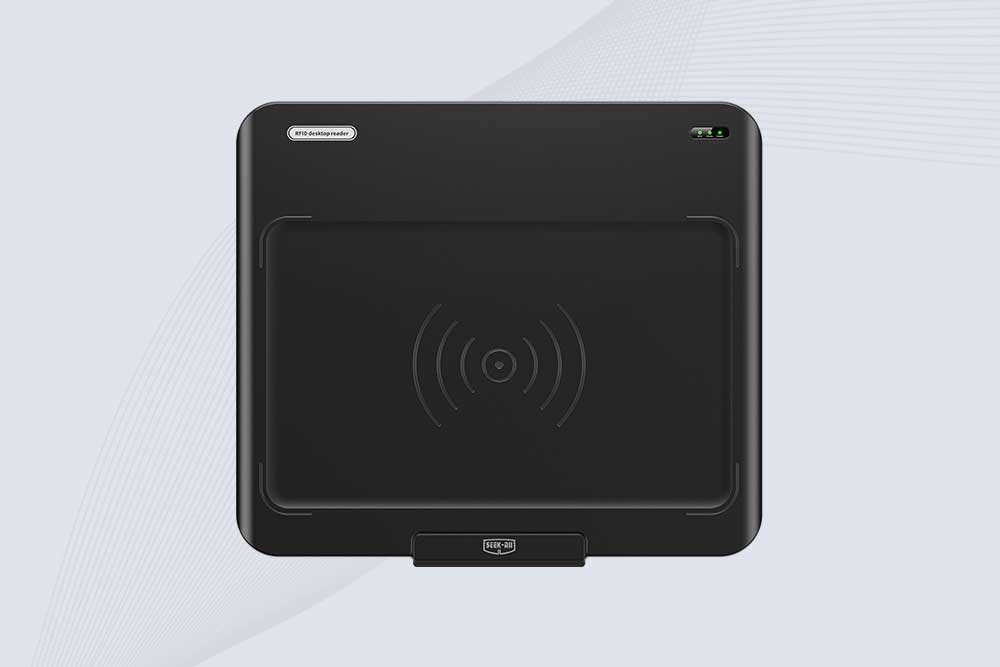
SSD-D3AL is a USB-HID UHF RFID reader with 0–30 cm reading, 0–15 cm writing, over 600 tags/s recognition, USB plug-and-play operation and OEM Logo customization.
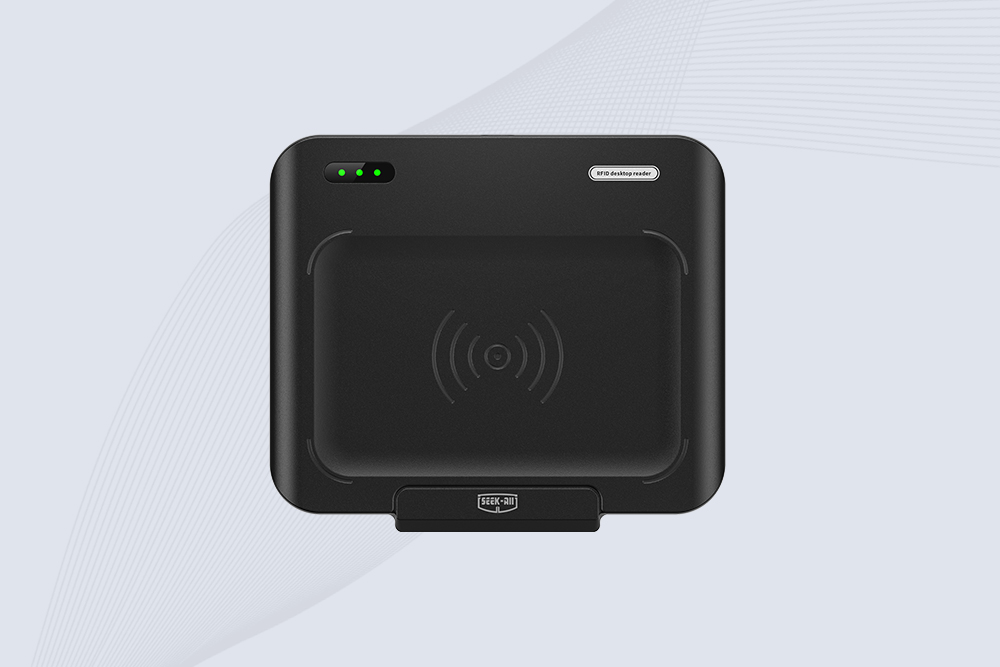
SSD-D1AL is a compact USB UHF RFID reader with Impinj E710/X3M1 chipset, USB-HID, 600+ tags/s recognition, 4/8/16 antenna support and plug-and-play USB power.

CYKEO CYKEO-D1LA USB RFID Reader is a compact desktop solution with near-field control for precise tag reading and encoding. Powered by USB, supporting ISO 18000-6C, and built for stable batch writing, this usb rfid tag reader fits retail, libraries, offices, and controlled RFID encoding tasks.
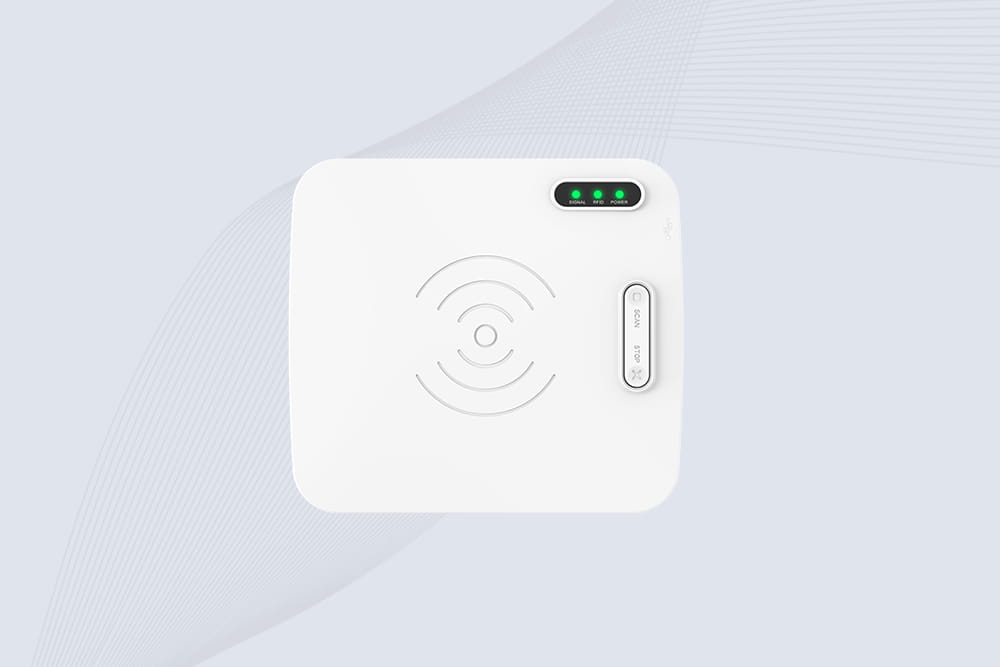
CYKEO CYKEO-D1L RFID scanner USB is a compact desktop UHF RFID scanner designed for short-range tag writing and verification. This usb rfid scanner supports batch encoding, stable 0–26 dBm output, and works across Windows, Linux, and Android systems.
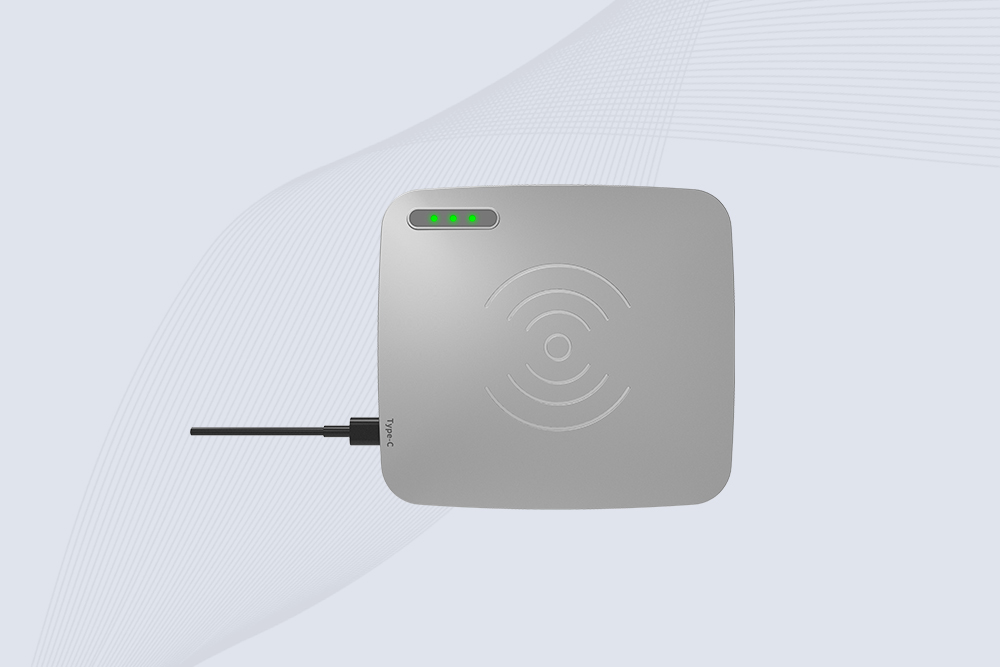
CYKEO CYKEO-D1C USB RFID Card Reader is a near-field UHF desktop writer designed for secure, short-range tag encoding. With USB-C connectivity and stable 26 dBm output, this rfid reader usb c is ideal for badge issuance, label encoding, and controlled desktop RFID workflows.
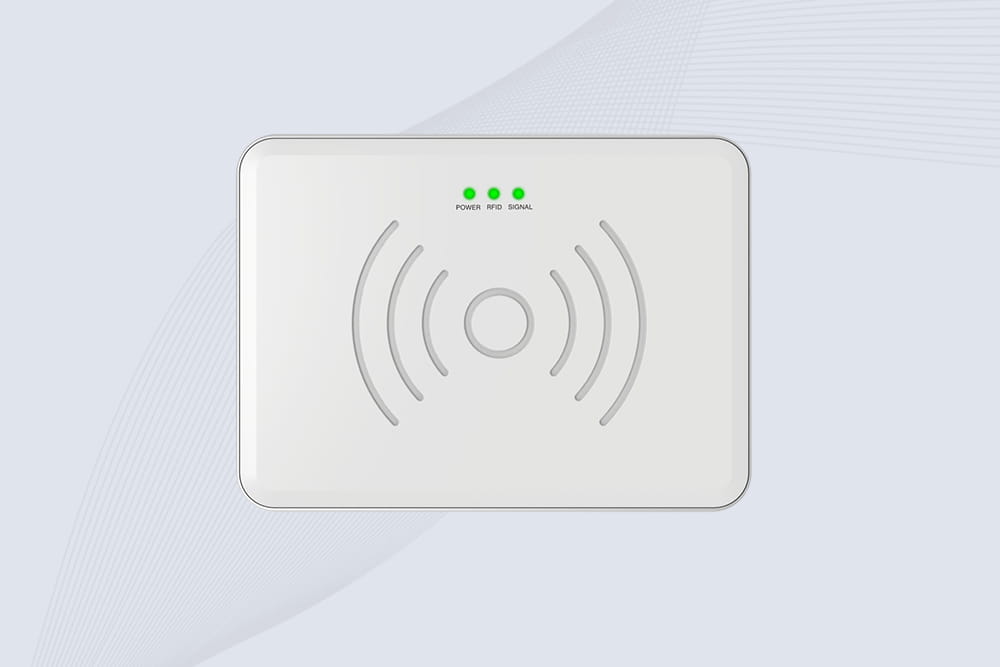
CYKEO CYKEO-D2L RFID Reader USB is a compact desktop encoder built on the Impinj R500 chip. With near-field control and stable USB power, this usb rfid card reader delivers precise tag writing for offices, retail counters, and small-scale logistics encoding tasks.
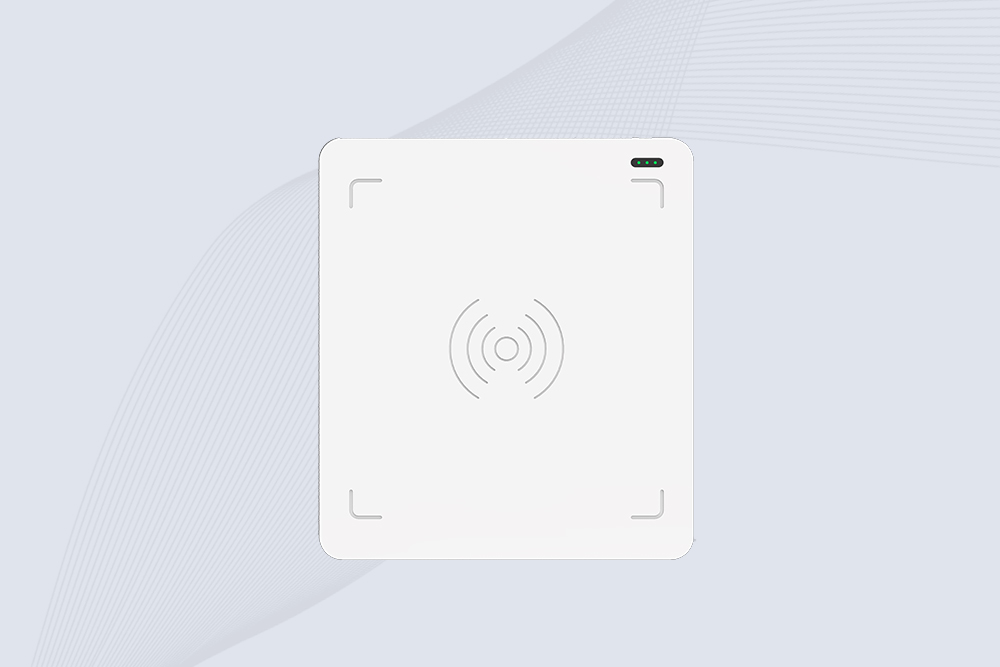
CYKEO CYKEO-D3L USB RFID Tag Reader delivers stable UHF tag reading and writing for daily desktop and light industrial tasks. Designed for controlled short-range operation, this USB RFID Tag Reader works reliably with rfid tag and reader systems in libraries, tool tracking, and inventory registration.
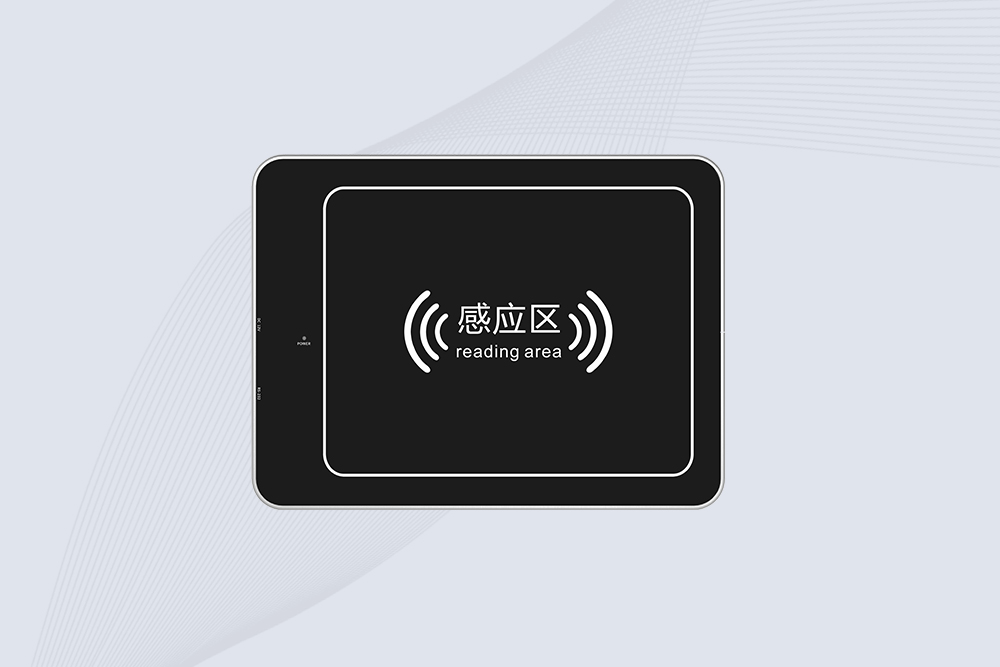
The CYKEO CYKEO-D4L UHF RFID Tag Reader is a stable Desktop RFID Reader designed for accurate tag registration, borrowing, and return workflows. Built with the Impinj R2000 chip, this UHF RFID Tag Reader delivers controlled short-range reads for libraries, asset tracking, and inventory management environments.
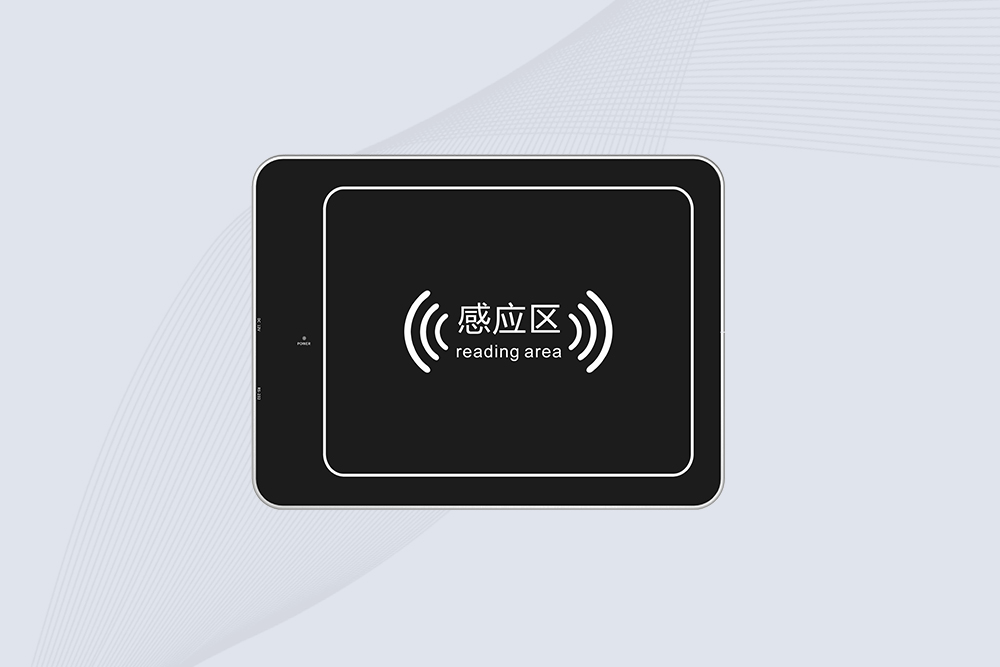
The CYKEO CYKEO-D5L Desktop RFID Card Reader is a stable UHF RFID Card Reader designed for controlled short-range reading and writing. Built for libraries, tool rooms, and asset desks, this UHF RFID Card Reader supports dense tag handling, secure data processing, and easy USB integration.
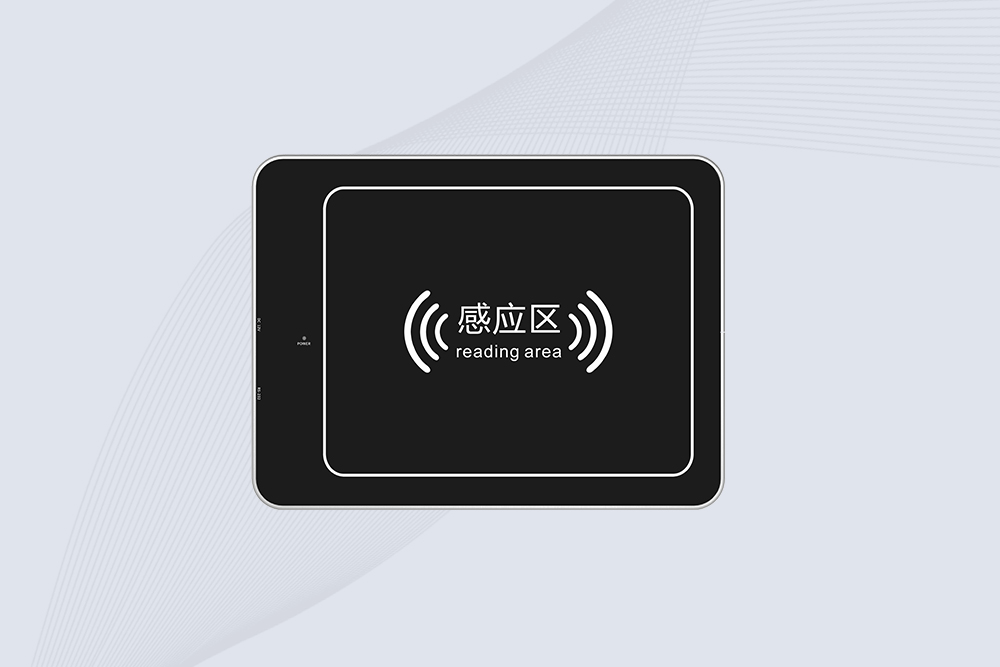
The CYKEO CYKEO-D6L RFID Reader Writer is a heavy-duty Desktop RFID Reader designed for short-range, high-accuracy tag programming. Built for libraries, labs, and asset desks, this RFID Reader Writer supports batch processing, stable 33dBm output, and seamless integration with existing management systems.
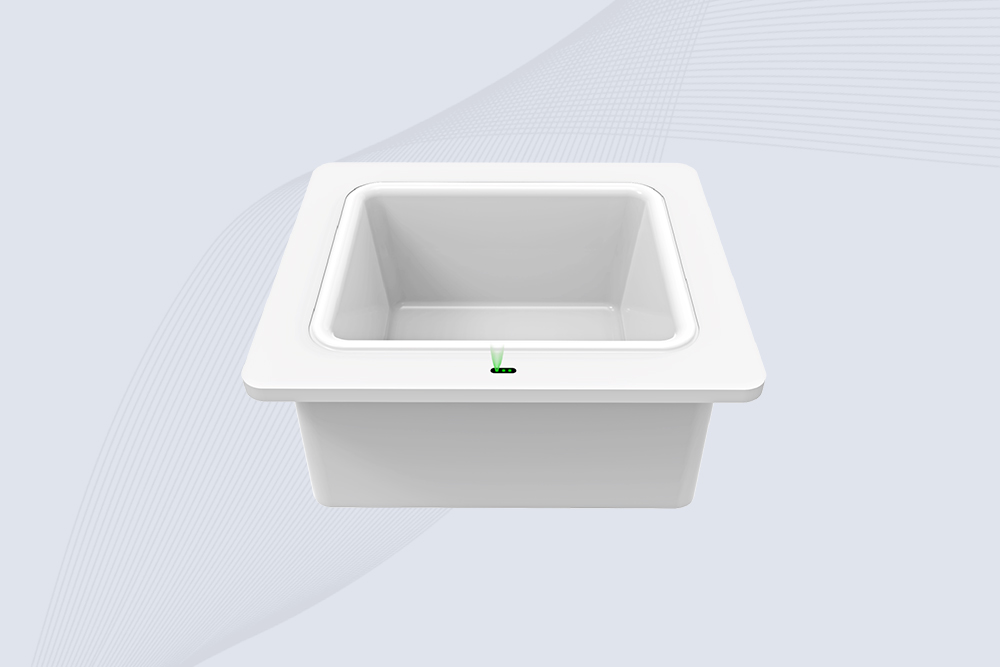
Cykeo CYKEO-D8B UHF RFID tunnel and RFID Desktop Reader features 30+ items batch reading,
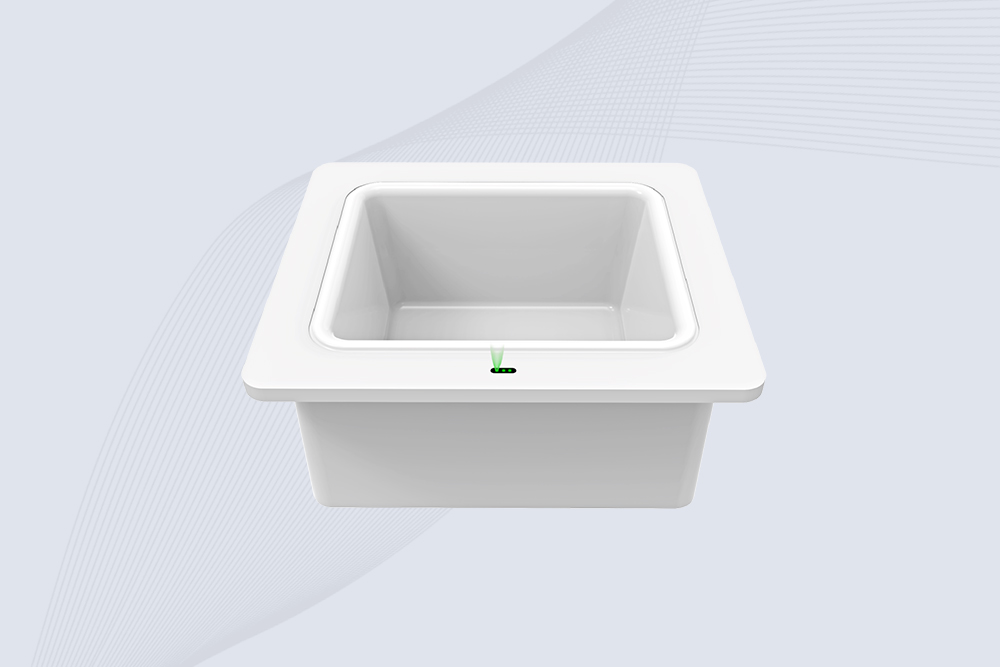
Cykeo CYKEO-D8A embedded RFID badge reader offers 30+ tags/sec scanning, 20cm anti-crosstalk precision, and DC 12V power for unmanned stores, warehouses, and smart inventory systems.
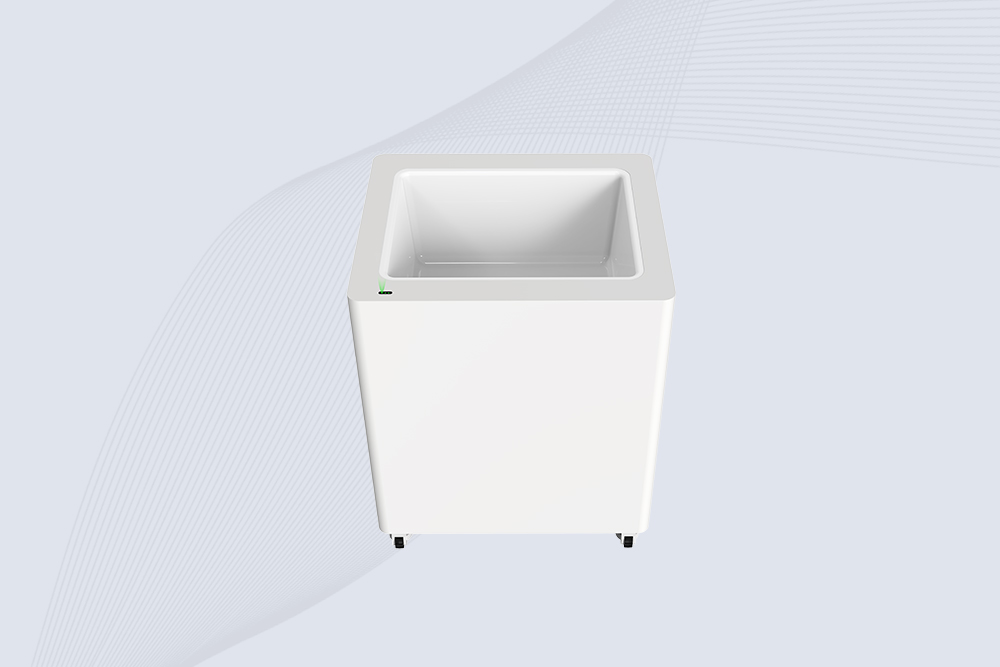
Cykeo’s CYKEO-D8C UHF RFID gate reader achieves 200-tag/batch scanning with adjustable power control, ideal for retail inventory and smart warehouse management.

Programming an RFID reader requires configuring communication, RF parameters, commands, SDK/API integration, and validating performance in real applications.
More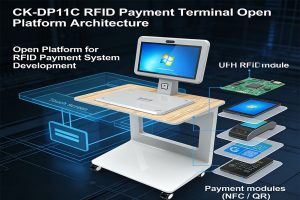
Build RFID-based payment and self-checkout systems faster with the CK-DP11C. Open APIs, Windows & Android OS, and high-speed UHF RFID scanning.
More
Android RFID Emulator improves testing and debugging efficiency, but it also introduces security risks in real-world enterprise applications, such as illegal emulation and UID spoofing. This article analyzes how it works, uncovers potential threat...
More
RFID jewelry tags help jewelers achieve real-time inventory visibility, faster stock counts, and enhanced security. Discover how Cykeo RFID solutions transform jewelry retail operations.
More