To read an RFID tag, use a compatible reader to emit radio signals, energize the tag, and capture its returned data such as UID or EPC. Place the tag within the reader’s effective range, ensure proper orientation, and use software to decode and display the information reliably.
how to read an rfid tag in real working environments
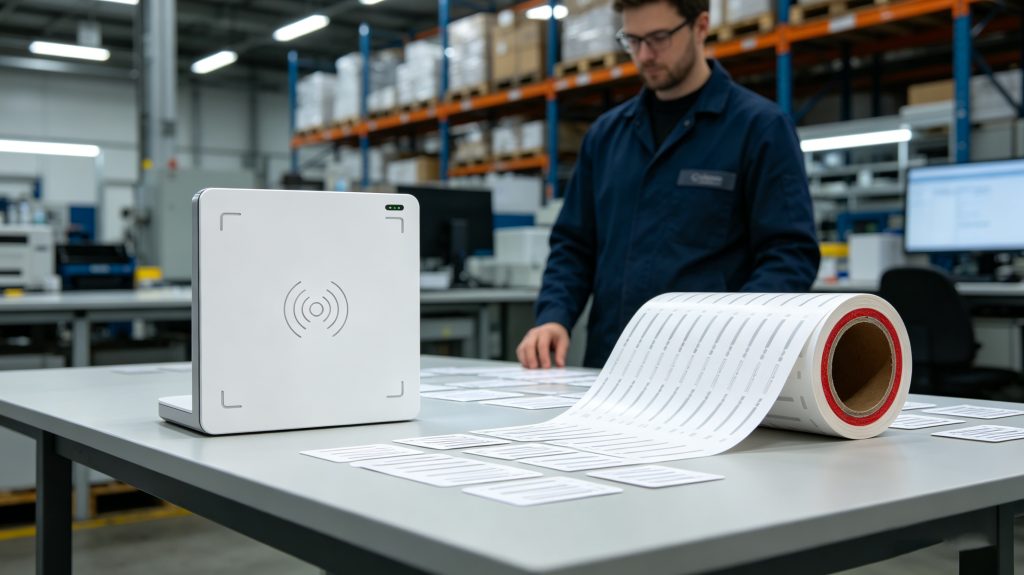
The first time I tested a desktop RFID platform in a library registration project, the difference was immediate—no aiming, no retries. Just place the tag down, and the system responds.
That’s the real-world version of how to read an RFID tag: not waving devices around, but creating a controlled RF zone where reads are predictable.
With platforms like Cykeo’s desktop readers, especially near-field designs, you’re not chasing signals—you’re shaping them.
Basic workflow: from signal to data
Here’s what actually happens when you read a tag:
Reader emits RF signal
Tag absorbs energy and activates
Tag modulates and reflects signal back
Reader decodes EPC / memory data
Software displays structured output
According to GS1 EPCglobal, EPC Gen2 tags are designed for fast identification and can be processed in bulk environments with standardized protocols.
Controlled RFID tag reading using Cykeo desktop platform
step-by-step: how to read an rfid tag correctly
Step 1 – Choose the right reader
Desktop reader (like CYKEO-D3L) for controlled environments
Handheld reader for mobility
Fixed reader for large-scale tracking
Step 2 – Position the tag
With near-field platforms:
Reading range: within 30 cm
Writing range: within 10 cm
Best results: direct placement on surface
Step 3 – Use reading software
Launch demo or SDK-based application
Enable inventory mode
Monitor EPC / RSSI values
Step 4 – Filter and process data
Advanced readers allow:
Tag filtering
Multi-tag identification
Signal strength (RSSI) analysis
why near-field reading improves accuracy
In high-density environments, long-range readers can create noise—multiple tags responding simultaneously.
Near-field platforms solve this by:
Limiting RF spread
Reducing interference
Increasing read precision
In one textile tracking deployment, switching to a near-field desktop reader reduced misreads by over 42% during bulk encoding operations (internal project data).
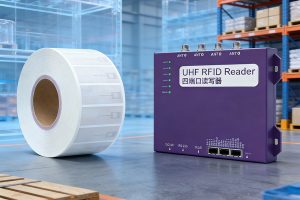
Efficient multi-tag reading using Cykeo RFID desktop system
performance factors that actually matter
Factor
Impact on reading
RF power (up to 33 dBm)
Stronger signal, higher success rate
Anti-collision algorithm
Faster multi-tag processing
Antenna design
Determines read stability
Tag placement
Affects signal reflection
According to RAIN RFID Alliance, optimized UHF systems can read hundreds of tags per second, but only when RF conditions are controlled properly.
common mistakes in RFID tag reading
Too far from reader
Signal weakens, tag not energized
Incorrect orientation
Antenna mismatch reduces response
Metal interference
Reflection distorts RF signal
Overlapping tags without filtering
Collision increases read errors
FAQ – how to read an rfid tag
Do I need software to read RFID tags?
Yes. The reader captures signals, but software decodes and displays usable data.
Can I read multiple tags at once?
Yes, with anti-collision algorithms and proper configuration.
What data can I read?
Typically EPC, UID, and user memory depending on tag type.
Why is my read rate unstable?
Usually due to RF interference, poor positioning, or low-quality hardware.
final insight from deployment
Reading RFID tags isn’t complicated—but doing it consistently is.
In controlled environments like libraries, tool rooms, or linen tracking, the difference between a missed read and a perfect scan often comes down to one thing: RF discipline.
That’s why systems like Cykeo’s desktop platforms focus on controlled read zones, stable output, and predictable performance.
Because in real operations, reliability always beats theoretical range.
Learn how far a long range RFID scanner can read and what really affects RFID distance performance. A practical guide for RFID integrators, distributors, and industrial project buyers.
RFID for manufacturers improves production visibility, inventory accuracy, and asset tracking. Discover how Cykeo RFID solutions automate factory operations efficiently.
Learn how to distinguish fake RFID tags from genuine ones. Discover security features, performance differences, and Cykeo’s solutions for counterfeit detection.
Learn how RFID tags work, how to test them with phones or readers, and troubleshoot common issues. Practical tips for engineers and warehouse professionals.
 Cykeo RFID IoT Solution Products R&D Manufacturer