If you’ve started looking into RFID systems, you’ve probably noticed something:
There are dozens of readers that look similar on paper.
But in real projects, the wrong choice shows up quickly:
Unstable reading
Coverage gaps
Integration issues
Unexpected extra costs
The problem is not the technology—it’s the mismatch between the reader and the actual use case.
So instead of asking “which reader is best,”
“Which reader fits my project?”
Step 1: Define Your Application
Before looking at any specs, start here:
What are you tracking? (pallets, tools, cables, cartons)
Where does reading happen? (gate, conveyor, open area)
Is it static or moving?
How many items per day?
Because the same reader that works in a warehouse gate
Step 2: Choose the Right Number of Antenna Ports
This is one of the most important decisions.
Typical options:
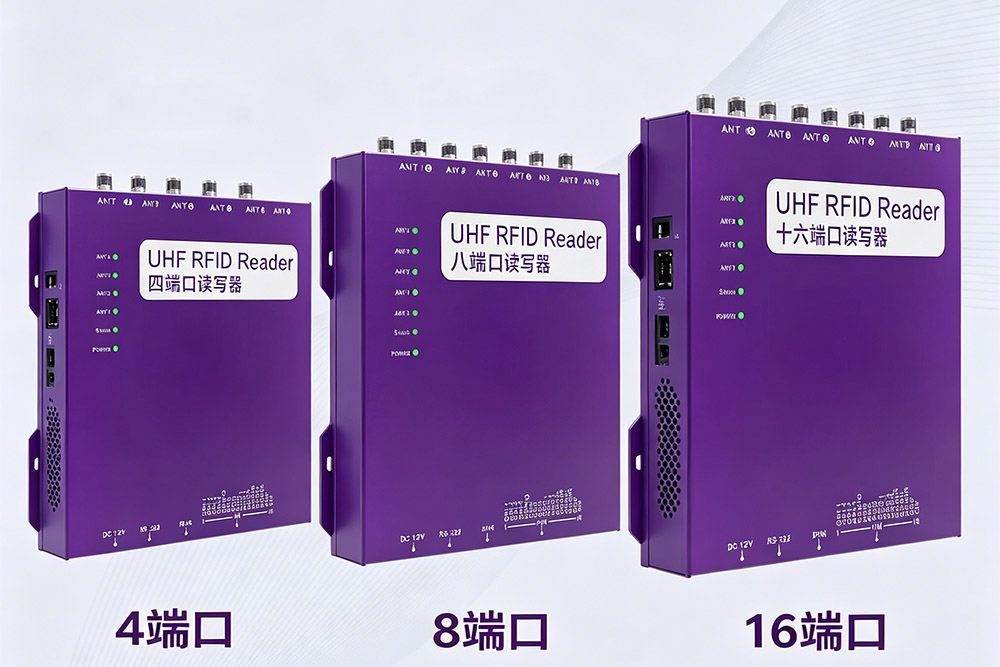
4-port reader
8-port reader
16-port reader
How to think about it:
4 ports → small zones, single gate8 ports → medium coverage, multiple angles16 ports → large systems, complex layouts
More ports = more antennas = better coverage
A common mistake is underestimating coverage needs and ending up with blind spots.
Step 3: Understand Real Read Range
You’ll often see:
“Up to 10–15 meters”
That’s under ideal lab conditions.
In real environments:
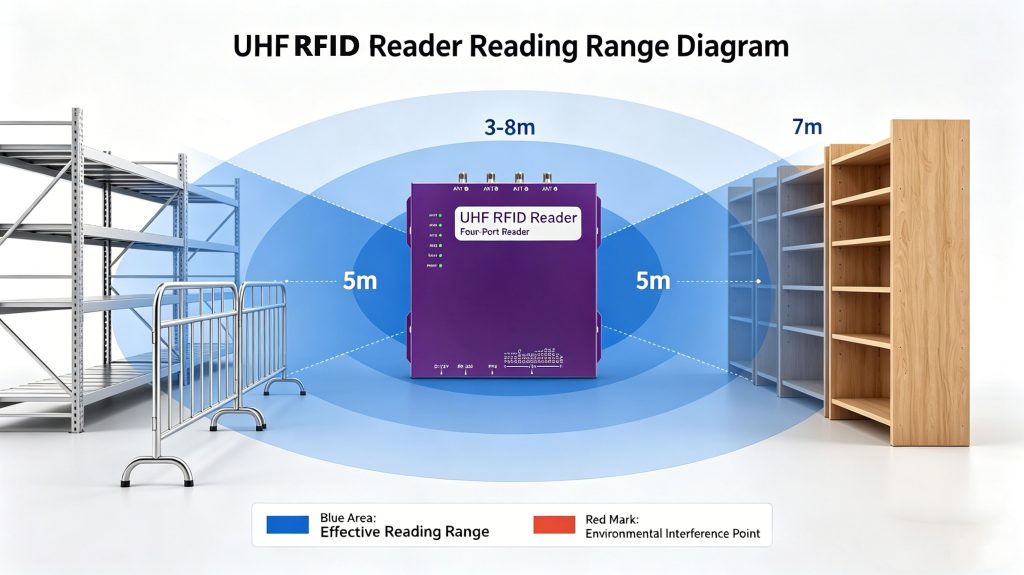
3–8 meters → typical stable performance
Metal, liquid, and interference reduce range
So instead of asking:
Ask:
Step 4: Match the Reader to Your Environment
Different environments require different considerations.
Warehouse
Open space
Focus on coverage and speed
Industrial / Factory
Metal interference
Need stable performance
Outdoor
Temperature, dust, moisture
Need rugged hardware
If your environment is harsh, a basic reader may work at first—but fail over time.
Step 5: Consider System Integration
A reader is not a standalone product.
It needs to connect to:
WMS (Warehouse Management System)
ERP systems
Custom software
So check:
Does it support API / SDK?
Is it easy to integrate?
What communication interfaces are available? (TCP/IP, RS232, etc.)
A cheaper reader with poor integration can cost more later.
Step 6: Evaluate Reading Speed and Tag Volume
In some applications, speed matters more than range.
For example:
Conveyor systems
High-throughput logistics
You need a reader that can:
Handle hundreds of tags per second
Avoid data collision
If your system processes large volumes, this is critical.
Step 7: Don’t Ignore Antenna Design
Many RFID issues are blamed on the reader—but actually come from antennas.
Things to consider:
Antenna placement
Polarization (linear vs circular)
Coverage angle
A good reader with poor antenna setup = poor performance.
Step 8: Think About Total Cost
Buyers often compare only reader price.
But real cost includes:
Reader
Antennas
Installation
Integration
Maintenance
A slightly more expensive reader that reduces system complexity
Step 9: Test Before Full Deployment
This step saves projects.
Before ordering in bulk:
Test in your real environment
Try different antenna layouts
Validate read performance
RFID is very environment-dependent.
Common Mistakes to Avoid
1. Choosing based on price only
Leads to unstable performance
2. Ignoring environment
Works in office → fails in field
3. Underestimating antenna needs
Creates blind spots
4. Skipping testing
Leads to costly redesign later
A Simple Selection Example
Let’s say:
Warehouse gate
Pallet tracking
Medium traffic
A practical setup might be:
4 or 8 port fixed reader
2–4 antennas per gate
Stable mid-range reading
Not overkill—but not underpowered.
Final Thoughts
Choosing a UHF RFID fixed reader is not about finding the most powerful device.
It’s about matching:
Coverage
Environment
Workflow
Most RFID issues don’t come from the reader itself—
 Cykeo RFID IoT Solution Products R&D Manufacturer