 Cykeo RFID IoT Solution Products R&D Manufacturer
How Do RFID Reader Work?
355Curious about how do RFID reader work? We explain the step-by-step process of radio wave communication between readers and tags in plain English.
MoreAll RFID Product
To apply an RFID tag, first choose a clean, flat location that matches the tag’s antenna design and the item material. Clean and dry the surface, align the tag as specified, press firmly, and verify readability with the intended reader. Metal, liquids, curvature, and nearby objects require application testing before production.
The best RFID tag location is not simply the most visible area. It is the position that gives the tag a stable RF environment while remaining firmly attached during normal handling.
In practical RFID deployment, I check three things before approving a tag position:
For ordinary cartons and plastic containers, a clean, relatively flat surface is usually the easiest starting point. The more difficult cases are often not caused by the reader itself. They appear after the tag is attached to the actual product.
That distinction matters.
Remove dust, oil, moisture, and loose particles before applying the adhesive tag. The surface should be dry and sufficiently smooth for the adhesive to make consistent contact.
Do not apply the tag over a damaged label, loose packaging seam, or heavily contaminated surface simply because the location is convenient.
GS1 implementation guidance emphasizes that RFID readability should be tested against the actual product and packaging configuration before shipment.
Mark the approved tag position during pilot deployment and use the same orientation throughout production. This becomes particularly important when tags are being read automatically through portals, conveyors, or fixed UHF RFID readers.
GS1 states that a passive UHF RFID tag can typically be read several meters away, with exceptional configurations reaching considerably farther, but the effective read volume depends on the antenna and tag orientation rather than distance alone.
| Check | Recommended practice |
|---|---|
| Surface | Clean and dry |
| Position | Flat, stable area where possible |
| Orientation | Keep consistent with the validated setup |
| Adhesion | Press firmly across the tag surface |
| Metal | Use a tag designed for metal applications |
| Liquids | Validate the tag on the actual liquid-containing product |
| Verification | Test with the production RFID reader |
Metal requires a different approach. A conventional UHF RFID inlay can lose performance when placed directly against conductive material because the surrounding electromagnetic environment changes.
For metal shelves, tools, machinery, containers, or vehicle components, use an RFID tag specifically engineered for on-metal installation rather than simply moving a standard label onto the metal surface.
GS1 confirms that modern RFID tags are available specifically for metallic objects, including medical devices, beer kegs, and automotive or aerospace components.
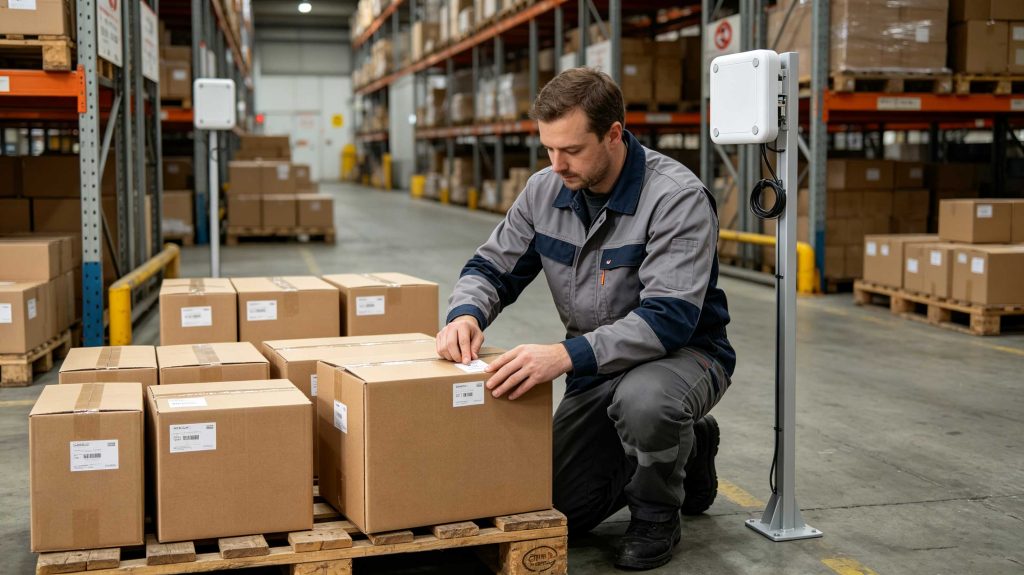
A tag that reads well on a workbench may behave differently after it is attached to the finished product, packed into a carton, placed beside another tagged item, or positioned near metal.
That is why the application should be validated using the actual tag, actual product, actual packaging, and intended reader configuration.
GS1’s Tagged-Item Performance Protocol provides defined procedures for evaluating RFID-tagged items and their performance, reinforcing the importance of testing the complete tagged-item configuration rather than judging the RFID inlay alone.
For Cykeo RFID deployments, this is where application experience becomes more valuable than simply following an adhesive label instruction. The physical attachment is only half of the job; the other half is confirming that the tag remains readable where the system will actually use it.
The application method changes with the item. A standard adhesive UHF label is a good fit for many cardboard and plastic products, but it should not automatically be used on metal or liquid-heavy products.
| Item surface | RFID tag application approach | What to verify |
|---|---|---|
| Cardboard | Apply directly to a clean, flat surface | Read consistency after packaging |
| Plastic | Apply to a stable exterior surface | Curvature and tag orientation |
| Glass | Apply to the exterior surface | Moisture and surrounding materials |
| Metal | Use an on-metal RFID tag | Read range and orientation |
| Liquid-filled item | Use a tag designed for the application | Detuning and reduced sensitivity |
| Fabric/textile | Secure tag where folding will not damage it | Compression and repeated handling |
| Pallet/carton | Keep placement consistent across units | Portal or conveyor read performance |
GS1 specifically notes that water absorbs electromagnetic energy and can detune RFID tags, while specialized antenna designs can reduce the effect. Metal also requires appropriate tag construction rather than treating every RFID label as interchangeable.
A tag can look perfectly attached while its antenna is being bent around a tight radius. For cylindrical products, I normally test several candidate positions instead of deciding from appearance alone.
This is particularly noticeable on bottles, pipes, cables, tools, and small containers. The tag may perform well when the item is stationary and then become inconsistent as the product rotates through a portal.
The practical test is simple: apply the tag to the finished item, rotate or move it through the intended reading zone, and record missed reads rather than relying on one successful scan.
Testing the loose inlay or unused label is not enough. GS1’s Tagged-Item Performance Protocol specifically defines procedures for evaluating RFID-tagged items, including tag orientation, stacking conditions, and repeatable test configurations.
For an operational deployment, I recommend checking:
GS1’s own interoperability test documentation uses a fixed tag position and controlled orientation during single-tag testing, illustrating why repeatable positioning matters when RFID performance is evaluated.

The most common mistake is treating tag attachment as a purely mechanical operation.
A tag can pass a bench test and fail after the product is boxed, stacked, wrapped, or moved beside metal equipment. GS1 guidance explicitly recommends testing readability where surrounding metal and other objects can influence RFID performance.
This usually creates unnecessary troubleshooting later. A tag optimized for cardboard should not automatically become the default choice for steel tools, machinery, or liquid-filled containers.
Even when the same tag model is used, inconsistent placement can change the relationship between the tag antenna and reader antenna. GS1 notes that the readable volume depends heavily on antenna directivity, gain, polarization, and tag orientation.
No. The location should be selected according to the product material, tag construction, antenna orientation, and intended reading environment.
Yes, but use an RFID tag designed for on-metal applications. Standard UHF labels may lose performance when placed directly against conductive surfaces.
Yes. However, liquids can absorb RF energy and detune the antenna, so the selected tag and placement should be validated on the actual container.
For controlled production environments, consistent orientation is strongly recommended. It makes installation repeatable and reduces unnecessary variation during automated reading.
Yes. Test the actual tag on the actual product and packaging with the intended reader configuration before large-scale deployment. GS1 provides a formal Tagged-Item Performance Protocol for this type of evaluation.
There is no universal range. GS1 states that passive UHF RAIN RFID tags typically operate over several meters, with special cases reaching up to 15 meters, while the actual readable volume depends on the complete reader, antenna, tag, and environment.
Yes. Cartons and pallets are common RFID applications, but placement should be validated against stacking, handling direction, packaging, and the intended reader zone. GS1’s logistics guidance also emphasizes consistent label placement for operational visibility.
At Cykeo, RFID application should be treated as part of the complete identification system, not as a simple label-sticking task. The tag, item material, placement, reader, antenna position, and operating environment interact.
That is why field validation starts with the real object whenever possible. A warehouse carton, metal tool, garment bundle, medical supply, or pallet should be tested in the form in which operators will actually encounter it.
GS1 currently maintains dedicated RFID implementation resources covering RAIN RFID, UHF Gen2, interoperability, tagged-item performance, and application guidelines.
For teams asking how to apply rfid tag, the practical answer begins with the same principle: choose the right tag for the object, apply it consistently, and prove readability under real operating conditions.
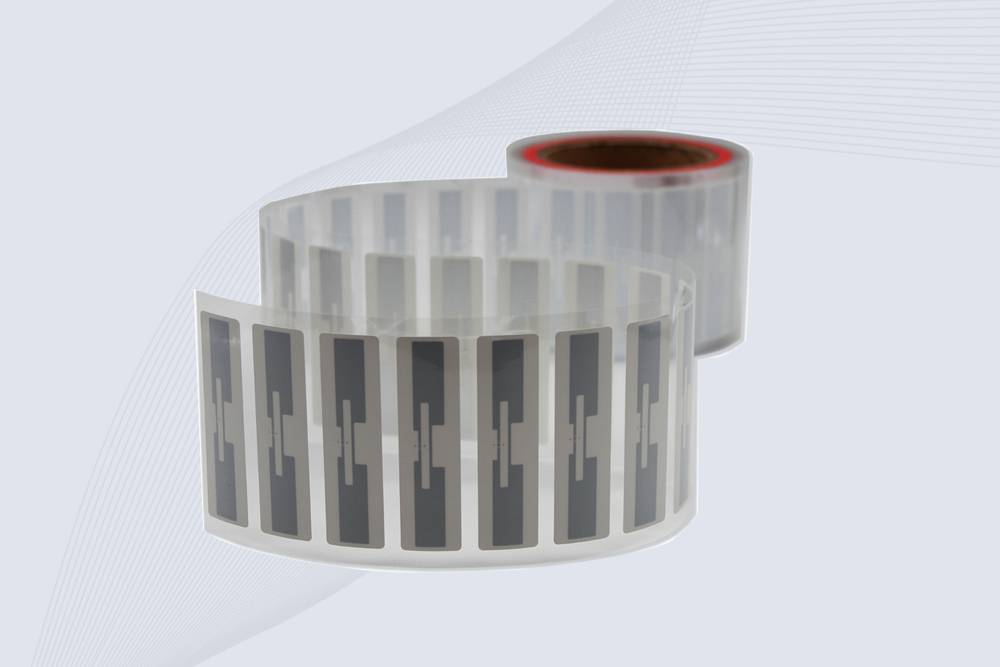
CYKEO Passive RFID Tags are made for wet and high-humidity environments where standard labels do not last. This rfid passive tag is often used around liquids, chemicals and temperature changes, providing stable reading distance and long data life for industrial tracking.
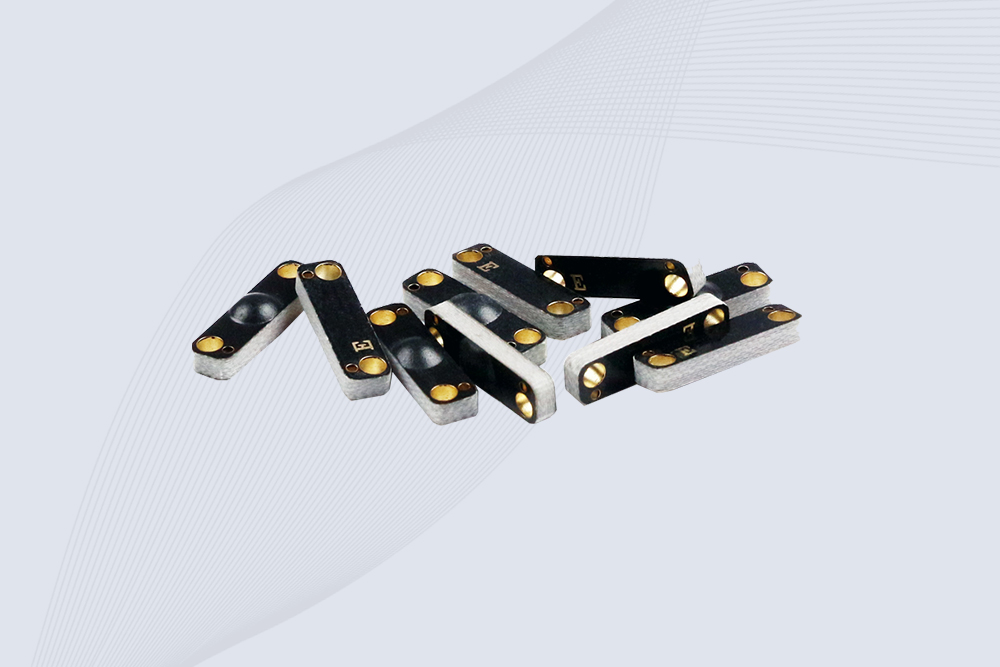
CYKEO CYKEO-PCB1504 Metal RFID Tags is a compact anti-metal UHF RFID solution built for direct mounting on metal surfaces. With stable 8-meter read range, Ucode-8 chip, and long data retention, this rfid metal tag fits tools, containers, automotive parts, and industrial asset tracking.
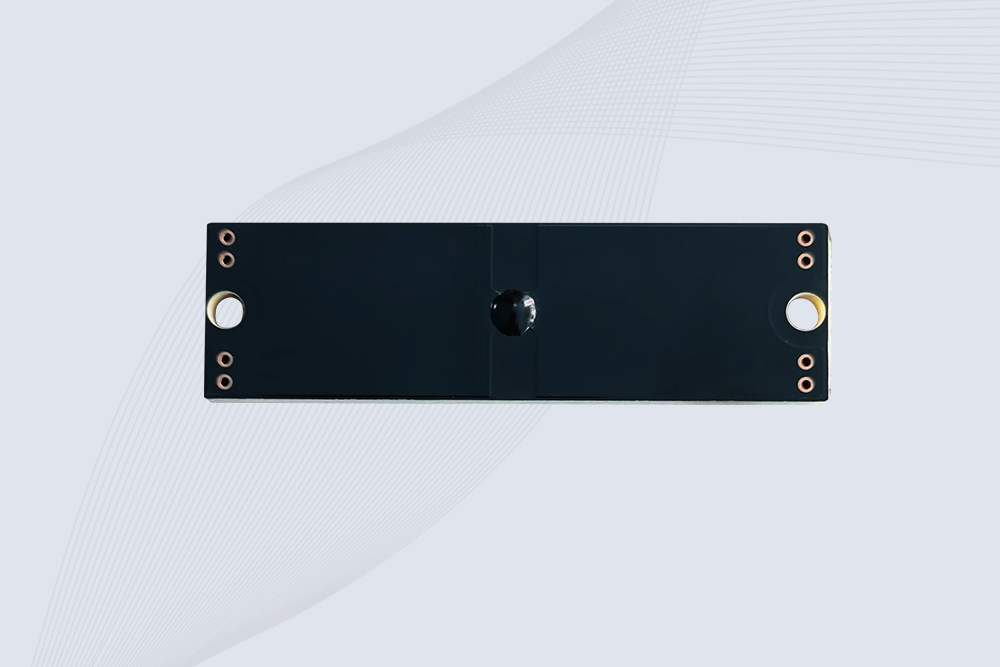
CYKEO CYKEO-PCB7020 On-Metal RFID Tags are designed for reliable tracking on steel and metal surfaces. Built with an FR4 epoxy body and industrial-grade chips, these On-Metal RFID Tags deliver stable performance, long data life, and chemical resistance, making them a dependable RFID anti-metal tag for harsh environments.
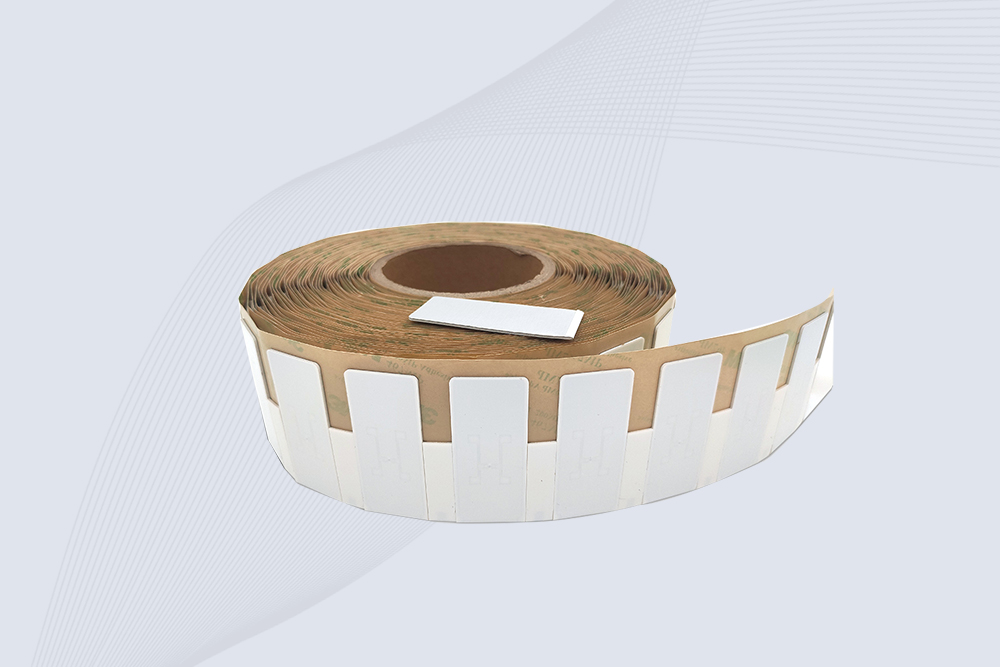
The CYKEO CYKEO-60-25 Anti-Metal RFID Tag is built for metal surfaces where standard tags fail. Designed for long-range performance, harsh environments, and stable data retention, this Anti-Metal RFID Tag is ideal for industrial assets, containers, and equipment tracking using on metal RFID tags.
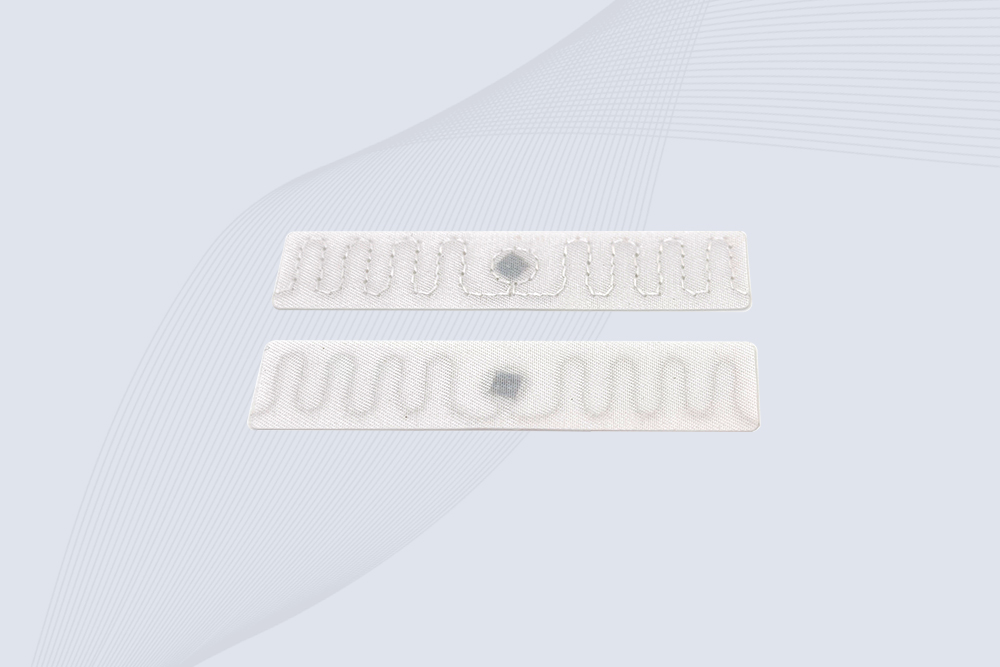
The CYKEO RFID Laundry Tag is designed for long-term textile identification in harsh laundry environments. Built to withstand high heat, chemicals, and repeated washing, this RFID Laundry Tag delivers stable performance for hotels, hospitals, and industrial laundry operations using laundry rfid tags at scale.
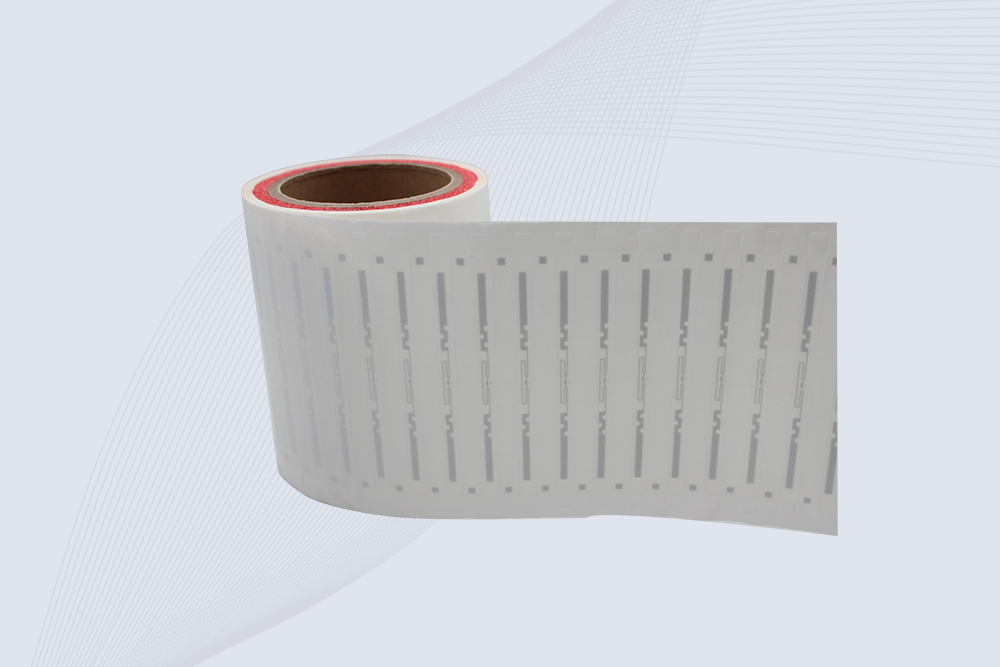
The CYKEO CYKEO-125-7 RFID Book Tag is designed for reliable book and document tracking in libraries and archives. This RFID Book Tag delivers long read range, dense placement support, and stable performance on shelves, making it a practical rfid tag on books for library automation, file management, and archival systems.
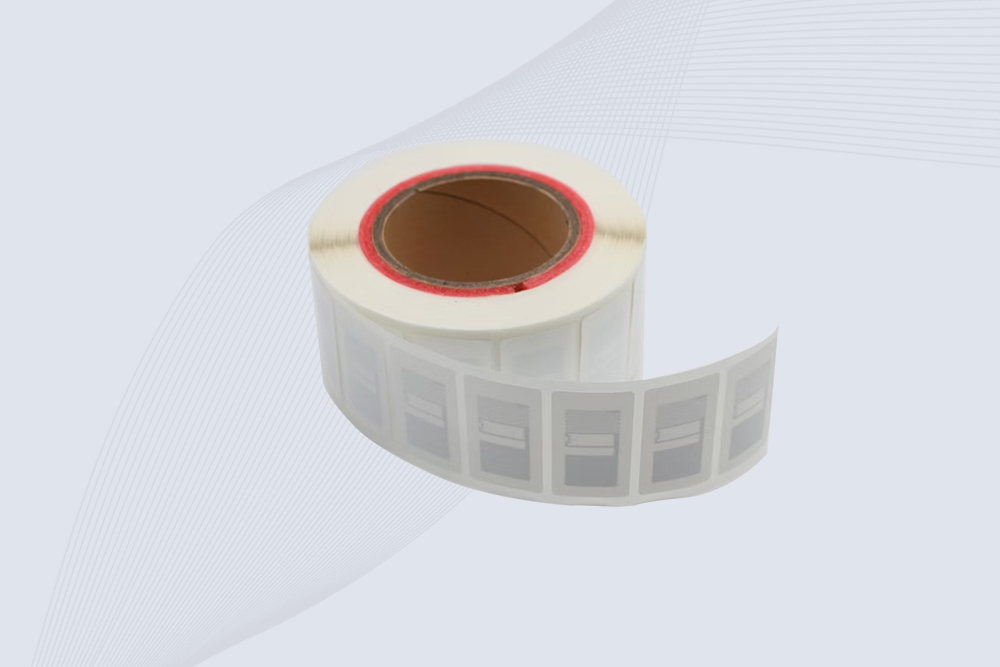
CYKEO RFID tags in hospitals are designed for sterile environments where accuracy matters. These autoclavable RFID tags support long-term tracking of surgical tools, implants, and medications, helping hospitals improve visibility, compliance, and patient safety.

CYKEO RFID Cable Tie Tag is built for reliable identification on metal surfaces. This UHF RFID Cable Tie Tag is widely used in rfid tags for inventory systems, industrial asset management and Hospital RFID Tags, offering stable read performance, long service life and global EPC Gen2 compatibility.
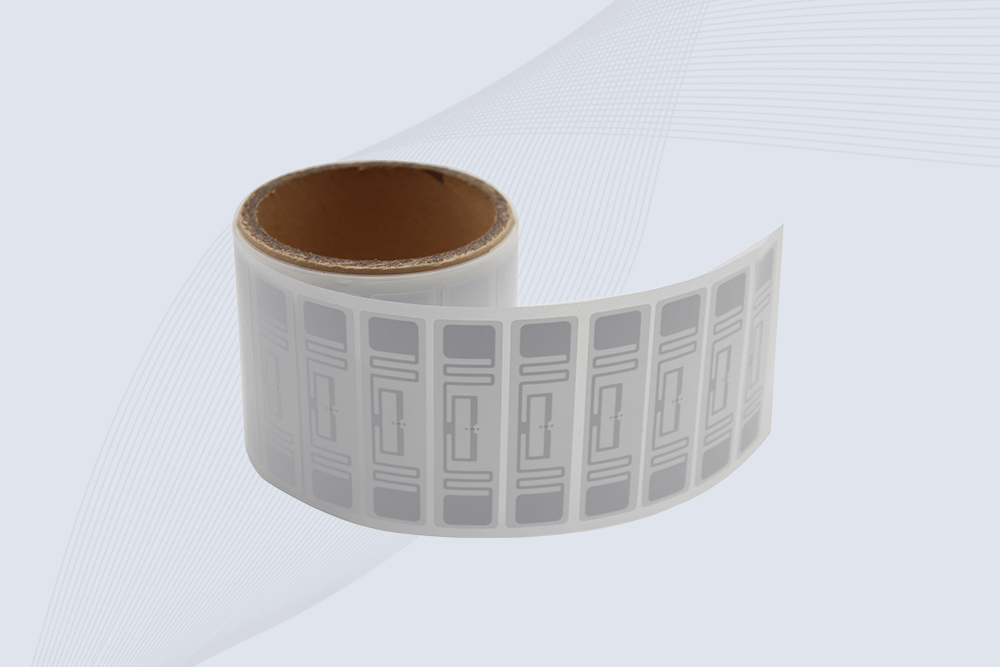
CYKEO RFID Asset Tag is designed for stable identification of metal assets in industrial environments. This UHF RFID Asset Tag is commonly used for rfid tag asset tracking on equipment, tools and containers, providing reliable reads, long service life and ISO/IEC 18000-6C support.

CYKEO UHF RFID Card is designed for fast identification and long-term use in industrial and commercial systems. Supporting ISO 18000-6C, this UHF RFID Card works at 860–960 MHz and is suitable for custom RFID cards used in asset tracking, access control and inventory management.
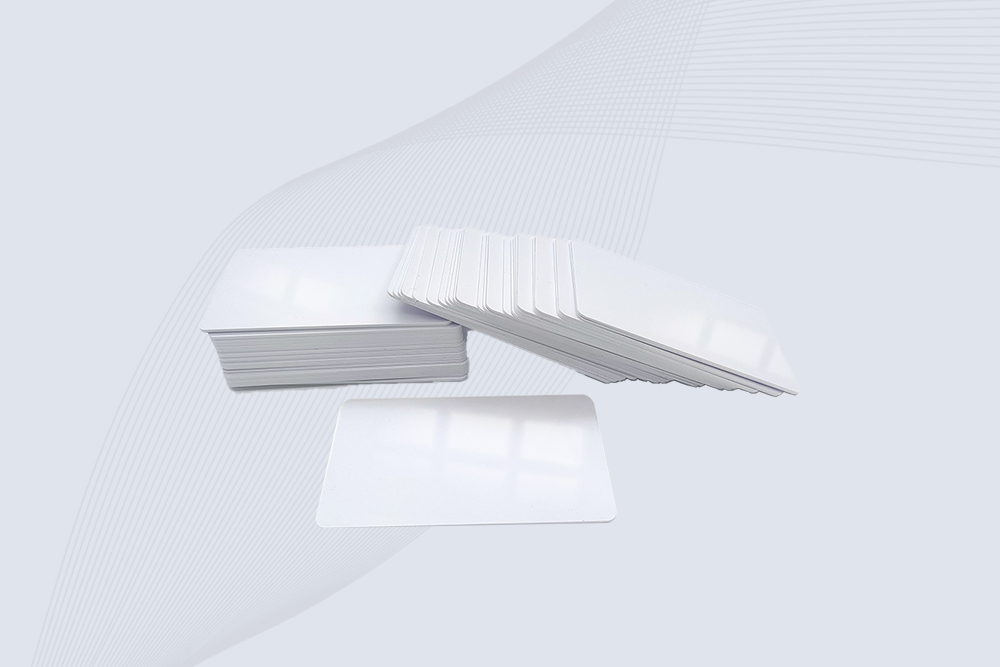
CYKEO HF RFID Cards are designed for secure and stable access control systems. These 13.56 MHz RFID key cards support ISO 14443-A, reliable rewriting and long service life, making HF RFID Cards suitable for offices, campuses, events and membership management.
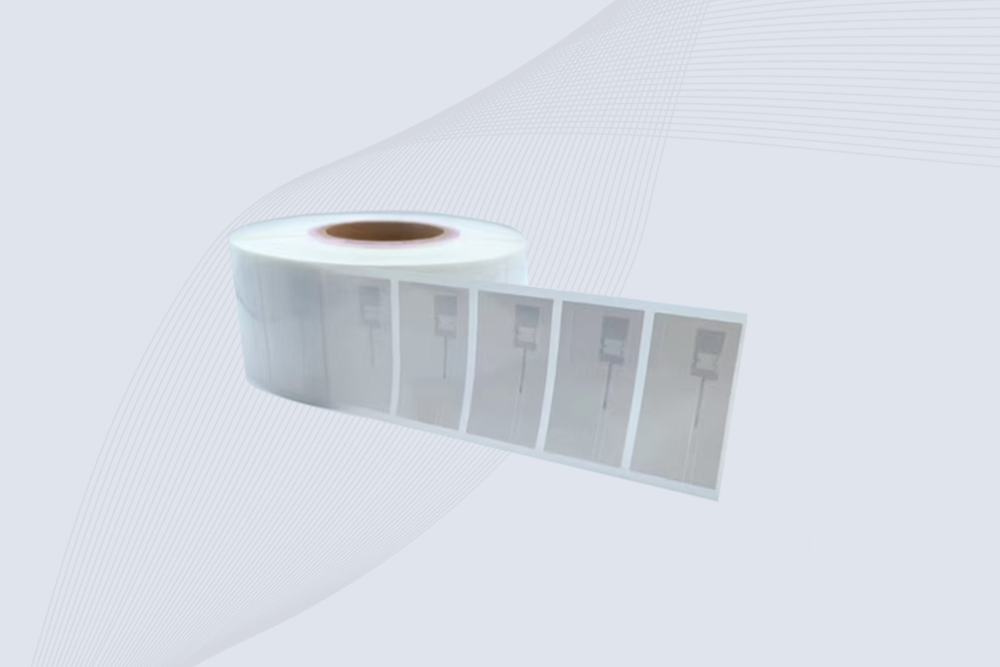
CYKEO UHF RFID Tag is designed for reliable tracking of metal jewelry and high-value items. This Jewelry RFID Tag supports long-range reading up to 8 meters, anti-counterfeit protection and stable performance on metal, making it suitable for retail, inventory control and asset management.

Curious about how do RFID reader work? We explain the step-by-step process of radio wave communication between readers and tags in plain English.
More
A long range RFID scanner can significantly speed up warehouse inventory by identifying multiple UHF RFID tags at once. Reliable results depend on tag placem...
More
What is an RFID label? Discover how RFID labels work, their structure, applications, and benefits for retail, logistics, and industrial tracking.
More
Discover how RFID technology slashes retail stockouts by 63%—proven by data from 500 stores. Learn Cykeo’s strategies for real-time inventory accuracy and higher sales.
More