How Small Can an RFID Antenna Be? The Shrinking World of Wireless Tracking
When you’re trying to track tiny, high-value items like surgical tools, jewelry, or microchips, the size of the tag becomes a critical constraint. This leads directly to the question: how small can an RFID antenna be? The short answer is: incredibly small—think smaller than a grain of rice for some specialized tags. But the more practical answer is that size is a constant negotiation with physics. Making an antenna smaller almost always involves a trade-off in performance, typically in read range and reliability.
The Physics Behind the Size: Wavelength is the Boss
The fundamental limit for any antenna is tied to the wavelength of the radio frequency it uses. For common UHF RFID (around 900 MHz), the wavelength is roughly 33 centimeters. A basic, efficient antenna (like a half-wave dipole) wants to be about half that length—around 16 cm. That’s why you see larger antennas for long-range applications.
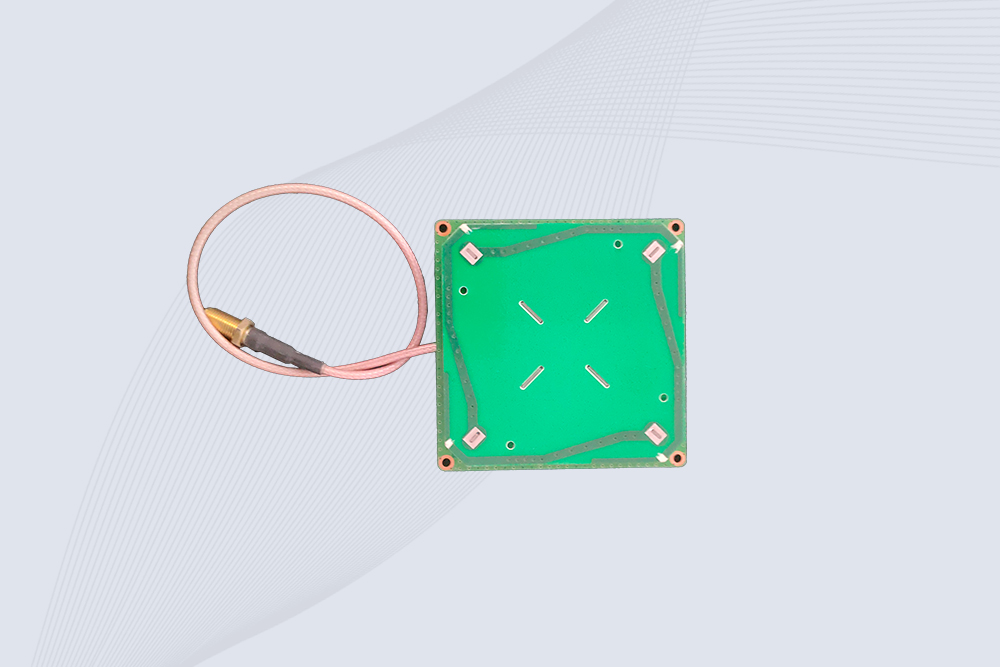
To shrink an antenna, engineers use clever design tricks to “fool” the physics. They create electrical paths that are electrically long but physically short. This is where techniques like fractal geometry (repeating, space-filling patterns) and meander lines (tight, zigzagging traces) come into play. By folding the antenna trace back on itself, you can fit the necessary electrical length into a much smaller footprint. This is the core of creating a miniaturized UHF RFID antenna.
The Inevitable Trade-Off: Performance vs. Size
This brings us to the critical factors affecting RFID antenna size and performance. As you shrink an antenna, you typically encounter these small antenna performance trade-offs:
- Reduced Read Range: A smaller antenna has a smaller aperture to capture energy. It’s less efficient at both harvesting power from the reader’s signal and radiating its response back. Read range can drop from meters to mere centimeters.
- Narrower Bandwidth: A tiny antenna is often finely tuned to one specific frequency. It may not perform well across the entire UHF band (860-960 MHz), making it sensitive to regional frequency differences or manufacturing variations.
- Increased Sensitivity to Environment: A miniaturized antenna’s performance is more easily detuned by nearby materials, especially metal or liquids. Placing it on a metal surface can completely kill its functionality unless it’s specially designed as an “on-metal” tag.
Real-World Examples of Tiny Antennas
Despite the trade-offs, tiny RFID antenna applications are growing in niche, high-value areas:
- Implantable Medical Devices & Tools: RFID tags for surgical sponges or instrument tracking can be smaller than a sesame seed.
- High-Value Jewelry & Document Security: Discreet tags embedded in watch bands, gemstones, or paper.
- Printed Electronics & Smart Labels: Antennas can be printed directly onto packaging with conductive ink, though performance is limited.
- PCB & Component Tracking: Tiny tags mounted directly on circuit boards.
For most of these, the requirement isn’t long-range scanning, but reliable, close-proximity verification. The antenna is designed for a specific, controlled use case.
Finding the Right Balance for Your Project
So, when asking how small can an RFID antenna be, you must first ask: What is the minimum acceptable read range and reliability for my specific task?
At CYKEO, we work with clients to navigate this balance. We help determine if a standard, larger tag will suffice or if a custom miniaturized UHF RFID antenna solution is necessary. Sometimes, the solution involves not just shrinking the antenna, but also integrating it with specialized reader systems (like high-sensitivity near-field readers) to compensate for the reduced performance.
The frontier of antenna miniaturization is always advancing, but the laws of physics remain. The smallest antennas are marvels of engineering, solving unique tracking challenges where size is the ultimate constraint, even if it means redefining what “good” performance looks like for that specific job.
RFID Antennas Recommendation
 Cykeo RFID IoT Solution Products R&D Manufacturer